The Bamboo Palm (Chamaedorea seifrizii) is a frequent sight in corporate lobbies and open-plan offices, and for good reason: it brings a soft, tropical aesthetic without the aggressive growth habits of larger indoor trees. If you are looking for a plant that fills vertical space effectively while remaining manageable, this species is a strong contender. Unlike many other palms that demand high-intensity sunlight, the Bamboo Palm is specifically adapted to the filtered, lower-light conditions typical of modern office buildings.
- Thrives in medium indirect light; tolerates low-light office corners.
- Requires consistently moist soil; avoid letting the root ball dry.
- Prefers average to above-average humidity levels for optimal leaf health.
- Non-toxic to cats and dogs according to ASPCA safety guidance.
- Moderate maintenance; best for offices with regular, predictable care routines.
However, successful integration into your workspace depends on understanding its specific physiological needs. While it is often labeled as an easy-care plant, it is not a “set it and forget it” decoration. It requires a consistent approach to moisture and a stable environment, making it a better fit for offices where someone is tasked with regular plant maintenance rather than a communal space where care is left entirely to chance.
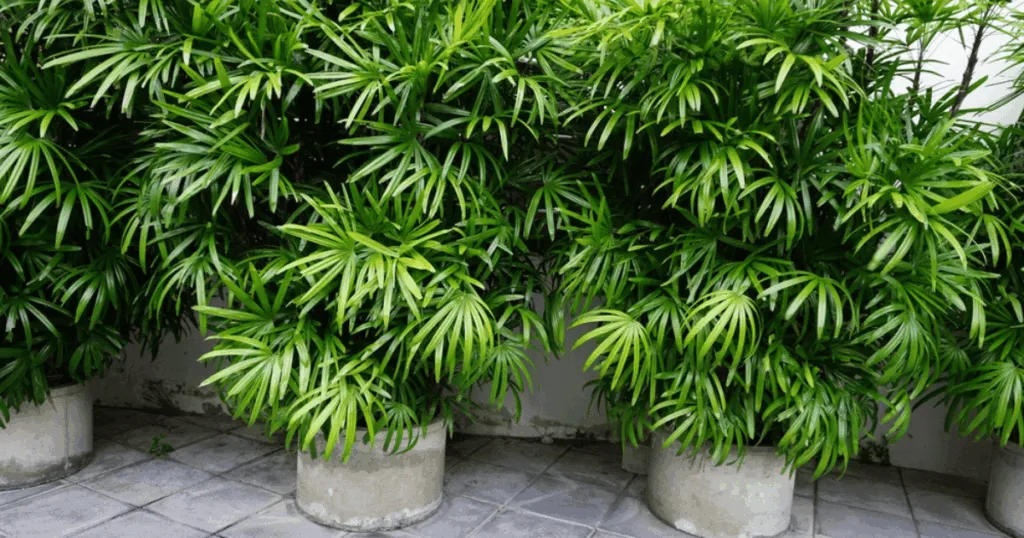
Appearance and Growth Habit
The Bamboo Palm is technically a clustering palm, meaning it grows in multiple stems from the base rather than as a single, solitary trunk. This growth habit is exactly what gives it its name; the stems are slender, ringed, and segmented, bearing a striking resemblance to actual bamboo stalks. The foliage consists of arching, feathery fronds that create a lush, dense canopy. In an office setting, this density is a significant advantage, as it allows the plant to act as a natural privacy screen or a soft divider between desks.
In terms of scale, these palms typically reach heights of four to seven feet when grown in containers. Because they grow in clusters, they maintain a relatively narrow footprint at the base, which is ideal for tight office layouts where floor space is at a premium. The growth rate is moderate; you won’t need to worry about the plant outgrowing its corner within a few months, but it will gradually fill out and establish a more substantial presence over time.
One of the most appealing visual traits of the Bamboo Palm is its ability to maintain a vibrant green color even in environments where natural light is limited. While other palms might become leggy or yellow under fluorescent lighting, this species tends to hold its structure well. It does not require constant pruning to maintain its shape, though you should expect to remove the occasional lower frond as it naturally ages and turns brown.
Care Needs at a Glance
Managing a Bamboo Palm in a professional environment requires attention to three primary pillars: light, water, and humidity. While it is more forgiving than many indoor palms, it does have specific thresholds that, if ignored, can lead to visible stress.
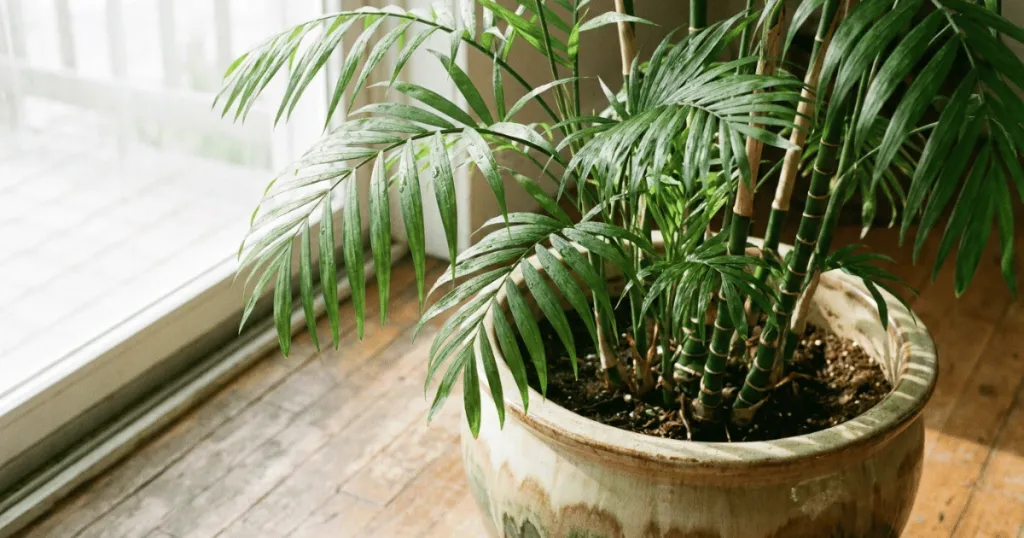
Light Requirements
While the Bamboo Palm is famous for its shade tolerance, “tolerance” does not mean “preference.” It performs best in medium indirect light. In an office, this means placing it near a north-facing window or a few feet away from an east-facing window. If your office relies entirely on artificial lighting, ensure the plant is close enough to the light source to receive consistent illumination throughout the workday. Avoid placing it in direct, harsh sun, which can scorch the delicate fronds and cause them to lose their deep green luster.
Watering and Soil Moisture
The most common mistake with this species is allowing the soil to dry out completely. The Bamboo Palm prefers to be kept consistently moist. In an office environment, this means checking the soil at least once a week. If the top inch of soil feels dry to the touch, it is time to water. However, avoid waterlogging the roots. Ensure your container has adequate drainage holes, as these palms are susceptible to root rot if left sitting in standing water. If your office has a strict “no water on the floor” policy, ensure you use a high-quality saucer to prevent leaks.
Humidity and Air Quality
Indoor offices, especially those with aggressive HVAC systems, are notoriously dry. The Bamboo Palm prefers average to above-average humidity. While it can survive in standard office air, you may notice the tips of the fronds turning brown if the humidity drops too low for extended periods. If you notice this, a simple pebble tray with water placed under the pot can help raise the ambient humidity around the plant without requiring a bulky humidifier.
Office Suitability and Placement Guidance
The Bamboo Palm is an excellent choice for reception areas, meeting rooms, and open-plan offices because of its non-imposing size and its ability to soften the hard lines of office furniture. Because it is a clustering plant, it provides a sense of fullness that makes a room feel more comfortable and less sterile. It is particularly effective at breaking up long, monotonous corridors or providing a visual buffer between a workstation and a high-traffic hallway.
When placing your plant, consider the airflow. Avoid putting it directly in the path of an air conditioning vent or a heater. Rapid temperature fluctuations and dry, forced air are the primary enemies of this palm. A stable location, even if it is slightly darker, is always better than a bright spot that is subjected to constant drafts.
From a maintenance perspective, this plant is best suited for offices with a designated plant care schedule. If your office relies on a rotating schedule of volunteers, ensure they are instructed to check the soil moisture rather than simply watering on a calendar day. Overwatering is just as dangerous as underwatering, and a consistent, observational approach will yield much better results than a rigid, automated one.
Toxicity and Safety Considerations
One of the strongest arguments for choosing the Bamboo Palm in a modern workplace is its safety profile. According to the ASPCA, which maintains extensive lists of plants and their effects on common household animals, the Bamboo Palm is considered non-toxic to both cats and dogs. This makes it a worry-free selection for offices that allow pets, or for managers who want to ensure their plant choices remain inclusive and safe for all employees.
Because it does not contain the irritating calcium oxalate crystals found in many other popular office plants like Dieffenbachia or Philodendrons, it is a low-risk option for shared spaces. While it is always best practice to discourage employees from handling or consuming office plants, the Bamboo Palm does not pose a chemical threat, providing peace of mind for facility managers who prioritize a safe and healthy workplace environment.
Care and Troubleshooting Handoff
While the Bamboo Palm is a resilient and reliable office companion, it is not immune to common indoor plant issues. Yellowing fronds, brown tips, or the presence of common pests like spider mites can occur if the plant is stressed by environmental factors. Because this overview focuses on the suitability and general profile of the plant, we have not covered the granular details of pest management or specific fertilization schedules here.
For those who have already decided to bring a Bamboo Palm into their workspace, we recommend consulting our dedicated care and troubleshooting guide. That resource covers the specific signs of overwatering versus underwatering, how to properly prune aging fronds without damaging the stems, and the exact steps to take if you notice signs of pest infestation. By following those more detailed protocols, you can ensure your Bamboo Palm remains a healthy, vibrant part of your office for years to come.
Related Bamboo Palm Guides
- Bamboo Palm watering and light needs
- common Bamboo Palm problems
FAQ
Does the Bamboo Palm need direct sunlight to stay healthy in an office?
No, it actually prefers medium indirect light. Direct sunlight can scorch the leaves. In an office, it thrives in filtered light or near windows where it receives bright, indirect exposure throughout the day.
How often should I water a Bamboo Palm in a typical office environment?
There is no fixed schedule, as it depends on your office’s temperature and humidity. Check the soil weekly; if the top inch feels dry, it is time to water. Always ensure the pot drains well to avoid root rot.
Is the Bamboo Palm actually a type of bamboo?
No, it is a palm species. It is called a Bamboo Palm because its slender, segmented, and clustering stems resemble the growth habit of bamboo, but it is biologically unrelated.
Why are the tips of my Bamboo Palm leaves turning brown?
Brown tips are usually a sign of low humidity or inconsistent watering. Office environments are often very dry due to HVAC systems. Increasing the local humidity with a pebble tray or ensuring the soil stays consistently moist can help.