The Kentia Palm is a premier choice for offices due to its slow growth, high tolerance for indoor conditions, and elegant, upright habit.
- Thrives in medium to bright indirect light but tolerates low light.
- Requires watering only when the top inch of soil dries out.
- Adapts well to average office humidity levels.
- Non-toxic to cats and dogs according to ASPCA guidelines.
Appearance and Growth Habit
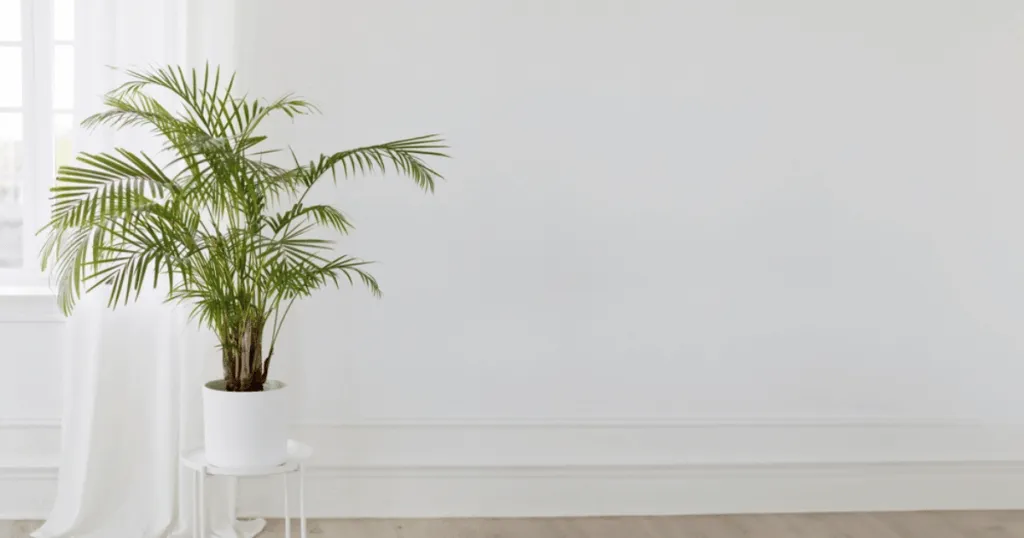
The Kentia Palm (Howea forsteriana) is widely regarded as the most sophisticated choice for corporate environments. Unlike faster-growing palms that quickly outgrow their assigned footprint, this species maintains a steady, deliberate pace of development. It features slender, dark green fronds that arch gracefully from a single or multi-stemmed base, creating a soft, feathery texture that contrasts beautifully with the rigid, linear architecture of modern office furniture and glass partitions.
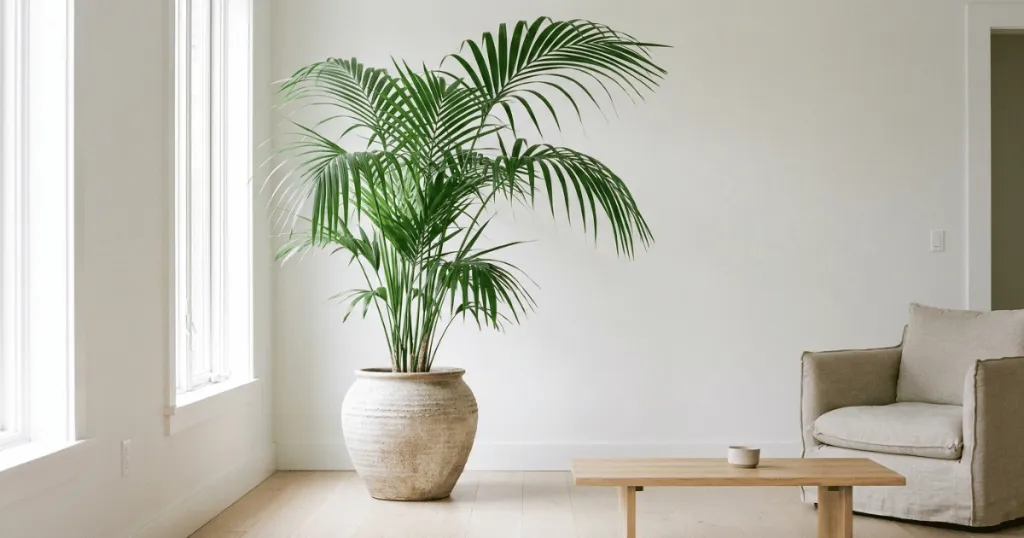
In a professional setting, the Kentia Palm typically reaches heights of six to ten feet, though it rarely exceeds this in containers. Its growth habit is distinctly upright, meaning it occupies vertical space without spreading aggressively into walkways or desk areas. This makes it an ideal candidate for tight corners, reception desk flanks, or as a focal point in open-plan offices where you need to define zones without creating visual clutter. Because it is a slow grower, you will not need to worry about frequent repotting or the plant becoming unmanageable within a single fiscal year.
The structural integrity of the Kentia Palm is one of its most valuable traits for office managers. While other species may lean or become leggy when searching for light, the Kentia maintains a rigid, architectural form. This consistency is vital for maintaining a clean, professional aesthetic in client-facing areas. The fronds are sturdy and resistant to the minor physical stresses common in busy workspaces, such as accidental bumps from passing carts or the occasional draft from a doorway.
Care Needs at a Glance
Managing indoor plants in an office often involves navigating suboptimal lighting and fluctuating temperatures. The Kentia Palm is uniquely suited to these challenges. While it performs best in bright, indirect light, it is remarkably resilient in the lower light levels common in interior offices or spaces away from window lines. If your office relies primarily on fluorescent or LED overhead lighting, the Kentia is one of the few palm species that will not immediately decline.
Watering is the most critical aspect of its maintenance. The goal is to keep the soil consistently moist but never waterlogged. A practical rule of thumb is to allow the top inch of soil to dry out completely before adding more water. In an office, where humidity is often kept low by HVAC systems, the Kentia Palm remains surprisingly stable. You do not need to invest in specialized misting equipment or humidifiers, as it adapts well to the average ambient humidity of a standard office environment. If you notice the leaf tips browning, it is often a sign of inconsistent watering or high salt buildup from tap water, rather than a lack of atmospheric moisture.
When managing plant maintenance, it is essential to consider the drainage of your containers. Because the Kentia Palm is sensitive to root rot, ensure that your decorative planters have a nursery liner or a drainage hole. If you are using a closed-bottom decorative pot, consider using a layer of expanded clay pebbles at the base to create a reservoir for excess water, preventing the roots from sitting in a stagnant pool. This simple modification can significantly extend the lifespan of your office greenery.
Office Suitability and Placement Guidance
When selecting plants for a shared workspace, the Kentia Palm offers a high return on investment regarding aesthetics and durability. Its ability to thrive in stable, climate-controlled environments makes it a reliable “set and forget” element for reception areas and conference rooms. Unlike more temperamental tropicals, it does not drop leaves at the first sign of a temperature shift, provided it is kept away from direct blasts of air from heating or cooling vents.
For placement, consider the scale of the room. Because of its elegant, narrow profile, a large specimen works exceptionally well in a lobby to provide a welcoming, high-end feel. In smaller meeting rooms, a single, smaller-potted Kentia can soften the room’s acoustics and visual harshness without obstructing the view of participants. Avoid placing the plant in high-traffic corridors where the fronds might be brushed against repeatedly, as the tips can be delicate and prone to fraying if handled roughly by staff or visitors passing by.
Strategic placement also involves understanding the light quality in your office. While the Kentia is tolerant of low light, it will grow significantly slower in darker corners. If you notice the plant is leaning heavily toward a light source, rotate the pot 90 degrees every two weeks to encourage even growth. This simple habit prevents the plant from developing a lopsided silhouette, which is particularly important for plants meant to serve as focal points in executive offices or boardrooms.
Safety and Environmental Limitations
For office managers concerned with workplace safety and wellness, the Kentia Palm is a safe, non-toxic choice. According to ASPCA guidance on toxic and non-toxic plants, this species is considered safe for both cats and dogs. This is a significant advantage if your office has a pet-friendly policy or if you are placing the plant in a high-traffic area where employees might have concerns about chemical sensitivities or pet safety.
However, the Kentia Palm is not invincible. Its primary limitation is its intolerance for soggy soil; if the pot lacks proper drainage, the roots will succumb to rot quickly. Additionally, while it is a slow grower, it does require a degree of patience. If you are looking for an instant, massive jungle effect, this plant may feel too subtle. It is a plant of refinement, not rapid transformation. If you notice yellowing fronds, assess your watering frequency first, as overwatering is the most common cause of decline in office-kept Kentia Palms.
Another environmental factor to monitor is dust accumulation. In many offices, dust can settle on the broad fronds of the Kentia, which can inhibit photosynthesis over time. A monthly wipe-down of the leaves with a damp cloth not only keeps the plant looking pristine but also ensures that the stomata remain clear, allowing the plant to breathe and thrive in the filtered air of your office. This is a simple, low-cost maintenance task that can be easily integrated into a standard cleaning schedule.
Care and Troubleshooting Handoff
While the Kentia Palm is relatively low-maintenance, keeping it in top condition requires an understanding of its specific needs regarding soil drainage and light exposure. If you notice persistent issues such as spotting on the leaves or stunted growth, it is often a matter of adjusting your existing maintenance schedule rather than a sign that the plant is failing. We recommend establishing a consistent monitoring routine where one designated person checks the soil moisture levels once a week, rather than relying on an ad-hoc watering schedule.
For deeper dives into specific issues like nutrient management, repotting cycles, or identifying common indoor pests like spider mites, please refer to our dedicated care and troubleshooting guides. These resources provide step-by-step protocols for maintaining the health of your Kentia Palm throughout the changing seasons, ensuring your office greenery remains a vibrant, professional asset for years to come. Remember that patience is key; the Kentia is a long-term investment in your office environment, and its slow, steady growth is part of its enduring appeal.
Related Kentia Palm Guides
- how to care for a Kentia Palm
- Kentia Palm symptoms and fixes
FAQ
How often should I water my Kentia Palm in an office environment?
Water only when the top inch of soil feels dry to the touch. In most offices, this translates to roughly once every 7 to 10 days, but always check the soil manually rather than following a strict calendar, as humidity and temperature fluctuations can change the rate of evaporation.
Can the Kentia Palm survive in a windowless office?
While it is more shade-tolerant than many other palms, it still requires some light to photosynthesize. If your office has zero natural light, the plant will eventually decline. It is best placed near an interior glass partition or under consistent, high-quality LED grow lights if no windows are available.
Why are the tips of my Kentia Palm fronds turning brown?
Brown tips are typically caused by inconsistent watering or high salt concentrations in the soil. Ensure you are allowing the soil to dry slightly between waterings and consider using filtered water if your tap water is heavily treated with chlorine or fluoride, which can accumulate in the soil over time.