Fernwood snake plant propagation is straightforward in an office if you start with a healthy plant and avoid the one mistake that causes most failures: keeping fresh divisions too wet. This narrow, upright snake plant is forgiving of dry air, weekends without care, and moderate office light. Propagation is slow, though. Divide pups for the most reliable result, then give them a small draining pot and time to root.
Your biggest care priority is simple: use a pot with drainage and let the mix dry fully before watering. A Fernwood snake plant can tolerate being overlooked for a holiday closure far better than it can tolerate a colleague adding water every Friday.
Quick Facts
- Tolerates low light but grows best in indirect light.
- Let soil dry completely before watering.
- Handles dry HVAC air well.
- Easy plant, but overwatering causes most problems.
- Mildly toxic to cats and dogs if chewed.
Light and Placement for a Fernwood Snake Plant
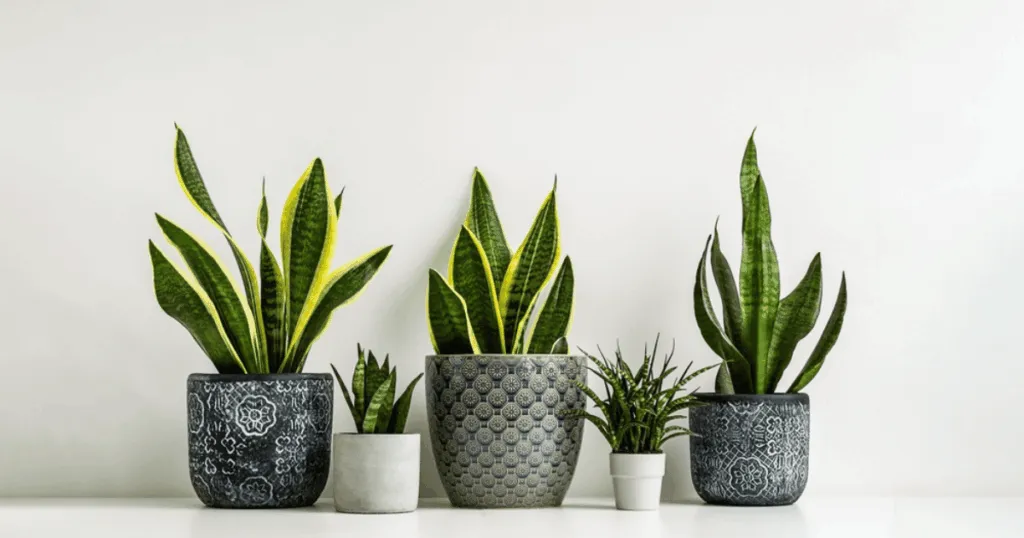
Fernwood snake plant, commonly sold as Sansevieria Fernwood and now often classified within Dracaena trifasciata, tolerates low light but makes its strongest, most compact growth in medium to bright indirect light. Its leaves are slimmer and more upright than those of many broad-leaved snake plants, so weak light can make new growth sparse and slow.
What office light works best
Place it within roughly 3 to 8 feet of a bright window that does not receive harsh, prolonged afternoon sun. Filtered east-facing light, bright north-facing light, or a desk near a window with blinds can work well. A plant beside a sunny south or west window should sit behind a sheer blind or be moved a few feet back. Intense direct sun through glass can bleach or scorch leaves.
Under ceiling LED or fluorescent panels, it can survive several feet from a window, especially if lights run through the workday. Do not expect fast growth there. A cubicle deep in an office with lights off nights and weekends is a low-light site, not a no-light site. Keep the plant there only if it receives consistent overhead light on workdays and accept that propagation pups will develop slowly.
If your desk has no daylight and the plant must grow rather than simply hold steady, a dedicated grow light is more useful than moving it from desk to desk. Keep the light above the plant on a timer for about 10 to 12 hours on workdays. Do not leave a grow light running continuously.
Placement details that matter
Keep foliage at least a few feet from a cold AC discharge or hot radiator. Constant moving air can dehydrate leaf tips and create temperature swings. Avoid wedging the pot directly behind a monitor or printer, where heat and accidental bumps are common. The upright form fits a crowded desk well, but use a stable, heavy outer container so it is not easily knocked over.
If leaves bend markedly toward the window or new leaves become unusually thin and floppy, move the plant closer to brighter indirect light. For broader help with office placement and expectations, see our low-maintenance office snake plant overview.
Watering and Soil Rules That Prevent Root Rot
The Fernwood snake plant stores water in its thick roots and succulent-like leaves. That reserve is why it handles a normal weekend, a long weekend, and often a short office closure without trouble. Water only after the potting mix has dried all the way through. The real risk is not underwatering. It is roots sitting in damp mix without enough air.
Use a check, not a calendar
In a warm, bright office, check the soil every 2 to 3 weeks and water only when it is dry from the surface to the bottom of the pot. In lower light, cool offices, or winter conditions, a plant may need water only every 4 to 6 weeks, sometimes longer. These are starting ranges, not a schedule to follow blindly.
Push a wooden chopstick or moisture probe deep into the soil near the pot edge, then pull it out. If it comes out dark, cool, or carrying moist particles, wait. If it is dry and the pot feels notably light, water. For a small desk pot, you can also gently lift the inner pot to compare its weight with the day after watering.
When it is time, take the pot to a sink if practical. Pour room-temperature water slowly over the soil until some runs from the drainage hole. Let excess water drain for several minutes, then return the plant to its saucer or decorative cachepot. Empty pooled water from the outer pot. In an office without a convenient sink, use a measured watering can and apply water slowly, stopping before water accumulates in the cover pot.
Choose a fast-draining mix and a draining pot
Use a cactus and succulent potting mix, or amend a standard indoor potting mix with perlite or pumice to make it drain more freely. The mix should wet evenly but should not stay dense and soggy for weeks. A terracotta pot helps mix dry more quickly. A plastic nursery pot is also fine if it has drainage holes and sits inside a cover pot.
Do not plant directly into a container without drainage. A layer of stones at the bottom does not create drainage. It reduces the depth of usable soil and can leave roots in a saturated zone. Self-watering pots are usually a poor match because this plant needs a dry interval between drinks.
Act early on watering symptoms
Soft, yellowing leaves, a mushy base, sour-smelling mix, or leaves that collapse at soil level point to overwatering or root rot. Stop watering, remove the plant from its pot, and inspect the roots. Healthy roots are firm and pale to orange-brown. Cut away black, soft roots with clean scissors, discard wet soil, and repot into dry, fresh mix. For more symptom-by-symptom help, use our snake plant watering problem checklist.
Humidity, Temperature, Feeding, and Pet Placement
Fernwood snake plants tolerate dry office air well. Typical HVAC humidity is not a reason to mist them, and misting does little to solve dry air while leaving water on leaf bases. Keep leaves clean instead. Wipe dust away with a soft, barely damp cloth every month or two so overhead light can reach the leaf surface.
Stable temperatures beat special humidity treatments
A comfortable office range of about 65 to 80°F [18 to 27°C] suits this plant. It can tolerate brief variation, but avoid prolonged temperatures below 55°F [13°C]. Chilled roots combined with wet soil are particularly risky. Do not leave a plant next to a glass door that gets cold overnight, beneath an AC vent, or beside a heater that runs all winter.
If a facilities team controls the thermostat, put the plant where temperature changes are less extreme rather than trying to compensate with extra water. A plant on an interior shelf with indirect light is often safer than one on a windowsill above a radiator.
Fertilize lightly, only during active growth
In spring and summer, fertilize about every 6 to 8 weeks if the plant is receiving medium or bright indirect light and producing new leaves. Use a balanced liquid houseplant fertilizer diluted to half the label strength. Apply it to already moist soil, not to a bone-dry root ball.
Skip fertilizer in fall and winter, and skip it entirely for a stressed, recently repotted, or low-light plant. Fertilizer cannot make up for inadequate light. It can leave salts in the soil, especially where office tap water is mineral-heavy. If you see a white crust on the soil or pot rim, flush the pot thoroughly at the next watering and let it drain.
Saponins matter in pet-friendly offices
ASPCA guidance on toxic and non-toxic plants lists snake plants as toxic to cats and dogs. Their saponins can cause gastrointestinal upset if leaves are chewed or swallowed. Veterinary poison-control resources also advise contacting a veterinary professional promptly if a pet has eaten a potentially toxic plant. Keep Fernwood snake plants off floor level in pet-friendly offices, and do not use them in children’s waiting areas where leaves may be handled or chewed. This is not the best shared-space choice where access cannot be controlled.
Fernwood Snake Plant Propagation by Division
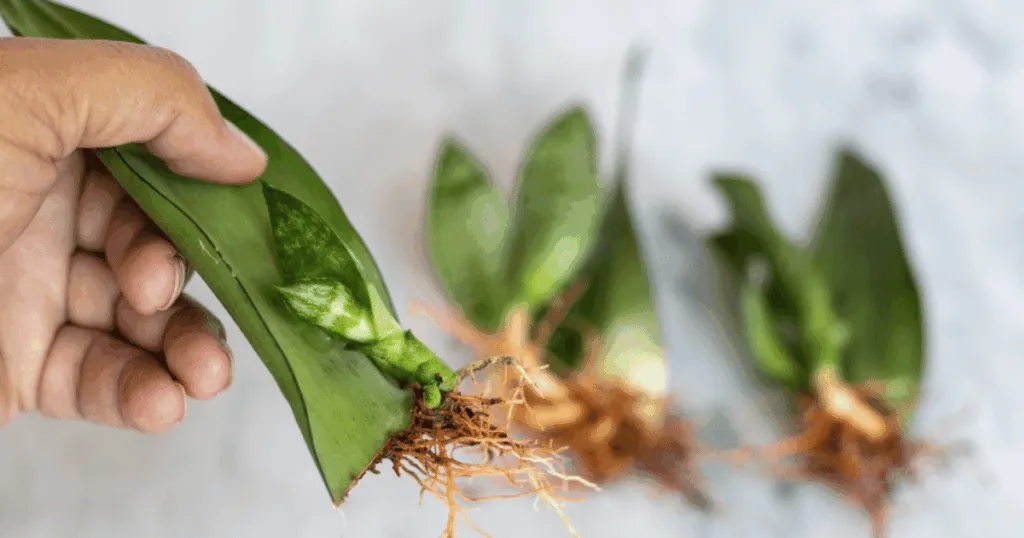
Division is the best method for preserving the growth habit of a Fernwood snake plant. It produces a new plant from a rooted pup, also called an offset, connected to the parent by an underground rhizome. Leaf cuttings can root, but they are slower and may not reliably reproduce the exact traits of named or variegated snake plant cultivars.
Before you divide a plant
Wait until you can see at least one healthy pup with its own leaves and roots, ideally during spring or early summer. A crowded pot is not automatically a problem. Divide only if you want additional plants, the pot is bulging, or roots have filled it so densely that watering becomes difficult.
Water the parent 5 to 7 days before the job, then let it dry slightly. This reduces brittle, dust-dry roots but avoids working in soggy soil. Gather a clean pot with drainage, fresh succulent mix, a clean knife or pruners, and a wipeable work surface. In offices with no outdoor space, use a tray or cardboard box to catch spilled soil.
How to divide Fernwood snake plant pups
- Slide the root ball from its pot and gently shake away loose soil.
- Find the rhizome joining the pup to the parent plant.
- Separate it by hand if it pulls apart cleanly. Otherwise, cut the rhizome with a clean knife.
- Keep as many roots as possible with each division.
- Let any fresh cut surfaces dry in a shaded, airy spot for several hours.
- Pot each division at the same depth it grew before, using dry or barely moist mix.
- Wait about 5 to 7 days before the first light watering.
Use a pot only 1 to 2 inches wider than the new root mass. An oversized pot stays wet too long and is a common cause of a failed division. Put the new plant in medium indirect light, away from direct sun, for the first few weeks. It may pause before producing new growth. That is normal while roots settle.
Leaf cuttings are possible but slower
To try leaf propagation, cut a healthy mature leaf into 3 to 4 inch sections and mark which end was closest to the roots. Let cut pieces callus for 1 to 2 days, then insert the original bottom end about 1 inch into lightly damp succulent mix. Keep the mix mostly dry and provide medium indirect light. Rooting and pup production can take months. For a workplace plant program, division is more predictable and creates less follow-up care.
After propagation, label each new pot with the date and a simple watering instruction. Our snake plant watering routine can help a shared team avoid treating new divisions like thirsty foliage plants.
Seasonal Office Adjustments and Mistakes to Avoid
Growth usually speeds up in spring and summer when daylight is longer and indoor temperatures are steadier. Check pots more often, but do not assume every plant needs frequent water. A Fernwood snake plant in a bright window may dry much sooner than one ten feet away under LEDs.
Winter and holiday closure routine
In fall and winter, lower light and cooler temperatures slow water use. Extend the time between checks, often to every 4 to 6 weeks or longer. Before a two-week holiday closure, do not water automatically. Check the soil. If it is still even slightly damp below the surface, leave it alone. A fully dry plant can usually wait until staff return unless it is in unusually warm, bright conditions.
Move plants away from cold glass and heater blasts before seasonal HVAC changes. If office lighting is reduced during a shutdown, do not fertilize and do not place the plant in a dark storage room. It needs light, even when it needs very little water.
Common mistakes in shared offices
- Multiple people watering: Assign one owner, or place a dated tag in the pot after each watering.
- Watering on a fixed Friday schedule: Check full soil dryness first. Routine watering causes more harm than a missed turn.
- Using a pot with no drain hole: Keep the nursery pot inside the decorative container instead.
- Putting it in a dark corner permanently: It may survive, but it will not thrive or produce pups readily.
- Dividing tiny pups: Wait until each offset has its own roots and several leaves.
- Cutting green leaves for appearance: Remove only damaged, yellow, or soft leaves at the base with clean shears.
Healthy Fernwood growth is upright, firm, and patterned in gray-green bands. New leaves emerge from the base as narrow spears and gradually harden. Slow growth is normal, especially in low light. Soft tissue, a wrinkled base, widespread yellowing, or a sudden lean are not normal and should prompt a check of roots, drainage, and light.
What to Do Next With Fernwood Snake Plant Propagation
For fernwood snake plant propagation, start by inspecting the parent plant rather than cutting leaves right away. If it has a rooted pup, divide it during active growth and pot it in a small container with drainage. If there are no pups, keep the parent in medium indirect light, water only after full dryness, and wait. A healthy, stable plant is far more likely to make propagation worthwhile than one pushed with frequent water or fertilizer.
FAQ
Can I propagate a Fernwood snake plant in water?
You can root leaf sections in water, but it is usually less practical for an office. Water-rooted cuttings need regular water changes and can rot if forgotten. Once roots form, they also must adapt to soil. Dividing a rooted pup directly into fast-draining mix is more reliable and needs less ongoing attention.
How long does fernwood snake plant propagation take?
A divided pup may take several weeks to settle and several months to show obvious new growth. Leaf cuttings often take months to root and may take much longer to produce pups. Light level, warmth, and the health of the original cutting affect the timeline. Do not keep the soil wet to speed the process.
Why did my divided snake plant become wrinkled?
Mild wrinkling shortly after division can happen while damaged roots recover. Keep the plant in medium indirect light and wait until the potting mix is dry before watering lightly. If wrinkling worsens while soil remains wet, inspect for root rot. If the mix is completely dry for weeks and leaves are firm but puckered, water thoroughly and drain.
Will leaf cuttings keep the Fernwood snake plant’s narrow shape?
Leaf cuttings can make new snake plant pups, but the outcome is less predictable than division for named cultivars. A pup produced from a rooted division already has the parent plant’s established growth form. If you want new plants that closely match the original Fernwood plant, divide rooted offsets rather than relying on leaf cuttings.
Can I propagate a snake plant during winter?
You can divide a healthy plant in winter if necessary, such as when a pot has cracked or roots are rotting. Expect slower recovery because light is lower and soil dries more slowly. For elective fernwood snake plant propagation, spring or early summer is usually easier because the plant is more likely to be actively growing.