A snake flower plant usually means a snake plant that has produced a flower stalk. The plant is most often Dracaena trifasciata, still widely sold under its former name, Sansevieria trifasciata. Its flowers are real, but they are not the main reason to choose it for an office. Snake plants are valued because their upright leaves tolerate missed watering, modest light, and long weekends better than many common houseplants.
If your office snake plant is flowering, it is usually not a problem and does not mean the plant is dying. Keep its care steady, avoid repotting or heavy feeding while it blooms, and cut the spent stalk at the base when it turns brown. The more useful question for a workplace is whether its light, pot, location, and watering routine will keep the leaves healthy after the flowers fade.
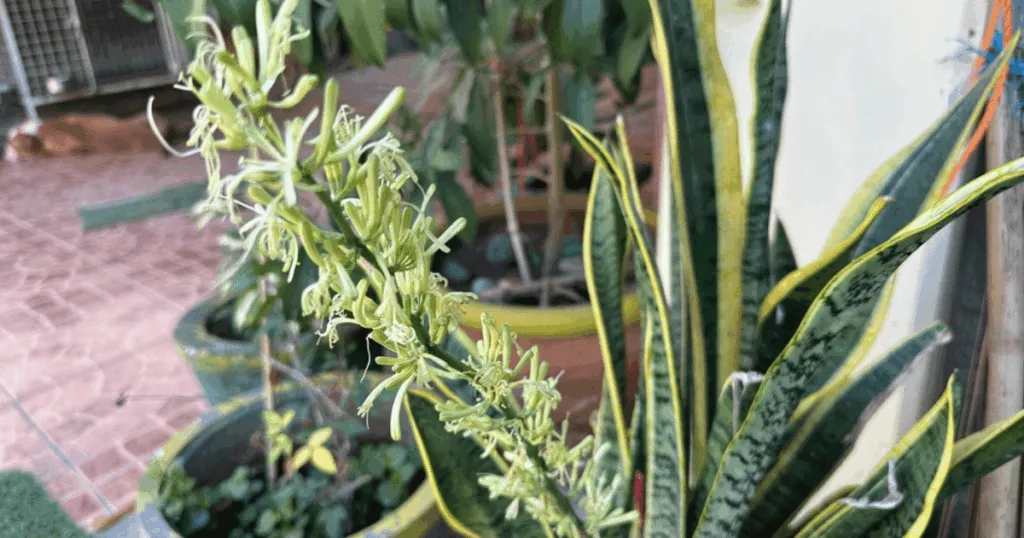
What Is a snake flower plant, Exactly?
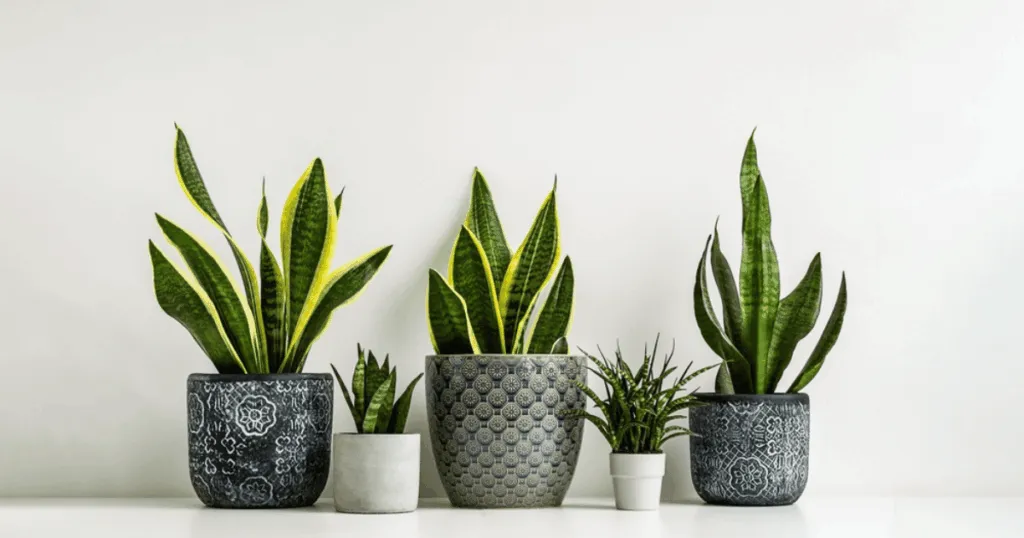
The name is informal and can cause confusion. It usually refers to a snake plant, also called mother-in-law’s tongue, that is flowering. The species now commonly listed as Dracaena trifasciata was previously classified as Sansevieria, so either botanical name may appear on plant labels. Popular office forms include ‘Laurentii’, with yellow leaf edges, and compact bird’s nest snake plants.
Snake plants produce a tall, narrow flower stalk from the base of the plant. Small white, cream, or pale green flowers open along it, often in the evening. Depending on the variety, the flowers may have a sweet fragrance. That scent can be pleasant in a lobby but distracting in a small meeting room, especially for people sensitive to fragrance.
Why a snake plant flowers indoors
A mature, established plant may flower when its conditions are reasonably stable. Brighter indirect light often helps, although flowering is not guaranteed. A plant that is somewhat root-bound may also bloom. This has led to the misleading idea that stress is required for flowers.
Do not intentionally deprive a snake plant of water or crowd its roots in an effort to make it bloom. Prolonged drought weakens roots, and a severely cramped pot makes watering uneven. In an office, dependable leaf health is a better goal than chasing a short flowering event.
Flowering is not usually a sign that a snake plant is at the end of its life. Unlike some plants that flower once and die, a healthy snake plant can continue growing from its underground rhizomes after blooming. A flower stalk itself does not turn into a new leaf. Once the flowers finish, the stalk will gradually dry out.
What the flowers tell you, and what they do not
Flowers suggest the plant has reached maturity and has not been under severe stress recently. They do not prove that the plant has perfect conditions. A snake plant can flower in a pot that is too small, in light that is only adequate, or after a change in routine. Treat the bloom as a normal event, then assess the leaves and roots before changing care.
Firm, upright leaves with even color are more useful signs of health. Soft leaves, wrinkling, blackened bases, or a sour smell from the pot point to a care problem, regardless of whether the plant has flowers. In offices, overwatering is much more likely to cause failure than insufficient watering.
Office Care for a snake flower plant
Snake plants handle lower light than many foliage plants, but low light is not the same as no light. They will survive in a cubicle with overhead LED panels, yet growth will be slow and flowering is unlikely. For reliable growth, place the pot where it receives bright indirect light from a window or several hours of strong indoor light. Keep it out of hot direct afternoon sun against glass, which can scorch leaves.
| Office condition | What it means for the plant | What to do |
|---|---|---|
| Desk far from a window | Low light, slow growth | Use a compact plant and rotate it closer to a window periodically, or add a suitable grow light. |
| Reception near bright tinted glass | Medium to bright indirect light | A good location. Set the pot 2 to 6 feet from the glass if direct sun is strong. |
| Cold AC vent overhead | Cold drafts and rapid drying | Move the plant out of the airflow, ideally several feet away. |
| Radiator or equipment cabinet | Hot, dry bursts of air | Keep the pot away from the heat source and check soil more often. |
Watering around weekends and office closures
Let the potting mix dry substantially before watering. In a typical office, check every 2 to 3 weeks. Watering may be needed every 2 to 4 weeks in spring and summer, and every 4 to 6 weeks in winter or in a dim office. These are starting ranges, not a calendar rule.
Before watering, push a finger or a wooden chopstick 2 to 3 inches into the mix. If it feels dry and the pot is noticeably lighter, water slowly until a little runs out of the drainage hole. Empty the saucer or cachepot after about 10 minutes. If the mix is still cool or damp, leave it alone and check again in a week.
A three-day weekend will not harm a healthy snake plant. Before a holiday closure of one or two weeks, do not give it extra water “just in case.” Water only if the soil passes the dryness check. A plant sitting in wet soil during an empty office is at greater risk than one kept slightly dry.
Pot, soil, and feeding choices for shared spaces
Use a pot with a drainage hole. This is essential, particularly where several people may water the same plant. A decorative outer pot is fine, but it must not hold standing water. Choose a fast-draining houseplant or cactus-style potting mix. Dense, water-retentive soil stays wet too long under office lighting.
Repot only when roots fill the pot, push the plant upward, or crack a container. Move up just 1 to 2 inches in pot diameter. A much larger pot holds excess wet soil around a small root system. If you have no outdoor area for repotting, put down paper or a reusable mat indoors and have a small trash bag ready for old soil.
Fertilizer is optional. If the plant receives medium or bright indirect light and is actively growing, a diluted balanced houseplant fertilizer once in spring and once in summer is plenty. Skip fertilizer in low light, during winter, or when the plant is struggling. Fertilizer will not correct poor light or soggy soil.
Handling Flowers, Fragrance, and Leaf Problems at Work
Leave a healthy flower stalk in place while it blooms. Do not tie it to a leaf or force it upright unless it is likely to interfere with a walkway. If the fragrance bothers coworkers, move the pot temporarily to a brighter, less occupied area rather than spraying it with fragrance products.
When the flowers fade and the stalk becomes yellow or brown, cut it close to the soil with clean scissors or pruners. Remove dropped flower parts from desks and reception counters to keep the area tidy. The stalk will not bloom again, and removing it does not hurt the plant.
Quick diagnosis for common office symptoms
- Soft, collapsing leaves: Usually excess moisture or root rot. Stop watering, inspect for wet soil and damaged roots, and repot into dry, fast-draining mix if needed.
- Wrinkled or curling leaves: Often prolonged dryness or damaged roots. Check whether the mix is bone dry throughout. Water thoroughly if roots and leaves are otherwise firm.
- Brown leaf tips: Can follow inconsistent watering, accumulated minerals, or hot and cold airflow. Trim only the brown portion with clean scissors and correct the placement issue.
- Pale, stretched growth: The plant needs more light. Move it closer to a window with filtered light or use a grow light.
- Yellowing at the base: Treat this as a watering warning first. Check drainage and do not water again until the mix dries substantially.
Saponins Make Snake Plants a Poor Choice for Pet-Friendly Offices
Snake plants contain saponins. The ASPCA lists snake plant as toxic to dogs and cats. Chewing or swallowing plant material may cause drooling, nausea, vomiting, or diarrhea. A flowering stalk is not a pet-safe exception.
For a pet-friendly office, a floor pot does not make this plant safe. Cats can reach tall leaves and may be drawn to moving flower stalks. Place it in a reliably inaccessible room only if access is truly controlled. Otherwise, choose a plant confirmed as non-toxic by the ASPCA for shared pet areas. The same caution is sensible in reception spaces used by visiting children.
Snake plant foliage is not a major airborne allergy source, but fragrant flowers can be an issue for someone with scent sensitivity. Remove a blooming plant from a small enclosed workspace if its fragrance is causing discomfort.
Where a Snake Plant Works Best in an Office
A compact bird’s nest variety works well on a desk that gets indirect window light or strong overhead lighting. Keep it off a crowded desk edge, where it can be bumped and where drainage water could reach electronics. A saucer inside a stable tray helps contain drips.
Standard upright varieties suit a reception desk, a meeting room credenza, or a bright corner near a window. They make a clean vertical accent without taking much floor area. Large specimens can work by a lobby wall, but do not place them directly below an air vent or beside an exterior door that opens to winter cold.
For teams, label the pot with the last watering date and the instruction: “Water only when dry 2 to 3 inches down.” One assigned plant owner is better than a group chat where everyone assumes someone else checked. This simple system prevents the most common shared-office mistake, repeated small waterings from multiple people.
What to Do With Your snake flower plant Next
First, check where it sits. If it is several feet from a window under lights that switch off every night and weekend, treat it as a low-light plant and water less often. If it is flowering, enjoy the bloom, then remove the dried stalk with clean scissors.
Next, confirm that the pot drains and that one person owns the watering decision. A snake flower plant can be an excellent low-maintenance office plant, but only when it stays out of standing water, cold AC drafts, and reach of office pets.
FAQ
How long do snake plant flowers last?
Individual snake plant flowers often last a short time, while the full display on a stalk can last several weeks as buds open in sequence. Conditions affect the timing. Keep the plant in its usual location while it blooms, and avoid overwatering in an attempt to extend the flowers.
Can I propagate a snake plant from its flower stalk?
No. A flower stalk is not useful for propagation and should be removed after it dries. Propagate snake plants from leaf cuttings or, more reliably, by dividing rooted rhizomes during repotting. Division also preserves the leaf pattern of variegated types such as ‘Laurentii’.
Why does my snake plant have flowers but no new leaves?
Flowering can use some of the plant’s available energy, but lack of new leaves usually points to low light, cool temperatures, or a root-bound plant rather than the bloom itself. Give it brighter indirect light and check roots at the next appropriate repotting time.
Is the fragrance from a snake flower plant safe in an office?
The fragrance is not generally considered a toxicity concern from normal indoor exposure, but scent sensitivity varies. Because the flowers can smell stronger in the evening, move a blooming plant out of a small meeting room or personal workstation if coworkers find the scent unpleasant or irritating.