Healthy snake plant roots are usually firm, pale cream to orange, and attached to thick underground stems called rhizomes. They are naturally shallow and compact, so a plant can look crowded in its pot without being in trouble. The urgent signs are different: black or mushy roots, a sour smell, wet soil that stays wet, and yellow or soft leaves at the base usually point to root rot.
In an office, roots fail most often because a low-light plant is watered on a home-plant schedule. Snake plants use very little water under ceiling lights, especially when lights are off at night and on weekends. Check the root zone before changing pots or adding water. That simple step prevents most avoidable damage.
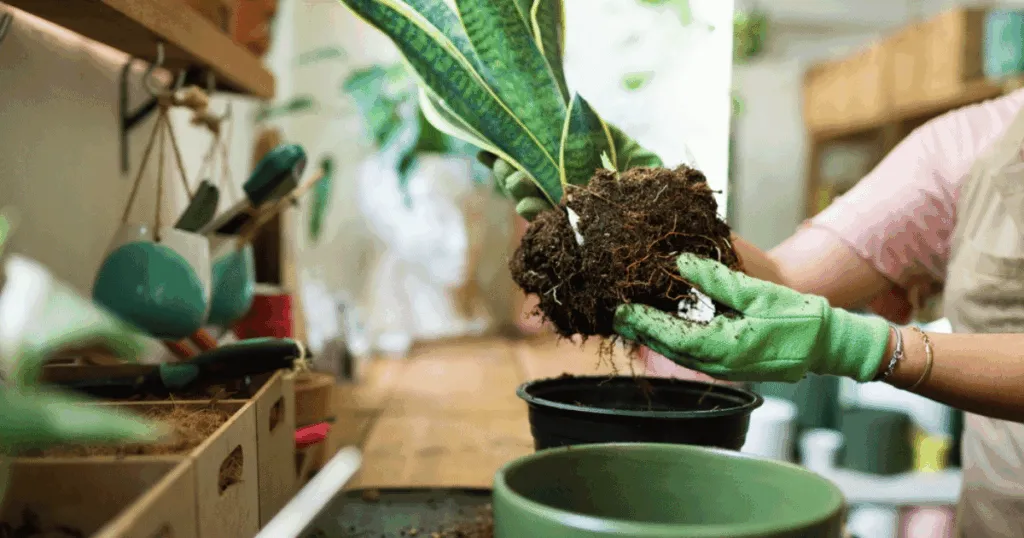
What Snake Plant Roots Should Look and Feel Like
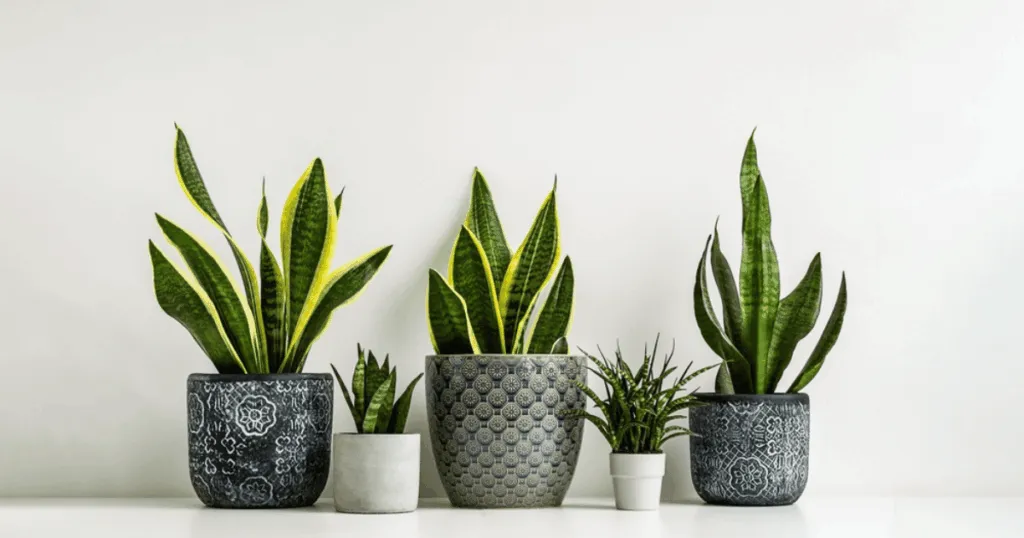
Snake plant, now commonly classified as Dracaena trifasciata and still widely sold as Sansevieria trifasciata, grows a network of fine roots from thick, horizontal rhizomes. Rhizomes store water and nutrients and send up new leaf clusters, often called pups. They can be pale, whitish, tan, or orange. Color alone is not a reliable diagnosis.
Healthy roots feel firm or slightly springy. A healthy rhizome is solid when gently pressed. It may be pale green, cream, or orange-brown, depending on age and exposure to potting mix. Roots can circle the pot or emerge at drainage holes when the plant is root bound. That is a sign to assess the pot, not an emergency.
| What you see | What it usually means | What to do in an office |
|---|---|---|
| Firm cream, tan, or orange roots | Normal, healthy root growth | Leave the plant alone unless it is severely crowded. |
| Firm roots circling inside the pot | Root bound but not necessarily unhealthy | Repot in spring or early summer if watering has become difficult. |
| Roots at drainage holes, pot bulging, or cracked | Rhizomes need more room | Move up one pot size and use a pot with drainage. |
| Dark, slimy, hollow, or foul-smelling roots | Root rot from prolonged wetness | Remove rot, replace wet mix, and correct the watering routine. |
| Dry, shriveled roots with dusty mix | Extended drought, often combined with heat | Water thoroughly once, then resume soil checks. |
Why shallow roots matter at work
These plants do not need a deep pot. A tall, oversized planter holds a large volume of mix below the roots, where moisture can remain for weeks. That is risky in a desk area several feet from a window or a reception lobby with only ambient light.
A pot that is slightly wider than the root mass works better. Choose one with at least one drainage hole and a saucer that is emptied after watering. Decorative cachepots are fine, but never let the nursery pot stand in pooled water inside one. For more routine advice, see our snake plant watering routine.
Root bound versus root rot
A root-bound snake plant often dries faster than usual, leans out of the pot, or produces pups at the rim. Its leaves may still look upright and firm. Root rot produces the opposite pattern: mix that stays wet, a soft base, leaves that yellow or collapse, and roots that lose their firm texture.
The real issue is not whether roots fill the pot. It is whether roots have access to air between waterings. Dense, soggy mix cuts off that air and allows decay organisms to damage roots. Repotting a merely crowded but healthy plant into a much larger pot can create the same wet conditions that cause rot.
How to Check Snake Plant Roots Without Making a Mess
You do not need to unpot a snake plant every time someone worries about it. Start with checks that work at a desk or on a tiled break-room floor. If you need to inspect the roots, put down a cardboard box or trash bag and schedule it when the soil is dry enough to release cleanly.
Start with the leaf base and soil
Press a finger about 2 inches into the mix, or use a wooden chopstick. If it comes out cool, damp, and coated in soil, wait. In a 6-inch pot under medium indirect light, this may mean waiting another 1 to 2 weeks. In low office light, watering every 3 to 5 weeks is common, and winter or low-light intervals can be longer.
Next, gently press near the leaf bases. Firm bases support the idea that the roots are functioning. Soft, translucent, or yellowing bases deserve a closer inspection. Do not water a drooping snake plant automatically. Both root rot and severe dryness can lead to poor posture, but their potting mix feels very different.
Inspect the root ball only when there is a reason
- Wait until the potting mix is mostly dry. Move the plant away from shared papers and electronics.
- Support the leaves with one hand, turn the pot on its side, and slide the root ball out. If it resists, tap the pot edge. Do not pull the leaves.
- Look for firm roots and solid rhizomes. Brush off only loose mix. You do not need to bare-root a healthy plant.
- If you find black, mushy roots or a rotten smell, cut damaged material away with cleaned, sharp scissors. Keep every firm root and solid rhizome you can.
- Repot into fresh, fast-draining cactus or succulent mix in a clean pot with drainage. Use a pot only 1 to 2 inches wider than the old one.
- After removing rot, wait several days before watering so cut surfaces can dry. Then water lightly and do not water again until the mix dries well down the pot.
Do not try to rescue rot by adding fertilizer. Fertilizer does not repair damaged roots and can stress a plant that is already unable to take up water. If persistent watering mistakes have caused leaf problems, our overview of office snake plant problems can help you sort symptoms before making another change.
Office Situations That Affect Root Health
A desk far from a window
Snake plants tolerate low light, but tolerance does not mean active growth. A plant 10 feet from a north-facing or tinted window, relying mostly on overhead LEDs, may use water slowly. Keep it in a small pot and water only after the mix is dry well below the surface. A larger planter does not make a low-light plant easier to maintain. It makes overwatering easier.
If there is no natural light at all, a grow light on a timer is a more dependable solution than moving the plant closer to a brighter fixture. Ceiling lights can support appearance for a while, but they are often weak at leaf level. Our overview of the low-maintenance office snake plant explains realistic placement expectations.
AC vents, radiators, and warm equipment
Cold air from an AC vent can chill the pot and slow drying unevenly. A radiator or a sunny glass wall can dry the top inch while the lower root zone remains wet. Keep the pot out of direct airflow and at least a few feet from intense heat sources when possible. Snake plants are most comfortable around 60 to 85°F [16 to 29°C]. Protect them from temperatures below 50°F [10°C], especially during winter deliveries or near exterior doors.
Long weekends and shared watering duties
A healthy snake plant is well suited to a three-day weekend and usually to a typical office closure. Watering immediately before a holiday is a common mistake. If the mix is dry, water normally. If it is still damp, leave it alone. The plant is safer slightly dry than waterlogged while nobody is there to notice a problem.
For shared care, assign one person or a rotating schedule to check, not automatically water. Place a small note near the pot: “Water only when dry 2 inches down and the pot feels light.” This is clearer than “water weekly,” which is the instruction most likely to harm roots.
Pups, division, and a crowded reception planter
Pups come from rhizomes and are normal growth. Leave them attached if you want a fuller plant. Divide them only when the container is distorted, the plant repeatedly dries too fast, or you need smaller plants for separate spaces. Each divided section needs a firm piece of rhizome and roots to establish well.
For a reception area, use a stable, heavy pot with drainage hidden inside a decorative planter. Snake plants contain saponins and are considered toxic to cats and dogs by the ASPCA if chewed, with gastrointestinal upset possible. They are not a good floor-level choice in a pet-friendly office or a waiting area where children may handle leaves. Put the plant out of reach or use a verified pet-safe alternative instead.
When to Repot, Divide, or Leave the Roots Alone
Most office snake plants do not need annual repotting. Check in spring, or whenever you see a clear change in watering behavior. In slower, low-light growth, a plant may stay comfortably in the same pot for several years. Repot because the root system gives you a reason, not because a calendar says so.
- Leave it alone if the plant is firm, soil dries in a reasonable time, and the pot is intact.
- Repot one size up if rhizomes are pushing hard against the pot, roots fill nearly all available mix, or water runs through immediately because little soil remains.
- Divide only if you want separate plants or the clump is too large for its assigned space. Division creates wounds and slows the plant temporarily.
- Act promptly for rot if leaves soften at the base or the pot smells sour. Remove decayed roots and wet mix rather than waiting for the plant to dry on its own.
A self-watering pot is usually a poor match for this plant in a dim office. A reservoir can keep the lower root zone wet long after the upper mix looks dry. Use a standard draining pot instead. If the team wants a simpler system, a moisture-check routine is safer than a permanently full reservoir.
After repotting, return the plant to bright indirect or medium light if available, away from vents. Do not fertilize for about a month. A little transplant slowdown is normal, but spreading softness is not. If several office plants are yellowing after frequent care visits, the pattern is often excess water, much like the root-related symptoms covered in ZZ plant root rot problems.
What to Do Next With Snake Plant Roots
First, check moisture and the leaf bases. If the mix is dry and the plant is firm, do not disturb the roots. If it is wet for a long time, smells sour, or has soft leaves, inspect the root ball and remove rot before repotting.
For healthy snake plant roots, the best ongoing care is simple: a snug pot with drainage, fast-draining mix, moderate temperatures, and watering only after the root zone dries. Put that routine in writing for coworkers. It protects the plant more effectively than frequent attention.
FAQ
Are orange snake plant roots healthy?
Yes, orange or orange-tan roots can be normal for a snake plant, especially on older roots and rhizomes. Check texture and smell instead of color alone. Healthy snake plant roots are firm and do not smell sour. If orange roots are soft, hollow, or surrounded by soggy soil, inspect for rot.
Can snake plant roots grow through a pot?
They can force their way through drainage holes and may crack thin plastic or ceramic pots when rhizomes expand. This usually means the plant is very root bound, not diseased. Repot into a container 1 to 2 inches wider with drainage. Avoid moving it into a much larger pot, which can hold excess moisture.
Should I cut snake plant roots when repotting?
Do not cut healthy roots just to make the plant fit. Keep firm roots and solid rhizomes intact. Remove only roots that are black, mushy, hollow, or clearly dead, using clean scissors. You can trim a small number of circling roots if necessary, but a one-size-larger pot is usually the less stressful solution.
Why are roots coming out of my snake plant’s drainage hole?
Roots at a drainage hole usually mean the plant has used much of the pot’s available space. If it is still firm and soil dries normally, there is no urgent problem. Repot when roots are densely packed, the pot is bulging, or water rushes through without wetting the remaining mix.