The Croton (Codiaeum variegatum) is arguably one of the most visually striking plants available for professional environments. With its bold, leathery leaves splashed in shades of yellow, orange, red, and deep green, it offers a level of color that few other indoor species can match. However, this aesthetic appeal comes with a significant caveat: the Croton is a demanding, sensitive specimen that requires a stable and highly specific environment to thrive. It is not a “set it and forget it” plant, making it a bold choice for reception areas or executive offices where consistent care can be guaranteed.
Unlike more resilient foliage plants that tolerate the fluctuating conditions of a typical corporate office, the Croton acts as a living barometer for environmental quality. It demands a level of precision in light exposure and hydration that often exceeds the capacity of standard office maintenance schedules. For workplace decision-makers, understanding the Croton is less about learning a simple watering routine and more about evaluating whether your office infrastructure—specifically its natural light access and climate control—can support a plant that is inherently intolerant of typical workplace stressors.
- Requires intense, direct light to maintain leaf variegation.
- Keep soil lightly moist; never allow the root ball to dry out.
- Sensitive to HVAC drafts, temperature fluctuations, and low humidity.
- Contains toxic sap; keep away from office pets or curious visitors.
- High-maintenance; best suited for experienced office plant managers.
In an office setting, the Croton acts as a focal point, but it reacts poorly to the common stressors of a workplace, such as erratic temperature shifts from HVAC vents or long weekends without attention. If you are looking for a low-maintenance greenery solution, this is likely not the plant for your space. If, however, you have a bright, south-facing window and a dedicated maintenance plan, the Croton can provide a vibrant, living piece of art that elevates the professional atmosphere.
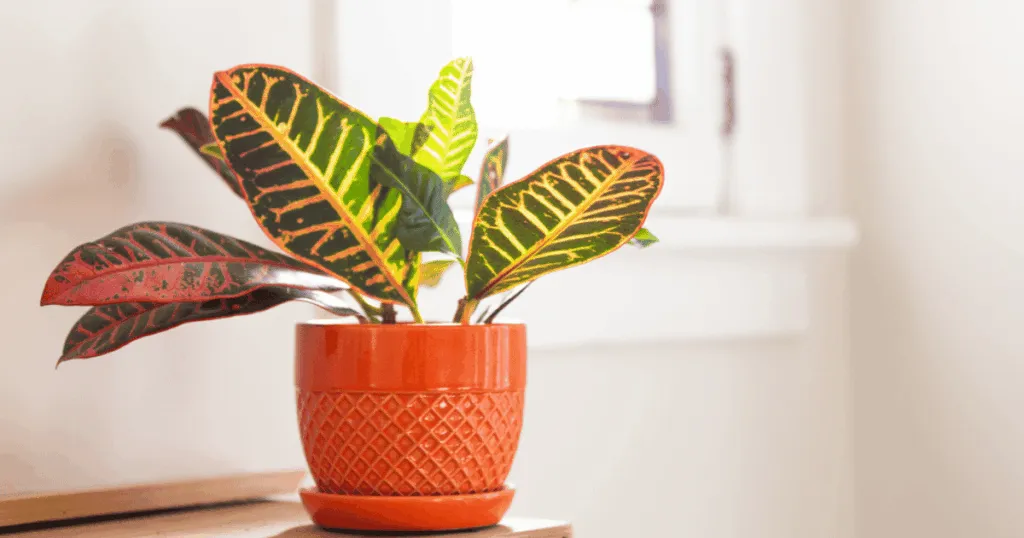
Appearance and Growth Habit
The Croton is defined by its dramatic foliage. Unlike many office plants that rely on shades of green, the Croton produces leaves in a kaleidoscope of warm tones. The shape of these leaves varies significantly between cultivars, ranging from broad, oval shapes to narrow, spiraling, or oak-leaf-like structures. This structural diversity allows the plant to fit into various design aesthetics, from modern minimalist offices to more traditional spaces.
Growth is relatively slow in indoor conditions compared to its natural habitat, but a healthy, mature specimen can reach several feet in height. In an office, it typically maintains a bushy, upright habit. Because it is a woody shrub, it does not trail or vine; it occupies vertical space, making it ideal for floor placement in corners or as a standalone feature on a sturdy pedestal. Its growth is strictly dependent on light intensity. In lower light, the plant will stop producing its signature vibrant colors, and new growth will appear predominantly green, causing the plant to lose the very trait that makes it desirable. This loss of variegation is a common indicator that the plant is struggling to photosynthesize at the rate required to maintain its complex pigment profile.
Care Needs at a Glance
Successfully maintaining a Croton in an office requires a disciplined approach to environmental control. The plant’s primary requirement is light. It needs bright, direct light to maintain its variegation. In many office floor plans, this means placing the plant directly in front of a south or west-facing window. If the plant is moved to a dim corner or a cubicle without a window, it will likely begin to shed leaves rapidly as a stress response.
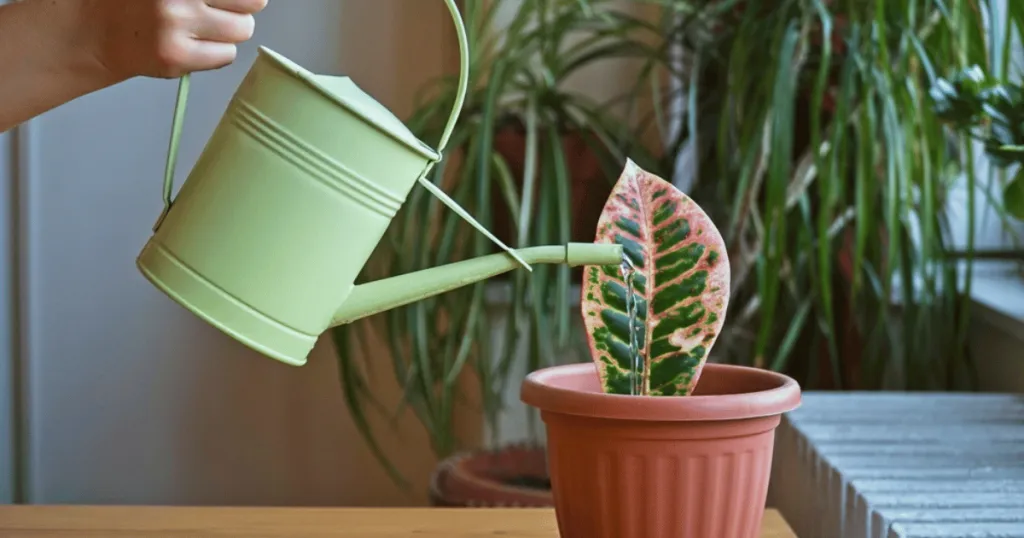
Watering must be consistent. The goal is to keep the soil lightly moist at all times. Allowing the root ball to dry out completely is a common mistake that leads to leaf drop and stunted growth. Conversely, the plant should not sit in standing water, as this invites root rot. In an office, this requires checking the soil moisture levels at least twice a week. Humidity is another critical factor. Most office buildings are climate-controlled with low relative humidity, which can desiccate the Croton’s leaves. Using a pebble tray or keeping the plant away from direct airflow from heating or cooling vents can help mitigate this, though it remains a challenge in dry winter months.
Beyond basic hydration, the Croton requires an understanding of its metabolic needs. Because it is a tropical species, it thrives in temperatures between 65°F and 80°F. If the office temperature drops significantly overnight or during weekends when the HVAC system is set to energy-saving modes, the plant may suffer from cold stress. This is often manifested by the curling of leaves or a dulling of the leaf surface, which acts as a precursor to more severe defoliation.
Office Suitability and Placement Guidance
The Croton is a high-maintenance plant that thrives only in specific office zones. It is not suitable for open-plan areas where temperature fluctuations are common or where it might be exposed to frequent drafts from doors or HVAC systems. The plant is notoriously sensitive to environmental changes; moving it from one part of the office to another can trigger a “shock” response, resulting in significant leaf drop. This phenomenon, known as plant shock, occurs when the plant cannot adjust its transpiration rate to match the new light or humidity levels of a different location.
For the best results, place your Croton in a stable, high-light location. A private office with a large window is ideal. Avoid placing it in hallways or near entrance doors where it will be subjected to temperature swings. Because it is a plant that demands attention, it is best suited for spaces where a facilities team or a dedicated office manager can monitor its health on a regular schedule. If your office lacks a consistent, high-light environment, you will find that the Croton struggles to maintain its vigor, and you may be better served by more resilient species. Consider the proximity to glass surfaces carefully; while light is necessary, intense, magnified heat through single-pane glass during summer months can scorch the foliage, leading to unsightly brown patches.
Toxicity and Safety Considerations
It is important to be aware that the Croton contains a milky, white latex sap that is considered toxic to both cats and dogs. According to guidance from the ASPCA and various veterinary poison-control resources, ingestion of any part of the plant can cause irritation to the mouth, tongue, and throat, as well as potential gastrointestinal distress. The sap can also be a skin irritant for humans, particularly those with sensitive skin or latex allergies.
In an office environment, this means the plant should be placed in areas that are not accessible to pets, should your office be pet-friendly, or in locations where it will not be handled by visitors or employees who might be unaware of its properties. While it is not lethal in small, accidental encounters, the risk of irritation makes it a plant that requires thoughtful placement. Always wash your hands after pruning or handling the plant to ensure that no sap residue remains on your skin. If you are responsible for the maintenance of the plant, wearing gloves during trimming or repotting is a recommended safety practice to prevent contact dermatitis.
Care and Troubleshooting Handoff
Because the Croton is a demanding species, mastering its care requires a proactive rather than reactive mindset. If you notice yellowing leaves, browning tips, or sudden defoliation, these are almost always indicators of an environmental shift—usually a lack of light, a change in temperature, or irregular watering. Troubleshooting these issues requires a systematic review of the plant’s immediate surroundings rather than just adjusting the water schedule.
For those who commit to the Croton, the reward is a vibrant, healthy plant that serves as a centerpiece. However, if you find that your office environment cannot provide the necessary light or stability, it is better to transition to a more forgiving species. Detailed guides on specific watering techniques, soil amendments for drainage, and advanced troubleshooting for leaf-drop are available in our dedicated care library. We encourage you to consult those resources if you are currently managing a struggling specimen or planning to introduce a new one to your workspace. Remember that the Croton is a long-term commitment; its health is a reflection of the consistency of the environment it inhabits.
Related Croton Guides
- how to care for a Croton
- fixing common Croton issues
FAQ
Why is my Croton losing its leaves in the office?
Leaf drop is the most common stress response in a Croton. It is almost always caused by a sudden change in environment, such as moving the plant, a drop in temperature, or exposure to cold drafts from HVAC vents. It can also occur if the plant is not receiving enough light or if the soil has been allowed to dry out completely.
Can a Croton survive in a windowless office with only fluorescent lights?
No, a Croton will not thrive in a windowless office. While fluorescent lights provide some illumination, they generally lack the intensity and spectrum required for the Croton to maintain its vibrant leaf colors. Without strong, natural light, the plant will lose its variegation, become leggy, and eventually decline.
How often should I water my office Croton?
There is no fixed schedule, as water needs depend on the office temperature and light levels. Instead, check the soil moisture by touch; if the top inch of soil feels dry, it is time to water. The goal is to keep the soil consistently moist but never waterlogged. Always check the soil before adding more water to avoid root rot.