Affiliate Disclosure: As an Amazon Associate, I earn from qualifying purchases.
Finding greenery that survives a commercial workspace means filtering out varieties that demand pristine humidity, unfiltered southern sunlight, or constant monitoring by someone with a green thumb. Most delicate tropical species and outdoor landscaping specimens fail indoors because they cannot handle fluctuating HVAC systems, stagnant air, or days of absolute darkness over long weekends. What you actually need for a corporate setting are resilient, upright botanical specimens capable of anchoring empty corners, softening hard architectural lines, and standing up to occasional neglect without dropping every leaf they own.
When curating large greenery for professional rooms, the priority shifts toward structural presence, root stability in confined pots, and sheer physiological toughness under artificial overhead lighting. The following options have earned their reputation not through social media trends, but through years of reliable performance in real-world commercial floor plans.
What You Need to Know
- Match your plant height to available ceiling clearance.
- Prioritize low light tolerance near interior core desks.
- Check pet toxicity if animals visit the workplace.
- Avoid drafty corridors near heating and cooling vents.
- Water only when topsoil dries completely through.
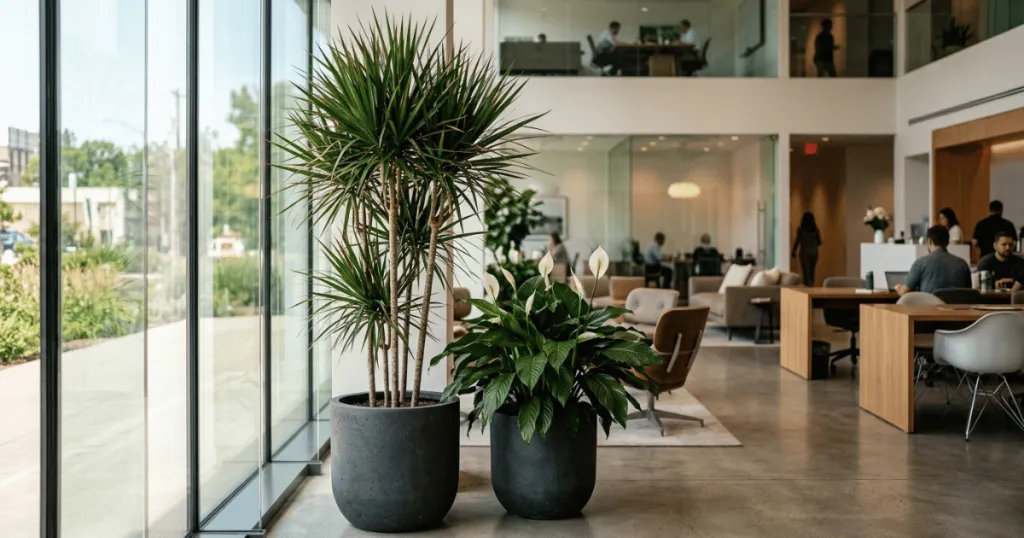
Best Floor Plants for Office Spaces
ZZ Plant
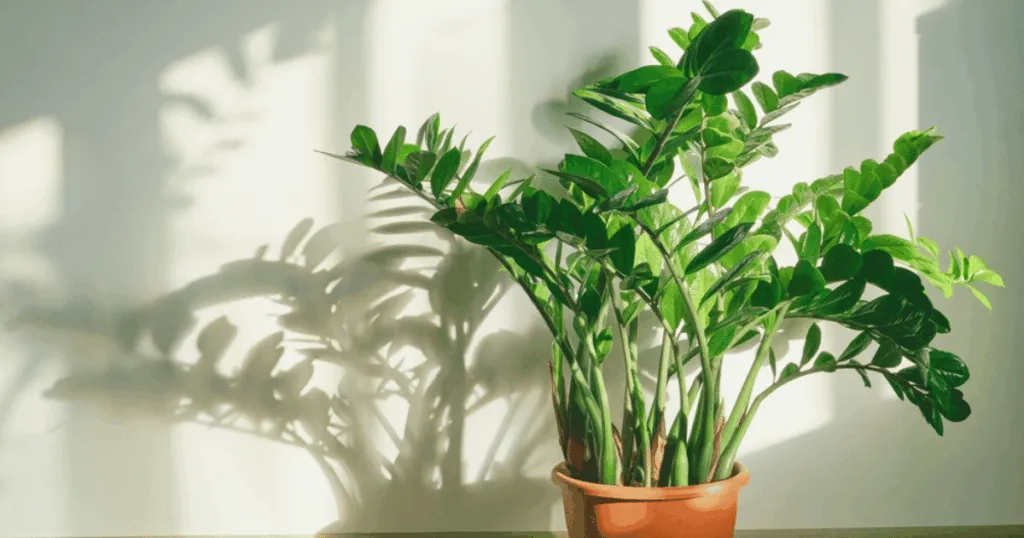
The ZZ plant remains a cornerstone recommendation for commercial reception areas and windowless interior zones. Its thick, waxy leaves and underground rhizomes store moisture efficiently, meaning it absorbs punishment from infrequent watering schedules far better than almost any other indoor specimen. While it grows best in medium indirect light, it adapts remarkably well to fluorescent office lighting without showing immediate signs of stress.
A common mistake with this species is overwatering during long holiday breaks when building occupants assume plants need extra hydration before leaving. Keeping the root system slightly dry is far safer than letting it sit in a soggy saucer, making it an ideal choice for busy office managers who prefer low maintenance. These large indoor plants for office settings provide an instant structural upgrade without adding to daily operational burdens. Because they tolerate neglected hydration cycles and dim corridors, facilities teams can rely on them to maintain a polished look across open-plan workspaces and executive boardrooms alike.
When placing a ZZ plant in an open office layout, consider its natural outward-spreading habit. As new stems emerge from the soil line, they arch gracefully outward rather than shooting straight up. Ensuring the container has adequate width prevents stems from spilling into high-traffic walking paths where chairs might clip them. Furthermore, its ability to withstand low illumination levels makes it a reliable anchor for core architectural zones far away from exterior windows.
Snake Plant
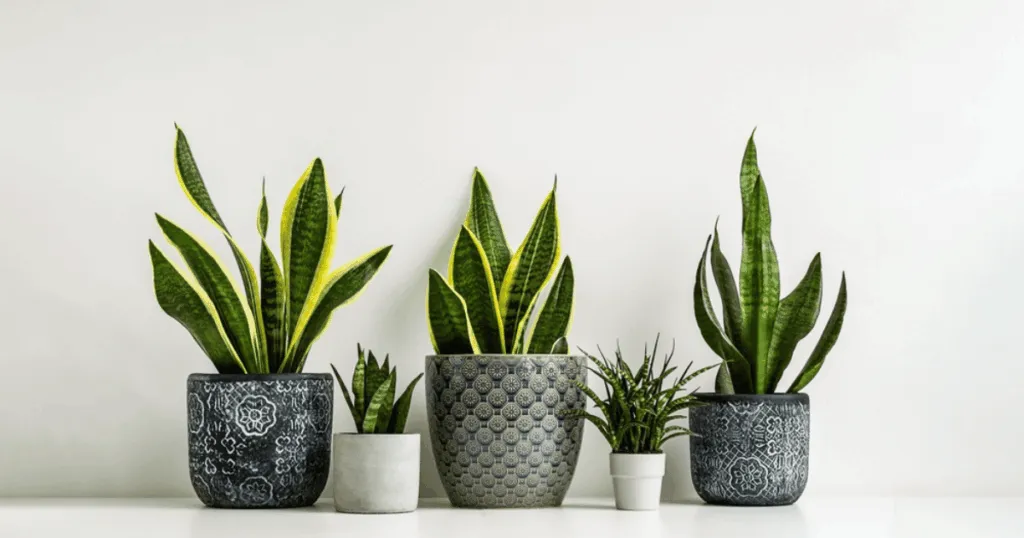
Few plants match the architectural rigidity and upright silhouette of the snake plant. Its stiff, sword-shaped leaves command attention in narrow hallways, elevator banks, and open office dividing partitions without taking up valuable floor space. It tolerates deep shade quite well, though brighter indirect light encourages faster upward growth and sharper variegation patterns along the leaf edges.
From a practical standpoint, this selection forgives erratic watering routines completely. Overwatering is the single greatest hazard for this species, as root rot develops quickly if soil remains waterlogged for weeks. Letting the potting mix dry out entirely between irrigation cycles keeps the foliage firm and upright. When evaluating tall office plants low light options for tight architectural corners, the slender profile of Sansevieria varieties ensures they never obstruct emergency egress routes or rolling office chairs.
In addition to spatial efficiency, snake plants excel at enduring seasonal temperature drops near exterior doors and drafty corridors. Their succulent-like leaves hold ample water reserves, cushioning the plant against missed watering cycles when facilities personnel are reassigned to other urgent tasks. Pruning is rarely necessary except to remove an occasional damaged leaf at the base using clean shears.
Dracaena
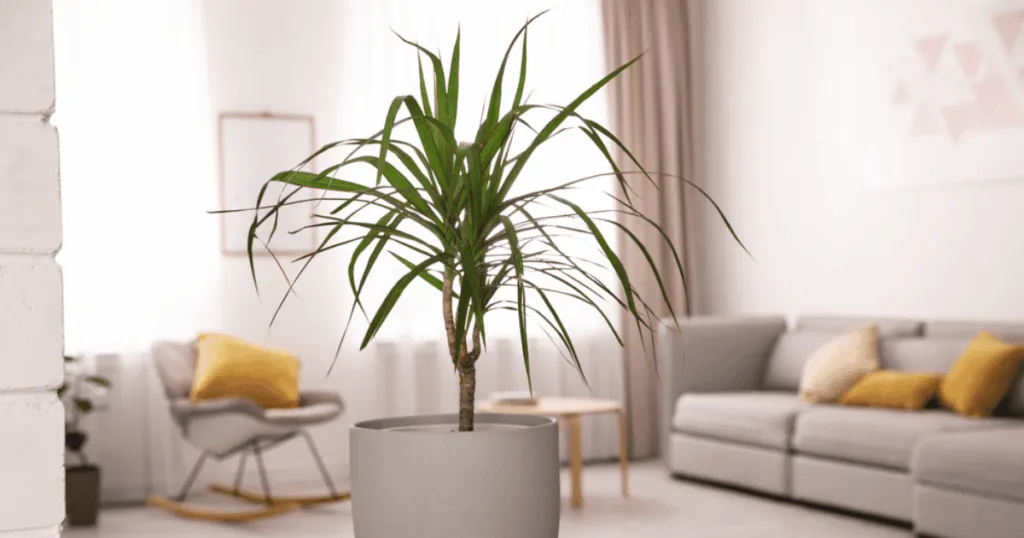
Dracaena varieties bring a distinct tropical tree appearance to conference rooms and executive offices with their woody canes and arching, ribbon-like foliage. They thrive best in bright indirect light, though several common cultivars manage adequately in medium-light corners if kept away from cold window drafts during winter months.
One detail worth noting is that these plants are sensitive to fluoride and chlorine commonly found in tap water, which frequently manifests as brown tips on the lower leaves. Using filtered water or letting tap water sit out overnight before application helps preserve the clean look of the foliage in professional spaces. Incorporating these indoor trees for corporate office layouts instantly introduces vertical interest that breaks up monotonous drop-ceiling grids and blank drywall panels.
Facilities teams should also monitor pot drainage carefully. Because Dracaenas grow tall on woody stalks, top-heavy specimens require sturdy, weighted containers to prevent tipping when bumped by cleaning carts or office furniture. Wiping the long leaves with a damp cloth periodically removes dust buildup that settles under office ventilation systems.
Cast Iron Plant
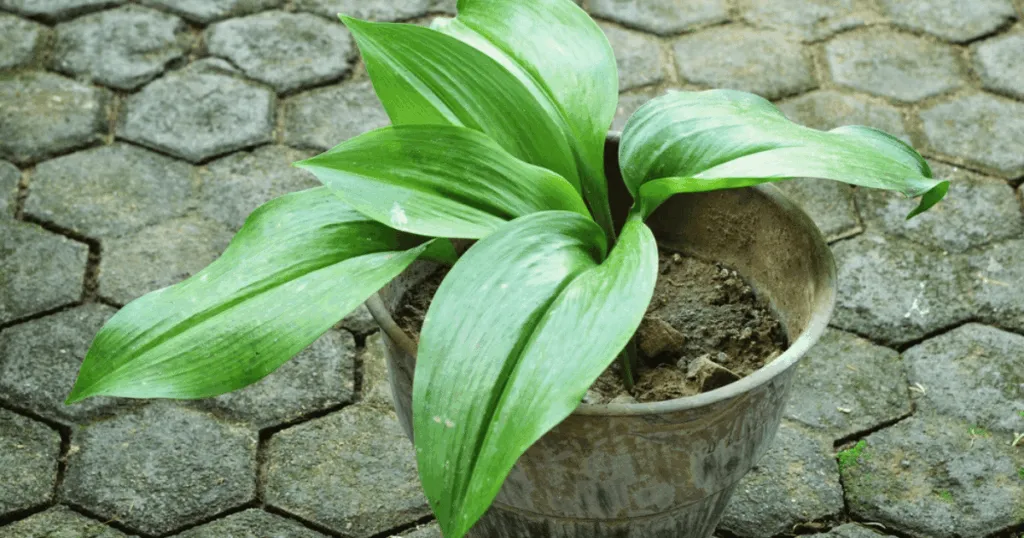
Living up to its utilitarian name, the cast iron plant earns its place through legendary durability under low light and irregular care routines. It features broad, dark green, lance-shaped leaves that arch gracefully from the base, adding lushness to dim reception areas where other decorative species wither away.
This variety grows slowly and prefers minimal disturbance, so repotting is rarely necessary more than once every few years. It represents a dependable safety net for offices with minimal natural light and high staff turnover where plant care protocols often fall through the cracks. For facilities seeking drought tolerant office plants that require almost zero specialized intervention, Aspidistra elatior stands out as an unmatched workhorse.
Because its leaves emerge directly from subterranean rhizomes without prominent woody stems, its height remains predictable over time, making it easy to fit beneath lower ceiling architectural details or window ledges. It accepts low humidity environments without developing crispy leaf edges, making it exceptionally well-suited for heavy HVAC-conditioned interior spaces.
Parlor Palm
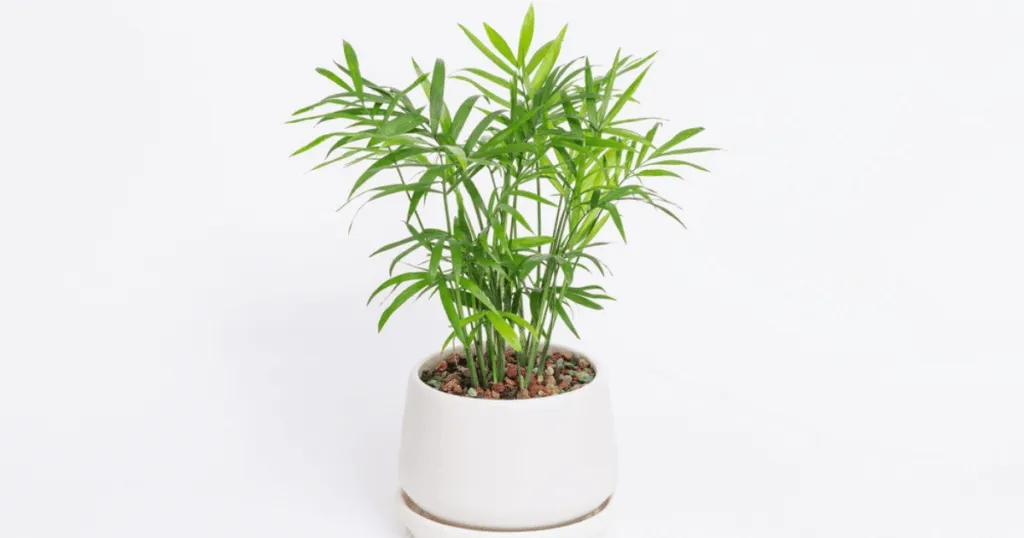
For workspaces requiring a softer, more delicate aesthetic without sacrificing shade tolerance, the parlor palm stands out as a reliable traditional pick. Its fine-textured fronds provide a classic, calming atmosphere in consultation rooms and private offices where heavy or rigid foliage might feel too imposing.
Unlike many other palms that demand blazing greenhouse sunshine, this species adapts comfortably to standard indoor conditions and fluorescent lighting arrays. It requires slightly more consistent soil moisture than a snake plant, but keeping the top inch of soil damp while avoiding standing water in the bottom tray prevents most common root issues. When designing welcoming reception area plants layouts, pairing these softer palms with harder architectural elements creates a balanced, inviting transition zone for visiting clients.
Maintaining a parlor palm successfully in an office environment also involves monitoring for microscopic pests like spider mites, which thrive in dry indoor air. Routine inspection of the fine frond leaflets helps catch any early signs before populations escalate, ensuring the plant retains its lush, vibrant appearance.
Rubber Plant
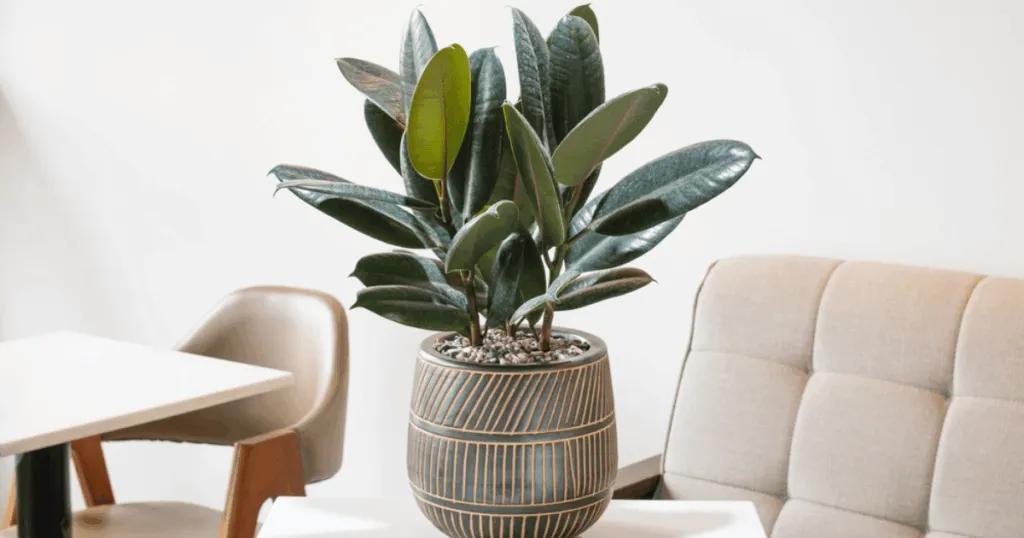
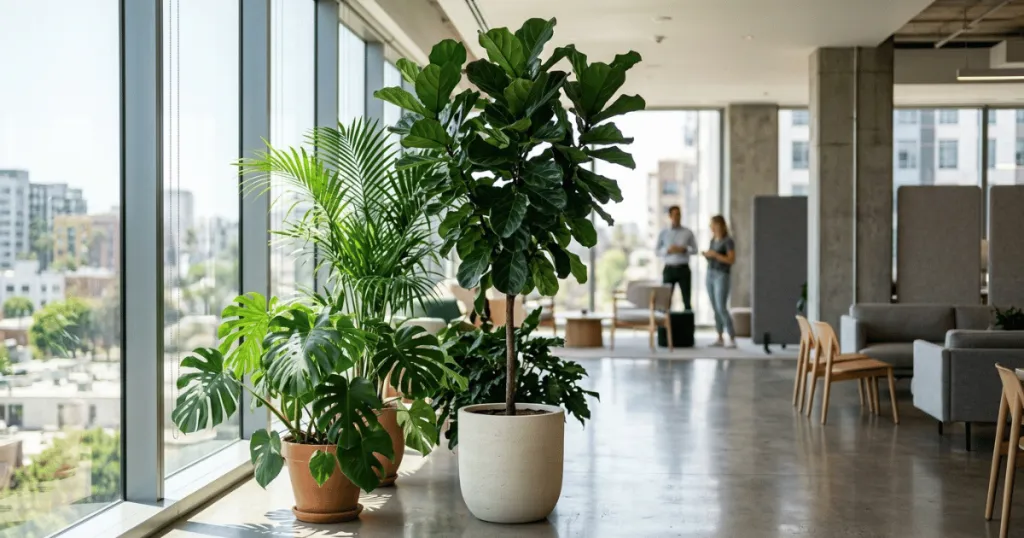
The rubber plant offers broad, glossy, burgundy-tinted leaves that make a bold statement in open-plan layouts and executive suites. It requires brighter indirect light than a ZZ or snake plant to maintain its rich leaf color and dense branching habit, making a spot near a large east-facing or south-facing window ideal.
Sudden drops in temperature or shifting the plant into a drastically darker spot can trigger leaf drop during the transition period. Wiping the large leaves down with a damp cloth every few weeks removes accumulated office dust and keeps the foliage actively photosynthesizing under indoor lights. As striking upright indoor plants, Ficus elastica specimens demand adequate spatial clearance to let their robust canopy expand naturally without crowding desks.
Pruning the main growing tip of a rubber plant encourages lateral branching, transforming a single-stemmed tree into a fuller, bushier specimen that fills wide office corners more effectively. Facilities teams should wear gloves when pruning, as the milky latex sap can irritate skin and mucous membranes if handled directly.
Monstera
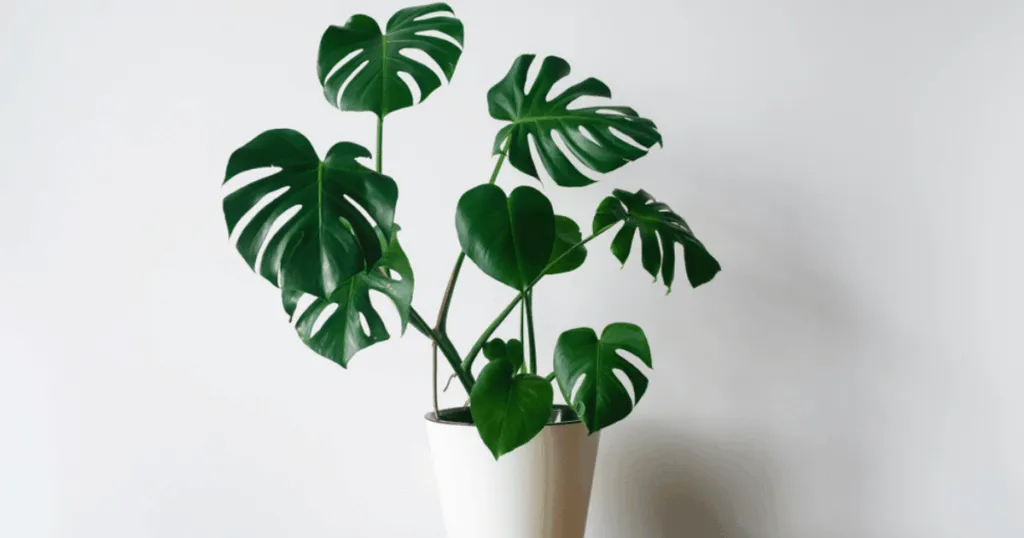
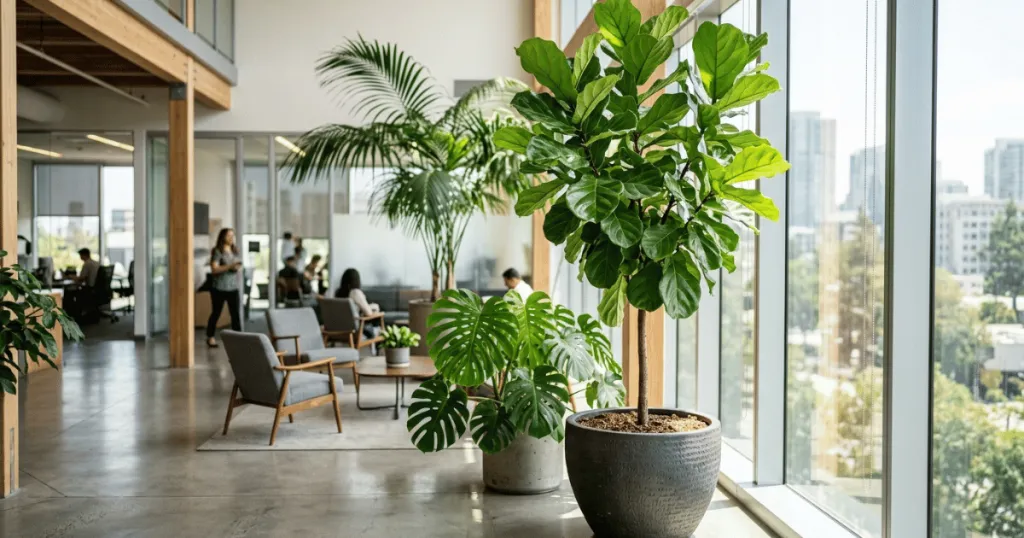
Monstera deliciosa brings an unmistakable jungle aesthetic to creative offices, meeting rooms, and spacious lounge areas. Its signature split leaves develop natural fenestrations when given adequate bright indirect light and something sturdy to climb, though it still produces large, solid leaves in lower-light corners.
Because these plants can spread outward quite aggressively over time, providing a moss pole or vertical support keeps the growth habit neat and prevents sprawling stems from blocking high-traffic walkways in busy office corridors. Utilizing these dynamic specimens as best floor plants for office corners transforms underutilized spatial dead zones into vibrant focal points that boost workplace wellness and visual appeal.
Managing a Monstera in a commercial workspace requires periodic evaluation of aerial roots. These thick roots can be gently tucked back into the potting soil or guided onto support structures to maintain a tidy silhouette. Adequate pot sizing is also crucial, as root-bound plants will slow down significantly and fail to produce new, fenestrated leaves.
Evaluating Placement and Spatial Fit
Placing large greenery successfully in a commercial workspace requires looking beyond aesthetics and analyzing how foot traffic, lighting zones, and climate control interact with living tissue. A stunning specimen positioned directly beneath an active air conditioning vent will quickly experience dry, brown leaf edges regardless of how diligently the office manager waters it. Assessing the physical environment before purchasing ensures long-term survival and reduces replacement costs.
High-traffic hallways demand rigid, upright species like snake plants or cast iron plants that will not get brushed against, torn, or knocked over by rolling office chairs and moving carts. Conversely, wide reception lounges and quiet breakout corners provide ideal protective pockets for broader, more delicate choices such as parlor palms or rubber plants where people can appreciate them up close without causing physical damage.
Furthermore, evaluating vertical clearance prevents awkward pruning situations later. Selecting a slow-growing architectural species for a low-ceilinged basement office avoids constant cutting back, whereas high-ceilinged atriums benefit from fast-establishing indoor trees that fill vertical voids without leaving the floor looking sparse.
Managing Trade-Offs and Maintenance Realities
Every large indoor plant represents a compromise between visual impact and upkeep requirements. Fast-growing tropical varieties fill empty corners quickly but demand regular pruning, staking, and consistent moisture monitoring. Slow-growing architectural options require almost no attention for weeks at a time, yet they offer zero forgiveness if someone accidentally dumps a cup of coffee into their potting soil.
Workplace schedules also complicate routine maintenance. Plants left unattended over long holiday closures suffer when soil dries out completely or when automated building climate systems shut down entirely over the weekend. Choosing resilient species with built-in moisture storage capabilities minimizes these operational risks and keeps maintenance overhead manageable for office facilities teams.
Understanding the interplay between indoor microclimate conditions and plant physiology helps administrators select varieties that endure without constant human intervention. By matching commercial interior constraints with biologically tough specimens, offices enjoy the psychological and aesthetic benefits of living greenery without turning facilities staff into full-time horticulturists.
FAQ
How often should large office floor plants be watered?
Most office floor plants prefer a thorough soaking only after the top two to three inches of soil dry out completely. Testing the soil depth with your finger or a moisture meter prevents the chronic overwatering that causes root rot in typical indoor conditions.
Can office plants survive entirely on fluorescent or LED ceiling lights?
Low-light champions like the ZZ plant, snake plant, and cast iron plant adapt well to artificial office lighting arrays. However, species requiring bright indirect light will gradually decline unless positioned directly beside a large window.
What causes lower leaves on indoor trees to turn yellow and drop?
Yellowing foliage typically signals either chronic overwatering or a sudden environmental shock such as a cold draft from a nearby ventilation duct. Inspecting the root zone for soggy soil helps identify the underlying cause quickly.
Are large floor plants safe for office buildings that allow pets?
Toxicity varies significantly by species. While options like the parlor palm are entirely non-toxic to cats and dogs, popular selections like the snake plant and ZZ plant contain chemical compounds that cause irritation if chewed or ingested.