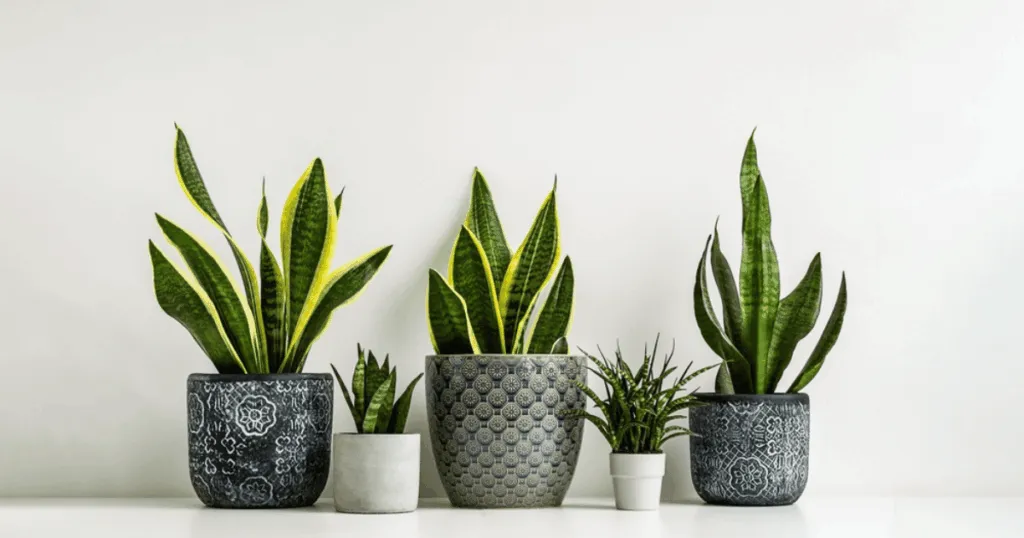
If you like a snake plant’s upright shape and tolerance for missed watering, several office-friendly alternatives can work. The best plants similar to snake plant depend on what you need to change: safer choices for pets, a softer leafy look, a plant for a very dim corner, or something that can handle a long holiday closure.
Start with the actual light at the plant, not the brightness of the room. A plant several feet from a window under ceiling panels usually gets low light. In that setting, a cast iron plant or ZZ plant is often more dependable than a plant chosen only because it looks architectural.
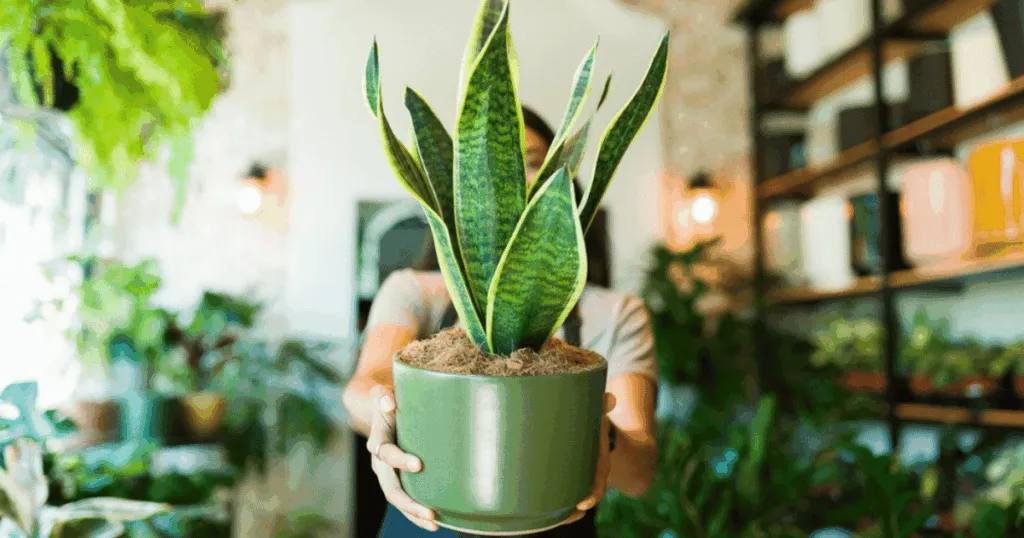
Plants Similar to Snake Plant: The Best Office Alternatives
Snake plant, now commonly classified as Dracaena trifasciata and often still sold as Sansevieria trifasciata, is popular because its stiff leaves use little desk space and its roots tolerate drying out. No alternative matches every one of those strengths. Some are more pet-friendly, while others need more consistent watering or brighter light.
| Plant | Best office light | Watering starting point | Office fit | Pet safety |
|---|---|---|---|---|
| ZZ plant, Zamioculcas zamiifolia | Low to medium indirect | Every 3 to 5 weeks | Floors, credenzas, larger desks | Not pet-safe |
| Cast iron plant, Aspidistra elatior | Low to medium indirect | Every 2 to 4 weeks | Dim corners and reception areas | Listed as non-toxic by ASPCA |
| Parlor palm, Chamaedorea elegans | Low to medium indirect | Every 1 to 2 weeks | Desks and small floor pots | Listed as non-toxic by ASPCA |
| Ponytail palm, Beaucarnea recurvata | Bright indirect, some gentle sun | Every 3 to 5 weeks | Sunny desks and window areas | Listed as non-toxic by ASPCA |
| Chinese evergreen, Aglaonema | Low to medium indirect | Every 1 to 2 weeks | Desks and meeting rooms | Not pet-safe |
| Dragon tree, Dracaena marginata | Medium to bright indirect | Every 2 to 3 weeks | Reception and open-plan floors | Not pet-safe |
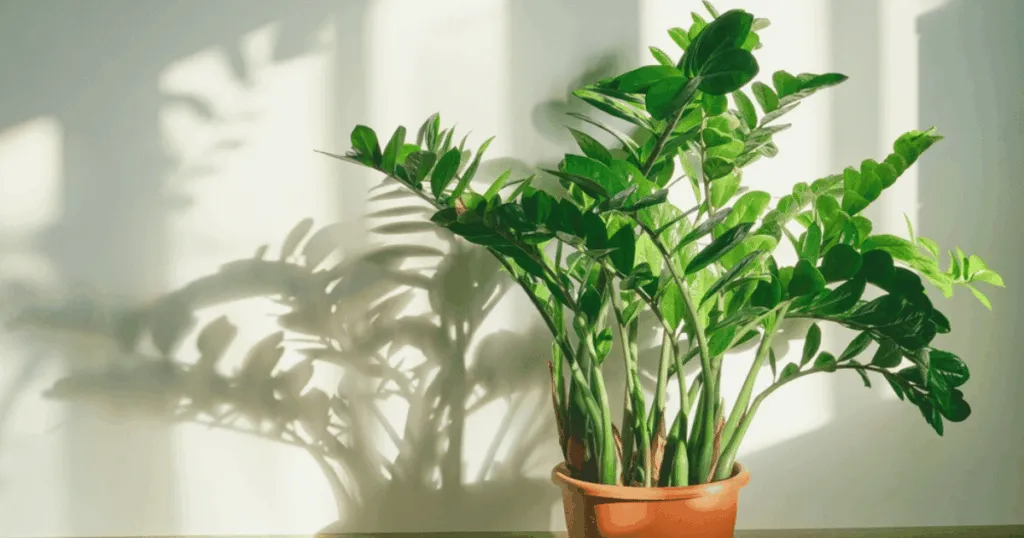
ZZ plant: the closest match for neglected watering
A ZZ plant is usually the strongest substitute if the main appeal of a snake plant is its ability to wait for water. Its glossy, upright leaf stalks have a neat, deliberate look, and its underground rhizomes store moisture. Put it in a pot with drainage and water only after the potting mix has dried nearly all the way through. In many climate-controlled offices, that is every three to five weeks.
ZZ plants cope with low light, but low light does not mean no light. They will survive under overhead LEDs near a windowless interior area only if the lighting is on for a normal workday and reasonably bright. Growth will be slow. A corner that stays dark after lights go off and receives no daylight may need a timed grow light.
Keep this option out of pet-friendly offices and visitor areas where a child may chew foliage. ZZ plants contain calcium oxalate crystals and are listed by ASPCA as toxic to cats and dogs. The same safety concern applies to snake plants, which contain saponins.
Cast iron plant: the best safer choice for a dim office
Cast iron plant has broad, dark green leaves rather than sword-like foliage, but it earns its name in ordinary office conditions. It tolerates lower light, modest dry air, and an occasional missed watering. It is also listed by ASPCA as non-toxic to cats and dogs, making it a better option for a pet-friendly reception desk.
It is not a tiny desk plant. Mature leaves can spread outward, so give it a stable floor pot, a low cabinet, or the end of a wide reception counter. Water when the top 2 inches of mix feel dry. Do not keep the soil constantly wet, especially where air conditioning slows drying.
Parlor palm and ponytail palm: safer choices with different light needs
A parlor palm gives a softer, more traditional office look. It can tolerate low to medium indirect light and stays manageable in a small pot, but it is less drought-tolerant than snake plant. Check weekly and water when the top inch of soil is dry. Brown tips often come from dry air, inconsistent watering, or mineral buildup, not a need to soak the plant more often.
Ponytail palm has a swollen trunk that stores water and narrow, arching leaves. It suits a person who wants low watering needs without the toxicity issue. Its limitation is light: it needs brighter indirect light than a snake plant or ZZ plant. Use it beside an unobstructed window, not in a cubicle several rows from glass.
How to Match the Plant to Your Office Conditions
For a desk far from a window
Choose cast iron plant first if pets are present, or a compact ZZ plant if pets are not an issue. Measure the usable footprint before bringing in a plant. A six-inch to eight-inch nursery pot is usually easier to manage on a desk than a large decorative container. Leave room for a saucer so water cannot reach a keyboard, paperwork, or power strip.
A common mistake is putting a plant directly under an HVAC vent because that space seems open. Cold air can cause leaf damage and makes soil drying unpredictable. Move the plant at least a few feet away from a direct vent if possible. Also keep foliage away from radiators, printer exhaust, and the warm air behind monitors.
For a reception area or shared floor
Choose a plant that has a clear care routine and does not create a safety issue. Cast iron plant works well in subdued lobbies. A dragon tree can create the tall, narrow silhouette many people want from a snake plant, but it needs more light and is not appropriate where pets can access it.
Use one assigned owner and a visible watering log. Shared watering is a larger risk than neglect for drought-tolerant plants. Write the date, then require the next person to check soil before watering. For a snake plant itself, use a consistent routine from this snake plant watering routine as a reference point, but do not assume every alternative needs the same dry-down period.
For offices that close for long weekends
ZZ plant, snake plant, and ponytail palm are the most forgiving choices here, provided they are healthy and not sitting in hot direct sun. Water only if the soil is already dry before closure. Giving extra water “just in case” can leave roots wet for days in a cool, empty office.
Parlor palms and Chinese evergreens need more planning. Water them thoroughly if the soil is dry, let excess drain away, and move them out of hot window sun before a week-long closure. Do not seal a plant in a plastic bag. Reduced air movement and wet soil can encourage rot.
What Similarity Really Means Before You Replace a Snake Plant
Most readers mean one of three things by a plant similar to snake plant: an upright shape, low maintenance, or tolerance of low light. Those are different traits. A dragon tree is visually similar but not equally tough in dim light. A cast iron plant is highly tolerant but has a wide, leafy shape. A ZZ plant comes closest on low-water care, yet its leaves are rounded and it is not pet-safe.
Chinese evergreen is another useful low-light option for a meeting room or desk where you want patterned leaves rather than spiky foliage. It prefers soil that dries partly, not completely, between waterings. Check the top 1 to 2 inches every week, then water when that layer is dry. Its calcium oxalate content means it should not be placed where pets or children can chew it.
Do not buy a plant solely because a label says “low light.” Low light describes tolerance, not ideal growing conditions. Even tough plants need enough light to maintain leaves and use water. If the plant is more than about 10 feet from a window and overhead lights are off every night and weekend, watch it closely for slow decline. Pale new growth, leaf loss, or soil staying wet for unusually long periods are signs that the location is too dim.
Office plants can improve the appearance of a space and may support wellbeing and perceived air quality. Avoid claims that a few plants will clean the air of a working office. The NASA Clean Air Study was conducted in sealed chambers, and a few potted plants do not measurably purify air in a real, ventilated workplace. Ventilation, source control, and building maintenance do that work.
A Simple Shortlist for Your Next Office Plant
- Choose a ZZ plant if your priority is missed watering and you can keep it away from pets and children.
- Choose a cast iron plant for a pet-friendly, low-light lobby or a dim spot with room for wider leaves.
- Choose a parlor palm for a pet-safe desk plant when someone can check soil every week.
- Choose a ponytail palm for a bright desk where long gaps between watering are likely.
- Choose Chinese evergreen for foliage color in low to medium light, only where chewing risk is not present.
Whatever you choose, use a pot with a drainage hole and empty its saucer after watering. Avoid moving a new plant repeatedly around the office while you search for the perfect spot. Pick one location with suitable light, protect it from direct HVAC airflow, and give it several weeks to settle.
If your present snake plant looks unwell, fix the cause before replacing it. Yellowing leaves and soft bases often point to excess moisture. These snake plant watering problems can help you distinguish overwatering from normal older-leaf aging.
Choose Plants Similar to Snake Plant With One Clear Priority
For most dim, low-care offices, select a ZZ plant if safety is not a concern or a cast iron plant if pets and children share the space. For a crowded desk, parlor palm works if watering is assigned to one person. Put the plant in a draining pot, label the care schedule, and check soil rather than watering by calendar alone.
If you still prefer the original’s narrow form, review why the low-maintenance snake plant remains a strong workplace choice. Plants similar to snake plant are most successful when their actual light, watering needs, and safety limits fit the space you have.
FAQ
Is a ZZ plant easier to care for than a snake plant?
They are similarly forgiving of missed watering, but neither should be watered on a fixed weekly schedule. ZZ plants often need water every three to five weeks indoors, while snake plants may go just as long or longer in low light. ZZ plants are more likely to develop problems if people keep the soil damp, and both plants are toxic to cats and dogs.
What plant looks like a snake plant but is safe for cats and dogs?
No common pet-safe plant has the exact stiff, vertical leaves of a snake plant. Cast iron plant is a strong alternative for low-light offices, although its leaves arch outward. Ponytail palm has a more sculptural shape and stores water in its trunk, but it needs brighter light. ASPCA lists both as non-toxic to cats and dogs.
Can office LED lights keep these plants alive without windows?
Standard office LEDs can support some low-light-tolerant plants if they are bright, on for a full workday, and positioned reasonably close to the plant. Growth is usually slow. A windowless room with lights off nights and weekends can be too dim over time. A timed grow light is more reliable for long-term placement away from daylight.
Should I use a self-watering pot for a ZZ plant or cast iron plant?
Use caution. Self-watering pots can keep the root zone too wet for drought-tolerant plants, especially in cool offices with low light. A standard pot with a drainage hole is usually simpler and safer. If you use a reservoir pot, let the soil dry well before refilling it and do not keep a constant water supply available.