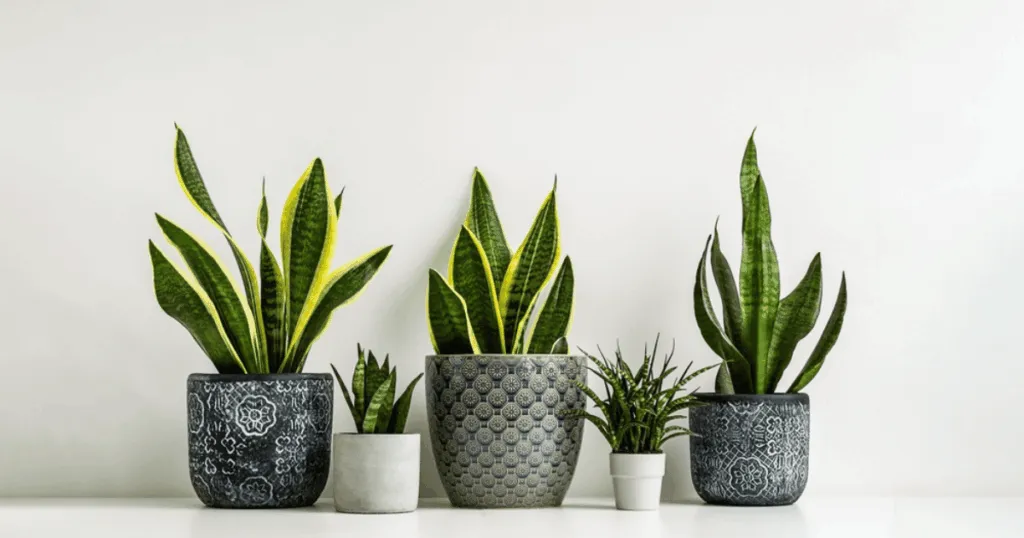
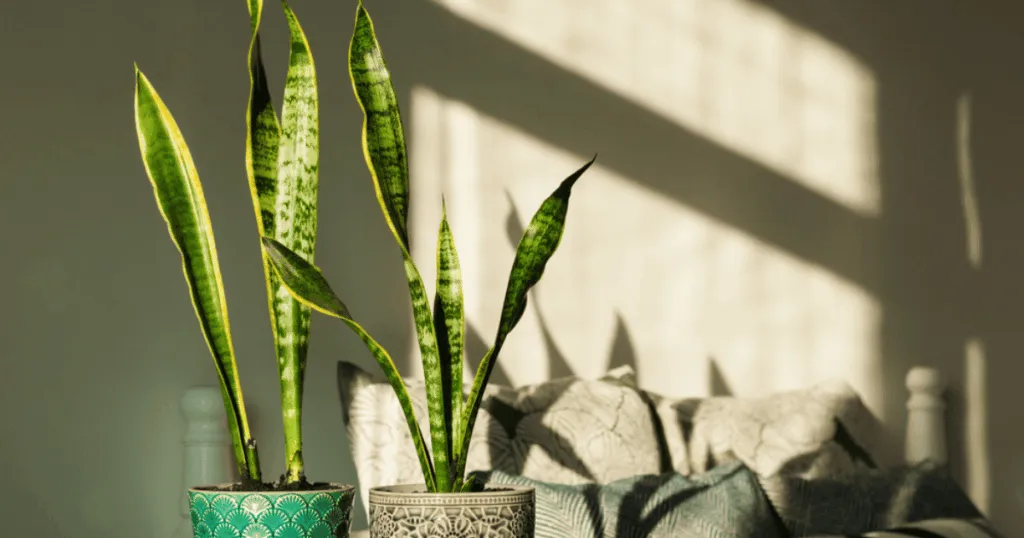
Snake plant color varies naturally by variety, but a change in color can also be a useful warning sign. Most healthy snake plants have firm green leaves with darker horizontal bands. Some have yellow leaf margins, silvery gray-green leaves, or very dark green foliage. In an office, the color you see depends on the cultivar, available light, watering habits, and whether the plant sits near an AC vent or hot window.
The key is to separate normal variety from damage. A yellow-edged snake plant is not necessarily unhealthy, but a formerly green leaf turning yellow from the base needs attention. Faded, pale leaves often point to too little useful light or too much direct sun. Knowing the difference helps you act before a low-maintenance desk plant becomes a shared-office problem.
Snake Plant Color: What Is Normal and What Is Not?
Snake plants, now commonly classified as Dracaena trifasciata and often still sold as Sansevieria trifasciata, are valued for their upright leaves and graphic patterns. Their natural leaf color is usually medium to deep green, marked with irregular horizontal bands in darker green or gray-green. Those bands are part of the plant’s normal pattern, not a disease.
Commercial cultivars expand that range. A plant’s color is largely set by its genetics, so do not expect one variety to turn into another because you move it to a brighter desk. Light can affect the intensity of its color and the strength of its growth, but it will not create a yellow border on an all-green variety.
| Leaf color or pattern | What it usually means | Best office placement |
|---|---|---|
| Green with dark horizontal bands | Typical species pattern | Low to medium indirect light |
| Green center with yellow edges | Normal variegation, often ‘Laurentii’ | Medium or bright indirect light to maintain contrast |
| Silver-green or pale gray-green | Normal in cultivars such as ‘Moonshine’ | Bright indirect light, away from hot glass |
| Very dark green with pale striping | Normal in darker cultivars such as ‘Black Coral’ | Low to medium indirect light |
| New leaf yellowing at the base | Often overwatering or root stress | Check roots, drainage, and watering routine |
| Bleached, tan, or papery patches | Usually sun scorch or heat damage | Move back from direct sun or radiator heat |
Natural variegation and why it matters
Variegated snake plants have areas with less chlorophyll, the green pigment that supports photosynthesis. The yellow margins on ‘Laurentii’ and similar varieties are normal. They also mean the plant has less green tissue available to use low light. A yellow-edged variety can tolerate a dim office, but it will generally stay fuller and more sharply patterned in medium indirect light.
For a desk several feet from a north-facing or tinted window, an all-green variety is usually the safer choice. ‘Black Coral’, ‘Zeylanica’, and other mostly green types tend to be more forgiving of weak daylight than pale or heavily variegated plants. Ceiling LEDs can help, but ordinary overhead lighting is rarely as strong as light near a window.
Why a variegated plant may grow green leaves
A yellow-bordered snake plant occasionally produces a leaf with little or no yellow. This is called reversion. It can happen because the plant produces a greener shoot with more chlorophyll, especially where light is poor. It is not an emergency, but that green shoot can become more vigorous than the variegated growth.
If keeping the yellow pattern matters, improve the plant’s light first. Move it closer to bright, filtered daylight or use a modest grow light on a timer during workdays. If a fully green shoot is clearly separate and you want to preserve the variegated plant, it can be removed at its origin with clean tools. Do not cut off a yellow leaf edge to make it greener. Variegation cannot be repaired that way.
Fading, darkening, and uneven color in offices
Low light does not usually cause sudden leaf damage, but it can make new growth less compact and leaf patterns less pronounced. The plant may also use water very slowly. This is why a snake plant placed in a dim conference room can look dull while its soil remains wet for weeks.
Too much direct sun creates the opposite problem. Strong afternoon sun through south- or west-facing glass can bleach leaves to pale green, cream, tan, or white. The damaged area will not regain its original color. Relocate the plant, then trim only fully dead sections if their appearance bothers you. Avoid placing it directly against cold winter glass, under a hot radiator, or in the path of an AC vent, as temperature stress can also mar leaf color.
For a fuller overview of placement and routines, see our low-maintenance office snake plant guide.
When Yellow, Brown, or Pale Leaves Signal a Problem
Yellow is the color change that most often needs action. Healthy yellow variegation appears in a stable, clean pattern, usually along leaf edges. Trouble yellowing is patchy, spreads through a leaf, or begins at the base where the leaf meets the soil.
Yellow leaves from too much water
Overwatering is the most common cause of yellowing in office snake plants. The plant stores water in its thick leaves and rhizomes, so damp potting mix for long periods can deprive roots of oxygen and encourage rot. A yellow leaf that feels soft, loose, or mushy near the base is a strong warning sign.
Take the plant out of any decorative cachepot and check whether the nursery pot has drainage holes. Let the potting mix dry completely before watering again. If you find black, soft, or foul-smelling roots, remove the damaged roots with clean scissors and repot into fresh, fast-draining mix in a pot with drainage. A detailed snake plant watering problem checklist can help a team identify the issue before multiple people add more water.
Brown tips and dry-looking edges
Brown tips are less specific. They may follow inconsistent watering, a strong fertilizer buildup, hard tap water, physical damage, or very dry heated air. Snake plants cope with typical HVAC dryness better than many tropical foliage plants, so low humidity alone is not usually the main cause.
First, check the soil. If it is bone dry and pulling away from the pot, water thoroughly until excess runs from the drainage holes, then discard the drained water. If the soil is wet, do not water. Keep the leaves away from radiator airflow and avoid letting office cleaners or spray products settle on foliage.
Pale patches, wrinkles, and soft leaves
Pale, wrinkled leaves can mean dehydration, especially after a holiday closure in a warm office. Yet soft, wrinkled leaves can also occur when rotted roots cannot take up water. The soil check decides which problem you have. Dry soil and firm roots suggest underwatering. Wet soil with soft roots suggests overwatering.
A single bent or scraped leaf is usually cosmetic damage from moving chairs, boxes, or cleaning equipment. Snake plant leaves do not straighten after a hard crease. Cut the whole damaged leaf at soil level only if it is unattractive or deteriorating. Do not remove more than a few leaves at one time from a small plant.
How Color Should Influence Your Office Plant Choice
Color affects more than appearance. It changes how well a particular snake plant fits your available light and how clearly staff can spot a health problem. For most dim desks, prioritize a compact, mostly green plant. For a reception counter with bright indirect light, a yellow-edged or silver cultivar can create more contrast without demanding daily care.
Best color choices for common office locations
- Windowless cubicle or desk far from glass: Choose a dark green, compact variety. If ceiling lights are the only light source, place it where the fixtures are on for the longest part of the workday, or add a grow light.
- Reception near a bright window: A ‘Laurentii’ or ‘Moonshine’ can work well if direct afternoon sun is softened by a sheer shade or set back from the glass.
- Meeting room used only occasionally: Choose a green variety and water sparingly. The issue is often not the room’s weekend darkness, but heavy watering in a low-use room.
- Open-plan floor near HVAC: Keep the plant out of the direct air stream. Constant cold drafts can dull foliage and make watering needs unpredictable.
Many brightly colored snake plants sold as novelty gifts have painted leaf tips or coatings. Those colors are not a natural cultivar trait and will not appear on new leaves. Paint can also hide the condition of the foliage. For a workplace, skip altered plants and choose naturally colored foliage that facilities staff can assess easily.
Snake plants are not a safe choice for pet-friendly offices or reception areas where dogs, cats, or small children may chew foliage. ASPCA lists snake plants as toxic to cats and dogs because of saponins, which can cause drooling, nausea, vomiting, or diarrhea if eaten. Put them well out of reach or select a verified non-toxic alternative instead.
Keep Snake Plant Color Consistent With a Simple Team Routine
A consistent routine prevents most avoidable color problems. Assign one person or one small team to water rather than leaving an open invitation for anyone to help. Add a small label with the last watering date, or keep a shared calendar note. The aim is not to water on a rigid schedule. It is to stop well-meaning duplicate watering.
- Every 10 to 14 days, push a finger or wooden chopstick at least 2 inches into the potting mix.
- Water only when the mix is dry at that depth and the pot feels noticeably lighter. In a typical office, this may mean every 2 to 4 weeks in brighter conditions and every 4 to 6 weeks in low light or winter.
- Water slowly until a little runs from the drainage hole. Empty the saucer or outer pot after about 10 minutes.
- Check leaves monthly for yellowing at the base, sunscald, dust, and signs that an air vent has shifted onto the plant.
Before a long weekend, do not give the plant extra water unless the soil is actually dry. Snake plants usually handle a short closure better dry than wet. Before a two-week holiday closure, water only dry plants, move them away from intense window sun and heat sources, and make sure no one leaves the pot sitting in collected water.
Dust can mute the leaf pattern and reduce the light reaching the leaf surface. Wipe leaves gently with a damp microfiber cloth every month or two. Avoid leaf-shine products, oils, and harsh cleaning sprays. They can leave residue and make it harder to judge the plant’s true color.
For a plant that has already started yellowing, follow a measured snake plant watering routine rather than trying fertilizer, extra light, and more water at the same time. Change one likely cause, then watch the next leaf. Old damage will remain, but healthy new leaves should emerge firm and true to the variety’s natural color.
What to Do Next for Better Snake Plant Color
Start by identifying the variety and looking at the newest leaf. Stable bands, yellow margins, or silver foliage are usually normal snake plant color traits. Yellowing from the base, mushy tissue, or bleached patches are not. Move the plant away from harsh sun, vents, and heaters, then use the dry-soil check before anyone waters it. In most offices, a green cultivar in a draining pot and a simple shared watering record will keep foliage looking its best.
FAQ
Can a snake plant change from green to yellow naturally?
A naturally variegated snake plant has yellow or cream areas from the start, especially along the edges. A solid green leaf turning yellow is not a normal color change. Check the leaf base and potting mix first. Yellowing with soft tissue or wet soil often points to excess water, while dry, crisp yellowing can follow heat or severe underwatering.
Why is my snake plant darker green in a low-light office?
A darker appearance can be normal for the variety, and low light may make leaf banding less obvious. Low light does not reliably improve color, though. It slows growth and reduces water use. If new leaves are weak, narrow, or leaning toward the light, move the plant closer to a window or add a suitable grow light.
Will a grow light improve snake plant color?
A grow light can support firmer new growth and clearer variegation when daylight is very weak. Use it above the plant on a timer for roughly 8 to 12 hours on workdays, following the light maker’s distance guidance. Avoid leaving a powerful light close to pale cultivars, since excessive intensity can bleach foliage.
Can I propagate a yellow-edged snake plant from a leaf cutting?
A leaf cutting from a yellow-edged cultivar often produces mostly green offspring because the yellow margin does not reliably carry through leaf propagation. Division is the better method if you want new plants that retain the same variegated snake plant color. Divide a pup with its own roots from the parent plant during repotting.