The most significant mistake office managers make with yucca care is assuming that because these plants look rugged and desert-adapted, they can survive in the dim, windowless corners of a cubicle farm. While yuccas are incredibly resilient, they are not low-light plants. Placing a yucca in a dark hallway or a windowless lobby will lead to slow decline, stretched growth, and eventual failure. To keep your plant healthy, you must prioritize its need for high-intensity light above all other maintenance tasks.
Quick Facts
- Light: Requires bright, direct or very strong indirect light.
- Water: Allow soil to dry out completely between waterings.
- Humidity: Thrives in standard, dry office air conditions.
- Toxicity: Contains saponins; toxic to cats and dogs if ingested.
- Placement: Keep away from high-traffic areas due to sharp tips.
Yuccas bring a distinct, architectural aesthetic to professional settings, offering a vertical element that softens the rigid lines of office furniture. Unlike many tropical indoor plants that demand high humidity and constant moisture, the yucca is a master of endurance. It is perfectly suited for the climate-controlled, often dry environment of a modern office building. By understanding the specific light and water requirements of this species, you can integrate a long-lasting, low-maintenance green feature into your workspace that requires very little daily intervention.
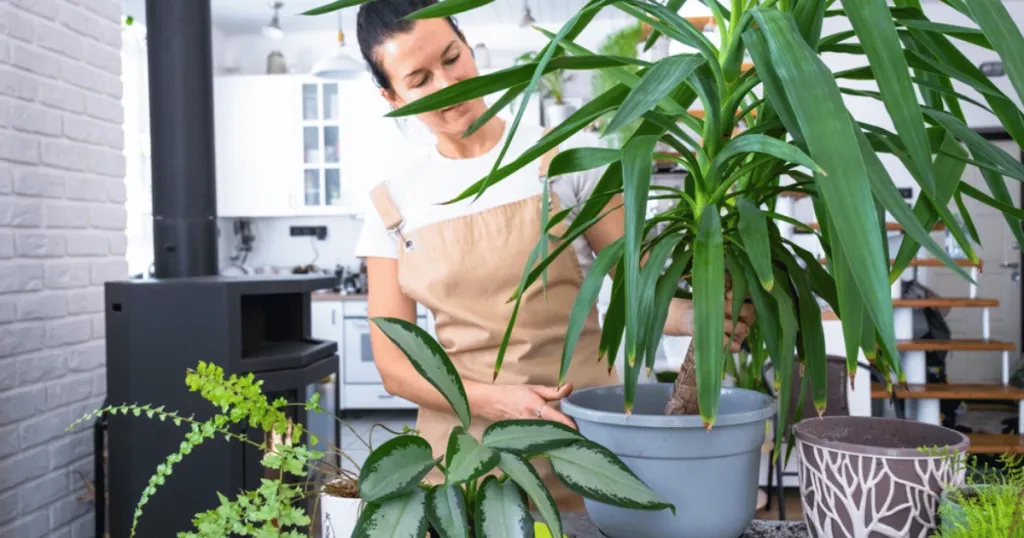
Optimizing Light and Strategic Placement
In an office setting, light is the primary driver of plant health. Yuccas require bright light to maintain their structural integrity and vibrant foliage. If you place your yucca in a spot that receives only ambient or filtered light, you will notice the leaves beginning to droop and the stem becoming thin and weak. This process, known as etiolation, is the plant reaching for a light source that is not there. For the best results, position your yucca within three feet of a south or west-facing window where it can receive direct sunlight for at least part of the day.
If your office layout does not provide access to natural windows, you may need to supplement with artificial lighting. Standard overhead fluorescent tubes are rarely sufficient for a yucca unless the plant is placed directly beneath them. If you are relying on office lighting, consider using a dedicated LED grow bulb in a nearby floor lamp, directed toward the canopy of the plant. This ensures the yucca receives the intensity it needs to photosynthesize effectively, even during the shorter winter months when natural daylight is limited.
Placement also involves safety considerations. Many yucca varieties feature stiff, pointed leaf tips that can be hazardous in narrow corridors or high-traffic break areas. When choosing a location, ensure the plant is set back from paths where employees frequently walk. A corner of a reception area or a wide meeting room wall is often better than a narrow hallway.
By keeping the plant out of the primary flow of foot traffic, you protect both the plant from physical damage and your staff from accidental scratches. Consider the mature height of the plant; yuccas can grow quite tall, so ensure the ceiling height allows for vertical growth over several years.
Watering and Soil Management: The Drought-Tolerant Reality
The golden rule for yucca care is to err on the side of dryness. These plants are native to arid regions and have evolved to store water in their thick, woody trunks. Overwatering is the fastest way to kill a yucca in an office environment. When the soil remains saturated, the roots are deprived of oxygen, which quickly leads to root rot. This condition is often irreversible, manifesting as yellowing leaves and a soft, mushy base of the trunk.
Before you add water, always check the soil moisture. Do not rely on a set weekly schedule, as office humidity and temperature can fluctuate depending on the HVAC system. Instead, use a moisture meter or simply insert your finger into the top three to four inches of soil. If the soil feels damp or cool, do not water. Only when the soil is completely dry throughout the entire pot should you provide a thorough soaking. When you do water, ensure that the excess liquid drains freely from the bottom of the container. Never allow the plant to sit in a saucer of standing water, as this creates a stagnant environment that invites fungal issues.
The soil medium itself should be fast-draining. Standard potting mixes designed for tropical plants are often too dense and retain too much moisture for a yucca. We recommend using a cactus or succulent mix, which typically contains higher percentages of perlite, pumice, or coarse sand.
This composition allows water to pass through the root zone quickly while providing enough aeration to keep the root system healthy. If your plant is currently in a dense, peat-heavy soil, consider repotting it into a more porous substrate to prevent long-term moisture retention issues. Proper soil aeration is the silent partner to successful watering; without it, even careful watering can lead to root suffocation.
Humidity, Temperature, and Nutrient Needs
One of the primary benefits of choosing a yucca for an office is its indifference to humidity. While many indoor plants struggle with the dry, recycled air produced by office HVAC systems, the yucca thrives in these conditions. You do not need to worry about misting the leaves or setting up a humidifier. In fact, excessive humidity can sometimes be detrimental, as it slows the evaporation of moisture from the soil, increasing the risk of rot. Keep the plant away from direct air vents, however, as constant blasts of cold or hot air can cause leaf tips to brown prematurely.
Temperature stability is also a key advantage. Yuccas are comfortable in the same temperature range that humans prefer, typically between 65 and 75 degrees Fahrenheit. They can tolerate minor fluctuations, but you should avoid placing them in areas prone to extreme drafts, such as near an exterior door that opens frequently during winter. Stability is more important than the exact temperature, so find a spot that stays relatively consistent throughout the day.
Regarding nutrition, yuccas are light feeders. They do not require frequent fertilization to maintain their health. During the active growing season, which typically spans from late spring through early autumn, you can apply a balanced, water-soluble fertilizer diluted to half-strength once every two months.
During the winter, when growth naturally slows, cease fertilization entirely. Over-fertilizing can lead to a buildup of salts in the soil, which may cause leaf burn. In an office setting, less is almost always more when it comes to plant nutrition. If you notice the plant is not growing, do not increase fertilizer; instead, check if the light levels are sufficient.
Repotting, Pruning, and Long-Term Maintenance
Yuccas are slow-growing plants, which means they do not need to be repotted often. In most office environments, a yucca will be perfectly happy in the same container for two to three years. When you do decide to repot, choose a container that is only one or two inches wider in diameter than the current one. A pot that is too large will hold too much soil and moisture, increasing the risk of root rot. Always ensure the new container has adequate drainage holes. If you are using a decorative outer pot, ensure the inner nursery pot is elevated so the plant never sits in drainage water.
Pruning is primarily a maintenance task for aesthetics and health. If you notice lower leaves turning yellow or brown, this is a natural part of the aging process. You can cleanly remove these spent leaves with a pair of sterilized shears, cutting close to the trunk without damaging the bark. If a stem becomes too tall or top-heavy, you can prune it back to encourage branching. This is best done in the spring. The top portion of the stem can often be used for propagation, though this is a more advanced task that requires a controlled environment to root successfully.
Propagation in an office is rarely necessary, but if you have a stem cutting, you can place it in a well-draining succulent mix and keep it in a warm, bright spot. It may take several weeks for roots to develop. Because yuccas take so long to establish, most office managers find it more practical to purchase a new plant if one reaches the end of its lifespan or becomes too large for its designated space. Focus on maintaining the current specimen rather than attempting complex propagation unless you have a dedicated staff member to oversee the process.
Seasonal Adjustments and Common Mistakes
Seasonal changes in an office are often dictated by the building management rather than the weather outside. However, the intensity of light coming through windows changes significantly between summer and winter. In the summer, you may need to move the plant slightly away from a window if the sun is scorching the leaves. In the winter, move it as close to the glass as possible to maximize the limited light. If your office building shuts down the HVAC system over weekends or holidays, the plant will generally be fine, provided it is not left in a freezing or sweltering environment.
The most common mistake is the impulse to over-care. Many well-meaning office workers try to help by watering the plant on a schedule, regardless of whether the soil is dry. This leads to the most frequent cause of failure: root rot. Another common issue is the accumulation of dust on the leaves. Because yuccas have large, broad leaves, they can collect a significant amount of office dust, which blocks light and reduces the plant’s ability to photosynthesize. Once a month, take a damp cloth and gently wipe the leaves to keep them clean and efficient.
Finally, be aware of the toxicity profile. According to guidance from the ASPCA on toxic and non-toxic plants, yuccas contain saponins, which are toxic to cats and dogs if ingested. While this is rarely an issue in a standard office, it is a critical factor if your workplace is pet-friendly or if you are considering the plant for a home-office environment where pets are present.
If you have concerns about pet safety, ensure the plant is placed in an area that is inaccessible to animals. The sharp leaf tips are also a physical hazard; in high-traffic areas, consider placing the plant on a pedestal or behind a low barrier to prevent accidental contact.
Managing Plant Health in High-Traffic Zones
When integrating yuccas into high-traffic areas like reception desks or open-plan meeting spaces, the primary challenge is physical protection. While the plant is durable, the leaves can be brittle if bumped repeatedly by chairs or passing staff. Ensure the plant is placed in a “dead zone” of the office – a corner or a space where foot traffic naturally curves away from the plant. If the plant is in a high-traffic area, consider a heavy, wide-based pot to prevent it from being tipped over by a stray bag or a person rushing through. This adds a layer of stability that is essential for tall, top-heavy varieties.
Furthermore, monitor the plant for signs of stress related to air circulation. While yuccas handle dry air well, they do not like stagnant air. If the plant is tucked into a corner that receives no airflow, dust buildup will be faster, and the risk of pests like spider mites increases. A gentle, indirect breeze from a fan or an open window can help keep the foliage healthy.
If you notice fine webbing on the leaves, wipe them down with a damp cloth immediately and ensure the plant has better air circulation. By treating the yucca as a structural element of the office design rather than just a decorative accessory, you ensure that its placement is both functional and sustainable for the long term.
Related Yucca Guides
- the Yucca plant profile
- Yucca symptoms and fixes
FAQ
Why are the lower leaves of my yucca turning yellow?
It is normal for the oldest, lowest leaves on a yucca to turn yellow and eventually brown as the plant grows and matures. This is simply the plant shedding older foliage to focus energy on new growth at the top. You can trim these leaves off once they are fully dried to keep the plant looking tidy. If the yellowing is occurring on the upper or middle leaves, however, it is likely a sign of overwatering or poor drainage.
Can I use a self-watering pot for my yucca?
We generally advise against using self-watering pots for yuccas. These systems are designed to keep soil consistently moist, which is the opposite of what a yucca needs. Yuccas require a wet-dry cycle where the soil dries out completely between waterings. A self-watering pot will likely keep the root zone too damp, which significantly increases the risk of root rot. Stick to a standard pot with drainage holes and a saucer to ensure you have full control over the watering schedule.
How do I know if my yucca is getting enough light?
A healthy yucca will have firm, upright leaves and a sturdy trunk. If your plant is not getting enough light, the most common sign is stretching, where the leaves become thin, pale, and start to droop or bend downward. You may also notice the stem becoming elongated and weak. If you see these signs, move the plant to a brighter location or supplement with a dedicated grow light. Proper yucca care requires high-intensity light to maintain its natural, compact shape.
Is it safe to keep a yucca in an office with pets?
According to the ASPCA, yuccas contain saponins, which are toxic to cats and dogs if chewed or ingested. While they are a popular choice for offices, you should avoid them if your workplace allows pets to roam freely in the areas where the plants are kept. If you must have a yucca in a pet-friendly office, ensure it is placed on a high stand or in a restricted area where animals cannot reach the foliage or the soil.