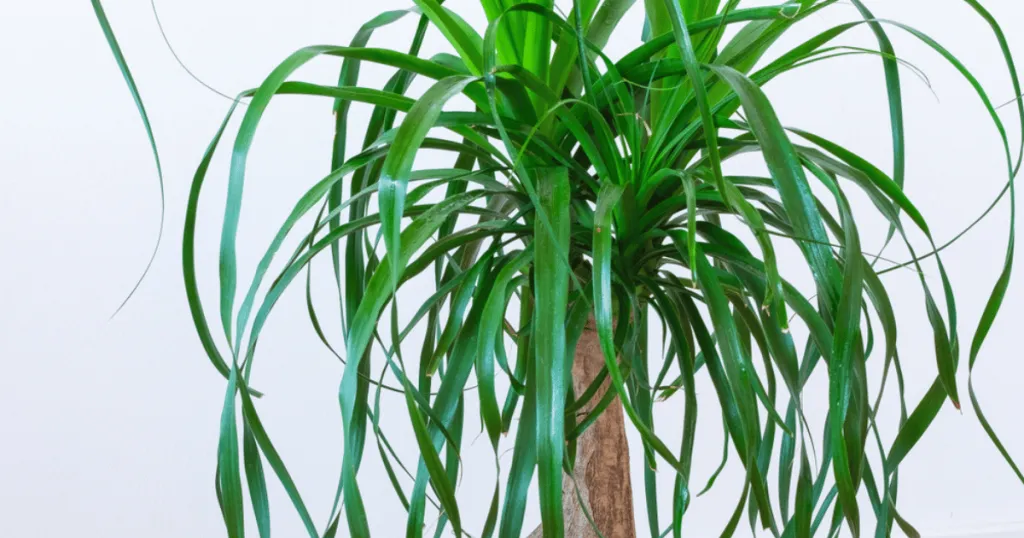
The ponytail palm, scientifically known as Beaucarnea recurvata, is a favorite in professional settings because it combines a striking, architectural appearance with extreme resilience. Often mistaken for a true palm, this plant is actually a succulent that stores water in its signature swollen trunk, known as a caudex.
This biological adaptation makes it exceptionally forgiving for office managers who need a plant that can survive the occasional missed watering during busy weeks or holiday closures. When you prioritize bright light and strict discipline regarding soil moisture, this plant remains one of the most reliable green assets in any workspace.
Quick Facts
- Light: Requires bright, indirect to direct light.
- Water: Allow soil to dry completely between waterings.
- Humidity: Thrives in standard, dry office air.
- Toxicity: Non-toxic to cats and dogs.
- Growth: Slow-growing, drought-tolerant succulent.
The most important takeaway for successful ponytail palm care is to treat the plant like a desert dweller rather than a tropical foliage plant. Because it stores moisture in its base, the plant is far more likely to suffer from root rot due to overwatering than it is to decline from being too dry. Keeping the soil consistently moist is the fastest way to compromise the health of a ponytail palm. By allowing the potting medium to dry out entirely before adding more water, you mimic the natural cycles that keep the plant healthy and prevent the common pitfalls associated with indoor plant maintenance.
Optimizing Light and Placement for Healthy Growth
Ponytail palms require a significant amount of light to maintain their compact, healthy form. In an office, this means placing the plant in a location where it receives bright, indirect light for the majority of the day. South-facing or west-facing windows are ideal, as they provide the intensity the plant craves.
If your office layout does not allow for direct window placement, ensure the plant is positioned in a spot that is not blocked by heavy partitions or deep corners. While the plant can survive in lower light levels for short periods, extended time in dim conditions will cause the long, arching leaves to become thin and weak.
If your office relies primarily on artificial lighting, be aware that standard fluorescent or LED overhead lights are rarely sufficient for a ponytail palm to thrive long-term. If the plant must live in an interior room, consider placing it near a desk lamp or a dedicated grow light to supplement the lack of natural solar radiation.
A clear sign that your plant is not receiving enough light is a noticeable decline in the rate of new leaf production or a stretching of the stem, known as etiolation. When you notice these signs, move the plant closer to a window or adjust your supplemental lighting arrangement immediately to prevent permanent structural weakness.
In open-plan offices, consider the proximity of the plant to glass partitions. While these allow light to pass through, they can also create localized “hot spots” if the sun hits the glass directly. A ponytail palm is one of the few office plants that can handle direct sun, but sudden exposure after a long period in a dark corner can lead to leaf scorch. If you are moving a plant from a dim cubicle to a sunny reception area, do so gradually over the course of a week to allow the foliage to acclimate to the increased light intensity.
Watering and Soil Guidance for Office Success
Watering is the most critical component of ponytail palm care. Because the plant stores water in its caudex, it is highly sensitive to damp soil. A common mistake in office environments is the habit of watering on a rigid weekly schedule, regardless of whether the plant actually needs it. Instead, you should check the moisture level of the soil by inserting your finger or a wooden dowel at least two to three inches into the potting medium. If you feel any moisture, wait several more days. The soil should be bone-dry to the touch before you consider adding more water.
When it is time to water, ensure you provide a thorough soak, but never leave the plant sitting in a saucer of standing water. Excess water must drain away completely to avoid suffocating the roots. If your office pots do not have drainage holes, this is a major risk factor. We strongly recommend repotting the plant into a container with adequate drainage or using a nursery liner that can be removed for watering and then placed back into the decorative pot once it has finished draining.
The potting mix itself should be porous and fast-draining, such as a cactus or succulent blend, to facilitate this process. A dense, peat-heavy soil will hold too much moisture and increase the risk of root rot, which is often fatal to the plant.
For office managers, the “soak and dry” method is the gold standard. When you water, pour until liquid flows freely from the bottom of the container. This ensures that the entire root ball is hydrated, rather than just the top layer of soil. If you only provide a small amount of water, you risk creating a cycle of shallow, weak root growth.
Furthermore, ensure that the pot is not sitting in a decorative cachepot that traps water. If you must use a decorative container, place the plant in a plastic nursery pot inside the decorative one, and use a spacer or pebbles at the bottom to ensure the plant is not sitting in the runoff.
Humidity, Temperature, and Feeding
Unlike many tropical office plants that require misting or humidifiers, the ponytail palm is perfectly adapted to the dry air typical of HVAC-controlled offices. You do not need to worry about the low humidity levels that often cause brown, crispy edges on other indoor plants. This makes it an ideal candidate for reception areas or open-plan offices where humidity control is difficult to manage.
The plant prefers standard room temperatures, generally between 65 and 80 degrees Fahrenheit. It can tolerate slight fluctuations, but try to keep it away from direct blasts of cold air from AC vents or the intense heat of a radiator, as these can stress the foliage.
Feeding requirements for the ponytail palm are minimal. Because it is a slow grower, it does not require heavy fertilization. A balanced, water-soluble fertilizer applied at half-strength once or twice during the active growing season, typically in late spring and summer, is more than sufficient.
Do not fertilize during the winter months when the plant enters a period of dormancy. Over-fertilizing can lead to salt buildup in the soil, which can damage the delicate root system. If you notice white crusting on the surface of the soil, this is often a sign of excess minerals, and you should flush the soil with clean water to clear the buildup.
In an office setting, it is often safer to under-fertilize than to over-fertilize. Because these plants are slow-growing, they do not have the high metabolic demand of leafy tropicals. If you are using a standard potting mix that contains slow-release fertilizer, you may not need to add any additional nutrients for the first year. Always check the label of your potting medium to see if it has been pre-enriched. If you do choose to fertilize, opt for a balanced liquid formula diluted to half the recommended strength to ensure you do not shock the root system.
Repotting, Pruning, and Propagation
Repotting a ponytail palm is a task that you will rarely need to perform. These plants prefer to be slightly root-bound and grow very slowly, so moving them to a larger pot every two to three years is usually enough. When you do repot, choose a container that is only one or two inches wider than the current one. Using a pot that is too large will result in too much soil volume, which holds excess water and increases the risk of rot. Always use a well-draining succulent mix during this process to ensure the roots have the airflow they need.
Pruning is primarily for aesthetic maintenance. As the plant ages, the lower leaves may naturally turn brown and dry out. You can trim these off with clean, sharp scissors to keep the plant looking tidy. Avoid cutting into the trunk or the green, healthy parts of the leaves, as this can create open wounds that are susceptible to infection.
Propagation of the ponytail palm is difficult and typically involves removing offsets, or pups, that occasionally grow at the base of the mother plant. However, in an office setting, it is usually more practical to purchase a new plant if you need to expand your collection, as propagating these plants requires specific environmental conditions and patience that are difficult to maintain in a busy workspace.
When repotting, pay close attention to the root structure. If you notice any dark, mushy roots, these are signs of rot and should be trimmed away with sterile shears before placing the plant in fresh, dry soil. This is also an excellent time to inspect the caudex. If the base feels firm, the plant is healthy. If you notice any soft spots, you may need to adjust your watering frequency significantly. Remember that the ponytail palm does not like to be disturbed, so avoid repotting more often than necessary.
Seasonal Adjustments and Common Care Mistakes
Your care routine should shift slightly with the seasons. During the winter, the plant’s growth slows significantly, and it requires even less water than in the summer. You might find that you only need to water once every three to four weeks during the coldest months. Keep a close eye on the trunk; if it begins to look slightly shriveled, the plant is using its stored water reserves, which is normal. However, if the trunk becomes soft or mushy, this is a red flag indicating that the roots have already begun to rot due to overwatering.
The most common mistake is the aforementioned overwatering, but another frequent error is placing the plant in a location with poor air circulation. While the plant is tough, it still benefits from a fresh environment. Avoid tucking it into a stagnant corner where dust can accumulate on the leaves. Periodically wiping the leaves with a damp cloth will help the plant photosynthesize more efficiently. If you notice the tips of the leaves turning brown, it is often a sign of water quality issues, such as high chlorine or fluoride content in the tap water. If this persists, consider using filtered or distilled water to see if the condition improves.
Another seasonal consideration in offices is the change in light intensity. As the sun angle shifts during the winter, a spot that was perfectly bright in July might become quite dim in December. If your ponytail palm is located near a window, monitor it for signs of etiolation during the winter months. If the plant begins to lean toward the light source, rotate the pot a quarter turn every week to ensure even growth. This simple practice prevents the plant from becoming lopsided and maintains its structural integrity as it grows toward the light.
Managing Pests and Environmental Stress
While the ponytail palm is remarkably hardy, it is not entirely immune to pests. In an office environment, the most common visitors are spider mites or scale insects, which can be introduced by other plants or through open windows. Spider mites thrive in the dry, warm air of an office, so it is important to inspect the undersides of the leaves periodically. If you notice fine webbing or small, stippled spots on the foliage, treat the plant immediately with a gentle insecticidal soap or simply wipe the leaves down with a damp cloth. Prevention is key; keeping the plant healthy and unstressed is the best defense against infestations.
Environmental stress can also manifest as leaf drop or yellowing. If you notice the leaves turning yellow, it is often a sign of either extreme overwatering or a sudden change in temperature. Ensure that the plant is not sitting in the path of a direct draft from an HVAC vent. While the ponytail palm is tolerant of many conditions, it does not appreciate rapid shifts in temperature. By maintaining a consistent environment, you reduce the likelihood of these stress responses and ensure that your plant remains a vibrant part of your office decor for years to come.
Related Ponytail Palm Guides
- our Ponytail Palm overview
- common Ponytail Palm problems
FAQ
Is the ponytail palm safe for office pets?
Yes, the ponytail palm is considered non-toxic to both cats and dogs. According to guidance from the ASPCA on pet-safe plants, this species does not contain the harmful compounds found in many other common office plants, making it a safe choice for workplaces that allow pets.
How can I tell if my ponytail palm is getting too much water?
The most reliable indicator of overwatering is a softening of the trunk base. If the trunk feels squishy or emits a foul odor, the roots are likely rotting. You should also check the soil; if it remains damp for more than a few days after watering, your drainage is insufficient.
Does the ponytail palm need to be misted?
No, misting is not necessary and can actually be detrimental. Ponytail palms are native to arid environments and prefer dry air. Misting can encourage fungal growth on the leaves and does not provide any benefit to the plant’s health in an office setting.
Why are the tips of my ponytail palm leaves turning brown?
Brown tips are usually caused by either underwatering over a long period or sensitivity to chemicals in tap water, such as chlorine or fluoride. Try switching to filtered water or ensuring the soil is fully saturated when you do water, rather than providing small, frequent sips.