The best office plants NASA studies identified are those that combine air-filtering capabilities with high tolerance for low-light, climate-controlled indoor conditions.
Key Takeaway
- Focus on species that thrive under standard fluorescent lighting.
- Prioritize low-maintenance plants for consistent office upkeep.
- Avoid high-humidity plants in dry HVAC-controlled environments.
Selecting greenery for a professional environment requires a shift from standard gardening logic toward workplace-specific constraints. While many plants are cited for their air-purifying potential, the most successful choices for an office are those that can survive the unique combination of low natural light, fluctuating HVAC air flow, and the reality of weekend neglect. When you prioritize plants that are both resilient and visually professional, you create a workspace that remains vibrant without requiring a dedicated horticulture team.
The following shortlist focuses on species that appear in foundational indoor air quality research while remaining practical for desks, reception areas, and conference rooms. We have excluded high-maintenance varieties that struggle with the dry air typical of modern office buildings, focusing instead on plants that offer the most reliable performance for busy office managers.
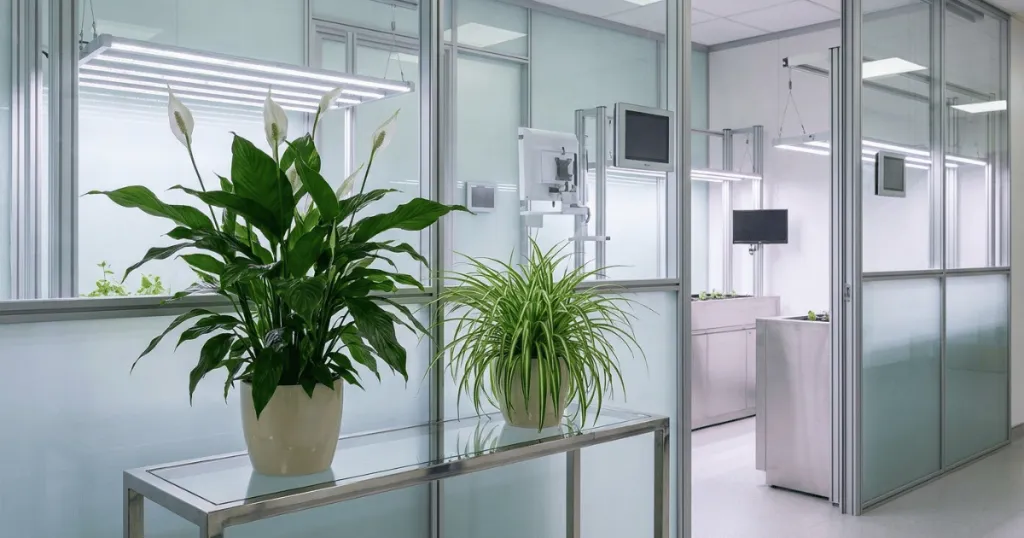
Criteria for Selecting Office-Ready Plants
When evaluating plants based on their inclusion in research like the NASA Clean Air Study, it is essential to distinguish between laboratory performance and real-world office survivability. In a controlled study, plants are often kept in ideal conditions with optimal light and humidity. In a corporate office, however, the environment is defined by artificial light, low humidity, and occasional temperature drops during non-business hours.
The most effective office plants are those that tolerate low light levels, as most desks are positioned far from windows. Additionally, the plant must be able to handle the inconsistent watering schedules that occur during holidays or busy work weeks. A plant that requires daily misting or precise soil moisture levels will likely fail in a standard office setting, regardless of its air-filtering reputation. We prioritize plants that are forgiving of neglect and capable of thriving in the ambient light levels provided by standard LED or fluorescent fixtures.
Resilient Foliage for Desks and Reception
Snake Plant
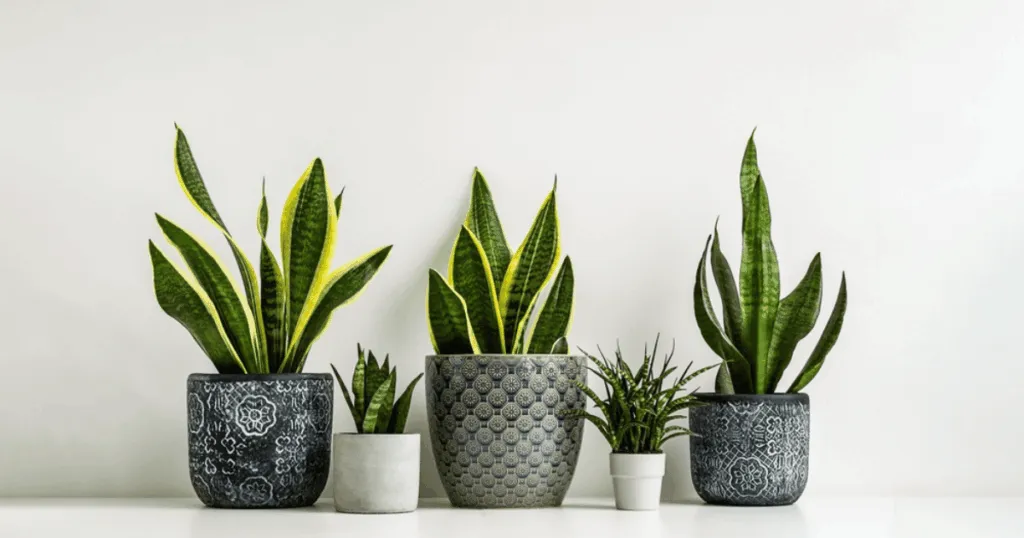
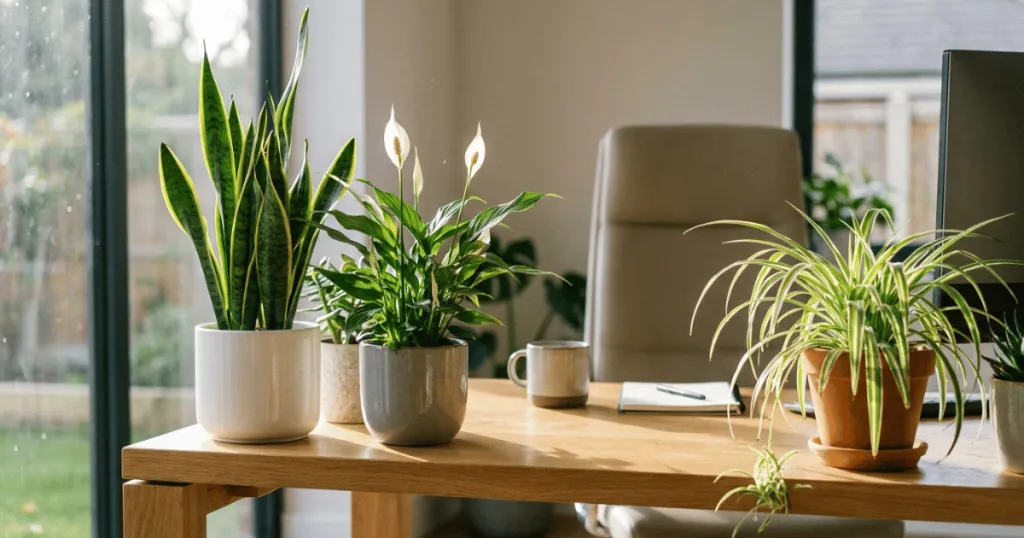
The Snake Plant is arguably the most reliable choice for any office environment. Its ability to tolerate low light and infrequent watering makes it a top performer for cubicles or corners that receive little natural sunlight. It is exceptionally hardy, and its architectural, vertical growth fits well in tight spaces without crowding a desk surface. Because it is succulent-like, it stores water in its leaves, allowing it to survive long weekends when the office is closed. Note that it is mildly toxic to pets, so keep it away from office areas where animals may be present.
ZZ Plant
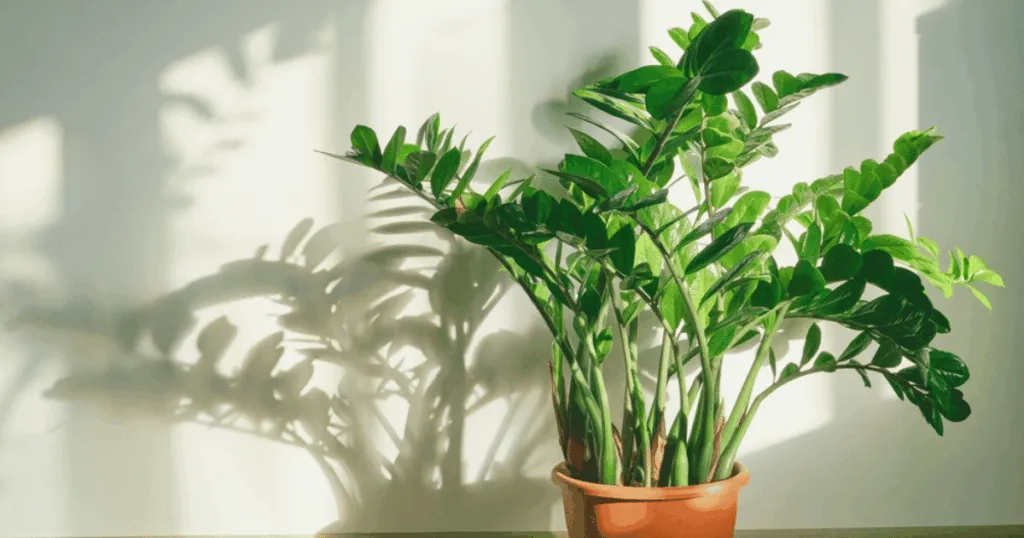
For areas that are almost entirely devoid of natural light, the ZZ Plant is a standout candidate. It is remarkably tolerant of fluorescent lighting and can go weeks without water, making it ideal for reception desks or administrative areas where plant care is not the primary focus. Its waxy leaves also resist dust accumulation better than many other indoor species. The ZZ plant grows from rhizomes, which act as a water reservoir, making it highly drought-tolerant. Like the Snake Plant, it contains calcium oxalate crystals and should be kept away from pets.
Pothos
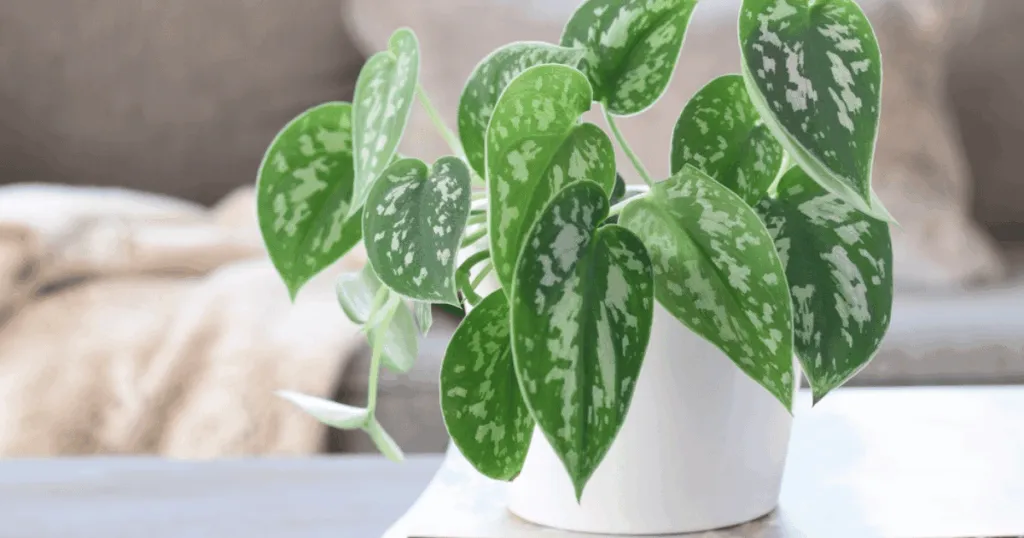
Pothos is a versatile trailing plant that adapts quickly to various light conditions. It is frequently recommended for its ease of care and ability to thrive in hanging baskets or on high shelves in meeting rooms. While it prefers medium light, it remains healthy in low-light settings, provided it is not overwatered during the winter months. Pothos is an excellent choice for adding a softening, organic element to rigid office shelving or partitions.
Architectural and Larger Office Plants
Chinese Evergreen
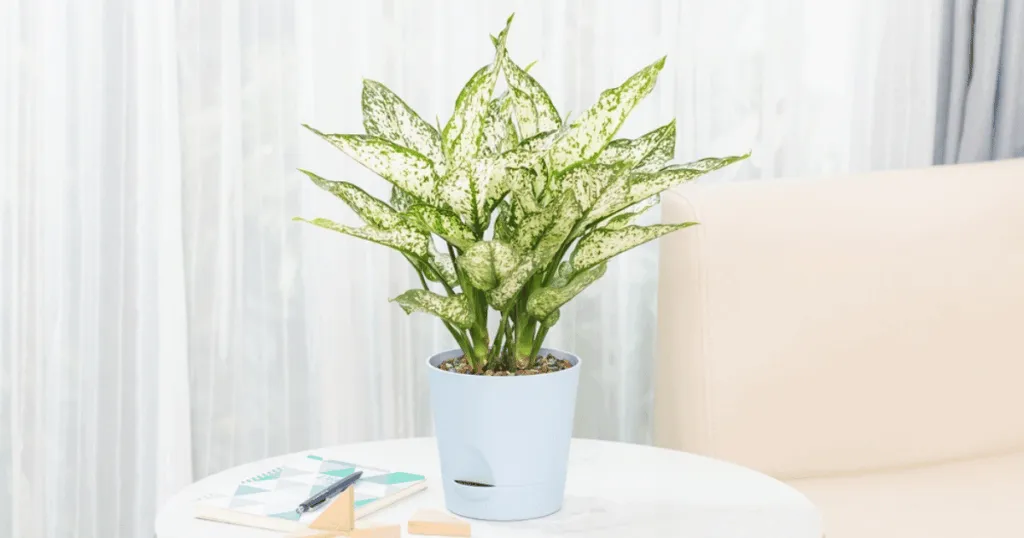
Chinese Evergreen offers a wide variety of leaf patterns that can add color to a monotonous office space. It is highly adaptable to lower light levels and is more forgiving of dry air than many other tropical plants. It is a solid choice for floor-standing displays in lobbies or waiting areas where you want a substantial plant that does not require constant attention. Ensure you allow the top inch of soil to dry out between waterings to prevent root rot.
Dracaena
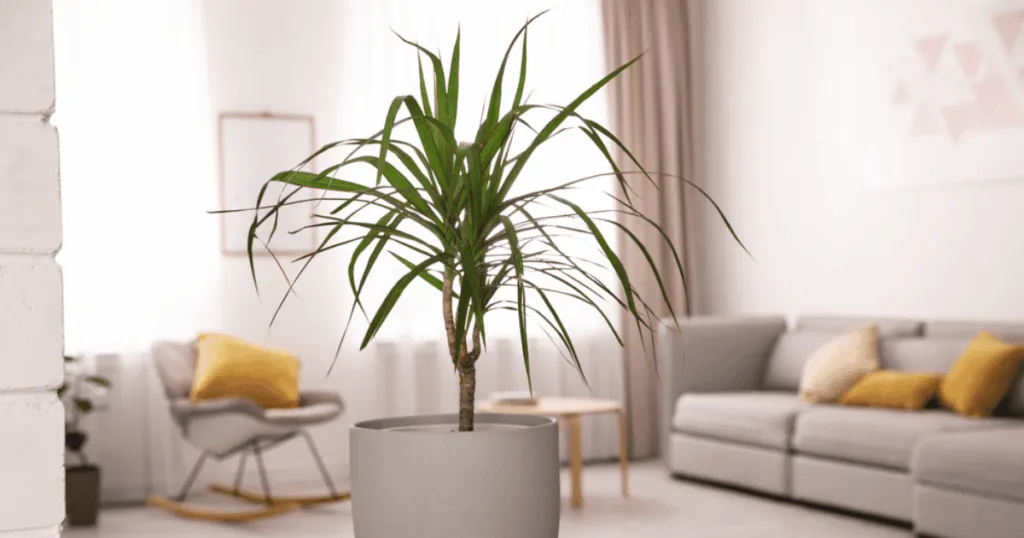
The Dracaena genus includes several varieties that serve as excellent focal points in open-plan offices. These plants are known for their resilience and ability to grow in medium light. They are particularly effective at filling vertical space, making them a standard choice for corners or near office entrances where a larger, more structured plant is needed. Be mindful that Dracaena can be sensitive to fluoride in tap water, which may cause brown tips; using filtered water can mitigate this aesthetic issue.
Parlor Palm
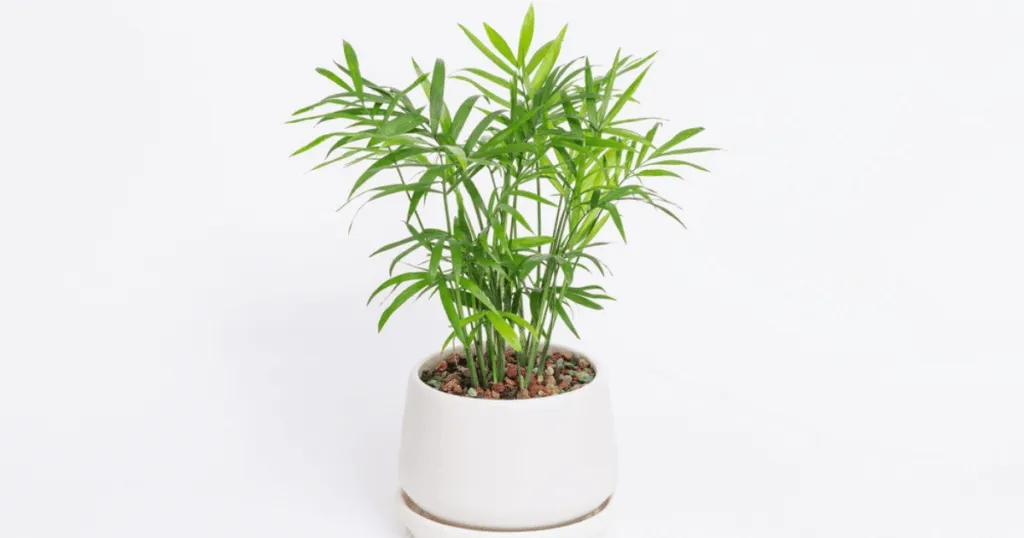
If you are looking for a palm that can handle the shade of a typical office, the Parlor Palm is the most suitable option. Unlike many other palms that demand bright, direct sunlight, this species is well-adapted to lower-light environments. It provides a soft, green aesthetic that can help break up the rigid lines of office furniture. It is also non-toxic, making it a safer choice for pet-friendly offices.
Cast Iron Plant
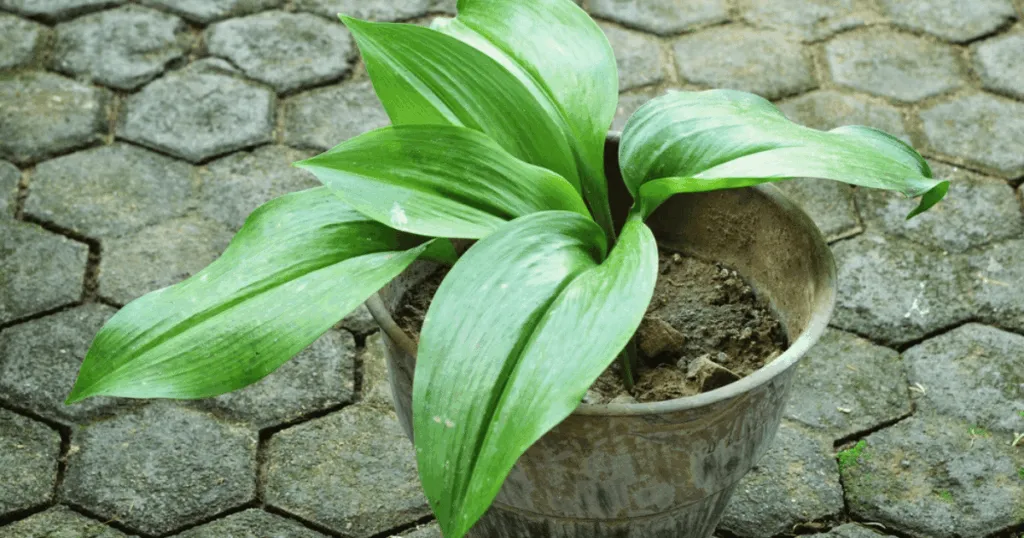
True to its name, the Cast Iron Plant is nearly indestructible. It is an excellent choice for offices that have a history of struggling to keep plants alive. It tolerates low light, temperature fluctuations, and irregular watering with ease, making it a low-stress addition to any professional environment. It is also non-toxic to cats and dogs, providing peace of mind in diverse work settings.
Specialized Office Plant Considerations
Heartleaf Philodendron
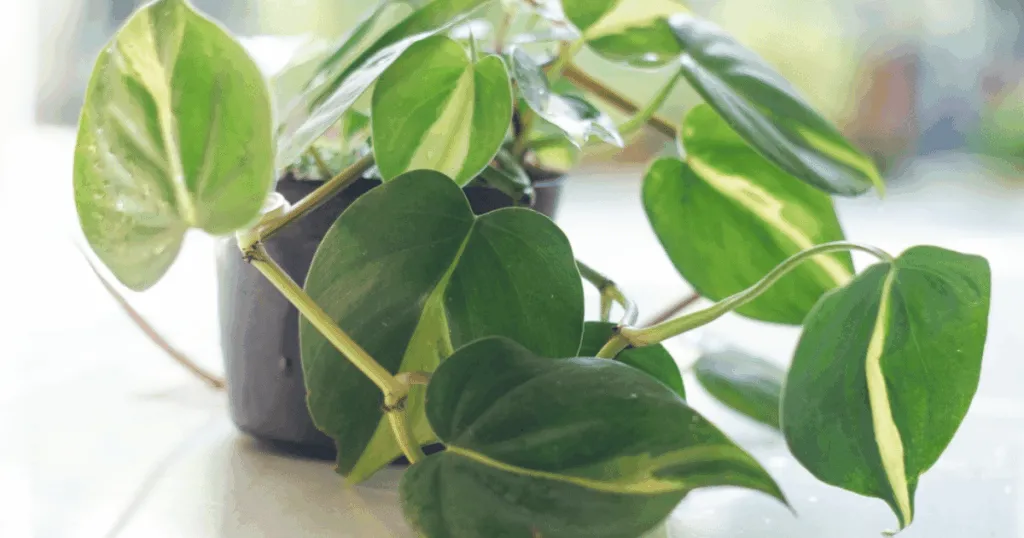
Often confused with Pothos, the Heartleaf Philodendron is a classic trailing plant that thrives in medium to bright indirect light. It is an excellent choice for office bookshelves or filing cabinets. It prefers slightly more consistent moisture than the Snake Plant but is still very forgiving. Its heart-shaped leaves add a touch of warmth to sterile office environments.
Spider Plant
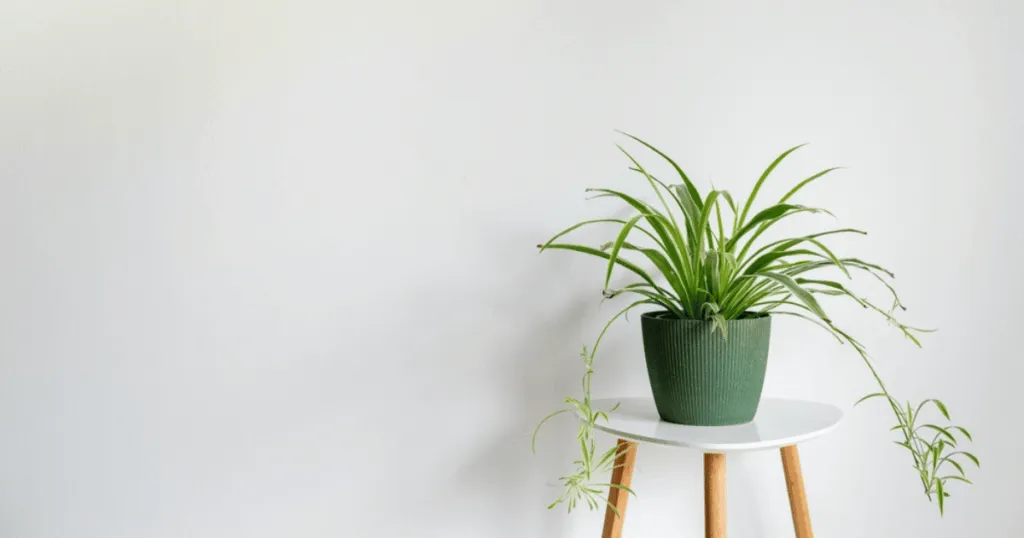
The Spider Plant is a favorite for its ability to produce “babies” or plantlets on long stems, which can be propagated easily. It is non-toxic and handles average office humidity well. It is a great choice for hanging planters in breakrooms or near windows where it can receive bright, indirect light to maintain its vibrant green and white variegation.
Rubber Plant
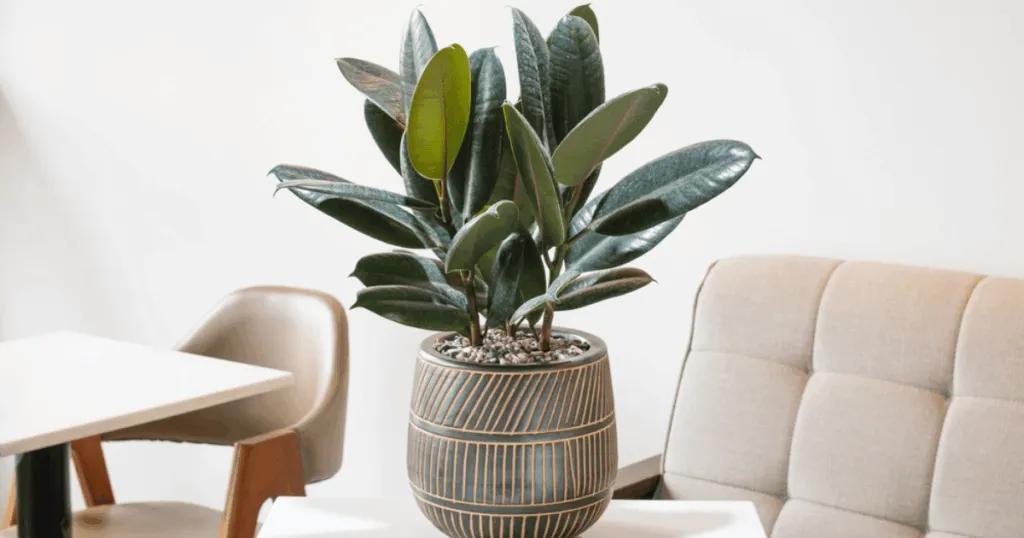
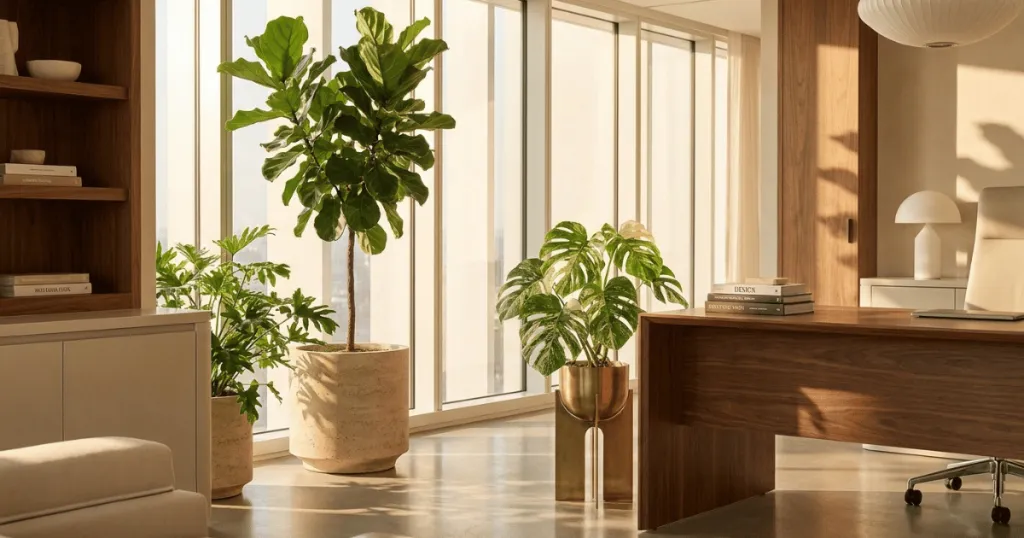
For a bold, statement-making plant, the Rubber Plant (Ficus elastica) offers thick, glossy leaves. It requires brighter light than the Snake Plant or ZZ Plant to maintain its vigor. It is a moderate-difficulty plant that prefers to dry out slightly between waterings. Note that its sap can be an irritant, so handle with care during repotting or pruning.
Peace Lily
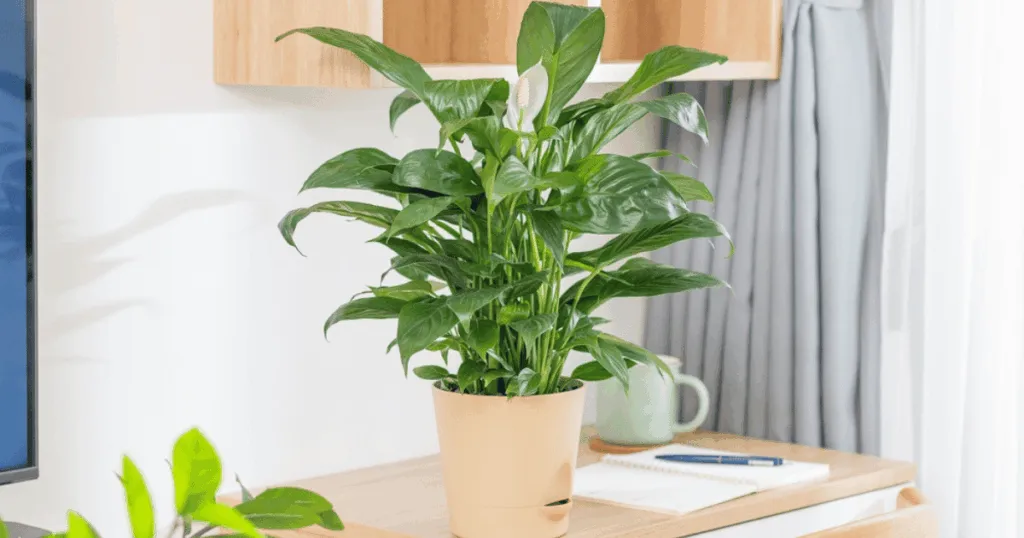
The Peace Lily is unique because it communicates its needs clearly; the leaves will droop noticeably when the plant is thirsty. This makes it an excellent choice for office managers who want a visual cue for when to water. While it prefers higher humidity, it can survive in standard office conditions if kept away from direct HVAC vents. It is a flowering plant, though blooms may be sparse under low-light office conditions.
Placement and Practical Use Cases
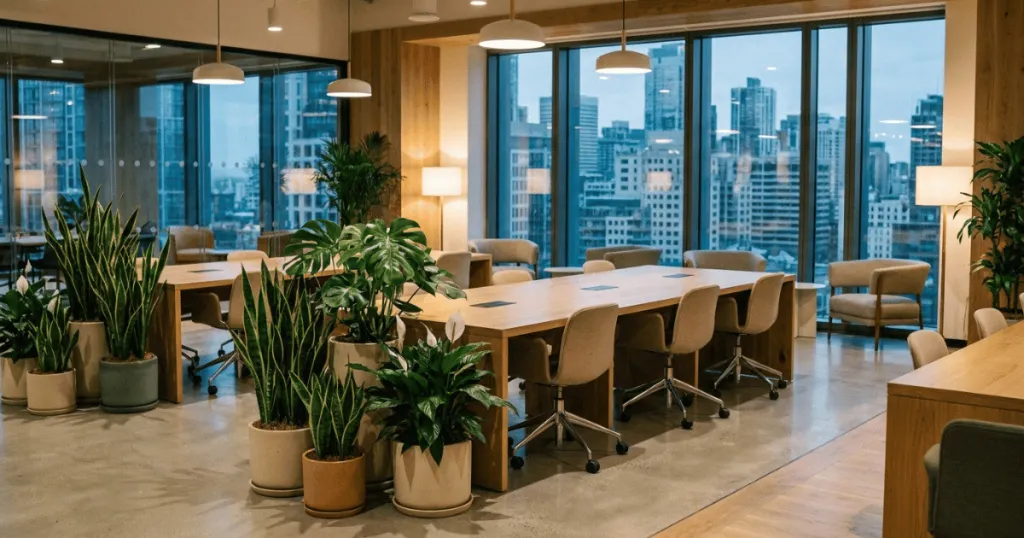
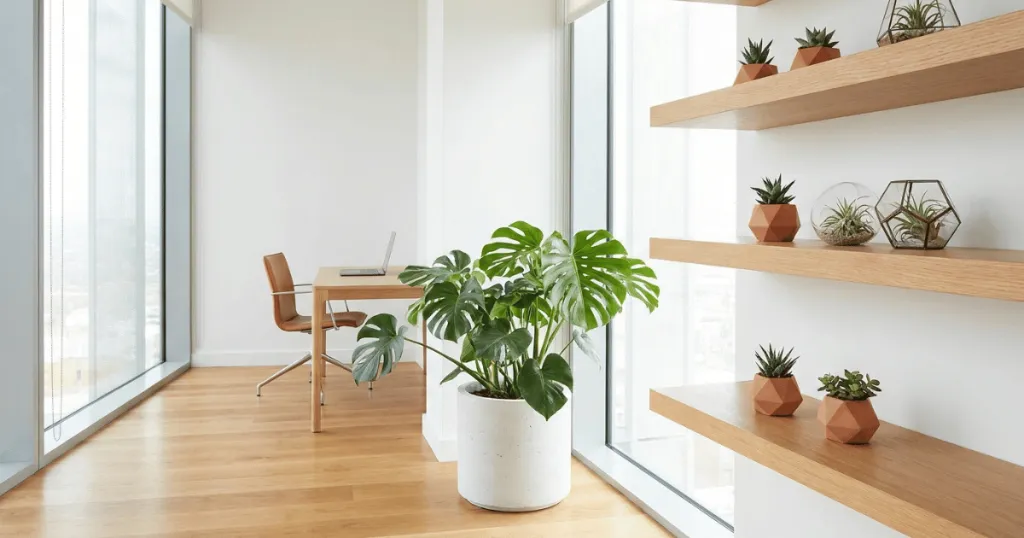
Strategic placement is just as important as the plant choice itself. In an office, the primary goal is to maximize the visual and psychological benefits of greenery without creating maintenance burdens. For desks, choose compact plants like the ZZ Plant or Pothos that do not interfere with computer equipment or workspace. For reception areas, larger specimens like the Dracaena or Chinese Evergreen create a welcoming, professional atmosphere that signals a well-maintained office.
Consider the light source before finalizing your placement. If a meeting room has only overhead fluorescent lighting, stick to the most shade-tolerant options like the Snake Plant or Cast Iron Plant. If you have a south-facing window, you can introduce more light-demanding varieties, but be aware that direct sun through office glass can sometimes cause leaf burn. Always ensure that plants are placed away from direct HVAC vents, as the constant stream of dry, forced air can stress even the most resilient species.
Limitations and Choosing Differently
Not every plant mentioned in historical air-quality research is a perfect fit for every office. Some plants, such as the Boston Fern or certain palms, require high humidity levels that are rarely found in modern, climate-controlled buildings. If your office has a very dry environment, these plants will likely develop brown, crispy tips, which can look untidy and unprofessional. In such cases, it is better to choose a more drought-tolerant succulent or a waxy-leaved plant that retains moisture better.
Another important consideration is toxicity. Many of the most popular office plants, including Pothos, Snake Plants, and Philodendrons, are toxic if ingested. If your office allows pets or if there is any chance of children being present, you should prioritize non-toxic options like the Parlor Palm or Cast Iron Plant. Choosing the right plant is a matter of balancing your aesthetic goals with the reality of your office environment and safety requirements.
Ultimately, the best approach is to start with one or two low-maintenance species and observe how they perform in your specific office climate before expanding your collection. Do not feel pressured to fill every corner with greenery immediately. A few healthy, well-placed plants provide more value to an office environment than a larger collection of struggling, neglected foliage.
Evaluating Long-Term Success in Corporate Settings
Beyond the initial selection, the longevity of office plants depends on a proactive maintenance routine that accounts for the “weekend gap.” In most office buildings, HVAC systems are programmed to reduce air circulation or adjust temperatures during non-business hours. This creates a microclimate that can be significantly drier or cooler than the daytime environment. Plants like the Snake Plant and ZZ Plant are particularly well-suited for these shifts because their physiological adaptations allow them to enter a state of metabolic conservation.
When managing a collection, it is helpful to categorize plants by their water needs. Grouping plants with similar requirements – such as keeping all drought-tolerant succulents together – simplifies the watering process for staff. Furthermore, avoid the common pitfall of “over-caring.” Many office plants die from excessive watering by well-meaning employees who assume a plant needs daily attention. Establishing a clear, singular point of contact for plant care prevents the “too many cooks” scenario where a plant is watered by three different people in one week, leading to inevitable root rot.
Finally, consider the aesthetic impact of containers. While plastic nursery pots are functional, they are often unstable and prone to tipping. Using heavy ceramic or stone planters not only provides better stability for larger plants like the Dracaena or Rubber Plant but also helps regulate soil temperature. Ensure that any decorative container has a drainage hole or a liner that allows for proper drainage; a plant sitting in standing water at the bottom of a decorative pot is a recipe for failure. By focusing on these practical, structural elements, you ensure that your office greenery remains an asset rather than a maintenance burden.
This information is provided for educational purposes to help office managers make informed decisions about indoor greenery. We do not provide commercial services, plant sales, or professional landscaping consultations. Always verify the specific environmental needs of a plant before purchasing, as individual cultivars may have slightly different requirements than the general species. Proper plant care in an office setting is a shared responsibility, and clear communication about watering schedules is the most effective way to ensure long-term success.
FAQ
Do these plants actually clean office air effectively?
While plants have shown the ability to filter air in laboratory settings, the number of plants required to significantly impact air quality in a large, ventilated office is impractical for most workplaces. Focus on their aesthetic and psychological benefits instead.
How often should I water my office plants?
There is no single schedule. Check the soil moisture by touch. If the top inch of soil is dry, most of the recommended plants are ready for water. Overwatering is a more common cause of plant failure than underwatering.
Can I use tap water for my office plants?
Most of the recommended plants tolerate tap water well. If your water is heavily chlorinated, letting it sit in an open container for 24 hours can help the chlorine dissipate before you water your plants.
What should I do if my plant leaves start turning yellow?
Yellowing leaves often indicate overwatering or poor drainage. Check the soil to see if it is waterlogged. Ensure your plant pot has drainage holes so that excess water can escape, preventing root rot.