How to prep office plants before a long weekend or holiday closure begins with your very first decision: assessing each plant’s actual water consumption rate relative to how many days the workspace will remain unstaffed. Rushing to drench every container before a holiday is a common misstep that often causes root rot, while leaving moisture-loving species bone dry in a low-humidity corporate environment guarantees severe dehydration. Taking ten minutes to audit container sizes, soil types, and ambient airflow patterns gives you a clear baseline before you start moving pots or setting up temporary irrigation aids.
When an office goes dark for an extended weekend, a three day break, or a winter shutdown, indoor plants face a sudden shift in environmental stability. HVAC systems often scale back, overhead fluorescent or LED lights switch off completely, and natural daylight through office windows becomes the sole source of illumination. Protecting your workspace greenery requires looking closely at moisture retention, light availability, and thermal stability before you lock up. Stepping away from your desk without a plan invites dry soil, crisp foliage, and wilted stems that take weeks to recover when regular operations resume.
Quick Answer
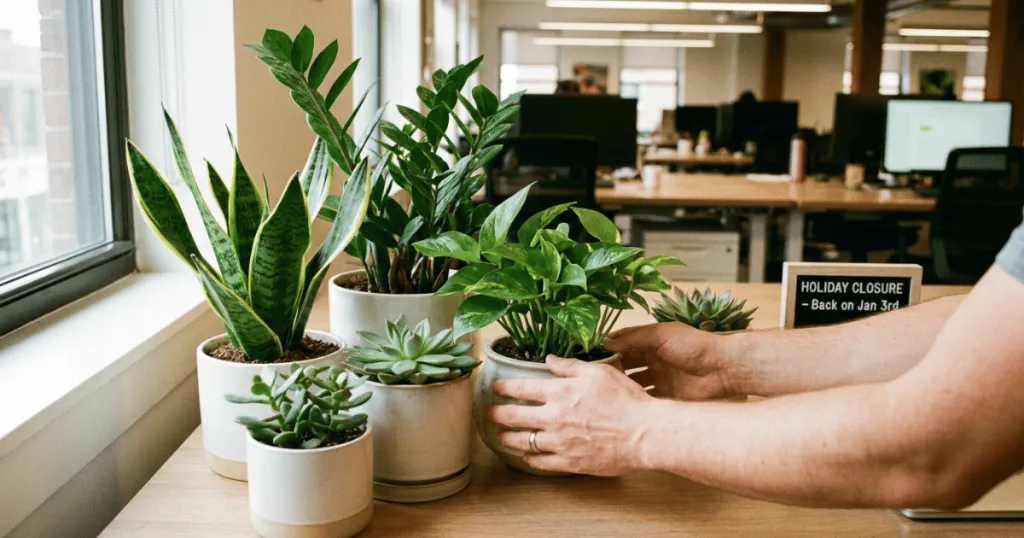
How to prep office plants before a long weekend or holiday closure requires thoroughly watering soil until moisture reaches the bottom drainage holes, shifting delicate foliage away from harsh direct window glare or active HVAC vents, and grouping plants together in a bright, sheltered interior zone to preserve ambient humidity.
Before You Start
Before touching a watering can or rearranging workspace vegetation, you need to establish a few non-negotiable checks. Skipping this assessment phase often leads to unintended damage, such as waterlogged root systems in stagnant plastic pots or scorched leaves left too close to south-facing glass panels. Take stock of your workspace layout, the specific plant species you manage, and the environmental controls operating while staff are away.
First, evaluate the duration of the closure. A standard three-day weekend requires very little intervention beyond normal Friday watering for most established indoor species. A week-long Thanksgiving closure or a two-week winter holiday demands proactive moisture management, temporary relocation, and sometimes simple passive wicking setups. Second, check your building management schedule regarding HVAC systems. Many commercial buildings shut down heating and cooling entirely over long weekends, causing dramatic temperature drops or unventilated heat buildup depending on the season. Knowing whether your office will turn into a hot box or a cool vault dictates where you should stage your plants.
Finally, identify which plants are high-risk specimens. Ferns, calatheas, and large tropical specimens with thin leaves demand high humidity and consistent moisture, making them vulnerable to dry corporate air during multi-day absences. Conversely, snake plants, ZZ plants, and pothos store water efficiently and handle empty offices with minimal fuss. Categorizing your collection allows you to focus your preparation efforts where intervention matters most, saving time and preventing over-correction on resilient varieties.
Executing office plant maintenance successfully also means understanding how building climate controls influence soil moisture evaporation. In winter, heating systems pump dry air through corporate suites, rapidly accelerating potting mix saturation loss. In summer, cooling systems do the same. Factoring these HVAC dynamics into your pre-holiday checklist prevents guesswork and ensures your indoor plant hydration strategy aligns with real environmental conditions.
Tools, Context, and Prerequisites
Gathering the right supplies before you begin makes the pre-holiday transition efficient and keeps office desks clean. You do not need complex automated irrigation systems for standard corporate flora, but a few simple household or office utility items will protect your plants while the building is empty.
- Watering container with a narrow spout: Allows precise targeting of the root zone without splashing corporate furniture or desktop electronics.
- Saucers or plastic nursery trays: Essential for catching excess drainage if you give plants a deep soak before leaving.
- Cotton or nylon wicking cords: Useful for creating temporary passive watering bridges from a filled container to thirsty pots.
- Plastic humidity domes or clear bags: Helpful for exceptionally delicate desktop ferns during extended winter closures.
Understanding the office environment is just as vital as having tools. Commercial office buildings maintain steady artificial lighting schedules and controlled indoor temperatures during normal work weeks, but holiday closures disrupt these baselines. When overhead lighting systems turn off on Friday evening, plants rely entirely on ambient daylight entering through windows. If your desk sits deep inside an open-plan core without exterior windows, you must move light-dependent species closer to perimeter glass or rely on automated desk lamps connected to timers. Recognizing these environmental shifts ensures your green assets stay healthy until Monday morning.
Workspace greenery care requires factoring in the unique constraints of office furniture and cubicle layouts. Because desks are often cramped or positioned directly under harsh overhead vents, evaluating workspace greenery care limitations before you leave prevents accidental property damage and keeps plant foliage clear of high-traffic walkways where cleaning crews or building maintenance might brush against them.
Step-by-Step Instructions for Holiday Plant Prep
Follow these sequential steps to safeguard your office greenery before leaving for a long weekend or extended office closure. Each action addresses a specific vulnerability created by empty, unmanaged workspaces.
1. Conduct a Thorough Moisture Audit
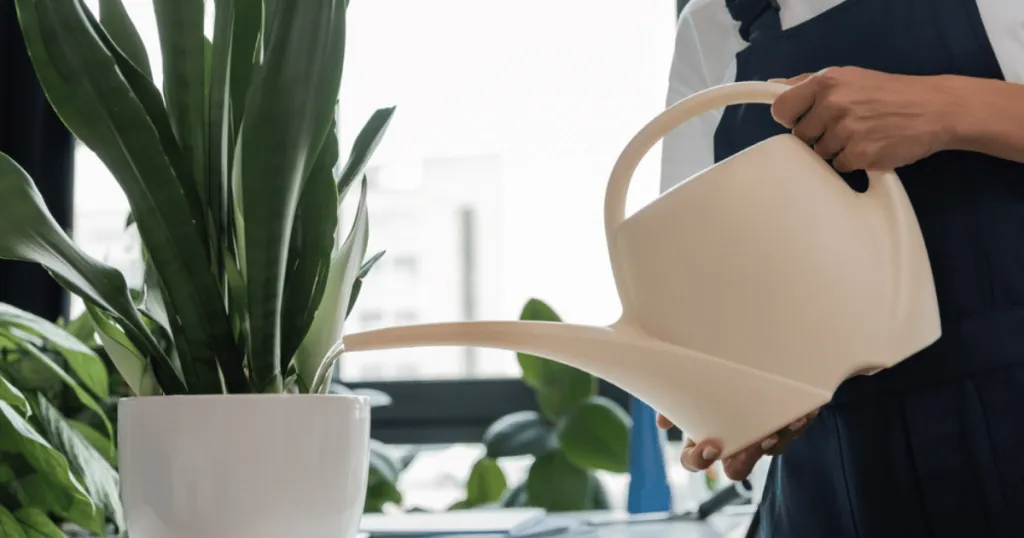
Inspect the soil moisture of every plant in your care using your finger or a wooden moisture meter pushed two inches into the potting mix. Do not water every pot automatically. Water only those plants whose soil feels dry in the upper root zone. For plants that are already damp, leave them alone to prevent root rot. For dry soil, water deeply until liquid trickles out of the bottom drainage hole, letting the excess drain completely into a saucer before placing the pot back in position. This soil moisture audit guarantees you never flood a container that has enough internal water reserves to carry it through a short office break.
2. Move Plants Away from Active HVAC Vents and Drafts
Commercial heating and air conditioning units cycling on and off in an empty building create intense directional drafts that rapidly dry out delicate foliage. Move desk plants away from direct ceiling diffusers, floor vents, and drafty exterior doorways. If a plant must sit near a window, ensure it does not touch cold winter glass or absorb magnified heat through unfiltered summer sunbeams while no one is there to adjust blinds. Effective HVAC draft management protects plant cells from rapid cellular moisture loss caused by constant artificial wind tunnels.
3. Group Plants Together to Boost Humidity
Isolate individual plants scattered across separate desks and cluster them together on a central breakroom table or a shared collaborative workspace. When multiple plants sit close together, they naturally transpire moisture into the shared air space, creating a humidity microclimate that buffers against the dry, sterile air of an empty office building. This collective grouping also makes it easier to set up collective watering aids if the closure extends beyond four days.
4. Set Up Simple Passive Wicking for Extended Absences
If your office will be closed for a week or more, set up a basic capillary wick system for thirsty species like peace lilies or fittonias. Fill a clean container or glass jar with water and place it slightly higher than the plant pot. Submerge one end of a thick cotton shoelace or nylon wick deeply into the water reservoir, and bury the other end two inches deep into the plant soil. Capillary wicking will slowly draw moisture into the root zone over several days without drowning the root system, providing reliable holiday plant survival insurance when office buildings sit locked for weeks.
5. Adjust Natural Light Placement
Assess where natural light will fall during the empty days. If your workspace lacks windows and relied entirely on desk lamps, set any automated lighting timers to run for standard daylight hours. For sun-loving desktop succulents, ensure they are positioned where they receive adequate indirect light without risking leaf scorch if window blinds remain fully open throughout the holiday break. Monitoring light availability prevents sudden chlorosis or sunburn while staff are off-site.
Common Mistakes to Avoid
Preventing post-holiday plant damage requires steering clear of common shortcuts that seem helpful on a busy Friday afternoon but backfire by the time you return. One frequent error is leaving pots sitting directly in standing water inside decorative cachepots or saucers. When drainage holes stay submerged in stagnant water for days without air circulation, roots suffocate and rot rapidly. Always empty saucers thirty minutes after watering, or elevate the inner nursery pot on pebbles so it never touches standing liquid.
Another pitfall is fertilizing right before a long closure. Feeding indoor plants stimulates active growth at the exact moment water and light availability may become erratic in an empty office. Save all fertilizer applications for regular maintenance weeks when you can monitor the response. Finally, avoid drastically changing a plant’s permanent spot just for a weekend. Moving a low-light office plant from a dark corner into blazing direct sunlight for three days will cause severe leaf scorch rather than a health boost.
Ignoring building security or cleaning staff schedules is another overlooked error. If you cluster all office plants in a main hallway or conference room floor to prep them, you might accidentally block emergency egress routes or interfere with routine custodial floor-waxing machines. Always stage plants on stable, elevated tables well clear of high-traffic zones.
Troubleshooting Post-Holiday Plant Issues
When you return to the office after a long closure, take a few minutes to inspect your plants before rushing into emergency care. Different symptoms require distinct corrective measures to restore plant health without causing further shock.
Limp, Drooping Stems and Dry Soil
If you return to find a plant completely wilted with bone-dry soil pulling away from the edges of the nursery pot, do not drown it instantly. Take the entire pot to a sink, submerge the root ball in lukewarm water for fifteen minutes until air bubbles stop rising, and then let it drain thoroughly. This rehydrates hydrophobic soil mixes that refuse to absorb water from standard top-watering after drying out completely.
Yellowing Leaves and Soggy Potting Mix
If the soil remains heavy, wet, and sour-smelling after a holiday break, your plant has suffered from waterlogging and potential root rot due to poor drainage or over-watering right before the closure. Remove any decorative outer cachepots immediately to maximize airflow around the plastic container. Allow the top three inches of soil to dry out completely before watering again, and prune away severely yellowed or mushy leaves with clean shears to redirect plant energy toward healthy tissue.
Crisp Brown Leaf Tips
Dry office air combined with fluctuating HVAC cycles often leaves plants with crisp, brown edges on their foliage. While brown tips will not turn green again, you can carefully trim the damaged edges using clean scissors, following the natural contour of the leaf. Increase local humidity immediately by grouping plants together or placing a small pebble tray filled with water nearby, completing a thorough foliage health assessment to ensure recovery is on track.
FAQ
Should I water office plants heavily right before a long holiday weekend?
Water thoroughly only if the soil is dry two inches down. Drenching damp soil before an office closure starves roots of oxygen and quickly causes root rot in empty buildings.
Can I leave office plants in windowless rooms during a week-long closure?
Yes, most hardy indoor office varieties like snake plants, ZZ plants, and pothos tolerate several days of total darkness well, provided their soil moisture is properly balanced beforehand.
What is the easiest way to keep desk plants hydrated during a two-week winter break?
Set up a temporary capillary wick system using a cotton cord running from a water reservoir into the pot soil, or group humidity-sensitive plants together away from drafty HVAC vents.
Should I feed my office plants with liquid fertilizer right before I leave for vacation?
Never fertilize immediately before an extended closure. Feeding encourages rapid growth when water and light levels are erratic, which stresses the plant and increases vulnerability to dry air.