Affiliate Disclosure: As an Amazon Associate, I earn from qualifying purchases.
When outfitting corporate desks, private executive suites, or shared reception areas, office managers face a unique set of environmental constraints defined strictly by artificial microclimates. Selecting greenery for a modern workspace means working around specific limitations like fluorescent or LED lighting arrays, low indoor humidity caused by constant commercial HVAC operation, and long weekends with zero human intervention.
When the goal is to improve indoor air quality and clear volatile organic compounds, standard outdoor landscaping choices simply will not survive. Finding the right species requires looking closely at how different plants manage sealed office air, artificial illumination, and restricted root zones. The best office plants for reducing pollutants combine high resilience with practical leaf structures that handle indoor stress without dropping foliage or inviting pests.
Integrating living foliage into a commercial layout also involves balancing aesthetic impact against ongoing operational overhead. In environments where facilities teams oversee dozens of workstations, plant selection must prioritize forgiving species that bounce back from irregular irrigation schedules and withstand the thermal fluctuations typical of commercial buildings.
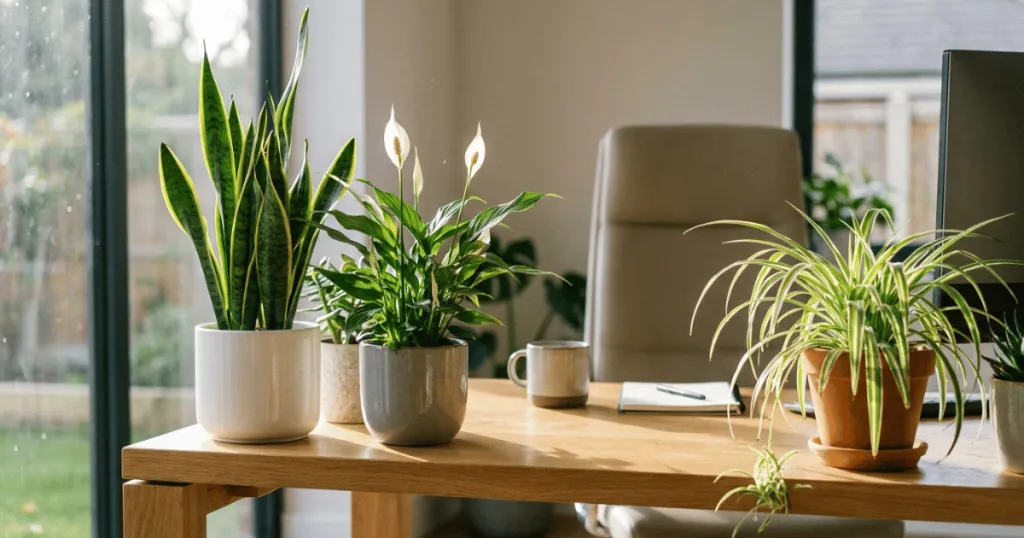
At a Glance
- Snake Plant: Tolerates deep shade and extreme neglect.
- Spider Plant: Non-toxic option with rapid leaf production.
- Chinese Evergreen: Thrives in steady indoor fluorescent light.
- English Ivy: Filters airborne compounds in bright zones.
Criteria for Selecting Pollutant-Reducing Office Plants
Navigating office botany starts with understanding that not all indoor foliage performs equally under artificial constraints. Traditional horticultural advice often assumes bright southern windows and attentive daily watering, conditions rarely found in corporate cubicles or internal meeting rooms. Our editorial review prioritizes specimens that tolerate low photosynthetic light levels, resist the drying effects of forced-air heating, and maintain active transpiration cycles even when watered on an irregular weekly or bi-weekly schedule.
Beyond basic survival, a strong candidate must manage particulate matter and gaseous compounds effectively while remaining manageable for facilities teams or busy office managers. We evaluate each entry based on its root system stability, pest resistance under dry indoor conditions, and overall tolerance of weekend neglect. The resulting shortlist focuses strictly on species proven to handle the physical realities of commercial buildings. Evaluating air-purifying office plants also requires examining foliage density, stomatal frequency, and the speed at which a plant adapts to indoor microclimates without shedding leaves prematurely.
Facilities managers must also account for container weight, soil composition, and pest vectors when introducing hundreds of pounds of potting mix into carpeted office suites. Selecting species that require minimal pruning and feature clean, upright growth habits prevents janitorial friction and keeps maintenance predictable over multi-year lease cycles.
Top Plant Selections for Office Air Purification
Choosing individual specimens for an office setting involves balancing light availability against maintenance overhead. Each entry below fulfills specific workplace demands while offering reliable foliage density for indoor air improvement.
Snake Plant
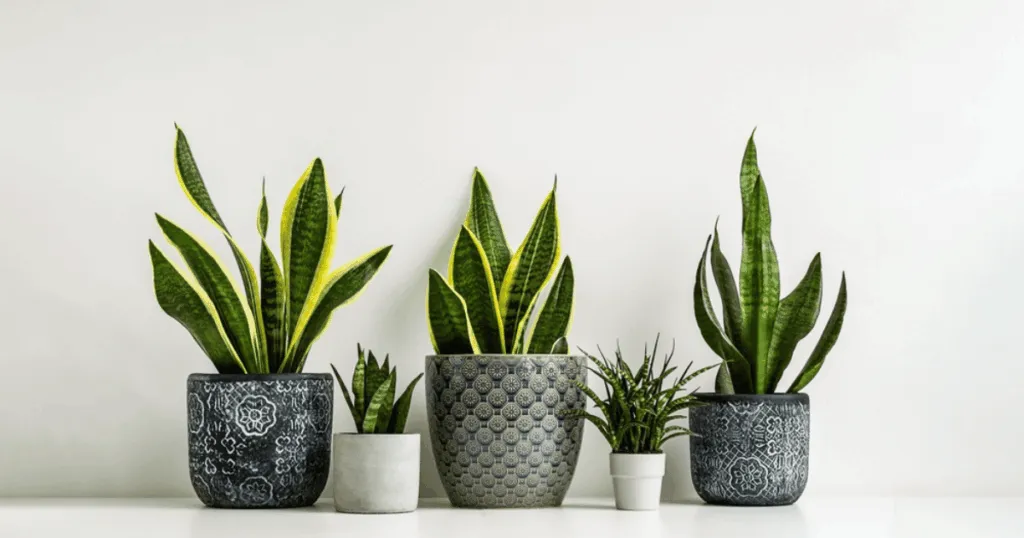
The Snake Plant stands out as one of the most forgiving office plants available, tolerating low light while growing best in medium to bright indirect light. Overwatering remains the single greatest risk to this species, making it an ideal choice for offices where weekend care is non-existent. Its upright, architectural leaves take up minimal desk footprint while maximizing surface area for gas exchange. For open-plan cubicles and windowless interior rooms, this species serves as a steadfast anchor that handles dry HVAC air with ease. Because it stores water in its thick leaves and underground rhizomes, it easily survives three-day holiday weekends or unwatered stretches that would kill tender tropical ferns.
Spider Plant
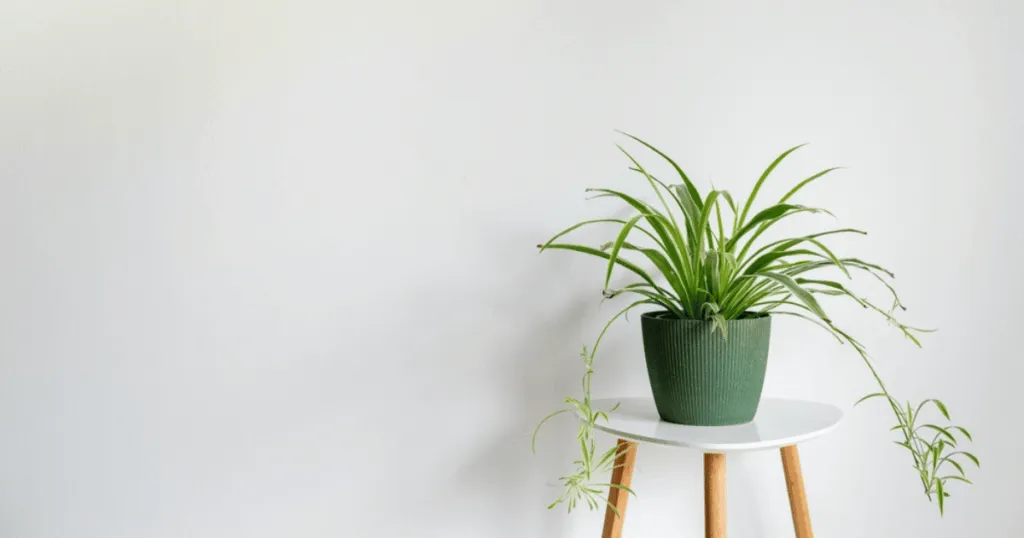
As a non-toxic option for cats and dogs, the Spider Plant adapts easily to typical office environments and produces numerous plantlets on long trailing stems. It tolerates low light while preferring medium to bright indirect light, though it can develop brown tips if exposed to excessive fluoridated tap water or extreme dry air. Its cascading habit makes it well-suited for high shelves or filing cabinets where trailing foliage softens the rigid geometry of commercial office furniture. Propagation is straightforward, allowing facilities teams to snip off plantlets and root them in water to populate additional breakrooms without purchasing new stock.
Chinese Evergreen
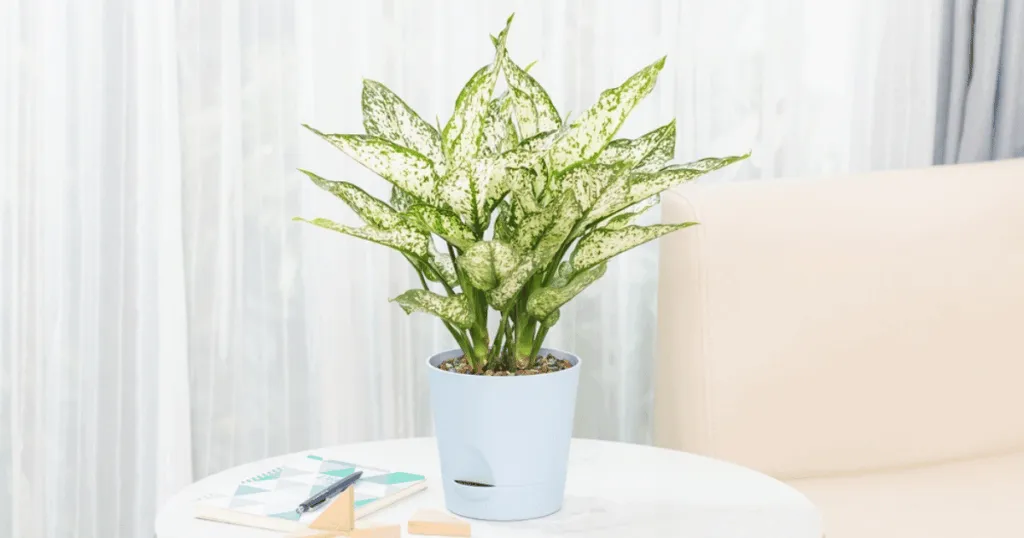
Also sold as Aglaonema, the Chinese Evergreen features striking patterned foliage that brightens dull corners while tolerating low light and thriving in medium indirect light. Numerous cultivars vary in leaf color from silver-green to deep red, yet their care requirements remain consistently manageable. This species maintains steady growth under fluorescent office lighting without requiring direct window exposure, making it a favorite for windowless executive boardrooms. Its dense, bushy growth habit ensures a substantial leaf surface area for capturing particulate matter in high-traffic administrative zones.
English Ivy
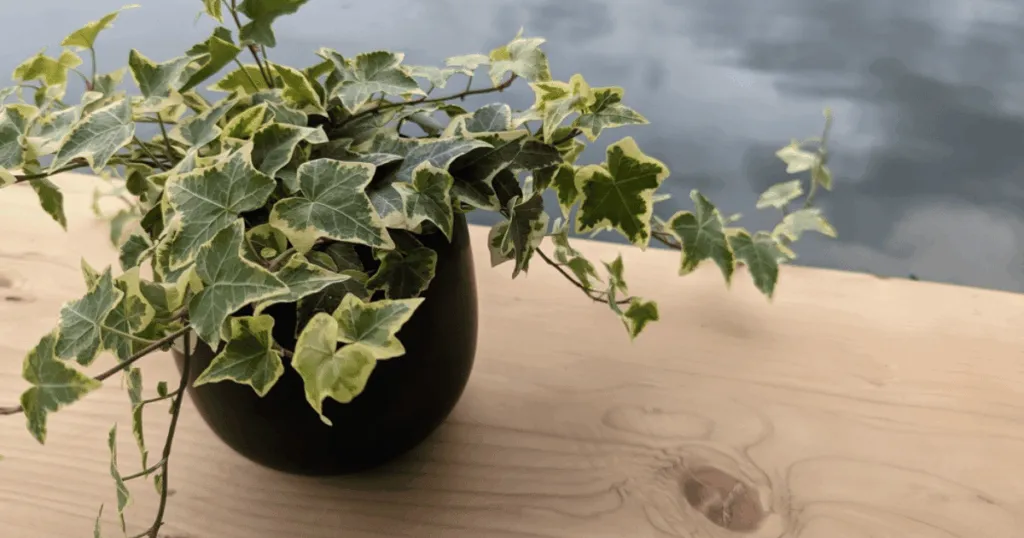
English Ivy handles medium to bright indirect light effectively, though it requires careful placement to avoid intense direct sun. In dry, low-humidity office environments, this trailing vine can be prone to spider mites, requiring occasional misting or leaf wiping. Its dense network of stems and leaves provides excellent surface coverage for filtering airborne office pollutants when kept in areas with adequate ambient brightness. Pruning long runners every few months encourages bushier growth and prevents the plant from tangling with nearby desk electronics or telephone lines.
Peace Lily
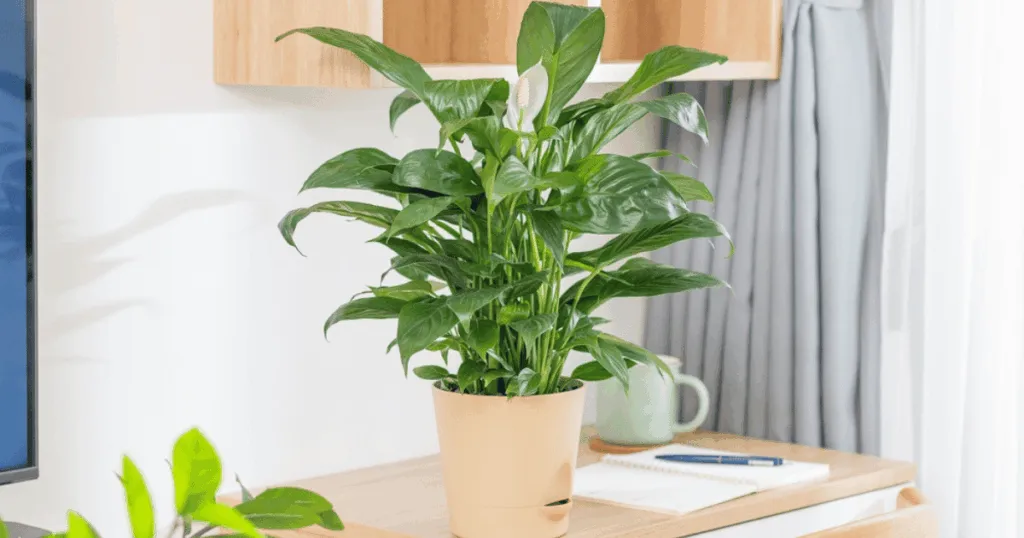
The Peace Lily tolerates low light and grows best in medium indirect light, rewarding consistent moisture with glossy green leaves and occasional white spathes. Flowering can be inconsistent under purely artificial office lighting, but the broad foliage remains an effective air-clearing asset. A common mistake is letting the soil dry out completely, which causes dramatic wilting, though the plant typically recovers quickly once watered. Office managers should designate a reliable watering schedule for this species because chronic dryness weakens cellular structure and invites tip burn.
Rubber Plant
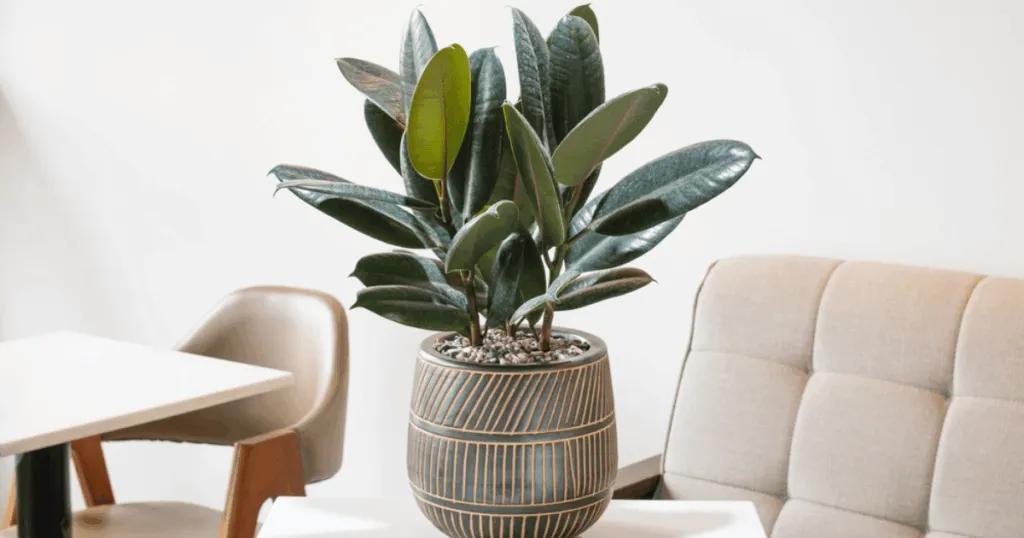
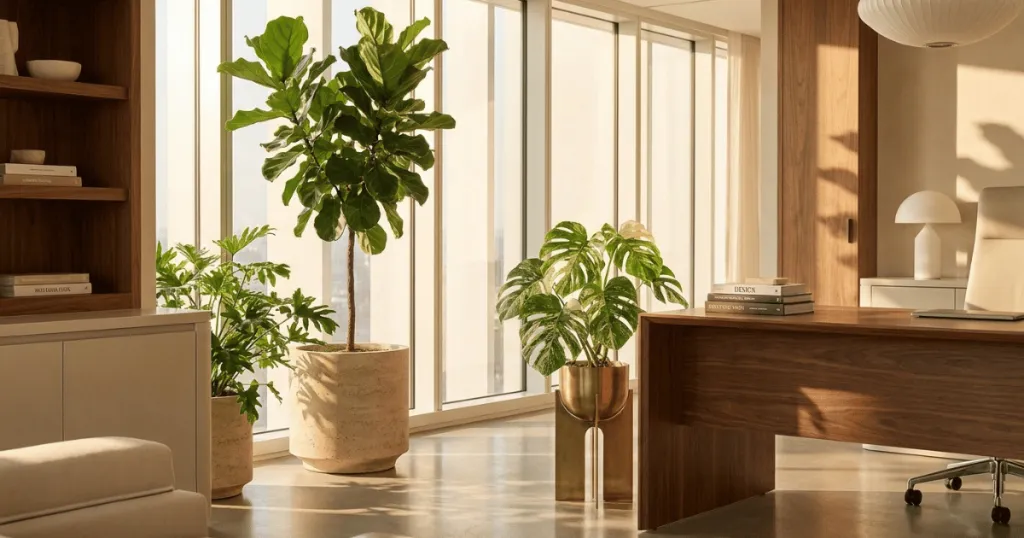
Referencing Ficus elastica, the Rubber Plant demands bright indirect light to maintain its robust growth and deep coloration. It features a woody stem and thick, glossy leaves that collect dust easily, requiring periodic wiping to maintain optimal function. Facilities managers should note that its irritant latex sap can cause skin irritation on contact if pruned or damaged. When placed near a sunny perimeter window, it grows into an impressive architectural tree that anchors open reception spaces and provides substantial canopy volume for pollutant interception.
Boston Fern
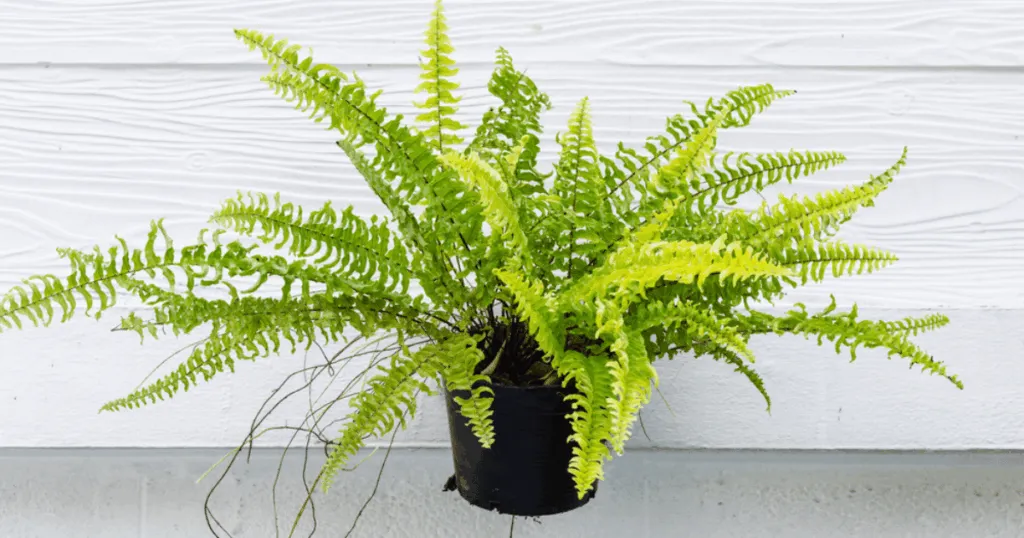
The Boston Fern requires medium indirect light and avoids direct sun entirely, thriving best where humidity remains moderate to high. It is one of the more humidity-demanding species on this list and frequently struggles in dry HVAC-conditioned offices unless placed on a pebble tray or misted regularly. When given adequate moisture, its feathery fronds offer exceptional textural contrast in office lobbies. However, in heavily climate-controlled spaces with bone-dry winter heating, facilities teams must commit to regular misting to prevent catastrophic frond drop.
Bamboo Palm
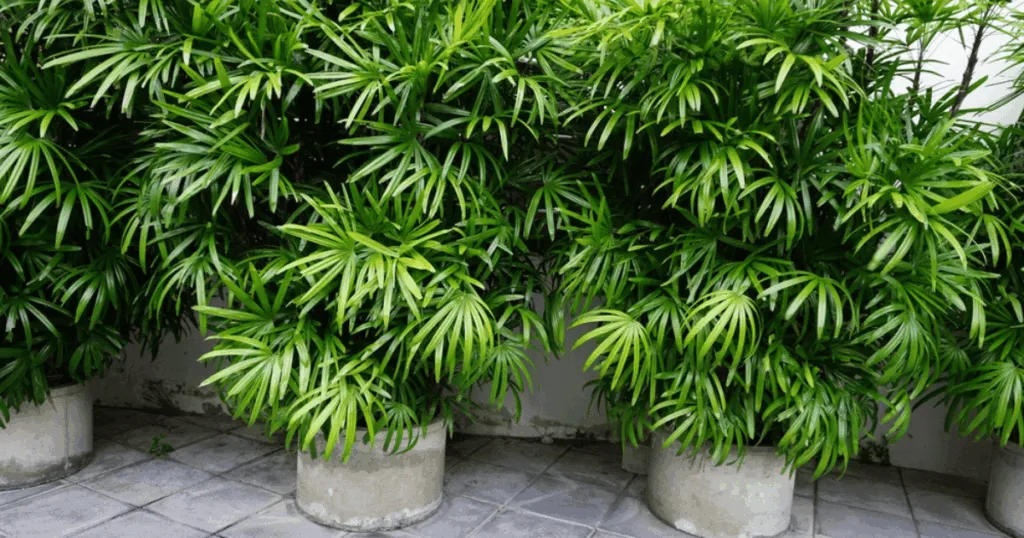
Not a true bamboo, this shade-tolerant clustering palm adapts well to low light and grows best in medium indirect light. It adds vertical height to open-plan offices and reception areas without demanding direct window sun. Maintaining slightly moist soil prevents the fronds from developing brown tips in dry office air. Its slender, graceful stems and soft green leaflets create an inviting, natural screen that divides large open-plan spaces without blocking ambient illumination.
Cast Iron Plant
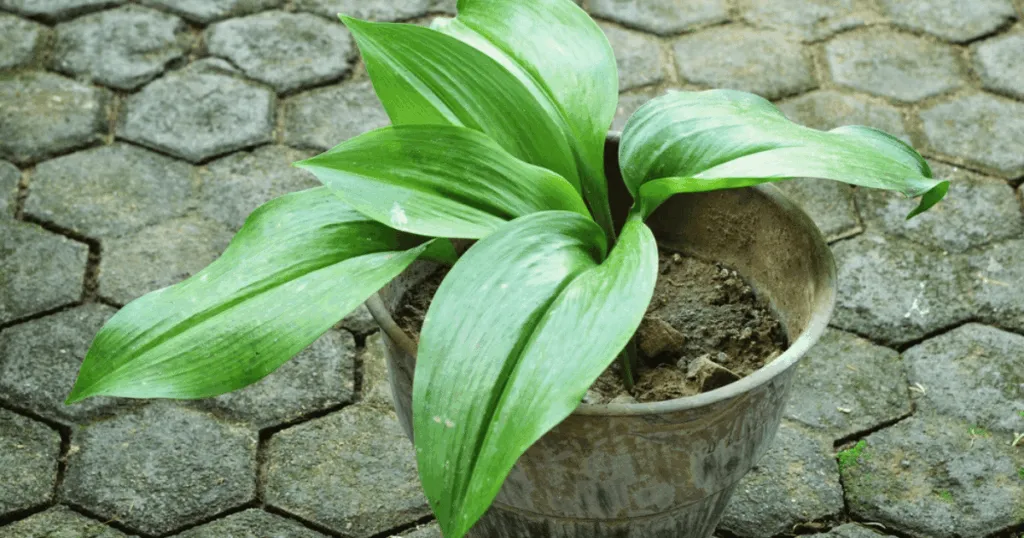
True to its name, the Cast Iron Plant earns its reputation by surviving deep shade, erratic watering, and severe neglect that would kill almost any other interior foliage. It thrives in low-light office corridors and internal windowless offices where other species wither. While it grows slowly, its broad, dark green leaves maintain a pristine appearance under minimal care, requiring only occasional dusting to keep its stomata clear of building particulate matter.
Parlor Palm
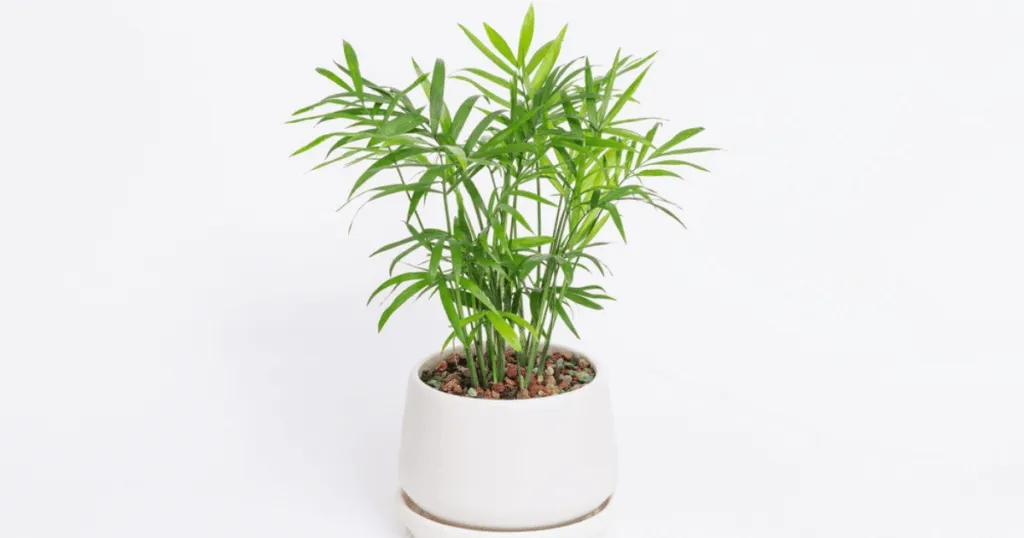
The Parlor Palm is exceptionally well-suited for tight desk spaces and low-light cubicles. Tolerating deep shade better than almost any other palm variety, it maintains a compact, upright silhouette that fits neatly onto filing cabinets or executive side tables. It prefers slightly moist soil and average room humidity, making it an undemanding companion for individual knowledge workers who want living greenery within arm’s reach.
Workplace Placement and Environmental Factors
Strategic placement determines whether an office plant thrives or declines within a few months. Most indoor workspaces rely heavily on artificial illumination, meaning plants placed far from windows must depend on LED or fluorescent tubes that stay on during business hours. Positioning specimens within a few feet of light fixtures helps compensate for a lack of natural sunlight. Understanding indoor air quality plants requires recognizing how light spectrums in commercial buildings impact photosynthetic rates.
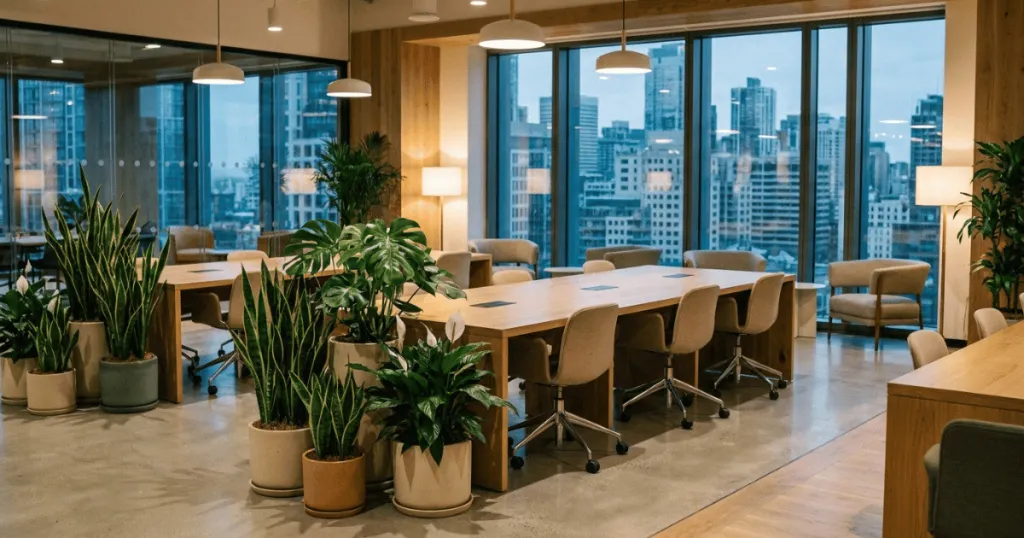
HVAC vents present another major hurdle. Direct airflow from heating or cooling ducts rapidly dehydrates foliage, leading to crisp leaf edges and premature drop. Placing plants away from direct draft paths while grouping them together creates a microclimate that helps moderate local humidity. Facility managers should also assess floor space and foot traffic to prevent delicate stems from getting brushed against or broken by passing staff. In shared breakrooms and busy corridors, durable floor plants with sturdy structural trunks outperform delicate trailing vines that catch on clothing or mobile office carts.
Another crucial environmental consideration is temperature stability. Commercial buildings often shut down or significantly scale back HVAC operations over weekends and holidays, causing indoor temperatures to swing wildly between Friday evening and Monday morning. Selecting robust species that tolerate these thermal transitions ensures that foliage remains vibrant year-round without requiring costly weekend climate control adjustments.
Trade-offs and Limitations of Office Air Purification
While foliage contributes to a more pleasant and functional workplace, expectations regarding indoor air quality must remain grounded in practical reality. Scientific studies on indoor botanical filtration often rely on sealed, small-scale chamber tests that do not replicate the rapid air exchange rates of modern commercial HVAC systems. Relying solely on greenery to clear building pollutants is insufficient without adequate mechanical ventilation.
Furthermore, maintaining these specimens introduces recurring operational duties. Plants require scheduled watering, occasional pruning, and pest monitoring. Offices with high employee turnover or limited administrative bandwidth may struggle to maintain consistent care, leading to declining plant health. Selecting ultra-resilient species mitigates this risk, but no indoor plant is entirely maintenance-free. Balancing aesthetic appeal with physical upkeep ensures that workplace botanical investments enhance employee well-being without creating extra labor for facilities teams.
Additionally, introducing living soil into sterile office environments introduces potential vectors for fungus gnats if overwatering occurs unchecked. Facilities managers should establish clear protocols regarding who handles watering duties to prevent well-meaning staff from flooding communal planters during lunch breaks. Implementing proper drainage trays and using coarse, well-draining soil mixes significantly reduces these operational risks, ensuring the green workspace remains an asset rather than a maintenance burden.
FAQ
Do office plants actually make a measurable difference in air quality?
While botanical research demonstrates that indoor foliage can absorb volatile organic compounds in sealed chambers, modern commercial HVAC systems exchange indoor air too rapidly for plants to serve as the sole air purification system. They work best as a complementary element for workplace wellness.
How do fluorescent and LED office lights affect pollutant-reducing plants?
Most shade-tolerant indoor species adapt well to standard commercial lighting fixtures, provided the lights remain on for normal business hours. Plants requiring bright light should be positioned near windows or supplemented with dedicated grow bulbs.
What is the most common reason office plants fail?
Overwatering remains the leading cause of plant decline in professional settings, often occurring when multiple staff members water the same desk specimen independently. Establishing a single assigned caretaker prevents root rot and soil saturation.
Are pollutant-clearing office plants safe for corporate pets?
Toxicity varies significantly by species. While options like the Spider Plant and Boston Fern are non-toxic, popular choices such as the Snake Plant, Peace Lily, and Rubber Plant contain calcium oxalate crystals or saponins that can cause irritation if chewed by office pets.