The single most important factor for successful hoya care in an office environment is mastering the art of the dry-down. These plants are semi-succulent, meaning they store moisture in their thick, waxy leaves and stems. In an office setting where you might be away for weekends or holidays, this trait is a significant advantage. The most common mistake is over-watering, which can lead to root rot in the confined space of a desk pot. By prioritizing soil dryness over a set calendar schedule, you ensure the plant remains stable and healthy.
Hoyas are exceptionally well-suited for professional spaces because they do not demand constant attention. Their slow growth rate means they rarely outgrow their containers, and their ability to tolerate lower humidity levels makes them far more resilient than many other tropical foliage plants often found in reception areas or cubicles. Whether you are managing a single desk plant or a collection in a meeting room, understanding their specific needs will allow you to enjoy their unique foliage and occasional fragrant blooms without the stress of high-maintenance gardening.
What You Need to Know
- Provide bright, indirect light for optimal health.
- Allow soil to dry completely between waterings.
- Average office humidity is perfectly sufficient.
- These plants are non-toxic to cats and dogs.
- Slow growth makes them ideal for small desks.
Optimizing Light and Placement
Hoyas thrive in bright, indirect light. In an office, this typically translates to a spot near a window that does not receive harsh, direct afternoon sun, which can scorch the leaves. If your office lacks windows, these plants are surprisingly adaptable to high-quality LED or fluorescent lighting, provided the light source is close enough to the plant to mimic the intensity of a bright room.
When selecting a location, observe the light quality throughout the day. A north-facing window is often ideal, as it provides consistent, soft light. If you are placing a hoya in a south-facing window, use a sheer curtain to diffuse the intensity. For interior offices or cubicles, consider placing the plant under a desk lamp equipped with a full-spectrum bulb.
While hoyas can survive in lower light, they will grow significantly slower and are much less likely to produce their characteristic clusters of star-shaped flowers. If you notice the stems becoming long and leafless, this is a clear sign the plant is stretching for more light and should be moved to a brighter spot.
Beyond basic placement, consider the orientation of your office layout. Hoyas are vining plants that can be trained to climb a small trellis or allowed to trail gracefully from a bookshelf. In an open office, using a hoya as a natural divider on a partition wall can provide a touch of greenery without obstructing sightlines.
However, ensure that the plant is not placed in a high-traffic zone where the delicate vines might be brushed against or damaged by passing employees. The stability of their environment is key; once a hoya is acclimated to a specific light intensity, frequent relocation can cause the plant to drop its buds or stall its growth cycle.
Watering and Soil Guidance
The secret to effective hoya care is to think of the plant as a succulent rather than a traditional tropical houseplant. Because they are epiphytic in nature, meaning they often grow on trees in their native habitats, they require a potting medium that provides excellent aeration and drainage. Standard potting soil is often too dense and holds too much moisture for a hoya. Instead, use a mix designed for cacti or succulents, or create your own by combining potting soil with generous amounts of perlite, orchid bark, and horticultural charcoal.
Watering should be dictated by the condition of the soil, not a calendar. Before adding water, insert your finger or a wooden dowel about two inches into the soil. If it feels damp, wait. Only water when the soil is completely dry throughout the pot. When you do water, ensure that the water drains freely from the bottom of the container.
Never let the plant sit in a saucer of standing water, as this is the fastest way to cause root decay. In an office environment, this means checking the plant on a Friday before leaving for the weekend; if the soil is dry, give it a thorough soak, but if it is still moist, leave it alone until the following week.
The physical structure of the pot also plays a role in successful watering. Terra cotta pots are excellent for hoyas because the porous material allows for additional evaporation, which helps prevent the soil from staying saturated for too long. If you are using a decorative ceramic or plastic pot without drainage, it is highly recommended to keep the hoya in a plastic nursery liner inside the decorative pot. This allows you to remove the plant for watering, ensuring that all excess moisture drains away before you place the plant back in its decorative home. This two-step process is a standard best practice for office plant management to protect office furniture from water damage.
Humidity, Temperature, and Feeding
Unlike many tropical plants that require misting or humidifiers, hoyas are perfectly comfortable in the average humidity levels found in most climate-controlled offices. They are remarkably resilient to the dry air produced by HVAC systems, provided they are not placed directly in the path of a heating or cooling vent. Sudden temperature fluctuations can cause the plant to drop leaves or buds, so aim to keep them away from drafty doorways or windows that are frequently opened.
Regarding temperature, hoyas prefer the same comfort range as humans, typically between 65 and 80 degrees Fahrenheit. As for nutrition, they are light feeders. During the growing season, which generally spans spring through early autumn, you can apply a balanced liquid fertilizer diluted to half-strength once a month. Do not fertilize during the winter months when the plant is in a state of semi-dormancy. Over-fertilizing can lead to salt buildup in the soil, which may eventually burn the roots and hinder the plant’s ability to take up water.
When considering fertilizer, opt for a formula specifically designed for foliage or a balanced houseplant fertilizer. Because hoyas are slow growers, they do not require the heavy nutrient loads that fast-growing tropicals like pothos or monsteras might demand. If you are unsure about the strength of the fertilizer, it is always safer to dilute it further. A common mistake in office settings is using leftover fertilizer from other plants that may be too concentrated for the hoya, leading to leaf burn or root stress. Consistency is more important than strength; a regular, diluted feeding schedule will support steady, healthy growth without overwhelming the plant’s root system.
Repotting, Pruning, and Propagation
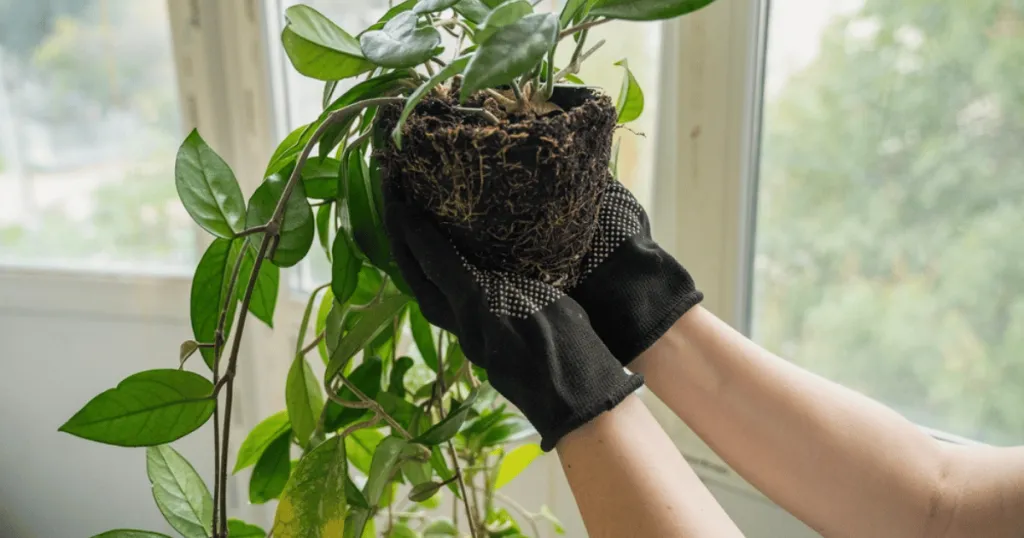
Hoyas actually prefer to be slightly root-bound. You will rarely need to repot them, and doing so too often can actually stress the plant and delay flowering. Only move to a larger pot if the roots are visibly circling the bottom or if the soil is breaking down and no longer draining well. When you do repot, choose a container that is only one or two inches larger in diameter than the current one to avoid excess soil volume that stays wet for too long.
Pruning is generally unnecessary unless you are trying to manage the size of the plant or remove dead growth. If you decide to prune, use clean, sharp shears and cut just above a leaf node. Propagation is straightforward and can be done through stem cuttings. Take a cutting with at least two leaves and a node, and place it in water or a moist, airy potting mix. Keep the cutting in bright, indirect light until roots develop. This is a great way to share a plant with a coworker or start a new desk specimen.
When propagating, patience is a virtue. Hoyas can take several weeks to show significant root development. Using a clear glass container for water propagation allows you to monitor the progress of the roots without disturbing the cutting. Once the roots are about an inch long, you can transplant the cutting into a small pot with a well-draining succulent mix. This process is highly rewarding and can turn one mature office plant into a collection of smaller specimens for different parts of the workspace. Always ensure that the cutting has at least one node, as this is where the new roots will emerge.
Seasonal Notes and Common Care Mistakes
As the seasons change, your hoya care routine should shift slightly. In the winter, the plant will grow much slower due to shorter days and lower light levels. Reduce your watering frequency accordingly, as the soil will take longer to dry out. It is better to err on the side of underwatering during these months. Keep a close eye on the plant during the transition into spring, as this is when you may see a flush of new growth that signals it is time to resume a more regular watering and feeding schedule.
The most common mistake is impatience. Many office workers assume that because a plant is not growing rapidly, it needs more water or fertilizer. This is almost always incorrect for a hoya. Another frequent error is moving the plant too often. Hoyas do not like to be relocated; once you find a spot where the plant is happy and showing signs of growth, leave it there. If you notice yellowing leaves, it is usually a sign of overwatering or poor drainage. If the leaves appear wrinkled or puckered, the plant is likely dehydrated and needs a thorough, deep watering.
Another subtle issue to watch for is the presence of pests. While hoyas are generally robust, they can occasionally attract mealybugs, which look like small, white, cottony masses in the leaf axils. In an office, these are often introduced via other plants or even on clothing. If you spot them, wipe them away with a cotton swab dipped in rubbing alcohol. Regular inspection of your plant during your weekly watering check is the best way to catch these issues early before they become a larger problem for your office plant collection.
Understanding Hoya Growth Habits
To truly master hoya care, it helps to understand their growth habit. Many hoyas produce long, leafless vines before they begin to sprout leaves. This is a normal part of their development and not a sign of illness. Do not be tempted to cut these vines off, as they are the plant’s way of searching for a support structure to climb. If you provide a small stake or trellis, you will often find that the plant begins to produce leaves more quickly once it has something to anchor itself to. This vining behavior makes them excellent candidates for hanging baskets in corners of the office where floor space is limited.
Furthermore, the waxy texture of the leaves is an evolutionary adaptation to help the plant retain moisture. This makes them highly resistant to the occasional dust that accumulates in office environments. You can gently wipe the leaves with a damp cloth every few months to keep them looking their best and to ensure the plant can photosynthesize efficiently. Avoid using leaf shine products, as these can clog the pores of the leaves and interfere with the plant’s natural respiration. A simple, clean, damp cloth is all that is required to maintain the aesthetic appeal of your hoya in a professional setting.
The Role of Air Circulation
While hoyas are tolerant of stagnant air, they do appreciate good air circulation. In a stuffy office, the air can become quite still, which may increase the risk of fungal issues if the plant is kept too wet. If your office has a ceiling fan or a small desk fan, ensure that the air is moving gently around the plant. This does not mean placing the plant directly in the path of a high-velocity fan, which could cause the leaves to dry out too quickly, but rather ensuring that the air in the room is not completely dead. Proper air circulation helps the soil dry out more evenly and keeps the foliage healthy and free of pests.
If you are working in a large, open-plan office, you might notice that different areas have different air quality. Areas near the entrance or near large windows may have more airflow than interior cubicles. Observe how your hoya responds to its specific microclimate. If you find the soil is staying wet for too long, you may need to adjust your potting mix to be even more porous by adding extra perlite or bark. Tailoring the environment to the plant’s needs is the hallmark of an experienced office plant manager and will lead to years of success with your hoya collection.
Related Hoya Guides
- our Hoya overview
- fixing common Hoya issues
FAQ
Are hoyas safe for office environments with pets?
Yes, according to the ASPCA, hoyas are considered non-toxic to cats and dogs. This makes them an excellent choice for offices that allow pets or for managers who want to ensure a safe environment for all employees.
Why are the leaves on my hoya turning yellow?
Yellowing leaves are almost always a symptom of overwatering or soil that remains wet for too long. Ensure your pot has drainage holes and that you are allowing the soil to dry out completely between waterings to prevent root issues.
How can I encourage my hoya to bloom in an office?
Flowering requires consistent, bright indirect light. If your office is dim, the plant will remain healthy but is unlikely to bloom. Ensure the plant is not being moved frequently and is receiving enough light to support the energy-intensive process of flower production.
Do I need to mist my hoya to increase humidity?
No, misting is generally unnecessary and can sometimes encourage fungal issues on the leaves. Hoyas are well-adapted to the average humidity levels found in most office buildings, so you do not need to take extra steps to increase moisture in the air.