The Bird’s Nest Fern is an excellent, low-maintenance choice for offices that provides a lush, tropical aesthetic without requiring high-intensity light.
- Thrives in low to medium indirect light common in offices.
- Requires soil to remain lightly moist, not soaked.
- Prefers above-average humidity, ideal for climate-controlled spaces.
- Non-toxic to cats and dogs according to ASPCA standards.
If you are looking for a plant that brings a distinct, sculptural look to a desk or reception area without the finicky demands of many other tropical ferns, the Bird’s Nest Fern (Asplenium nidus) is a strong candidate. Unlike the delicate, shedding foliage of a Boston Fern, this species offers sturdy, upright fronds that hold their shape well in typical office environments. It is a plant that feels intentional, providing a clean, modern silhouette that fits perfectly into professional settings.
Many office managers struggle to find greenery that survives the specific pressures of a workplace, such as fluorescent lighting and fluctuating HVAC cycles. The Bird’s Nest Fern is uniquely suited to these conditions because it is naturally an epiphyte, meaning it often grows on trees in the wild rather than in deep soil. This evolutionary history makes it more resilient to the container-bound life of an office desk or meeting room table than many of its ground-dwelling cousins.
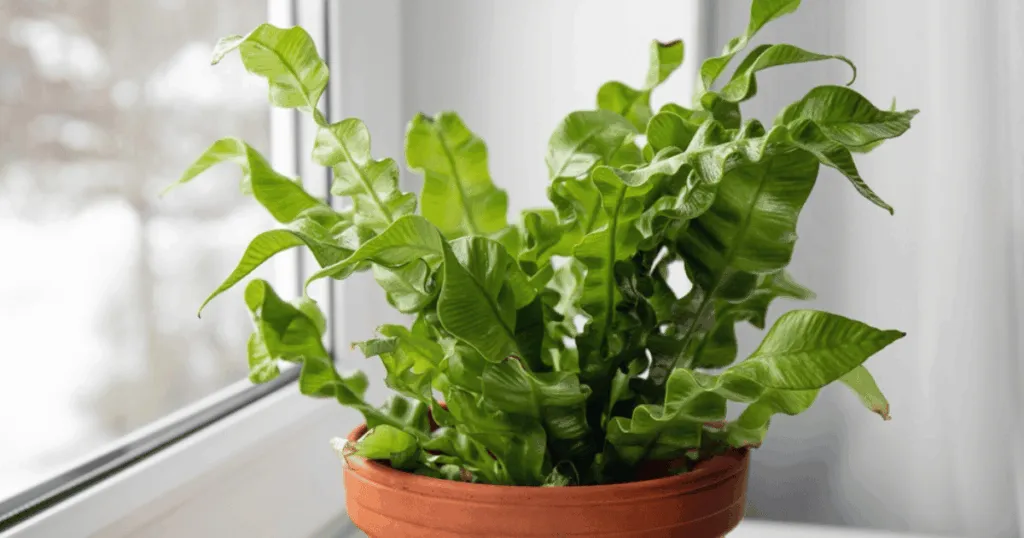
Growth Habits and Visual Appeal
The visual signature of the Bird’s Nest Fern is its rosette-like growth pattern. The fronds emerge from a central, fuzzy crown, unfurling in a bright, apple-green color before deepening to a rich, glossy emerald as they mature. The leaves are typically lance-shaped with a prominent midrib, giving the plant a structured, architectural appearance that contrasts well with the sharp lines of office furniture.
In an office setting, you can expect this plant to remain relatively compact, especially when compared to sprawling vining plants or large floor-standing palms. It does not grow aggressively, meaning it won’t quickly outgrow a desktop or a designated shelf space. This slow, steady growth rate is a significant advantage for office maintenance, as it reduces the frequency of repotting or pruning required to keep the plant looking tidy.
Because the fronds are relatively thick and leathery, they are more resistant to the dry air often found in air-conditioned offices. While other ferns might crisp at the edges when humidity drops, the Bird’s Nest Fern maintains its structural integrity longer. Its ability to hold its form makes it a reliable choice for high-visibility areas like reception desks or client-facing meeting rooms where a ragged or dying plant would be a distraction.
Care Requirements in the Workplace
Managing the health of a Bird’s Nest Fern in an office is straightforward if you focus on the fundamentals: light and water. The plant performs best in low to medium indirect light. If your office has windows with sheer curtains or if the plant is placed a few feet away from a window, it will likely be very happy. It is also surprisingly tolerant of the artificial fluorescent or LED lighting common in cubicles, provided it is not shoved into a completely windowless corner with no ambient light at all.
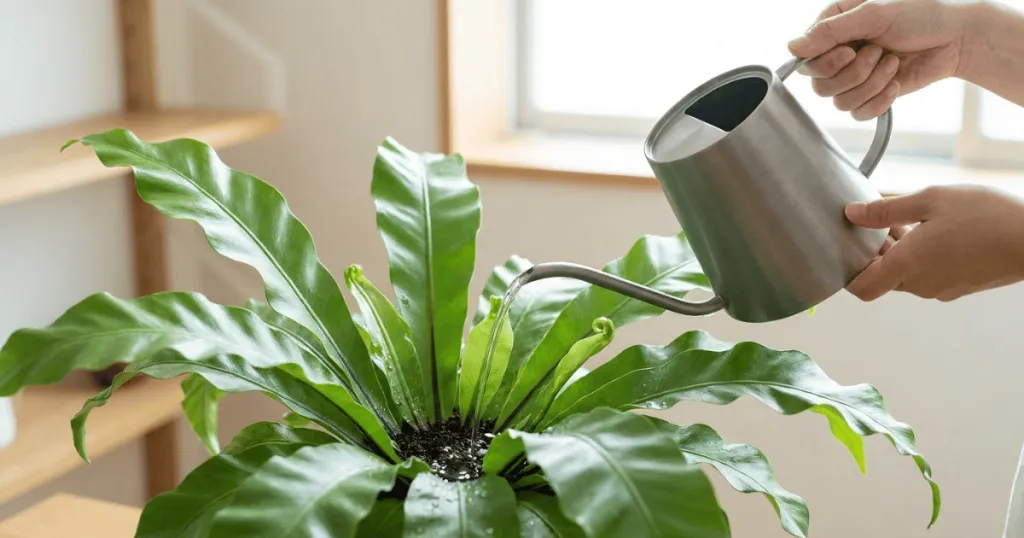
Watering is the area where most office workers encounter trouble. The goal is to keep the potting medium lightly moist at all times, but never waterlogged. A common mistake is to treat the plant like a succulent, letting it dry out completely, or conversely, to treat it like a bog plant, leaving it sitting in a saucer of standing water. Both extremes will stress the plant. In an office, it is often best to check the top inch of soil before adding more water. If it feels dry to the touch, it is time to hydrate.
Humidity is the third pillar of care. While the plant is more tolerant of dry air than most ferns, it still appreciates a boost. If your office environment is particularly dry due to heavy HVAC usage, you might notice the tips of the fronds browning slightly. This is usually a signal to increase local humidity, perhaps by grouping it with other plants or ensuring it is not placed directly in the path of a heating or cooling vent.
Placement and Office Suitability
Choosing the right spot for a Bird’s Nest Fern is about balancing aesthetic impact with environmental stability. Because it is a non-trailing plant, it is ideal for surfaces where you want a focal point without the plant spilling over onto keyboards or documents. A sturdy ceramic pot on a side table or a decorative planter on a bookshelf works well.
Avoid placing the plant in high-traffic areas where people might brush against the fronds. While the leaves are sturdy, they can be bruised or torn if subjected to constant physical contact. Additionally, keep it away from direct, harsh sunlight. Even if the plant is near a window, ensure that the sun is not hitting the leaves directly, as this can scorch the foliage and cause permanent damage to the plant’s appearance.
One of the most practical benefits of this species is its ability to handle the weekend or holiday downtime. Because it enjoys consistent moisture, a thorough watering before a long weekend is usually sufficient to keep it happy until you return. It does not require the daily attention that some flowering plants or high-light tropicals demand, making it a low-stress addition to your office routine.
Safety and Environmental Limitations
When considering office plants, safety is a frequent concern, particularly in offices that are pet-friendly or where employees have sensitivities. According to ASPCA guidance on non-toxic plants, the Bird’s Nest Fern is considered non-toxic to both cats and dogs. This makes it a safe choice for offices that allow pets or for managers who want to avoid any liability or concern regarding plant toxicity.
Despite its resilience, the Bird’s Nest Fern does have limitations. It is not a plant for the “set it and forget it” crowd who never intend to check on their greenery. It requires a baseline level of observation. If you work in a space with zero natural light, or if your office environment is subject to extreme temperature swings—such as being freezing cold at night and sweltering during the day—even this hardy fern will struggle. It is a plant that thrives on consistency rather than perfection.
Moving Forward with Your Plant Care
Once you have selected a healthy specimen, the transition into your office space should be smooth. The Bird’s Nest Fern is a forgiving plant, and most issues that arise are easily corrected with minor adjustments to watering or light exposure. If you notice the fronds drooping or the color fading, it is usually a clear signal that the plant is either receiving too much direct sun or that the soil moisture has become inconsistent.
We recommend starting with a simple observation period. Place the plant in your chosen spot and monitor its reaction for a week or two. If it looks vibrant and maintains its upright posture, you have found the perfect location. If you find yourself struggling with specific symptoms like yellowing leaves or persistent dryness, please consult our dedicated troubleshooting and care guides, which provide deeper dives into soil management, fertilization, and long-term maintenance strategies for office-grown ferns.
Related Bird’s Nest Fern Guides
- the full Bird’s Nest Fern care breakdown
- troubleshooting a Bird’s Nest Fern
FAQ
Does the Bird’s Nest Fern require special soil for an office environment?
Yes, it prefers a well-draining, peat-based potting mix that retains moisture without becoming soggy. In an office, using a high-quality indoor potting mix with added perlite or bark helps ensure the roots get enough oxygen, which is critical since office plants are often kept in containers with limited airflow.
Can I keep my Bird’s Nest Fern in a windowless office with only fluorescent lights?
While it is more tolerant of low light than many other plants, it will struggle in a completely windowless environment. If your office has no natural light, you will likely need to supplement with a dedicated LED grow light to keep the plant healthy and prevent it from becoming leggy or losing its vibrant green color.
How often should I fertilize my Bird’s Nest Fern at work?
Fertilization should be kept light and infrequent. A balanced, water-soluble fertilizer diluted to half-strength once every two months during the growing season (spring and summer) is sufficient. Avoid fertilizing in the winter months when the plant’s growth naturally slows down, as this can lead to salt buildup in the soil.