The Spider Plant is an exceptionally reliable, low-maintenance choice for office environments that offers high visual impact with minimal intervention.
- Thrives in medium to bright indirect light but tolerates lower levels.
- Requires watering only when the top inch of soil feels dry.
- Completely non-toxic to cats and dogs according to ASPCA standards.
- Produces distinctive plantlets that add a dynamic, natural aesthetic.
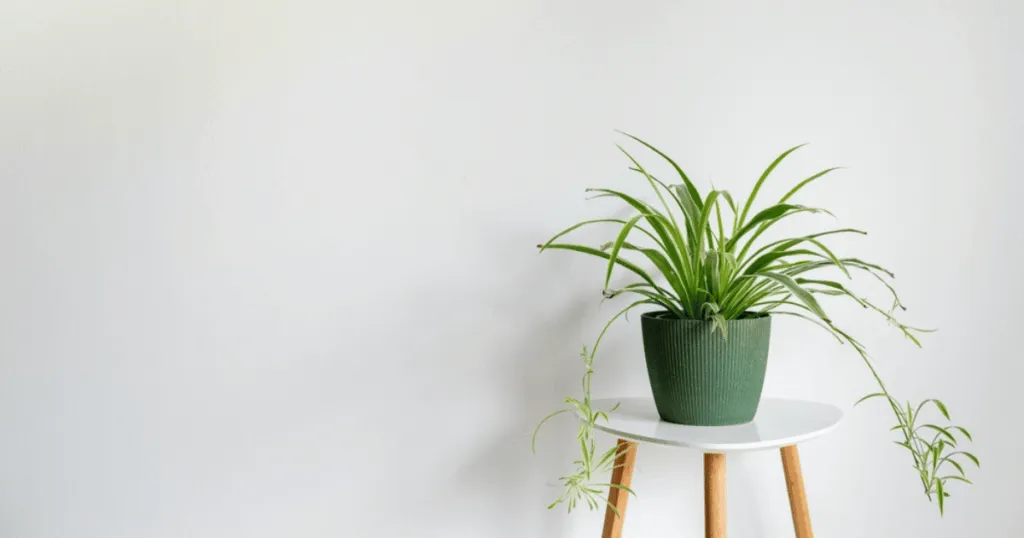
Appearance and Growth Habit
The Spider Plant (Chlorophytum comosum) is defined by its arching, grass-like foliage that creates a soft, fountain-like silhouette. In an office setting, this growth habit provides a welcome contrast to the rigid lines of desks, monitors, and filing cabinets. The leaves are typically slender and pointed, often featuring bright white or cream-colored stripes that add a sense of brightness to dim corners or cubicles.
Beyond its primary foliage, the plant is famous for its unique reproductive strategy. As it matures, it sends out long, slender stems-often called stolons-that bear tiny, white, star-shaped flowers. Following these blooms, miniature plantlets, or “babies,” develop at the ends of the stems. In a professional workspace, these dangling plantlets provide a cascading effect, making the plant an excellent candidate for hanging baskets, high shelves, or the edges of reception desks where they can drape naturally.
Growth speed is generally moderate. Under favorable conditions, a young plant can fill a six-inch pot within a single season. Because it grows from a thick, fleshy root system, it is quite efficient at storing water, which allows it to remain stable even if office maintenance schedules are occasionally interrupted. Its ability to maintain a lush, full appearance without constant pruning makes it a staple for managers looking to add greenery to shared spaces without increasing the workload for facilities staff.
Care Needs at a Glance
Managing a Spider Plant in an office does not require specialized horticultural knowledge. The plant is remarkably forgiving, which is why it remains one of the most recommended species for workplace environments. Understanding its core needs helps ensure it remains a decorative asset rather than a maintenance burden.
Light and Exposure
While the Spider Plant is known for its adaptability, it performs best in medium to bright indirect light. In an office, this means placing it near a window that does not receive direct, harsh sun, or under consistent LED or fluorescent overhead lighting. While it can tolerate lower light levels, you may notice the variegation-the white stripes on the leaves-fading to a solid green if the light is insufficient. If the plant stops producing its characteristic plantlets, it is a strong indicator that it needs more light.
Watering and Soil Moisture
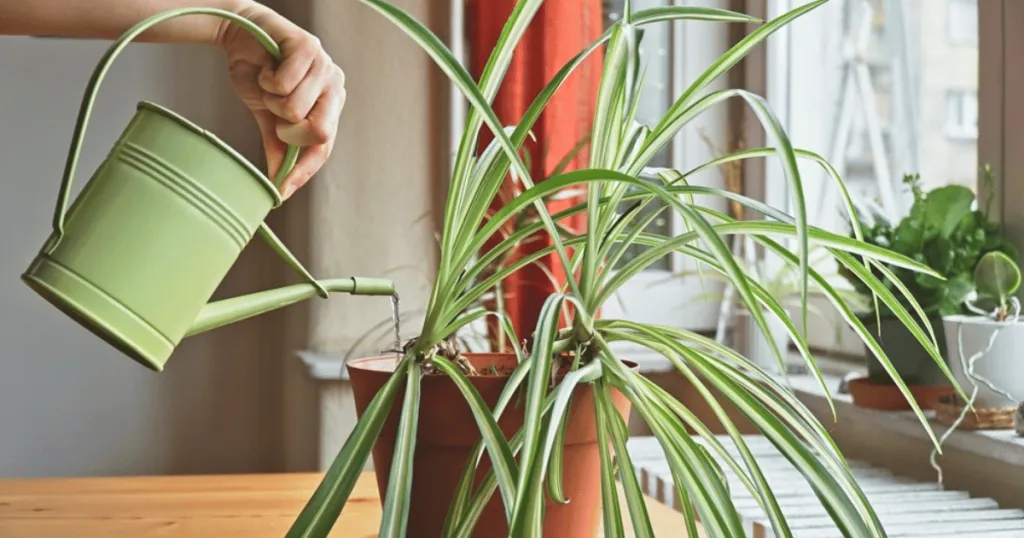
The most common mistake in office plant care is overwatering. The Spider Plant prefers a “soak and dry” approach. You should allow the top inch of the soil to dry out completely before adding more water. Because office environments often feature climate-controlled HVAC systems that can fluctuate in humidity, checking the soil moisture manually is more reliable than following a rigid calendar schedule. Ensure the pot has proper drainage holes; if the plant sits in standing water, the roots will quickly succumb to rot, which is the primary cause of decline in this species.
Humidity and Temperature
Average office humidity is perfectly acceptable for this plant. Unlike tropical ferns that might crisp up in the dry air of a modern office, the Spider Plant is quite resilient. It prefers standard room temperatures between 65°F and 75°F. Avoid placing it directly in the path of cold air drafts from vents or near heat sources like radiators, as these extreme temperature swings can cause the tips of the leaves to turn brown.
Office Suitability and Placement Guidance
The Spider Plant is a versatile player in the workplace. Its ability to thrive in various lighting conditions makes it suitable for almost any location, from a private office desk to a communal breakroom. Because it does not require high humidity, it is well-suited for the dry, climate-controlled air typical of modern office buildings.
For reception areas, a mature Spider Plant in a hanging planter creates an inviting, organic look that softens the professional environment. In open-plan offices, these plants can act as subtle visual barriers when placed on top of low partitions or filing cabinets. Because they are relatively compact, they do not overwhelm individual workspaces, making them a safe choice for employees who want a desk plant that won’t interfere with their computer equipment.
One practical consideration is the plant’s sensitivity to water quality. In some office buildings, tap water may contain high levels of fluoride or chlorine, which can lead to brown leaf tips. If you notice this, switching to filtered or distilled water can often resolve the issue. Additionally, because the plant grows quickly, you should plan for a repotting session once every year or two. This is a simple task that involves moving the plant to a slightly larger container with fresh potting mix, ensuring the root system continues to have enough space to support the foliage.
Toxicity and Safety Considerations
For offices that allow pets or for managers concerned about workplace safety, the Spider Plant is an ideal candidate. According to the ASPCA, which maintains a list of toxic and non-toxic plants, the Spider Plant is considered non-toxic to both cats and dogs. This makes it a stress-free choice for pet-friendly offices or shared spaces where the risk of accidental ingestion by a visiting animal must be considered.
While the plant is safe, it is still a living organism that should be kept in a stable location. If a plant is knocked over, the soil can create a mess, and the foliage can be damaged. Placing it in a stable, weighted pot is a simple way to prevent accidents in high-traffic areas. The plant does not produce harmful sap or irritants, making it safe for handling during routine maintenance, such as trimming back brown tips or removing older, spent leaves.
Care and Troubleshooting Guide Handoff
While the Spider Plant is exceptionally easy to manage, even the most resilient plants can occasionally show signs of stress. Common issues, such as yellowing leaves, brown tips, or a lack of new growth, are almost always tied to environmental factors like light, water, or container size. If you notice your plant struggling, it is usually a signal to adjust your current care routine rather than a sign of a permanent problem.
For those interested in the finer details of maintenance-such as how to propagate the “babies” into new plants for other areas of the office, or how to address specific nutrient deficiencies-we have developed dedicated guides. These resources provide step-by-step instructions for long-term health, including pruning techniques and soil amendments. We recommend consulting these specialized guides for troubleshooting persistent issues, as they offer the granular detail needed to keep your office greenery thriving for years to come.
Related Spider Plant Guides
- keeping a Spider Plant healthy
- fixing common Spider Plant issues
FAQ
Why are the tips of my Spider Plant leaves turning brown?
Brown tips are often caused by low humidity or the presence of minerals like fluoride in tap water. Try using filtered water and ensure the plant is not sitting directly in the path of a dry HVAC vent.
Can I keep a Spider Plant in an office with no windows?
Yes, as long as there is consistent overhead LED or fluorescent lighting. While it won’t grow as quickly as it would in natural light, it can survive and remain healthy under standard office lighting conditions.
How do I propagate the plantlets on my Spider Plant?
You can propagate the babies by placing them in a small glass of water until roots form, or by pinning them directly into a small pot of soil while they are still attached to the parent plant until they establish their own root system.