In the typical office environment, plants often face harsh conditions: fluctuating temperatures from HVAC systems, limited natural light, and irregular care schedules. The Chinese Evergreen (Aglaonema) stands out as one of the most resilient candidates for these settings. Unlike more temperamental foliage, this plant maintains its structural integrity and vibrant leaf patterns even when tucked into corners or placed in rooms with minimal window access.
- Light: Tolerates low light; thrives in medium indirect light.
- Watering: Allow the top inch of soil to dry between waterings.
- Humidity: Prefers average to above-average indoor humidity levels.
- Difficulty: Easy, making it ideal for busy office environments.
- Toxicity: Toxic to cats and dogs if ingested.
For office managers and employees, the Chinese Evergreen (Aglaonema) offers a balance of aesthetic appeal and low-maintenance requirements. It does not demand the constant attention of a greenhouse specimen, yet it provides a significant visual upgrade to sterile cubicles, reception desks, and conference rooms. By understanding its basic biological needs, you can integrate this plant into your workspace with a high degree of confidence in its long-term survival.
Growth Habits and Visual Appeal
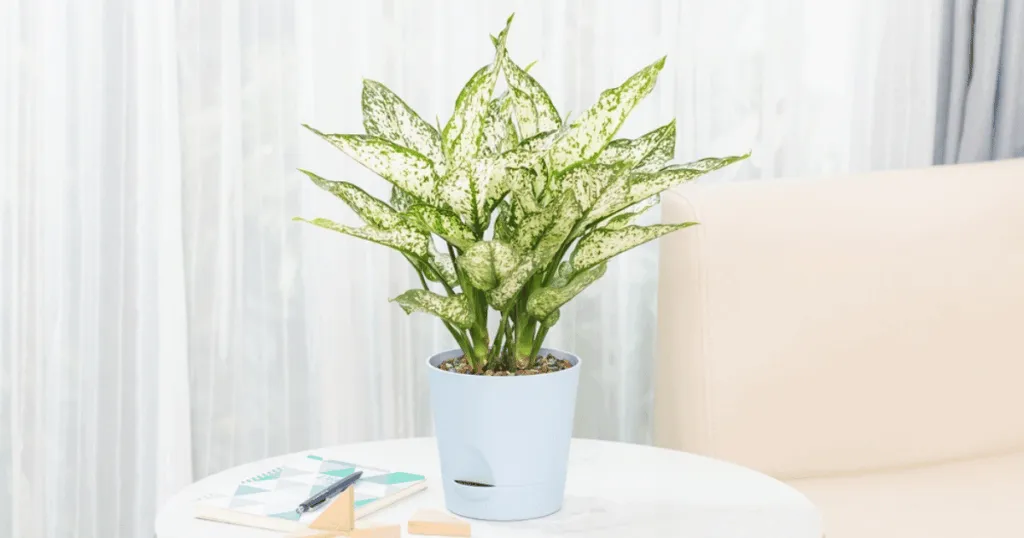
The Chinese Evergreen (Aglaonema) is celebrated for its diverse range of cultivars, which provide varying splashes of color to office interiors. While many indoor plants are strictly green, Aglaonema varieties often feature striking variegation in shades of silver, cream, pink, and deep red. This variety allows for a cohesive design choice, whether you want a subtle, professional look or a more vibrant, modern aesthetic.
In terms of growth habit, this plant typically forms a dense, bushy mound. It is a slow-to-moderate grower, which is a distinct advantage in an office setting. You will not need to worry about the plant rapidly outgrowing its container or encroaching on desk space within a few months. Most varieties remain compact, generally reaching between 12 and 36 inches in height, depending on the specific cultivar and the size of the pot.
The leaves are broad, lance-shaped, and often have a waxy texture that helps them resist the dust accumulation common in office buildings. As the plant matures, it may develop a short, cane-like stem, but it rarely becomes leggy or unruly if it receives adequate light. This predictable growth pattern makes it a reliable choice for long-term office decor, as you can plan your space layout without anticipating drastic changes in the plant’s footprint.
Care Needs for the Workplace
Managing the health of a Chinese Evergreen (Aglaonema) in an office requires a focus on consistency rather than intensity. The plant’s ability to tolerate low light is its most famous trait, but it is important to clarify that low light does not mean no light. It will survive in dim corners, but it will grow significantly slower and may lose some of its vibrant variegation if deprived of light for too long. If possible, position it near a window with filtered light or in a space with consistent overhead LED lighting.
Watering and Humidity
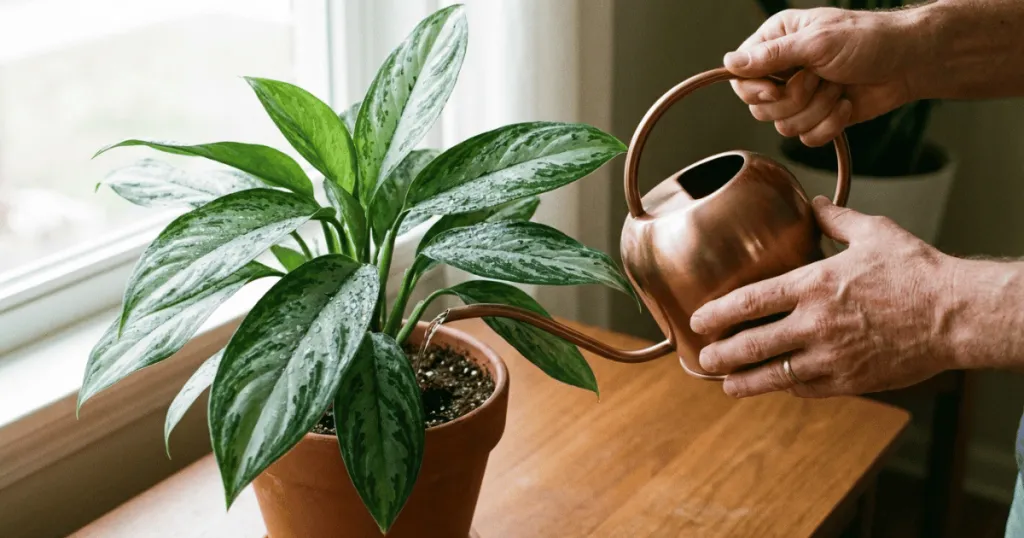
Watering is the most critical aspect of care. The rule of thumb is to let the top inch of soil dry out completely before adding more water. In an office, it is easy to overwater, especially if multiple people are responsible for the plant. Always check the soil moisture with a finger or a moisture meter rather than following a strict calendar schedule. If the soil remains soggy, the roots will suffer, which is the most common cause of decline.
Humidity is another factor influenced by office HVAC systems. Because air conditioning and heating units strip moisture from the air, the Chinese Evergreen (Aglaonema) may appreciate a bit of extra help. While it is more tolerant of dry air than many tropical plants, keeping it away from direct air vents will prevent the leaf tips from turning brown and crispy. If your office is particularly arid, grouping it with other plants can create a more favorable microclimate.
Placement Strategy for Offices
Choosing the right location for your Chinese Evergreen (Aglaonema) can significantly reduce maintenance needs. Reception areas are excellent spots because they often have ambient light and are frequently monitored by staff. For individual desks, ensure the plant is not placed directly under a cold air vent or in the path of a heater, as these temperature fluctuations can stress the foliage.
Consider the traffic flow of your office. Because these plants have relatively sturdy leaves, they handle minor brushes from passing employees better than delicate ferns or trailing vines. However, they are not indestructible. Placing them in a high-traffic hallway where they are constantly bumped is a recipe for broken stems. A corner of a meeting room or a dedicated plant stand in a break area provides the best balance of visibility and protection.
If you are managing a large open office, use these plants as natural dividers. Their bushy nature makes them effective at softening the edges of cubicle walls or creating a visual buffer between workstations. Because they do not require massive amounts of natural light, they are one of the few species that can thrive in the interior zones of a building where windows are far away.
Safety and Limitations
When selecting plants for a shared workspace, it is essential to consider the safety of everyone-including office pets, if your workplace is pet-friendly. According to guidance from the ASPCA, the Chinese Evergreen (Aglaonema) is toxic to cats and dogs. The plant contains calcium oxalate crystals, which can cause irritation, swelling, and discomfort if the leaves are chewed or ingested.
If your office has an open-door policy for pets, ensure that the plant is placed on a high shelf, a secure pedestal, or in an area that is inaccessible to animals. While the plant is not lethal in small amounts, the potential for oral irritation makes it a poor choice for floor-level placement in areas where pets roam freely. For most office environments, this is a manageable risk, but it should be a primary consideration during your initial planning phase.
Transitioning to Advanced Care
Once you have established your Chinese Evergreen (Aglaonema) in its new office home, you may find that you want to refine your care routine to encourage faster growth or more vibrant leaf patterns. While this profile covers the essential requirements for keeping your plant healthy and stable, there are nuances to long-term maintenance, such as repotting, soil selection, and managing specific pest issues like mealybugs, which are common in indoor environments. We recommend consulting our dedicated troubleshooting and care guides for these more advanced topics, as they provide the granular detail needed to handle specific plant health challenges as they arise.
Related Chinese Evergreen Guides
- keeping a Chinese Evergreen healthy
- why your Chinese Evergreen might be struggling
FAQ
Can the Chinese Evergreen (Aglaonema) survive in an office with no windows?
It can survive, but it will not thrive. If your office has no natural light, ensure the plant is placed under consistent, high-quality LED or fluorescent office lighting. Without any light source, the plant will eventually exhaust its energy reserves and decline.
How do I know if I am overwatering my plant?
The most common sign of overwatering in a Chinese Evergreen (Aglaonema) is yellowing leaves or soft, mushy stems. If you notice these symptoms, immediately check the soil moisture. If the soil is consistently wet, stop watering and allow the plant to dry out completely before the next cycle.
Does the Chinese Evergreen (Aglaonema) need fertilizer in an office setting?
In an office, the plant grows slowly, so it requires very little fertilizer. A balanced, water-soluble fertilizer applied at half-strength once every few months during the spring and summer is sufficient. Avoid fertilizing during the winter months when the plant’s growth naturally slows down.