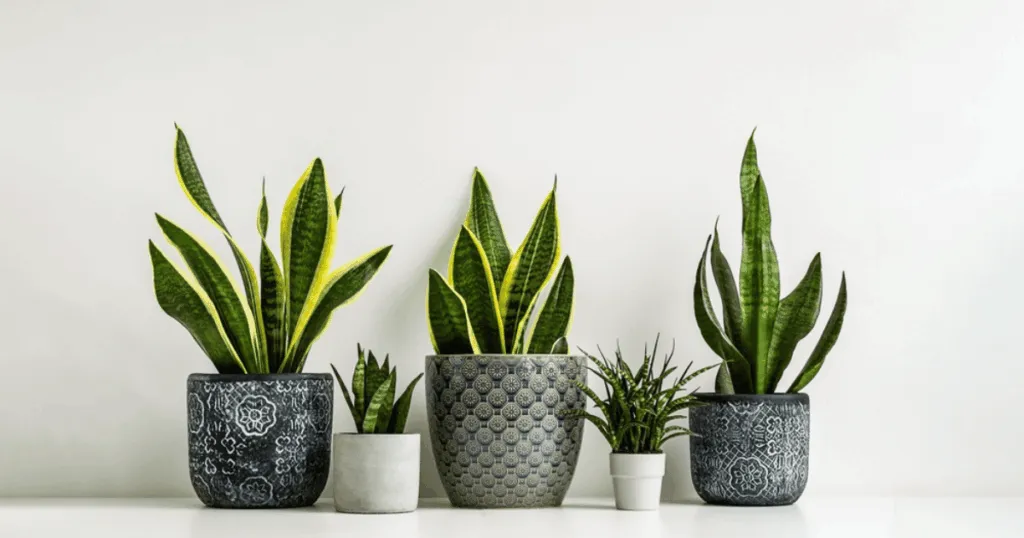
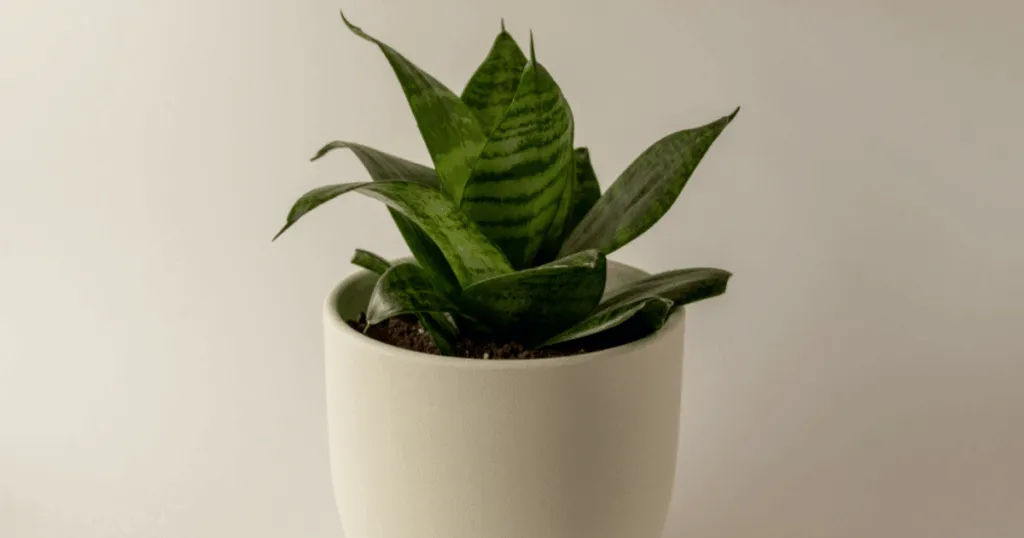
A sansevieria birds nest snake plant is one of the better small office plants if you need a compact, upright-looking plant that can tolerate missed watering. Usually sold as a bird’s nest snake plant or Sansevieria ‘Hahnii,’ it forms a short rosette instead of the tall blades associated with standard snake plants. It suits a desk corner, reception counter, shelf, or meeting-room credenza where a full-size floor plant would be in the way.
Its main weakness is not low light. It is too much water in a pot that stays damp. Give it a container with drainage, let the potting mix dry all the way through, and keep it away from cold AC blasts. It can handle ordinary office neglect far better than frequent, well-meant watering.
Is a Sansevieria Birds Nest Snake Plant Good for an Office?
Yes, for many workplaces. The bird’s nest form is commonly identified as Dracaena trifasciata ‘Hahnii,’ though labels still often use the older botanical name Sansevieria trifasciata ‘Hahnii.’ Both names refer to the same familiar group in most office plant listings. Its leaves grow in a low spiral, typically reaching about 6 to 12 inches tall indoors, with a similar spread. That compact shape is its practical advantage.
It is a solid choice for a desk near a window with filtered light, a bright reception area, or an interior workstation that receives decent ceiling light. It tolerates lower light better than many small foliage plants, but tolerance is not the same as growth. In a windowless cubicle under lights that are off every night and weekend, it may survive for a while but will grow very slowly and can gradually weaken. A small grow light on a timer is the more reliable answer for a plant with no daylight at all.
| Office condition | What the plant can handle | What you should do |
|---|---|---|
| Bright indirect light near a window | Best for steady growth and sharper leaf color | Keep it a few feet back from direct hot afternoon sun. |
| Medium light from windows and overhead LEDs | Usually very suitable | Rotate the pot a quarter turn monthly for even growth. |
| Low light several yards from a window | Can cope, but growth slows | Water less often and move it closer to light if leaves fade. |
| No natural light | Not a long-term location without added light | Use a grow light for about 8 to 10 hours on a timer. |
The real office-care benefit is its drought tolerance. Thick leaves and roots store water, so a normal weekend, a holiday weekend, or a one-week office closure is rarely a problem. In fact, watering just before a closure can be the wrong move if the soil is still moist. For broader guidance on this plant family, see our low-maintenance office snake plant overview.
What it needs to stay presentable
Use a fast-draining houseplant mix, ideally one amended with perlite, pumice, or coarse bark. A standard peat-heavy mix can work, but it must not remain wet for long. A pot with at least one drainage hole is essential. Decorative cachepots are fine only if you remove the nursery pot to water, let it drain completely, then empty any collected water before putting it back.
Keep daytime office temperatures roughly between 60 and 85°F [16 and 29°C]. Briefly warmer conditions are usually manageable if the plant is dry and not pressed against hot glass. Cold is more troublesome. Do not place it directly below an AC vent, against a chilly window in winter, or beside an exterior door that opens repeatedly. Temperatures below about 50°F [10°C] can damage the leaves.
Why a smaller snake plant changes the placement decision
A standard snake plant can become tall and narrow, which works well on the floor. The bird’s nest variety stays low and takes up more horizontal room relative to its height. On a crowded desk, allow a clear footprint of about 8 to 10 inches. Do not tuck it behind a monitor where it receives little light and is easy to forget when the watering roster changes.
For reception desks, use a stable, low pot rather than a tall lightweight planter. The rosette shape gives a neat appearance without blocking sightlines. In a meeting room, a pair of matching plants on a sideboard can look intentional, but avoid arranging them where leaves get knocked by bags or chair backs.
How to Water a Bird’s Nest Snake Plant at Work
Check the potting mix before watering. Push a clean finger or wooden chopstick down at least 2 inches. If it feels cool, clings to the stick, or looks dark below the surface, wait. Water only when the mix is dry through the root zone, not merely dry on top.
In a medium-light office, that often means watering about every 2 to 4 weeks. In low light or a cool office, it may be every 4 to 6 weeks. Near bright indirect light in summer, it could be closer to every 2 weeks. These are check-in ranges, not calendar rules. Pot size, soil mix, HVAC, and available light all change how fast a pot dries.
- Take the plant to a sink or protected utility area if possible.
- Pour water slowly over the soil until it runs from the drainage hole.
- Let the pot drain for 10 to 15 minutes.
- Return it only after no water remains in the saucer or outer pot.
- Write the date on a shared plant log, but make the dryness check the final decision.
A self-watering pot is usually not our first recommendation for this plant. Reservoirs can keep the roots wet longer than a snake plant needs, especially in a dim office. A regular draining pot, a simple moisture check, and one named person responsible for final watering are safer. For a detailed routine that applies to these compact cultivars too, use our snake plant watering routine.
Signs the office watering routine is wrong
Yellowing lower leaves, soft leaf bases, an unpleasant soil smell, or leaves that collapse outward often point to excessive moisture or poor drainage. Stop watering, remove standing water, and inspect the roots if the soil remains wet for more than a week. Healthy roots are firm and pale. Dark, mushy roots should be trimmed away with clean tools before repotting into fresh, dry, fast-draining mix.
Wrinkled or slightly inward-curled leaves can indicate prolonged dryness, especially in a warm, bright spot. Water thoroughly once, then return to checking the soil. Do not compensate with repeated small sips, which can moisten only the upper layer. If symptoms continue, our guide to common snake plant watering problems can help separate root issues from simple thirst.
Light, Leaves, and Growth in a Shared Workplace
Bird’s nest snake plants grow slowly indoors. A plant that looks unchanged for months may be perfectly healthy, particularly in low light. New leaves should emerge firm from the center of the rosette. Variegated types, often with yellow edges or pale striping, need more light than plain green forms to keep their pattern. In very dim conditions, variegation may become less distinct.
Dust is a bigger issue in offices than people expect. HVAC airflow and paper dust can dull the leaves, reducing their clean, structured look. Wipe both sides gently with a soft damp cloth every month or two. Skip leaf-shine products. They can leave residue and make a low-maintenance plant look artificially glossy.
Do not expect one small plant to clean a ventilated office’s air. The NASA Clean Air Study is often cited in plant marketing, but it used sealed chambers rather than real offices with mechanical ventilation and outdoor-air exchange. Plants can still improve a room’s appearance and may support wellbeing, mood, and perceived air quality. Those are reasonable reasons to add them without making a claim they cannot support.
Repotting without an outdoor work area
Repot only when roots are tightly circling, pushing the plant upward, or cracking a thin plastic pot. Every 2 to 4 years is common for a slow-growing office specimen. Choose a new pot only 1 to 2 inches wider. A large pot holds excess wet soil and increases rot risk.
Put down paper or a disposable table covering in a break room, then tip the root ball into a bin or bag to contain loose mix. You do not need to loosen every root. Set the plant at the same soil level, fill around it lightly, and wait several days before watering if roots were disturbed. This is one reason the compact ‘Hahnii’ type is easier to manage than a heavy floor-sized plant.
Saponins Make This a Poor Choice for Pet-Friendly Offices
Snake plants contain saponins. The ASPCA lists snake plants as toxic to cats and dogs. Chewing can cause drooling, nausea, vomiting, or diarrhea, and the fibrous leaves may also irritate the mouth. Severity varies with the amount eaten, but this is not a plant to place at floor level where an office dog or cat can chew it.
It is also sensible to keep it out of reach in a reception area used by young children. Put it on a high, stable surface only if access is truly prevented. If a pet eats part of the plant, contact a veterinarian or an animal poison-control service promptly and identify the plant from its label or a photo. For a pet-friendly shared space, choose a species confirmed as non-toxic rather than relying on placement alone.
Three Office Setups That Work Well
A window-adjacent personal desk
Place the plant 3 to 6 feet from an east- or north-facing window, or behind a sheer blind at a brighter exposure. A 5- to 6-inch draining pot fits beside a monitor without taking over the work surface. Check the soil every other Friday, but water only when it is dry all the way down.
A reception counter with changing shifts
Use a broad, sturdy pot and assign one person to assess moisture. A sign that says “water weekly” encourages overwatering. Instead, write: “Check soil every two weeks. Water only if fully dry.” Keep the plant away from public reach and cold door drafts.
An interior meeting room with overhead LEDs
A green bird’s nest variety can tolerate this setup better than a highly variegated one, provided the lights run for much of the workday. If the room is used only occasionally and stays dark for long periods, rotate the plant to a brighter location every few weeks or add a timed grow light. Do not compensate for low light by watering more often.
What to Do Before You Add a Sansevieria Birds Nest Snake Plant
First, identify the brightest realistic location, not the location that simply has empty space. Check for a vent overhead, radiator heat, and whether weekend lighting leaves the spot completely dark. Then choose a pot with drainage and agree on a single watering system before the plant arrives.
- Choose a green or lightly variegated cultivar for lower-light offices.
- Keep the plant 2 to 4 feet from strong AC airflow and direct radiator heat.
- Use a saucer or cachepot that never holds standing water.
- Assign one owner, with a backup person for vacations and office closures.
- Do not use it at reachable height in pet-friendly or child-accessible areas.
If these conditions fit your workspace, a sansevieria birds nest snake plant is a compact, forgiving choice that stays tidy with modest attention. Start with good drainage, check dryness instead of following a rigid schedule, and move it away from drafts before leaf damage begins.
FAQ
Why is it called a bird’s nest snake plant?
The name describes its growth habit. Unlike tall snake plant varieties with long upright leaves, the ‘Hahnii’ group grows as a short, circular rosette that resembles a nest. Do not confuse it with a bird’s nest fern. A bird’s nest fern needs consistently moist soil and higher humidity, while a sansevieria birds nest snake plant needs soil that dries fully.
Can a bird’s nest snake plant live under fluorescent office lights?
It can tolerate fluorescent or LED office lighting if the plant also receives some usable ambient light and the fixtures run regularly during workdays. Growth will be slow in a deep interior space. If there are no windows and lights are off nights and weekends, a timed grow light is a more dependable long-term solution.
How large does Sansevieria ‘Hahnii’ get indoors?
Most bird’s nest snake plants stay compact, often around 6 to 12 inches tall and wide indoors, though a mature clump can spread beyond that as offsets form. Size depends on the cultivar, light, and pot. Divide offsets during repotting if the plant becomes too wide for a desk or counter.
Should I mist a bird’s nest snake plant in dry air conditioning?
No. Misting does not solve dry HVAC conditions for this drought-tolerant plant, and repeated moisture trapped in the leaf rosette can raise the chance of rot. Keep it away from the direct AC stream instead. Normal office humidity is generally acceptable as long as the soil drains well and watering is restrained.