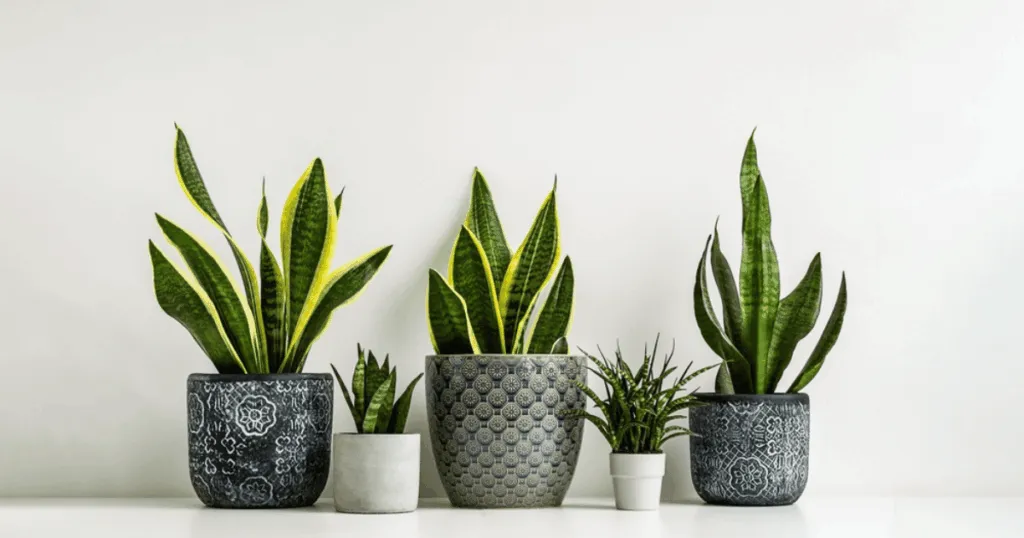
A laurentii snake plant is one of the more forgiving choices for an office, especially if the plant may go untouched over weekends or a long holiday. Its upright, sword-shaped leaves take little floor space, and the yellow-edged variegation gives reception desks and meeting rooms a stronger visual presence than a plain green snake plant.
Still, “low light tolerant” does not mean “happy anywhere.” A laurentii snake plant needs a pot with drainage, soil that dries fully between waterings, and protection from cold air-conditioning vents. Put it in medium or bright indirect light if you want the yellow margins to stay crisp and the plant to grow steadily.
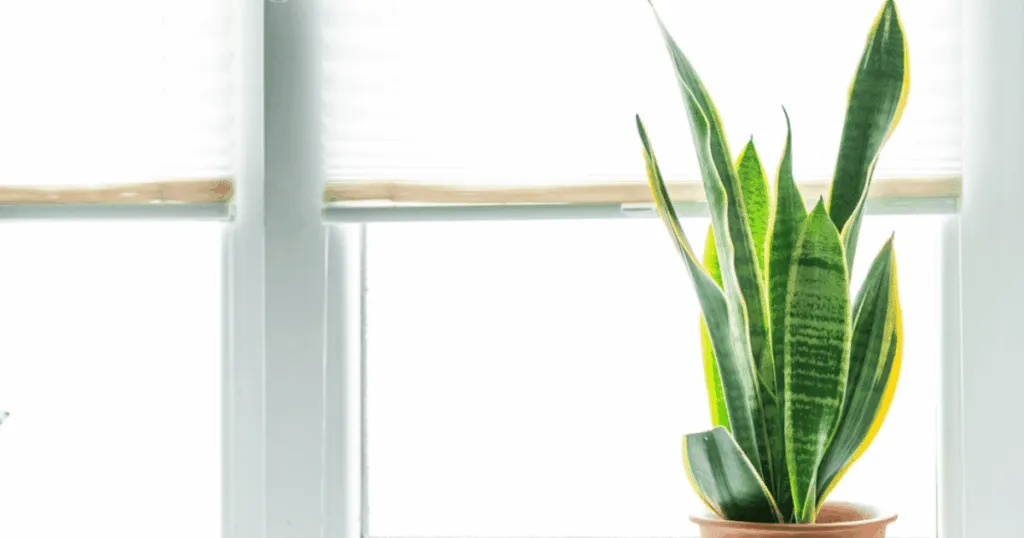
Why a laurentii snake plant works in an office
Laurentii is a variegated cultivar of Dracaena trifasciata, often still sold under its former name, Sansevieria trifasciata ‘Laurentii.’ It is commonly called a mother-in-law’s tongue or variegated snake plant. The stiff leaves grow upright from underground rhizomes, rather than spreading into a wide canopy. That makes it useful beside a filing cabinet, at the end of a credenza, or in a narrow lobby corner.
For a shared workplace, its main advantage is drought tolerance. The thick leaves store water, so a missed weekly watering is usually much safer than routine watering by several well-meaning coworkers. The main cause of failure is not neglect. It is wet soil that stays wet too long.
| Office condition | What the plant can handle | What to do |
|---|---|---|
| Low light, several feet from a window | It can survive, but growth will be slow and variegation may soften. | Use a small to medium plant and water less often. Move it closer to indirect daylight if possible. |
| Medium indirect light | This is the most reliable setting for healthy growth. | Place it near a bright room or window, out of direct hot sun. |
| Overhead LED or fluorescent light only | It may maintain itself if the light is strong and on for much of the workday, but it often will not grow much. | Watch for weak new leaves. Add a suitable grow light if it is the only light source. |
| Cold AC vent or exterior winter glass | Cold drafts can cause stress and damaged leaf tissue. | Keep it out of the direct air stream and above 55°F [13°C]. |
| Radiator or equipment heat | Dry heat is less dangerous than soggy soil, but repeated hot blasts can scorch leaves. | Leave space between the pot and the heat source. |
How much light does Laurentii need?
Bright indirect light is best. A spot near an east-facing window, or a few feet back from an unobstructed south or west window, generally supports stronger growth. Direct summer sun through glass can bleach or scorch foliage, especially in a hot conference room.
It will tolerate low light, including a workstation away from windows, but tolerance has limits. In practice, a plant in a dim interior office may remain alive without producing much new growth. Yellow leaf edges can look less vivid, and the soil will take much longer to dry. If lights switch off every night and all weekend, do not treat ceiling lights as equal to daylight.
Turn the pot one-quarter turn about monthly if light comes mainly from one side. This keeps new leaves more evenly upright. Do not rotate it every few days. Slow-growing plants benefit more from consistent conditions than constant fussing.
Watering: the decision that matters most
Check the potting mix before you water. Insert a finger or a wooden chopstick several inches into the soil. Water only when the mix is dry nearly all the way down, not merely dry on the surface. Then water thoroughly until some water runs from the drainage hole, and empty the saucer or cachepot after 10 to 15 minutes.
In a typical office with medium indirect light, a rough starting interval is every 2 to 4 weeks. In low light, during winter, or in a cool air-conditioned office, it may need water only every 4 to 6 weeks. A warmer, brighter reception area may dry faster. The calendar is a reminder to inspect the soil, not a watering instruction.
For team care, assign one person to check it on a set date and record whether it was watered. A small note inside the cabinet or a shared facilities checklist prevents duplicate watering. For deeper help with timing and soil checks, use this snake plant watering routine.
Use the right pot and soil indoors
A drainage hole is non-negotiable for a laurentii snake plant. Decorative pots without holes can work only as outer cachepots, with the nursery pot sitting inside. Never let the inner pot stand in collected water.
Use a fast-draining cactus or succulent mix, or amend regular houseplant mix with pumice or perlite to improve drainage. Choose a pot only 1 to 2 inches wider than the root ball when repotting. A much larger pot holds extra wet soil around a small root system, which raises the risk of root rot.
Where to place a laurentii snake plant at work
Desk and cubicle placement
A small Laurentii can work on a wide desk corner, but it is rarely the best plant for a narrow desktop. Leaves are rigid and can poke into sightlines or catch on bags and sleeves. Put it on a low shelf, a lateral file cabinet, or a plant stand beside the desk instead. Leave a few inches between the leaves and monitors, desk lamps, or task lights that run hot.
For a cubicle with no natural light, start with a smaller specimen. Large plants use more water slowly in dim conditions, making overwatering easier. If the cubicle gets only standard ceiling light, consider a grow light on a timer for 8 to 12 hours on workdays, placed according to the fixture instructions. A grow light is more useful than moving the plant from one dim desk to another.
Reception, meeting rooms, and shared floors
Laurentii is particularly effective in an entry area because the vertical leaves read clearly from a distance. Use a substantial, stable planter if visitors, children, or rolling luggage pass nearby. Keep the pot out of door swing paths and away from automatic doors where cold or hot outside air can repeatedly hit the foliage.
In a conference room, position it where staff can see and check it. A handsome plant hidden behind a screen often goes months without care, then gets heavily watered all at once. Near a bright window with a sheer blind or several feet into the room is usually a better location than a dark interior corner.
Snake plants are often promoted as air purifiers. The NASA Clean Air Study was conducted in sealed chambers, not real ventilated offices. A few plants do not measurably clean workplace air at room scale. Their realistic value is visual comfort, a more welcoming setting, and the wellbeing people may get from having greenery nearby. For broader placement ideas, see snake plants in office spaces.
Pets, children, and shared-space safety
Do not use a laurentii snake plant where office pets are likely to chew it. The ASPCA lists snake plants as toxic to cats and dogs because they contain saponins. Eating plant material may cause drooling, nausea, vomiting, or diarrhea. The risk is usually gastrointestinal irritation, but contact a veterinarian or a veterinary poison-control service promptly if a pet has eaten a meaningful amount or seems unwell.
Keep it out of reach in child-facing reception areas, too. Place it on a sturdy raised stand or choose a confirmed non-toxic alternative for a pet-friendly office. Do not rely on the leaves being tough as a safety measure. Curious pets can still chew them.
What common Laurentii problems mean in an office
Yellowing, soft leaves, or a sour-smelling pot
These signs usually point to excessive moisture, especially if the lowest leaves are soft at the base. Stop watering. Remove the plant from the pot and inspect the roots if the soil is soggy or smells sour. Healthy roots are firm and pale to orange-tan; mushy, dark roots should be trimmed away with clean tools before repotting in dry, fast-draining mix.
Do not try to fix root rot by adding fertilizer or moving the plant into intense sun. The immediate fix is less water and better drainage. This detailed page on office snake plant problems can help you sort watering damage from other symptoms.
Brown tips, dry patches, and leaning leaves
Brown tips can result from very dry conditions, mineral buildup from tap water, physical damage, or inconsistent watering. Trim only the brown portion with clean scissors, following the leaf’s natural pointed shape. If you see a broad bleached patch on the window-facing side, direct sun is more likely than dryness.
Leaves that lean strongly toward a window need brighter, more even light or a monthly turn. Leaves that suddenly flop and feel soft are a different issue: check for wet soil and root damage. Firm but crowded leaves may simply mean the plant is ready for a slightly larger pot.
A simple care plan for busy offices
- Choose the location first. Give it medium indirect light when possible, not a permanently dark corner.
- Keep it 3 to 6 feet from direct AC airflow, radiators, and exterior doors.
- Check soil every 2 to 4 weeks. Water only after it has dried nearly completely.
- Use a draining pot and empty any collected water from an outer pot or saucer.
- Wipe dust from both sides of the leaves every month with a damp, soft cloth. Avoid leaf-shine products, which can leave residue.
- Before a holiday closure, check the soil but do not water automatically. A dry snake plant is safer than one left sitting wet for two weeks.
Fertilizer is optional. If the plant is growing in spring or summer, a diluted balanced houseplant fertilizer once or twice during the growing season is enough. Skip fertilizer in low light, during winter, or when the plant is stressed. More fertilizer will not compensate for poor light or overwatering.
Start with a laurentii snake plant only if you can provide a draining pot and keep it away from pets that chew plants. Then give it a visible spot with usable indirect light, appoint one person to check the soil, and let the mix dry fully between waterings. That simple routine is what keeps this office plant looking upright and sharply variegated.
FAQ
Can a Laurentii snake plant grow under office lights only?
It can survive under strong overhead LED or fluorescent lighting, but growth is often slow and the yellow leaf edges may become less pronounced. If there is no daylight at all, a dedicated grow light is more reliable. Use it for about 8 to 12 hours on workdays and continue to let the potting mix dry fully.
Why is my laurentii snake plant producing plain green leaves?
New leaves that are mostly green can indicate low light, although individual variation can occur. Move the plant to brighter indirect light and avoid overwatering while it adjusts. A fully green shoot may grow more vigorously than the variegated leaves. Remove it at the base only if you want to preserve the plant’s yellow-edged appearance.
Can I divide a Laurentii snake plant for several office desks?
Yes, division is the most dependable way to create new plants that retain Laurentii’s yellow margins. Divide a crowded plant while repotting, making sure each section has roots and at least one healthy leaf or growth point. Leaf cuttings are less dependable for preserving the variegation and often produce plain green plants instead.
How tall does a Laurentii snake plant get indoors?
Indoor size varies with light, pot size, and age, but many mature Laurentii plants reach about 2 to 4 feet tall. In a dim office, growth may be much slower and shorter. Check the expected mature height before placing one under wall art, shelving, or a low reception counter.