Whale fin snake plants handle missed weekend watering and dry HVAC air well, but propagation fails easily when a cutting is planted too wet or a division has too few roots. For whale fin snake plant propagation, division is the most dependable method. It gives you a new plant with roots and preserves the parent plant’s form. Leaf cuttings can work, but they are slower and carry more rot risk in an office where nobody is checking the pot every day.
Known botanically as Dracaena masoniana, and often sold under its former name Sansevieria masoniana, this broad-leaved snake plant is forgiving after it has rooted. The key is to use a draining pot, wait for cut surfaces to dry, and resist the urge to water on a schedule.
Decision Snapshot
- Division is safer than leaf cuttings.
- Let soil dry completely before watering.
- Medium to bright indirect light speeds rooting.
- Dry office air is usually not a problem.
- Keep away from pets that chew leaves.
Whale Fin Snake Plant Propagation: Start With Division
The biggest care takeaway is simple: keep the new plant drier than you think at first. A whale fin snake plant stores water in its thick leaves and rhizomes, so a recently divided or cut piece does not need frequent watering. Excess moisture around a wound can lead to soft, rotting tissue before roots establish.
Use division if your established plant has more than one leaf cluster emerging from the soil, especially if separate clusters have their own roots or connecting underground rhizomes. This is the best choice for an office plant that needs predictable results. A leaf cutting is useful only when you have a healthy leaf to spare and accept that it may take months to produce roots and a new pup.
Before You Begin at Work
Plan the job for a day when you can use a protected table near a sink or take the plant home. Repotting on office carpet creates avoidable mess. Prepare a clean sharp knife, a pot with drainage holes, fresh gritty potting mix, and paper towels. Do not use a container without drainage for a new division or cutting.
Choose a healthy parent plant. Its leaves should feel firm, not wrinkled or mushy, and should have no spreading brown, water-soaked spots at the base. If the plant has been recently overwatered, wait until the potting mix has dried completely before disturbing the roots. For broader placement advice after propagation, see our low-maintenance office snake plant overview.
How to Divide a Whale Fin Snake Plant
- Slide the dry root ball from its pot. Support the leaf bases instead of pulling on a leaf.
- Brush or gently loosen enough soil to see the rhizome and roots.
- Find a natural division with at least one healthy leaf cluster and several firm roots.
- Separate it by hand if it comes apart cleanly. Otherwise, cut through the rhizome with a disinfected knife.
- Let any cut rhizome surfaces air-dry for several hours. Overnight is reasonable for a larger, fresh cut.
- Plant each section at the same depth it grew before in barely damp or dry, fast-draining mix.
- Wait about 5 to 7 days before the first light watering, then let the mix dry fully again.
Do not make tiny divisions just to produce more plants. A division with one leaf and weak roots can survive, but it will establish slowly. A larger section with firm roots is the better office choice because it can tolerate an unnoticed dry spell.
Light and Placement for New Whale Fin Plants
Whale fin snake plants tolerate low light, but they grow and root best in medium to bright indirect light. In practical office terms, medium light is a spot near a bright window but not in direct hot sun. Bright indirect light may be beside an east-facing window behind a sheer blind, or several feet back from a large unobstructed south-facing window.
A place far from any window, lit only by ceiling LEDs or fluorescent panels, is low light. A mature plant may stay alive there, but a fresh division or leaf cutting will root slowly and the soil will take longer to dry. That combination makes overwatering more likely. Put new propagations nearer to daylight for their first few months, then move an established plant to a lower-light location if needed.
How Far From a Window?
There is no exact distance that works in every building because tinted glass, nearby buildings, and window direction change the available light. As a working rule, start a new plant within about 3 to 6 feet of a bright window, out of direct afternoon rays. If the only available desk is 10 feet or more from a window, ceiling lights may maintain the plant but will not drive much new growth.
Look at the leaves rather than relying on labels. Healthy new growth is upright, thick, and broadly oval, often emerging as a rolled spear before opening. Very slow growth is normal in low light. Pale, weak growth or a plant that never dries out suggests it needs brighter indirect light or less water.
Office Placement Hazards
Keep pots out of the direct path of an AC vent. Cold moving air can stress leaves and cool wet soil, which slows drying. Avoid placing the pot directly above a radiator, beside a space heater, or against equipment that runs hot. Dry air itself is rarely the issue for this species. Sudden temperature swings and poorly timed watering are more damaging.
Rotate the pot a quarter turn every month if light comes mainly from one direction. This helps the broad whale-fin leaves grow more evenly. Do not rotate a newly divided plant every few days. Let it settle and establish first.
Watering and Soil That Prevent Rhizome Rot
Overwatering, not underwatering, is the main risk for a whale fin snake plant. Let the potting mix dry out completely before you water. In a bright office during active growth, that might mean roughly every 2 to 4 weeks. In low light, during winter, or in an air-conditioned area where the soil stays cool, it can be every 4 to 8 weeks or longer. These are checking intervals, not appointments.
Use a Dryness Check, Not a Calendar
Before watering, push a wooden chopstick or your finger down as far as you can without damaging roots. The mix should feel dry throughout, not merely dry on top. A lightweight pot is another useful sign. If the stick comes out cool with damp soil clinging to it, wait and check again in 5 to 7 days.
When the mix is dry, take the plant to a sink if possible. Water slowly until it drains from the bottom, then let it drain completely for several minutes. Empty the saucer or cachepot. Never leave a whale fin snake plant sitting in runoff. If carrying the pot to a sink is impractical, add water slowly in measured amounts and stop before water pools in the outer container.
A shared office benefits from a simple tag: record the date checked, whether the soil was dry, and whether it was watered. This prevents three well-meaning coworkers from watering the same plant. If you see yellowing, soft leaf bases, or a sour smell from the soil, pause all watering and review our guide to office snake plant watering problems.
The Right Mix and Pot
Use a cactus and succulent mix, or amend standard indoor potting mix with perlite or pumice so it drains quickly. The goal is air around the roots, not dense, water-holding soil. A small amount of orchid bark can add structure, but do not use a very chunky mix that cannot support a top-heavy leaf.
Choose a pot with at least one drainage hole. A heavy ceramic pot can help keep a large leaf from tipping, while a plastic nursery pot inside a decorative cover pot makes watering and drainage easier. Keep the new division in a pot only 1 to 2 inches wider than its root mass. An oversized pot holds wet soil around a small root system and raises rot risk.
Leaf-Cutting Method and Its Limits
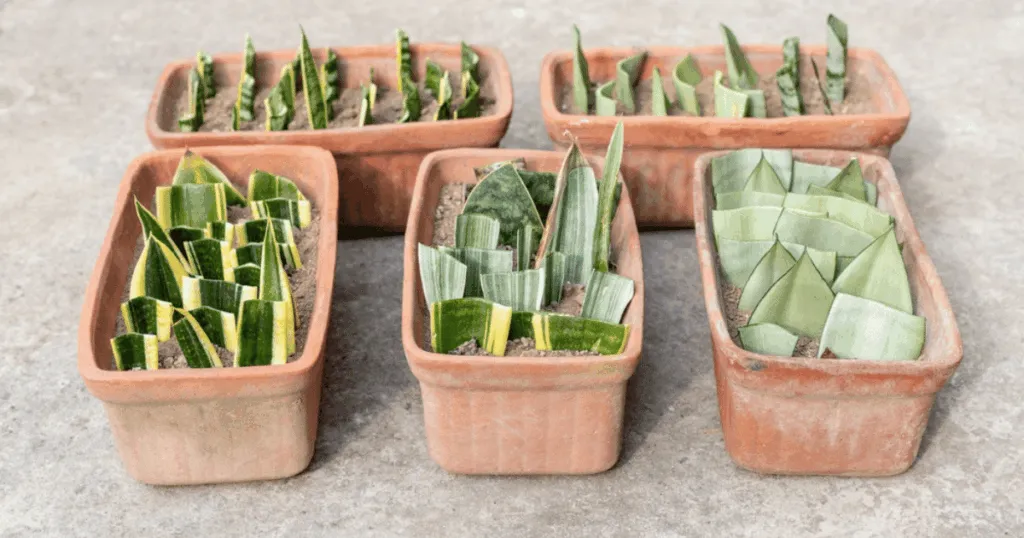
To root a leaf cutting, cut a healthy mature leaf into 3 to 4 inch sections. Mark which end was closest to the roots, because each section must be planted right-side up. Let the pieces callus in a dry, shaded indoor spot for 2 to 5 days, then insert the lower inch into dry or barely damp succulent mix.
Keep the cutting warm in medium to bright indirect light. Wait about a week to water lightly, then allow the mix to dry completely each time. Rooting can take many weeks, and pups may take several months. Do not tug a cutting to test it. Gentle resistance after several weeks can indicate roots. Division remains the faster, more reliable route.
Humidity, Temperature, and Fertilizer in HVAC Offices
Whale fin snake plants tolerate dry office air well. You do not need a humidifier, pebble tray, or misting routine. Misting adds water to leaf surfaces but does not solve the main office risk, which is wet soil that dries too slowly. Keep leaves clean by wiping dust with a soft, damp cloth every month or two. Clean leaves receive available light more effectively and look better in reception areas.
Keep Temperatures Stable
A normal occupied office is suitable. Aim for temperatures above 55°F [13°C], with steady conditions around 65 to 80°F [18 to 27°C] supporting the most reliable growth. Brief dips may not kill an established plant, but cold drafts are a poor match for newly cut or divided pieces. Move plants away from exterior doors, chilly windows in winter, and AC discharge.
During a long weekend or holiday closure, leave the plant alone if its soil is dry. Do not water heavily before closing the office. It can tolerate drought far better than saturated roots in a dim, cool building. If heating or cooling will be shut off and temperatures may fall below 55°F [13°C], move a new propagation to a more stable indoor location.
Feed Lightly, Only During Growth
Use a balanced houseplant fertilizer diluted to half strength about once every 6 to 8 weeks in spring and summer, but only for a rooted, actively growing plant. Do not fertilize a leaf cutting, a recent division with damaged roots, or a plant in low winter light. Fertilizer does not compensate for poor light and can leave salts in the potting mix.
If you inherit a plant with a white crust on the soil or pot rim, flush the mix with water at the sink when it is otherwise due for watering, then drain thoroughly. Repeated heavy feeding is unnecessary. The plant’s slow growth is normal, especially under office lighting.
Repotting, Pruning, and Saponin Risks in Shared Offices
Repot a whale fin snake plant every 2 to 4 years, or sooner if rhizomes distort the pot, roots fill the container, or water runs straight through because there is little soil left. Spring and early summer are the easiest times because the plant can recover in brighter, warmer conditions. Repotting is also the ideal moment to divide a crowded plant.
Repot Without Creating a Larger Wet Zone
Increase the pot diameter by only 1 to 2 inches. Set the rhizome at the same depth as before and fill around it with fresh, fast-draining mix. Do not pack the soil tightly. Wait several days before watering if roots were broken or the rhizome was cut. This brief dry period lets damaged tissue seal.
Pruning is minimal. Remove only yellow, damaged, or clearly rotting leaves by cutting them cleanly at the soil line with disinfected shears. Do not trim the top of a healthy leaf to control height. That leaf will keep the blunt cut edge rather than regrowing its original pointed shape.
Keep Leaves Out of Reach of Chewers
ASPCA guidance on toxic and non-toxic plants lists snake plants as toxic to cats and dogs. Their saponins can cause gastrointestinal upset if chewed or swallowed. Veterinary poison-control resources also advise contacting a veterinary professional promptly if a pet has eaten plant material or seems unwell.
For a pet-friendly office, place this plant in a closed room, high stable planter, or area pets cannot access. It is not the safest choice for a reception floor where visiting dogs, children, or curious pets can reach the leaves. Wear gloves if sap irritates your skin, and collect trimmed pieces immediately so they are not left in a shared bin or on the floor.
Seasonal Adjustments and Mistakes That Stop New Growth
In spring and summer, brighter days may dry the pot faster and prompt new pups. Check the soil every 2 to 3 weeks, but water only after it is dry all the way through. In fall and winter, reduced window light and cooler rooms can double the drying time. Check less often and stop fertilizer unless the plant is clearly producing new growth under strong light.
Common Propagation Problems
| What You See | Likely Cause | What to Do |
|---|---|---|
| Cutting turns soft at the base | Mix stayed wet or cutting was not callused | Remove rot, recut to firm tissue, dry, and restart in drier mix. |
| Division wrinkles slightly | Roots were disturbed and have not reconnected | Give bright indirect light and water only after complete drying. |
| No new pup for months | Low light or normal slow growth | Move closer to indirect daylight and wait. |
| Leaf yellows near the base | Overwatering or root damage | Inspect roots, remove rot, and repot into dry draining mix. |
The most common mistake is watering a propagation because the top inch of soil looks dry. New roots occupy only part of the pot, and the bottom can remain wet for weeks in an office. Another mistake is using a pot without a drainage hole inside a decorative cover. Remove the inner pot to water, let it drain, then return it to the cover.
Do not put a fresh leaf cutting in direct sun to speed it up. Heat can dehydrate the cutting before it roots. Do not cover it with a humidity dome either. This plant does not need high humidity, and stagnant moist air increases the chance of rot.
What Healthy Progress Looks Like
Healthy divisions remain firm and upright, even if they do not make a new leaf quickly. Leaf cuttings should stay firm at the planted end, then eventually form roots and small pups from the base. The pup, not the original cutting, is the new plant you are waiting for. Patience is part of the process: a slow but firm propagation is usually healthier than one pushed with frequent water or fertilizer.
What to Do Next With Whale Fin Snake Plant Propagation
Start with division if your mature plant has a rooted side cluster. Put that division in a small draining pot, give it medium to bright indirect light, and wait until the soil is fully dry before each watering. If you only have a leaf, use a callused cutting and expect a longer timeline.
Set a shared reminder to check moisture, not to water automatically. For an established plant after propagation, follow our detailed snake plant watering routine. That simple system is what keeps whale fin snake plant propagation from turning into a rot problem during busy weeks, weekends, and office closures.
FAQ
Can I propagate a whale fin snake plant in water?
You can root a leaf cutting in water, but it is usually less practical for an office. Water-grown roots are delicate and the cutting can rot if water is not changed regularly. A callused cutting in a small pot of fast-draining mix is easier to leave over weekends. Transfer only after roots are established if you choose the water method.
Will a leaf cutting make an identical whale fin snake plant?
A leaf cutting from a standard green whale fin snake plant will usually produce a similar plant, but new pups take time to appear. If the parent has unusual variegation, leaf propagation may not reliably preserve that pattern. Division is the better method when you want the new plant to retain the parent plant’s established traits.
How long does whale fin snake plant propagation take?
A rooted division may settle in for several weeks before showing visible growth. Leaf cuttings often need many weeks to root, and pups can take several months, especially under ordinary office lighting. Firm tissue and dry, well-aerated soil matter more than fast results. Do not fertilize or increase watering to force the process.
Can I divide a whale fin snake plant with only one leaf?
Yes, if that leaf is attached to a firm piece of rhizome with healthy roots. It may survive, but it has limited stored energy and will establish more slowly than a larger division. Avoid separating a leaf with no roots unless you are intentionally making a leaf cutting. Keep a small division in a small pot so the soil dries promptly.
Why is my propagated whale fin snake plant leaning?
A newly divided plant may lean because roots were disturbed or because its broad leaf makes it top-heavy. Firm the mix gently around the rhizome and use a heavier pot if needed. Do not bury the leaf base deeper to hold it upright. If the leaf feels soft rather than simply leaning, inspect for overwatering and rhizome rot.