A star fish snake plant is a compact, sculptural snake plant with thick, round leaves that grow outward in a star-like fan. It is usually sold as Sansevieria cylindrica ‘Boncel’, although current botanical naming often lists it as Dracaena angolensis ‘Boncel’. It can work very well in an office, especially on a bright desk, reception counter, or shelf, because it stays neater and smaller than many upright snake plants.
Its biggest risk at work is not neglect. It is too much water in a pot with poor drainage. Give it the brightest indirect light your space can offer, let the potting mix dry substantially between waterings, and keep it away from cold AC blasts. In a dim cubicle, it may survive, but it will grow very slowly and may gradually lose its compact look.
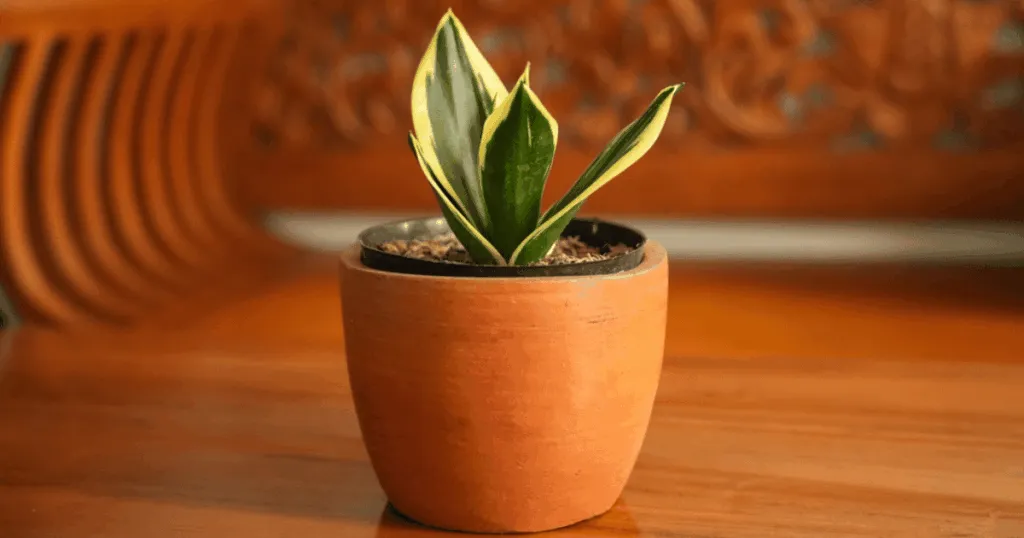
What Makes a star fish snake plant Different?
The starfish form is a cultivar of the cylindrical snake plant, a succulent native to southern Africa. Instead of flat, sword-shaped leaves, it has firm, spear-like leaves with subtle green banding. The leaves emerge from a central base and spread in several directions, creating the shape that gives the plant its common name.
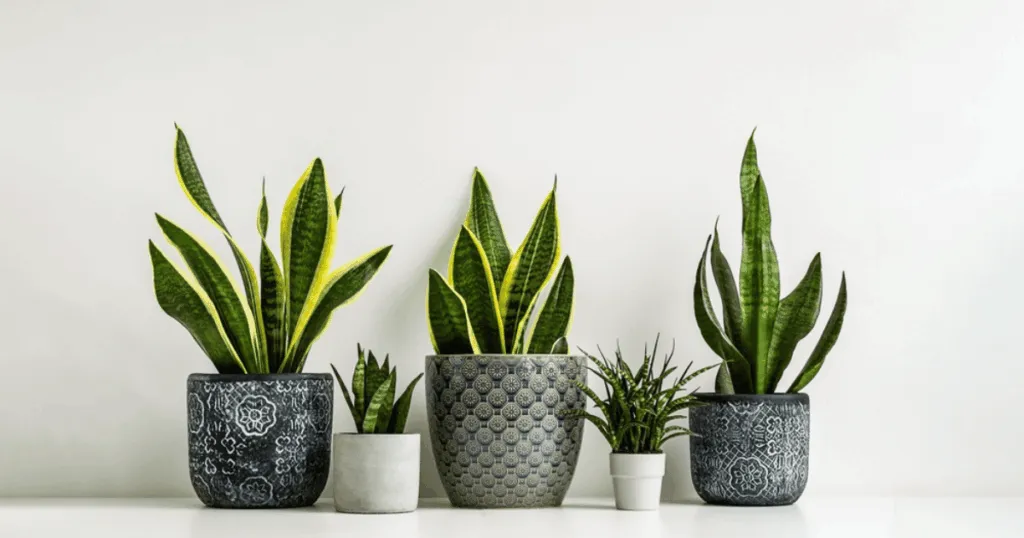
This form is often confused with braided snake plants. A braided plant has leaves that growers have physically woven together. A starfish plant grows in its rounded, radial shape naturally. It also differs from a standard Sansevieria trifasciata, now commonly classified within the genus Dracaena, which tends to grow taller, flatter, and more vertically.
Why Its Shape Suits Workplace Spaces
Most starfish plants remain roughly 6 to 12 inches tall and wide in a small pot, though mature plants can spread as offsets develop. That makes one practical for a desk corner where a tall floor plant would block sightlines or get bumped. Its stiff leaves handle normal office movement better than plants with thin, trailing stems.
It is also naturally tidy. Healthy leaves do not shed frequently, and the plant does not need routine pruning. You may only need to remove a damaged leaf at the base with clean scissors. That low-mess habit is useful for reception desks, conference tables, and areas where plant debris would be noticed.
What It Can and Cannot Handle
A starfish snake plant tolerates low light better than many houseplants, but tolerance is not the same as ideal placement. Medium to bright indirect light produces the strongest growth and better leaf color. A spot several feet from a reasonably bright window may work. A desk in the center of a deep office lit only by ceiling panels is a survival setting, not a growth setting.
Office lights switched off overnight and on weekends are usually not a problem. The plant does not need 24-hour light. What matters is the total useful light it receives during working hours. If the plant is far from windows and shows no growth for months, a small grow light on a timer is more useful than changing the watering schedule.
Like other succulents, it stores water in its leaves and roots. This is why it can cope with a long weekend or a holiday closure. It is not suited to being watered on a fixed weekly schedule regardless of soil condition. For a broader baseline, use our snake plant watering routine alongside the plant-specific checks below.
Office Care for a Starfish Snake Plant
| Care factor | Best office condition | What to avoid |
|---|---|---|
| Light | Medium or bright indirect light, near a window with filtered sun | Deep interior corners with little daylight for months |
| Water | About every 2 to 4 weeks, after mix is dry most of the way down | Weekly watering or water left in a decorative cachepot |
| Temperature | 65 to 80°F [18 to 27°C] | Cold drafts below 55°F [13°C], radiator heat, or AC vents |
| Pot | Small pot with a drainage hole and gritty mix | Oversized containers or pots without drainage |
Light: Place It Closer Than You Think
Put this plant within a few feet of an east, west, or bright north-facing window when possible. Tinted glass reduces light, so move it closer to the window rather than assuming the room is bright enough. Bright direct summer sun through a south or west window can scorch leaves, especially behind hot glass. Set it back from the pane or use a sheer blind.
Under ordinary LED or fluorescent ceiling fixtures, choose a desk directly beneath the brightest area, not a filing cabinet in a shaded aisle. Rotate the pot one quarter turn every month or two so the leaves do not lean toward one side. Do not move it repeatedly between a bright window and a dark desk. Stable conditions are easier for a shared care team to manage.
Water: Check the Mix, Not the Calendar
In a warm, bright office, check every 2 weeks and expect to water about every 2 to 3 weeks. In lower light or a cool office, it may need water only every 4 to 6 weeks. Insert a finger or a wooden chopstick 2 inches into the pot. If it comes out dry and the pot feels light, water slowly until excess runs out of the drainage hole.
Empty the saucer or outer pot after 10 to 15 minutes. Roots sitting in water are the main cause of root rot. Before a three-day weekend, do not water automatically. Check the soil as usual. Before a two-week office closure, water only if the mix is dry. A saturated plant left in a dark, closed office is far more likely to decline than a dry one.
Hard tap water is usually acceptable, but softened water can leave salts in the potting mix over time. If you see a white crust on the soil or pot rim, flush the mix with plain water during a planned watering and let it drain fully.
Potting Mix, Repotting, and Shared Care
Use cactus and succulent mix, or amend standard indoor potting mix with perlite to improve drainage. Keep the root ball in a pot only slightly larger than its current container. A large pot holds wet soil around a small root system for too long.
Repot every 2 to 3 years, or when offsets crowd the pot and roots visibly fill the drainage hole. Repotting is easiest in spring or early summer, but an office plant can wait if it is healthy. Since many workplaces lack a cleanup area, place a tray or cardboard on a conference table and schedule the task when a facilities team can handle spilled mix.
Give one person final watering responsibility, even if several people can check the plant. A small label with the last watering date prevents well-meaning coworkers from watering twice. If leaves turn soft, yellow, or mushy near the base, stop watering and consult these snake plant watering problem signs before adding more water.
Where This Compact Snake Plant Works Best
A Window-Adjacent Desk
A desk 2 to 5 feet from a bright window is the strongest fit. Use a pot no wider than the clear working space, and place it where the leaves will not catch on bags, headset cords, or monitor arms. A drainage saucer protects desktop surfaces. If the pot sits inside a decorative container, remove it for watering and never let runoff collect unseen at the bottom.
A Reception Counter or Waiting Area
The starfish shape gives a reception counter a clean focal point without obstructing a visitor’s view. Choose a heavier pot so it cannot tip easily. Keep it behind the counter if visitors, small children, or pets could handle or chew the leaves. In a bright lobby, check that direct sun is not heating the pot through glass.
A Shared Open-Plan Floor
This plant suits a small side table near daylight, not the middle of a large interior floor. In open-plan offices, HVAC airflow can vary sharply over a few feet. Hold your hand where the plant will sit while the system is running. If you feel a steady cold or hot stream, move the pot. Brown, dry patches on the leaf tips can result from harsh drafts and low humidity, though overwatering should still be ruled out first.
Snake plants are often described as air-purifying plants. That claim needs context. The NASA Clean Air Study tested plants in sealed chambers, not normal ventilated offices. A few plants will not measurably clean workplace air. Their better-supported value is visual comfort, a more welcoming appearance, and the wellbeing benefits some people associate with greenery at work.
Saponins Make This a Poor Choice for Pet-Friendly Offices
According to ASPCA guidance, snake plants are toxic to cats and dogs. They contain saponins that can cause drooling, nausea, vomiting, or diarrhea if chewed or eaten. The leaves are not a safe desk snack for office pets, even though their firm texture may discourage some animals.
For a pet-friendly office, place the plant in a reliably inaccessible room or choose a plant confirmed as non-toxic by ASPCA resources instead. Do not rely on training, a heavy pot, or the assumption that a pet will ignore it. The same cautious placement makes sense in a reception area used by young children. If a pet eats part of the plant, contact a veterinarian or a veterinary poison-control service promptly.
Common Starfish Snake Plant Problems at Work
Soft or Yellowing Leaves
The likely cause is excess moisture, often combined with low light. Take the inner pot out of any cover pot and check for standing water. Let the mix dry completely. If the base is mushy or smells sour, root rot may be advanced, and healthy firm offsets may be the only parts worth saving.
Wrinkled Leaves or Dry Brown Tips
Wrinkling can mean the plant has stayed dry too long, especially in a warm, bright spot. Water thoroughly once the mix is dry. Brown tips can also come from radiator heat, air conditioning, mineral buildup, or physical damage. Trim only the dead brown point with clean scissors, following the leaf’s natural shape.
Leaves Leaning or Pale Growth
Weak, stretched, or leaning leaves point to insufficient light. Move the plant closer to a window, or add a grow light that runs for 10 to 12 hours on workdays and on a timer during closures. Do not compensate for low light with fertilizer. Fertilizer cannot replace light and can damage roots in dry or stressed soil.
Set It Up for Easy Office Care
Start by choosing the brightest practical spot that is away from direct HVAC flow. Use a small draining pot and a succulent-style mix. Then create a simple care note: check the soil every other Friday, water only when it is dry well below the surface, and record the date.
Skip fertilizer until the plant has settled into its location. If it is actively growing in spring or summer, a diluted houseplant fertilizer once or twice is enough. Do not fertilize a plant in low light, during winter slowdown, or when roots may be wet and damaged.
For most offices, the star fish snake plant is a smarter choice than a large snake plant when you need a compact, low-mess accent. Prioritize drainage and adequate light, then let the pot dry between waterings. For other durable workplace options, see our overview of the low-maintenance office snake plant.
FAQ
Is a starfish snake plant the same as a cylindrica snake plant?
A starfish snake plant is usually a named cultivar of the cylindrical snake plant, commonly sold as Sansevieria cylindrica ‘Boncel’. Its accepted botanical name is often given as Dracaena angolensis ‘Boncel’. It has the same round, upright leaf type as a cylindrica, but grows in a compact, outward-facing fan rather than as a taller clump.
Can I propagate a star fish snake plant from a leaf cutting?
Leaf cuttings can root, but a named cultivar may not reproduce true to its parent from a leaf section. Division of rooted offsets is the more reliable way to make another plant with the same compact starfish form. Wait until an offset has roots of its own, then separate it during repotting with a clean knife.
Why is my starfish snake plant growing straight upward?
Mature leaves and new offsets can grow more upright than the original fan, and that is not always a problem. Low light can also cause less compact growth as the plant reaches toward its light source. Move it to brighter indirect light and rotate the pot periodically. Avoid tying the leaves into shape, which can damage them.
Does a starfish snake plant flower indoors?
It can flower indoors, but this is uncommon. A mature, healthy plant may produce a stalk with small, pale, fragrant flowers under favorable conditions. Flowering is not a sign that it needs special treatment, and lack of flowers does not mean the plant is unhealthy. Reliable light and careful watering matter much more for routine office care.