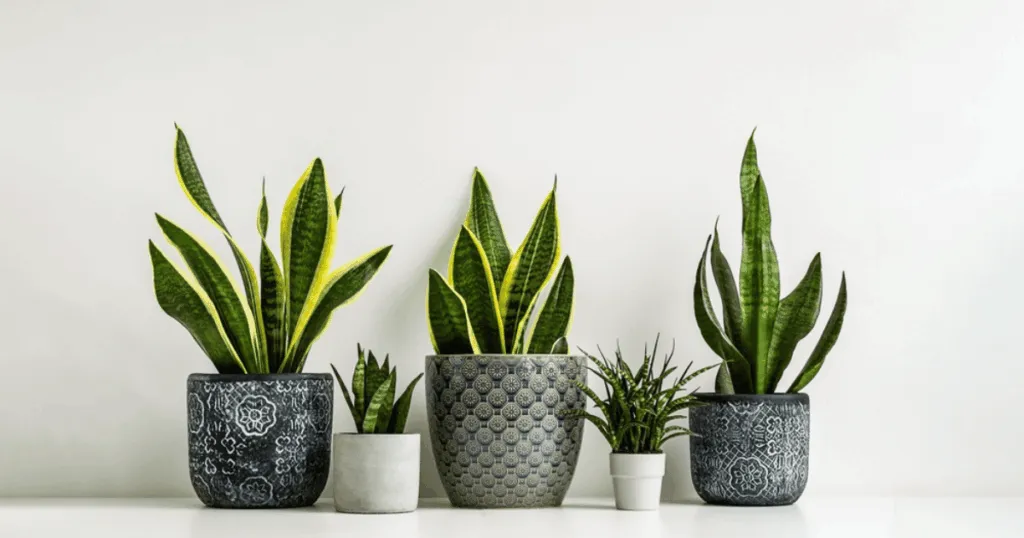
A spiral snake plant is usually a compact cylindrical snake plant with leaves that grow in a fan, star, or deliberately shaped spiral. It can be an excellent office plant if you need something tidy, drought-tolerant, and able to handle a missed watering. Its biggest weakness is not low light. It is too much water in a pot without drainage.
For most desks, reception counters, and small meeting rooms, choose a healthy compact plant in a draining pot and place it where it receives medium or bright indirect light. It will tolerate lower office light, but growth will be very slow and the leaf shape may look less crisp. Keep it away from cold AC blasts, radiators, and pets that chew plants.
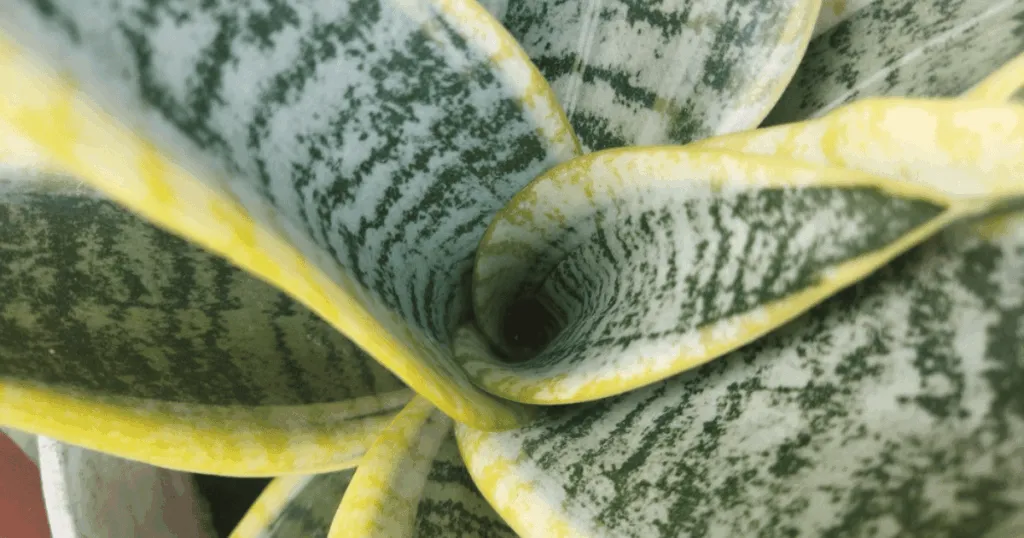
What Is a Spiral Snake Plant?
Spiral snake plant is a nursery and retail name, not one precise botanical name. It most often refers to Dracaena angolensis ‘Boncel’, which may also be labeled Sansevieria cylindrica ‘Boncel’, starfish snake plant, or cylindrical snake plant. Plant naming changed when many plants formerly placed in the genus Sansevieria were moved into Dracaena. Both names still appear on plant tags.
‘Boncel’ has thick, rounded, upright leaves rather than the flat sword-shaped leaves associated with the common snake plant, Dracaena trifasciata. Young leaves emerge in a compact fan. As the plant matures, it can resemble a small starburst or a cluster of green fingers. Pale green and dark green horizontal bands are normal.
Why Some Plants Look More Spiraled Than Others
The word spiral can describe several different looks. A naturally compact ‘Boncel’ often has leaves arranged in a curved fan, but it does not reliably make a perfect corkscrew. Some sellers train cylindrical leaves into braids, twists, or loops while they are young. Those shapes are usually maintained by the way the leaves were positioned, not by a special care technique you can repeat at your desk.
Do not buy a plant expecting it to keep producing tightly twisted new leaves. New growth will follow the plant’s natural habit, which is usually upright and fan-shaped. A very sculpted plant can still be attractive, but inspect it closely. Avoid leaves with sharp bends, splits, soft spots, or ties that press into the tissue.
How It Differs From a Standard Snake Plant
| Feature | Spiral or cylindrical type | Common flat-leaved snake plant |
|---|---|---|
| Typical form | Rounded leaves in a compact fan or starburst | Flat, upright sword-like leaves |
| Desk footprint | Usually narrow and compact | Can become wider and taller |
| Growth rate indoors | Slow, especially in low light | Slow to moderate in good light |
| Watering risk | High risk of rot if soil stays wet | High risk of rot if soil stays wet |
| Best office location | Bright desk edge, shelf, or reception counter | Floor planter, lobby, or brighter work area |
The care principles are similar, but the cylindrical form is often the better fit for a crowded desk because it uses less horizontal space. It also looks more intentional in a small pot. If you want a taller architectural plant for a lobby, a standard snake plant is often the more practical choice. For broader guidance on the familiar flat-leaved type, see low-maintenance office snake plants.
Do Not Confuse Low Light Tolerance With No-Light Tolerance
A cylindrical snake plant can survive in low light, but it cannot thrive in a dark interior with only occasional ceiling lighting. Light from overhead LEDs or fluorescent panels is often enough to keep an established plant alive near a workstation, especially if the room has some daylight. It is less likely to put out new leaves there.
Medium indirect light is the dependable target. Think of a spot a few feet from an uncovered window, or a bright open office that receives daylight plus overhead lights. Bright indirect light produces the most even growth. Direct hot afternoon sun through glass can bleach or scorch foliage, particularly if the plant has spent months in dim conditions.
Spiral Snake Plant Care in a Real Office
The real issue in shared offices is not a complicated care routine. It is preventing several well-meaning people from watering the same plant. Give one person responsibility, add the date of the last watering to a simple label or shared task list, and water only after checking the soil.
Light, Temperature, and Airflow
Place your plant in medium or bright indirect light when possible. A desk 3 to 6 feet from a window is often suitable if the window is not deeply tinted. A desk far from windows can work under ceiling lights, but expect very slow growth. If the plant is more than 10 to 12 feet from any daylight and the overhead lights are off most nights and weekends, use a modest full-spectrum grow light on a timer or choose a location closer to daylight.
Keep temperatures roughly between 60 and 85 degrees F [16 to 29 degrees C]. Briefly cooler conditions are usually less harmful than cold drafts, but avoid temperatures below 50 degrees F [10 degrees C]. Do not place it directly under an AC vent or beside a radiator. Constant cold or hot airflow dries and stresses leaf tips, while a hot radiator can cause the pot to dry unevenly.
Water Only When the Potting Mix Has Dried
In many offices, check every 2 to 3 weeks in spring and summer, then every 3 to 5 weeks in fall and winter. These are checking intervals, not a fixed calendar schedule. Low light, cool rooms, and a large pot all make the soil dry more slowly.
Push a finger 2 inches into the mix, or use a wooden chopstick to check deeper in a small pot. Water only if the mix feels dry and the stick comes out mostly clean. Then water thoroughly until a little runs from the drainage hole. Empty the saucer after 10 to 15 minutes. Never leave the pot standing in water over a weekend.
A pot with a drainage hole is essential. Decorative cachepots are fine only if you remove the nursery pot to water and let it drain completely before returning it. A self-watering pot is usually a poor match for this plant because its roots need an extended dry period. For a detailed routine that staff can follow, use this snake plant watering routine.
Soil, Fertilizer, and Repotting Without a Mess
Use a fast-draining cactus and succulent mix, or amend standard indoor potting mix with perlite or pumice. Dense, moisture-holding soil is a common cause of root rot. Keep the pot only slightly larger than the root ball. An oversized container holds more wet mix around roots that are not using it.
Fertilizer is optional. If the plant is actively growing in spring or summer, use a balanced houseplant fertilizer diluted to half strength about once every 6 to 8 weeks. Skip fertilizer in low light, during winter, or when the plant is stressed. Fertilizer will not compensate for inadequate light.
Repot every 2 to 4 years, or when the root mass is crowding the pot, the container is cracking, or water runs through without wetting the mix. For an office, place a trash bag or flattened box on a conference table, do the job after hours, and wipe leaves with a damp cloth afterward. Avoid leaf-shine sprays, which can leave residue and attract dust.
Where a Cylindrical Snake Plant Works Best at Work
On a Desk or Cubicle Shelf
A 4 to 6 inch pot suits a desk with a clear patch of surface and moderate daylight. Leave space around the plant so leaves are not repeatedly hit by bags, monitor arms, or swinging cabinet doors. Rotate the pot a quarter turn every month if light comes mainly from one side. This helps the fan grow more evenly.
Do not tuck it into a dark cubicle corner simply because it is called a low-light plant. If the nearest window is distant, place it near the aisle side where ambient daylight reaches it, or use a grow light. A plant that remains healthy but unchanged for months is not necessarily failing. Slow growth is normal indoors.
At Reception and in Meeting Rooms
Its narrow form makes this plant useful on a reception counter or small side table where a broad plant would block sight lines. Choose a stable, heavy pot with a saucer or an inner liner to avoid water marks. In a meeting room, keep it away from exterior doors that bring in cold winter air and away from window ledges that become hot in summer.
In pet-friendly offices or public reception areas, this is not a safe floor-level choice. Snake plants contain saponins and are listed by the ASPCA as toxic to cats and dogs. Chewing may cause drooling, nausea, vomiting, or diarrhea. Put it in an inaccessible location or choose a verified pet-safe plant instead. Children should also be discouraged from handling or tasting any office plant.
Reading the Plant Before It Gets Worse
Soft, yellowing leaves or a sour-smelling pot usually point to excess moisture. Stop watering, inspect the roots, remove dark mushy tissue with clean scissors, and repot into dry, fast-draining mix if rot is present. Wrinkled leaves can mean severe dryness, but they can also occur when rotted roots cannot take up water. Check the roots before adding more water.
Brown dry tips often come from inconsistent watering, dry heated air, mineral buildup, or physical damage. Trim only the brown portion with clean scissors, following the leaf’s natural shape. Learn the wider pattern of snake plant watering problems before treating every yellow or brown leaf as the same issue.
A Simple Office Plan for Your Spiral Snake Plant
Start with a pot that has drainage, a fast-draining mix, and a stable place with some natural daylight. Those three choices prevent most avoidable problems. Do not move it repeatedly in search of the perfect spot. Give it several weeks to adjust unless it is clearly receiving hot direct sun or a cold draft.
- Assign one named person to check the soil and record watering.
- Check the soil every 2 to 3 weeks in warmer, brighter months and every 3 to 5 weeks in cooler, darker months.
- Water only when the mix is dry at least 2 inches down, then empty any saucer.
- Move it at least a few feet from AC vents, radiators, and frequently opened exterior doors.
- Before a holiday closure, do not water automatically. Water only if the mix is actually dry.
- Keep it out of reach in offices with cats, dogs, or young visitors.
If your workplace needs a compact plant that will not demand attention every Friday, a spiral snake plant is a strong option. Give it draining soil, restrained watering, and the brightest indirect light your available desk or shared space can provide. That approach protects both its sculptural shape and its roots.
FAQ
Is a spiral snake plant the same as a starfish snake plant?
Usually, yes. Starfish snake plant commonly refers to Dracaena angolensis ‘Boncel’, formerly sold as Sansevieria cylindrica ‘Boncel’. Its cylindrical leaves grow in a compact fan that can resemble a starfish from above. The word spiral is less precise and may also be used for plants whose leaves were manually trained into twists or braids.
How big does a spiral snake plant get indoors?
A compact ‘Boncel’ often remains manageable on a desk for years, though mature leaves can reach roughly 1 to 3 feet tall depending on light, age, and growing conditions. Growth is slow in offices. It may widen as new shoots emerge from the base, so allow a little space around the pot rather than packing it tightly between equipment.
Can I cut a spiral snake plant to keep it short?
You can remove a damaged leaf at its base with clean scissors, but cutting across a healthy cylindrical leaf leaves a blunt, permanent tip. It will not resume growth from that cut point. If the plant becomes too crowded, divide rooted offsets during repotting rather than shortening healthy leaves.
Does a spiral snake plant clean office air?
A spiral snake plant can make an office feel more welcoming and may support wellbeing through its visual presence, but it should not be treated as an air-cleaning system. The NASA Clean Air Study used sealed chambers. A few plants do not measurably clean the air in a normal ventilated office, where ventilation and source control matter far more.