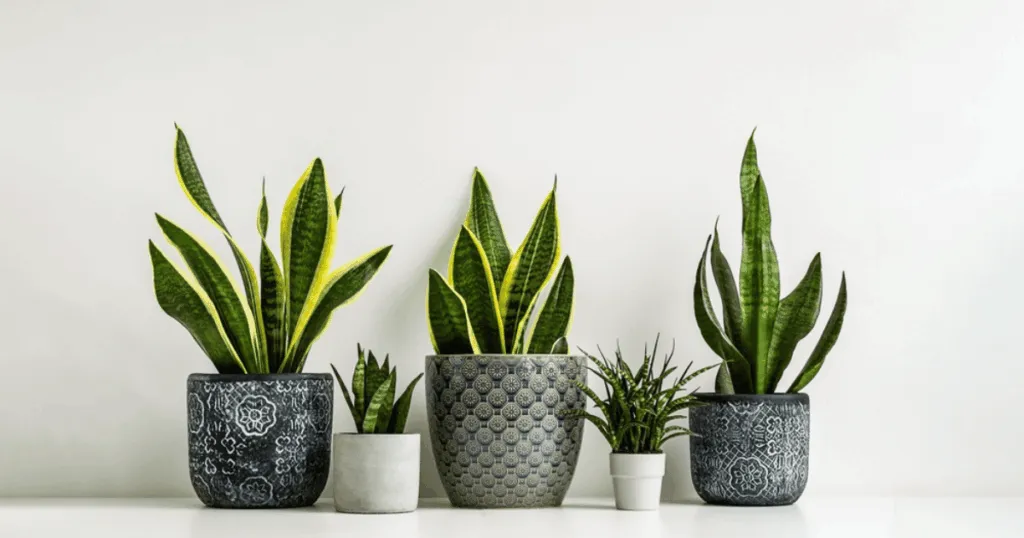
A moonshine snake plant is a compact, upright snake plant with broad, silvery green leaves. It is a strong office choice if you want a tidy plant that can handle missed weekends and modest natural light. Its pale color is the main appeal, but it also creates its main limitation: a Moonshine kept too far from a window for too long may grow more slowly and produce greener new leaves.
For most workplaces, put it in bright indirect or medium light, use a pot with drainage, and water only after the potting mix has dried fully. It is better for a credenza, reception counter, or nearby desk than for a windowless cubicle lit only by ceiling panels. Keep it away from cold AC airflow, hot radiators, and areas reached by office pets.
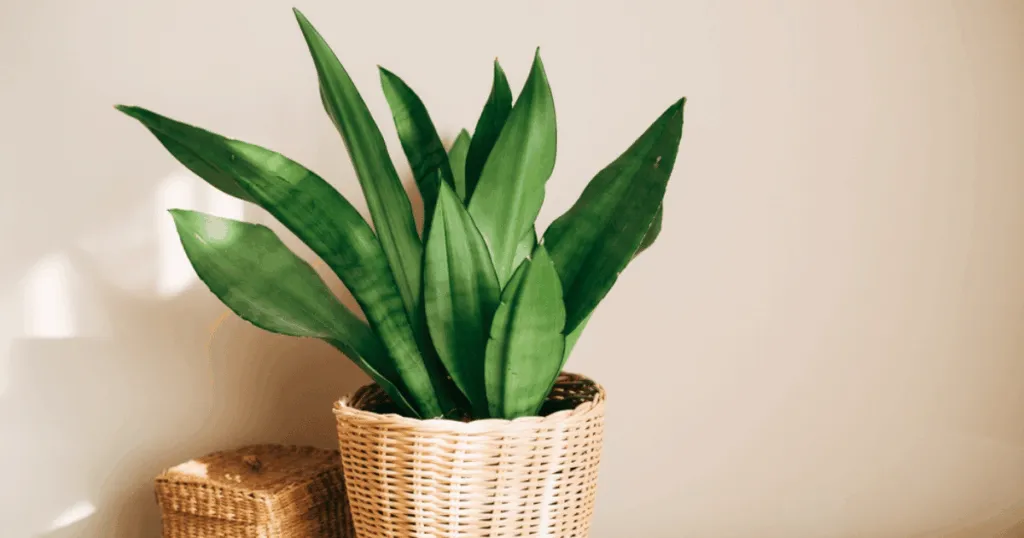
Is a moonshine snake plant right for your office?
Moonshine is a cultivated form of Dracaena trifasciata, a species still widely sold under its former botanical name, Sansevieria trifasciata. Most people recognize snake plants by their tall, sword-shaped leaves. Moonshine has a softer look, with gray-green to silvery leaves and a subtle darker green edge rather than strong horizontal banding.
It is usually a practical plant for offices because it grows upright, tolerates dry indoor air, and stores water in its thick leaves and underground rhizomes. A healthy plant does not need attention every few days. That makes it more forgiving when one person waters during the week and nobody is present over a holiday weekend.
Its tolerance is often misunderstood. Low light means it can remain alive in less-than-ideal conditions. It does not mean a plant can stay indefinitely in a dim interior with no meaningful daylight. In a deep open-plan floor, ordinary ceiling LEDs may be enough to maintain a Moonshine slowly, but they rarely provide the intensity needed for its best color and steady growth.
| Office factor | What Moonshine handles | What to do in practice |
|---|---|---|
| Light | Medium light well, low light for a limited period | Place within a few feet of a bright, filtered window when possible. Use a grow light for a windowless spot. |
| Watering | Dry soil better than wet soil | Check every 2 to 4 weeks, then water only if the mix is dry through the pot. |
| Office closures | Several dry weeks | Do not water extra before closing. Confirm the soil is dry or nearly dry instead. |
| Temperature | Typical indoor temperatures | Keep it around 60 to 85°F [16 to 29°C], away from vents and radiators. |
| Space | Narrow footprints | Use a stable floor pot or a broad desk surface. Mature leaves can reach roughly 2 to 4 feet tall indoors. |
Where the silver color stays strongest
Bright indirect light is the sweet spot. Think of a position near an east-facing window, a few feet back from a south- or west-facing window with blinds, or a bright north-facing office window without heavy tint. Direct midday sun through clear glass can bleach or scorch leaves, especially when the plant sits against hot glass.
In medium light, Moonshine remains attractive but may make fewer leaves. In lower light, its new growth commonly appears darker green. That is not necessarily disease or poor care. More chlorophyll helps the plant capture limited light, so greener growth is a normal response.
If the only available location is more than 10 feet from a window, assess it honestly. A small full-spectrum grow light on a timer for about 10 to 12 hours on workdays can make that placement more reliable. Set the timer so it also runs on weekends. Avoid leaving a light on around the clock.
How large it gets and where it fits
A young Moonshine in a 4- or 6-inch pot can work on a substantial desk, provided it will not be knocked over by monitor arms, bags, or cleaning crews. A larger 8- to 10-inch pot is usually more suitable beside a reception desk, in a meeting room corner, or on a low cabinet.
Leaves grow from a clustered base rather than branching outward. The floor footprint stays modest, but the leaf tips need clear vertical room. Avoid putting it under a shelf or directly below an air diffuser. For a broader overview of sizing and placement, see our office snake plant overview.
moonshine snake plant care in a shared workplace
Water only after a full dryness check
Overwatering is the most common way an office snake plant declines. The problem is rarely a lack of water during a three-day weekend. It is a well-meaning coworker watering a plant that is still damp deep in the pot.
Start by checking the soil every 2 to 4 weeks in spring and summer. In low light, during winter, or in a cool office, checks may lead to watering only every 4 to 6 weeks. Push a wooden chopstick or moisture probe into the pot near the root zone. If it comes out cool, dark, or with soil clinging to it, wait. If it comes out mostly clean and dry, water slowly until a little runs from the drainage hole, then empty the saucer or cachepot.
Do not follow a calendar without checking soil. A small plant near a sunny window dries far sooner than a larger one in a dim conference room. Our detailed snake plant watering routine explains how pot size, light, and season change the interval.
Use a pot that lets excess water leave
Choose a nursery pot with drainage holes, placed inside a decorative cover pot if you prefer a finished look. Lift the inner pot out to water at a sink, let it drain for several minutes, then return it to the cover pot. This keeps lobby furniture and desk surfaces dry without trapping water around the roots.
Use a free-draining mix made for cacti and succulents, or amend ordinary indoor potting mix with pumice or perlite. Dense, water-retentive soil stays wet too long in air-conditioned offices. Repot only when rhizomes crowd the pot, push the pot outward, or drainage has become poor. Spring is usually the least disruptive time. Go up only one pot size.
Manage HVAC, dust, and uneven care
Moonshine copes with normal dry air, so there is no need to mist it. Misting can leave mineral spots on its pale leaves and does little to change room humidity. Wipe dust off with a soft damp cloth every month or two. Clean leaves look better in reception areas and can receive available light more effectively.
Keep the plant out of direct blasts from air conditioning and at least a few feet from radiators. Cold drafts can cause soft-looking patches or sudden yellowing, while heater heat dries the pot unusually fast. If a plant must sit near HVAC, place it where a cabinet or partition blocks the direct airflow.
Give one person ownership of watering. Add a small tag with the last watering date and the rule, “Check soil before watering.” This is more useful than assigning a fixed weekly watering day. If the plant begins to struggle, use this guide to diagnose snake plant watering problems before adding more water.
What yellow leaves, wrinkles, and green growth mean
Yellowing or soft leaves usually point to wet roots
A lower leaf that turns yellow and feels soft or mushy often signals soil staying wet too long. Take the plant out of any standing water, stop watering, and check whether the pot drains freely. If several leaves are soft or the base smells sour, remove the plant from the pot, trim clearly black or mushy roots with clean tools, and repot in dry, free-draining mix.
Do not cut a healthy leaf because one leaf has failed. Remove only damaged leaves at the base with clean pruners. Then give the plant brighter indirect light and allow the mix to dry completely between waterings.
Wrinkled leaves can mean thirst, but check roots first
Wrinkles, inward curling, or a slight loss of firmness may mean the plant has been dry for too long. Water thoroughly if the mix is dry throughout. Yet root damage from past overwatering can also leave leaves wrinkled because damaged roots cannot take up water. If soil is wet and leaves are wrinkling, do not add water. Inspect drainage and roots instead.
Darker new leaves are usually a placement clue
When new Moonshine leaves emerge more green than silver, move the plant gradually to brighter indirect light. Do not shift it from a dark cubicle directly onto a hot, unshaded sill. Move it closer to the window over a week or add a grow light. Existing dark leaves will not turn silver again, but new growth may show the paler characteristic color.
Pet access and realistic office benefits
Moonshine is not a pet-safe plant. Snake plants contain saponins, which can cause drooling, nausea, vomiting, or diarrhea if cats or dogs chew them. ASPCA lists snake plants as toxic to cats and dogs. In a pet-friendly workplace, do not place one on a low lobby table, near a dog bed, or in a room where a cat has free access. Put it in a closed office or choose a verified non-toxic alternative instead.
It is also sensible to keep the pointed leaf tips away from small children in reception spaces and busy walkways. The leaves are not razor sharp, but a stable, heavy pot placed off the floor prevents knocks and mess. People with ordinary plant allergies are more likely to be bothered by dusty leaves or moldy potting mix than by an intact snake plant. Clean leaves and avoiding chronically wet soil help.
A Moonshine can make an office feel calmer and more finished, and many people enjoy having visible greenery near their work area. Do not rely on it to clean office air. The NASA Clean Air Study tested plants in sealed chambers. A few plants do not measurably clean the air in a real, ventilated workplace. Good ventilation and source control remain the meaningful tools for indoor air quality.
Set up your Moonshine for a low-effort workweek
Start with the brightest indirect-light location available, a drainage pot, and a saucer or cover pot that is emptied after watering. Keep the plant clear of direct HVAC flow and give the team one simple rule: test the soil before anyone reaches for a watering can.
For a new moonshine snake plant, watch the first month rather than changing everything at once. Note how long the pot takes to dry, whether new leaves stay pale, and whether its location receives cold or hot air. Those observations will give you a safer routine than a generic weekly schedule.
FAQ
Can I propagate a Moonshine snake plant from a leaf cutting?
Yes, leaf cuttings can root in water or a well-draining potting mix, although they are slow. Cut a healthy leaf into sections, keep track of which end was the bottom, and let the cut edges dry briefly before planting. Division is usually faster for an established office plant because each division already has roots and a growing point.
Do Moonshine snake plants flower indoors?
They can, but flowering indoors is uncommon and should not be expected. A mature, slightly root-bound plant may produce a tall stalk with small, fragrant pale flowers under favorable conditions. The flowers do not mean the plant needs extra water. Continue its normal dry-down routine after blooming.
Should I rotate a Moonshine snake plant on a desk?
Rotate the pot about one quarter turn every few weeks if light comes mainly from one window. This helps the leaves grow more evenly rather than leaning toward the glass. Do not rotate it constantly or move it repeatedly between bright and dim spaces. A consistent location is easier for the plant and for the person responsible for watering.