The accepted snake plant scientific name is Dracaena trifasciata. You may still see it sold, labeled, and discussed as Sansevieria trifasciata, its older and very familiar botanical name. Both names point to the common upright, striped houseplant often called mother-in-law’s tongue.
For an office plant owner, the name change does not alter care. It does matter when you are checking a plant label, comparing varieties for a reception area, looking up toxicity, or asking a facilities team to order a replacement. The key is to recognize that current plant databases usually use Dracaena trifasciata, while many nurseries and older care tags still use Sansevieria.
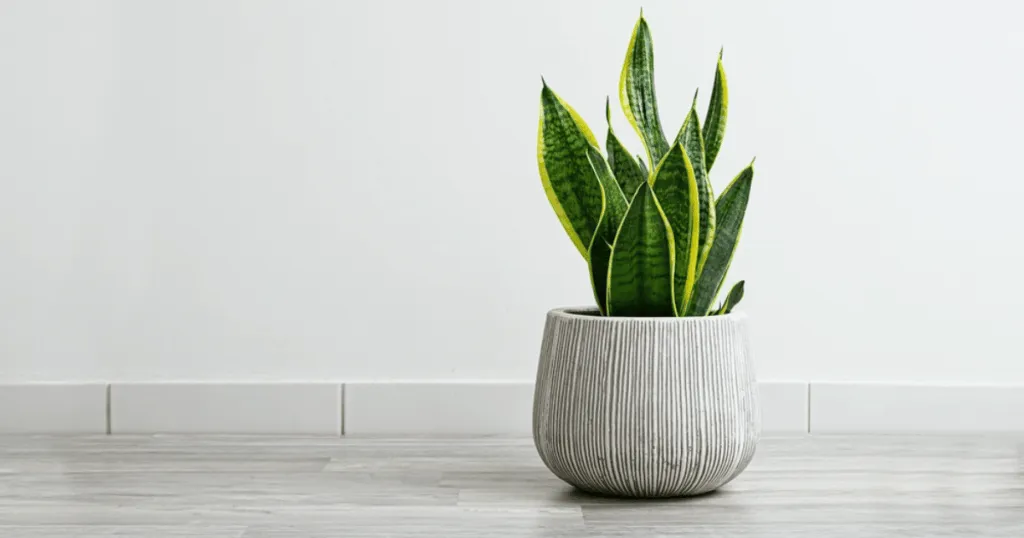
snake plant scientific name: Dracaena trifasciata Explained
Botanical names are intended to identify a plant more precisely than common names. A scientific name has two parts: the genus and the species. In Dracaena trifasciata, Dracaena is the genus and trifasciata is the species. Italics are customary in print, with the genus capitalized and the species lowercase.
For decades, this plant was widely known as Sansevieria trifasciata. Taxonomists later placed Sansevieria within the broader Dracaena group based on plant relationships. That is why reputable botanical resources now generally accept Dracaena trifasciata. The older name has not vanished because it remains useful in horticulture, retail labeling, office plant contracts, and everyday conversation.
Why two names appear on office plant labels
Plant labels often lag behind botanical updates. A lobby plant may have arrived with a tag reading Sansevieria trifasciata, while a replacement ordered today may be invoiced as Dracaena trifasciata. Neither label means the care requirements changed overnight.
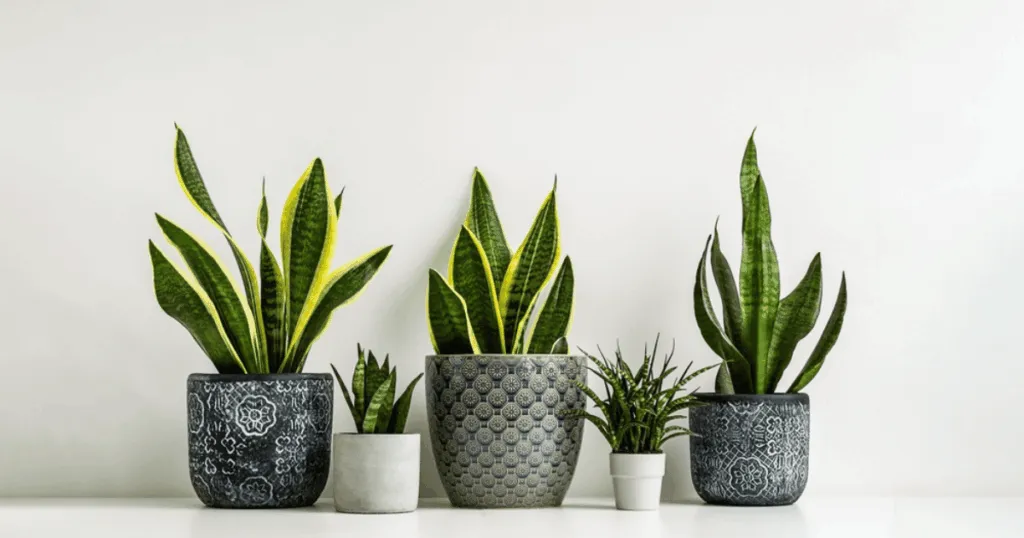
Use the leaf shape and growth habit to confirm what you have. The usual snake plant has stiff, sword-shaped leaves that grow upright from a compact base. Leaves may be dark green, gray-green, banded, or edged in yellow depending on the cultivar. It spreads slowly by underground rhizomes and can eventually fill a floor pot.
If an online care page calls it a Sansevieria and another calls it a Dracaena, treat those as alternate names for the same common office species unless the page identifies a different species. This prevents a common record-keeping problem: a workplace may list one plant twice under two scientific names and assign different care notes to each.
Common names are less exact
“Snake plant” is a useful common name, but it can cover several related plants. “Mother-in-law’s tongue” is another common name for the upright type. These names are fine for a watering roster, but a scientific name is more helpful when a plant has an unusual form or a safety question comes up.
For example, a plant with round, spear-like leaves is often marketed as a cylindrical snake plant. Its accepted name is usually Dracaena angolensis, formerly Sansevieria cylindrica. It is related, but it is not the same species as Dracaena trifasciata. The care overlap is substantial, yet the distinction matters for accurate inventory and identification.
Scientific name, cultivar name, and trade name
A cultivar is a selected cultivated form within a species. The yellow-edged plant frequently called ‘Laurentii’ is commonly written Dracaena trifasciata ‘Laurentii’. The short rosette type called bird’s nest snake plant is often sold as a Hahnii cultivar. These names describe a particular look, such as leaf color or compact size, rather than a new species.
Trade names can be less consistent. Terms such as “golden snake plant,” “black coral,” or “moonshine” may identify a cultivar, but spelling and usage can vary among growers. For a shared office inventory, note the accepted species first, then add the cultivar or trade name and the pot location. That gives the next caretaker information they can actually use.
For routine care, start with the plant’s conditions rather than its tag. Our snake plant watering routine explains the dry-soil check that matters far more than whether a label uses the older genus.
What the name change means for office care
The reclassification does not make a snake plant a different office plant. Dracaena trifasciata remains a drought-tolerant houseplant that does best in bright indirect light but tolerates lower light better than many common indoor plants. Tolerance is not the same as thriving. A plant several yards from a window under ceiling LEDs may stay alive, but grow slowly and lose sharper leaf patterning.
| Office factor | Best practice for Dracaena trifasciata | What to avoid |
|---|---|---|
| Light | Medium to bright indirect light. Low light is acceptable for slow growth. | Dark interior corners with no useful daylight or dedicated grow light. |
| Water | Check every 2 to 4 weeks. Water only when the potting mix is dry nearly all the way down. | A fixed weekly schedule or water left in a decorative outer pot. |
| Temperature | About 60 to 85°F [16 to 29°C], away from abrupt airflow. | Cold AC blasts, drafty exterior doors, or radiator heat. |
| Container | A pot with a drainage hole, sized only slightly larger than the root mass. | An oversized pot that keeps extra soil wet for too long. |
Overwatering is the main risk in offices. The leaves store water, and cooler low-light areas use that stored moisture slowly. Before watering, push a finger or a narrow wooden stick into the mix. If it feels damp below the surface, wait. In many climate-controlled offices, a small desk specimen may need water every 3 to 5 weeks, while a larger plant near brighter windows may need it every 2 to 3 weeks. Seasonal light and indoor temperature change the timing.
Do not “top up” before a three-day weekend if the soil is still moist. A healthy established snake plant can usually handle a normal weekend and a holiday closure far better than it can handle saturated roots. If the office will close for two weeks or more, water only plants that are actually dry, move them away from harsh direct sun, and make sure excess water can drain completely.
Also keep the pot out of a direct path from an AC vent. Repeated cold drafts can stress leaves even when the thermostat reading seems suitable. A few feet of distance, a low plant stand, or moving the plant to the side of a cabinet often solves the problem without changing the room layout.
Using botanical names to choose the right snake plant form
Knowing the name helps you match plant form to workplace space. Standard Dracaena trifasciata is usually a better floor plant than a crowded desk plant because mature leaves can become tall and the pot becomes wide over time. It works well beside a reception desk, in a meeting room with decent ambient daylight, or at the edge of an open-plan floor where nobody brushes the leaf tips constantly.
Desk and cubicle choices
For a desk, look for a compact bird’s nest type identified as a Dracaena trifasciata Hahnii selection. Its short rosette form has a smaller footprint and is less likely to block a monitor or lean into a keyboard area. Give it a draining pot and place it where it receives more than just the weak spill of overhead lighting.
A taller cultivar such as ‘Laurentii’ makes a stronger visual statement, but it can become awkward on a narrow desk. Its yellow leaf edges also tend to look better in medium or bright indirect light. If your desk is far from a window, a compact green type is usually the less demanding choice.
Reception areas and shared floors
For a lobby or reception area, specify the full name on the plant list: Dracaena trifasciata, plus the cultivar if known. This helps a replacement match the height and color scheme already planned for the space. It also avoids accidentally substituting a cylindrical snake plant, which has a very different silhouette.
Snake plants are not a pet-safe choice. ASPCA lists Sansevieria, the older genus name used on its plant list, as toxic to dogs and cats. The concern is saponins, which can cause gastrointestinal upset such as drooling, nausea, vomiting, or diarrhea if chewed or eaten. Put them out of reach in pet-friendly offices and do not place them in child-accessible waiting areas. If a workplace pet ingests plant material, contact a veterinarian or an animal poison-control service promptly.
They also do not meaningfully clean the air in a real ventilated office. The NASA Clean Air Study tested plants in sealed chambers, not ordinary workplaces with HVAC and ongoing air exchange. A snake plant can still improve the appearance of a room and may support a more pleasant, cared-for atmosphere. Treat it as a design and wellbeing feature, not as a substitute for ventilation or indoor air-quality management.
Yellowing, soft leaves, or a sour-smelling pot are more likely to be watering problems than a naming issue. Use our guide to office snake plant problems to sort out symptoms before repotting or replacing the plant.
How to label and manage snake plants at work
A simple plant record prevents confusion as staff change or a vendor rotates plants. On a discreet label or shared spreadsheet, use “Dracaena trifasciata (formerly Sansevieria trifasciata)” for the standard snake plant. Add its common name, cultivar if known, location, last watering date, and the next check date.
- Use a check date, not an automatic water date. A team member should inspect soil dryness at the scheduled interval, then decide whether water is needed.
- Assign one owner and one backup. Shared responsibility with no named person often leads to duplicate watering.
- Keep the nursery pot or an inner pot with drainage inside any decorative cover pot. Empty standing water after watering.
- Wipe dust from leaves with a soft, damp cloth every month or two. This keeps the plant tidy in a reception setting and makes pest checks easier.
- Repot only when roots are crowded, the pot is cracking, or the plant dries unusually fast. Choose a container about 1 to 2 inches wider, with drainage, and use a fast-draining indoor potting mix.
If no one knows the cultivar, do not guess. “Snake plant, likely Dracaena trifasciata” is a useful and honest record. A photo attached to the inventory can help future teams confirm the form.
What to Do With the snake plant scientific name
Use Dracaena trifasciata when creating a current office inventory, searching modern botanical information, or requesting a like-for-like replacement. Keep Sansevieria trifasciata in parentheses so older labels and care resources remain easy to find. Then focus on the decisions that protect the plant: adequate indirect light, dry soil before watering, drainage, and a safe location away from pets and children.
If you are still deciding whether this plant suits your workplace, see our overview of the low-maintenance office snake plant for placement and day-to-day expectations.
FAQ
Is Sansevieria trifasciata still a correct name?
Sansevieria trifasciata is an older name and remains widely recognized in horticulture, plant shops, and care resources. Current botanical classification generally treats it as Dracaena trifasciata. Using either name will usually help you find relevant care information, but Dracaena trifasciata is the accepted name to use in updated records.
Why did the snake plant scientific name change to Dracaena?
The change followed taxonomic research indicating that plants formerly placed in Sansevieria belong within the genus Dracaena. It is a classification update, not a change to the physical plant or its needs. A snake plant labeled Sansevieria trifasciata and one labeled Dracaena trifasciata are usually the same familiar upright houseplant.
Is a cylindrical snake plant Dracaena trifasciata?
Usually not. The cylindrical snake plant, with rounded spear-shaped leaves, is commonly identified as Dracaena angolensis, formerly Sansevieria cylindrica. It is closely related and has similar low-water preferences, but it is a different species. Confirm the leaf form before using a species name in an office plant inventory.
Can I use a snake plant in a pet-friendly office?
A snake plant is not the safest choice where cats or dogs can chew leaves. ASPCA lists Sansevieria as toxic to dogs and cats because of saponins, which may cause gastrointestinal upset. Place it where animals cannot access it, or select a plant confirmed as pet-safe for low, reachable areas.