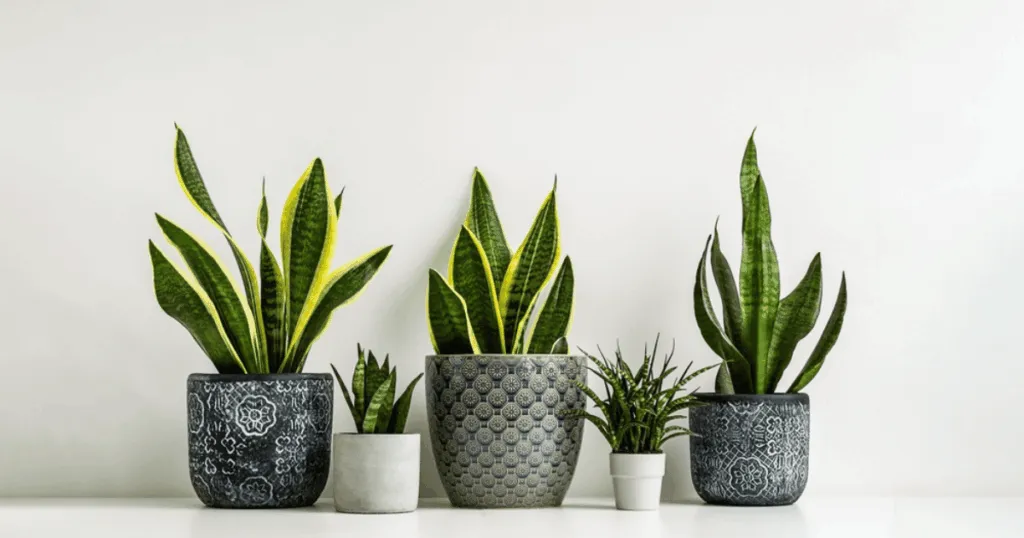
A small snake plant is one of the better choices for a desk, cubicle, or narrow reception counter. Its upright leaves use little horizontal space, it tolerates missed watering better than most houseplants, and dwarf varieties stay manageable indoors. The key is choosing a truly compact cultivar and not treating low light as no light.
For most workplaces, look for a bird’s nest snake plant, often sold as Dracaena trifasciata ‘Hahnii’ or Sansevieria trifasciata ‘Hahnii’. Put it where it gets ambient daylight or reasonably bright office lighting, use a pot with a drainage hole, and water only after the potting mix has dried out fully. Too much water, not neglect, is the usual reason snake plants fail at work.
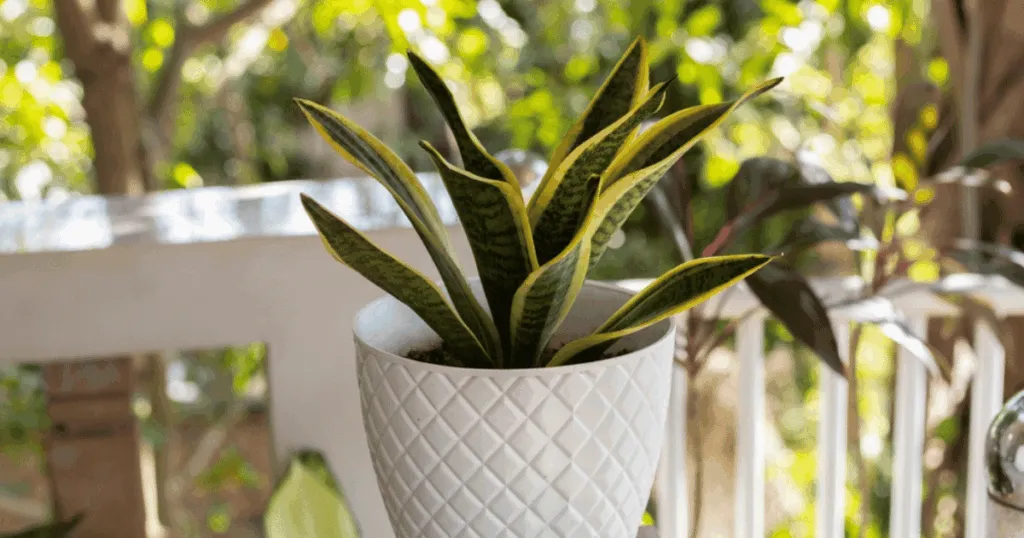
Which Small Snake Plant Works Best on a Desk?
Not every plant labeled a mini snake plant remains mini. Many standard snake plants begin small in nursery pots but can eventually reach 2 to 4 feet tall. For a crowded desk or shelf, a rosette-forming dwarf is usually the most reliable choice.
| Type | Typical indoor size | Office use | What to know |
|---|---|---|---|
| Bird’s nest snake plant, ‘Hahnii’ | About 6 to 12 inches tall and wide | Desk, credenza, reception counter | Compact rosette shape and the best all-around choice for tight spaces. |
| ‘Jade Star’ | About 10 to 16 inches tall | Desk corner or small cabinet | Dark, sturdy leaves and a slightly taller upright form. |
| ‘Golden Hahnii’ | About 6 to 12 inches tall and wide | Bright desk or lobby shelf | Yellow variegation needs brighter indirect light to stay distinct. |
| ‘Fernwood Mikado’ | Often 2 to 3 feet indoors over time | Floor pot or roomy side table | Slender leaves, but not a genuinely small long-term desk plant. |
The bird’s nest forms are often called dwarf Sansevieria. Botanical naming has changed, and many labels still use Sansevieria. You may also see the current name Dracaena trifasciata. Both names commonly refer to the same familiar snake plant group.
Measure the space around the pot, not only the pot itself
A 4-inch or 6-inch nursery pot can fit almost anywhere, but leaves need clearance. Allow a footprint of about 10 to 14 inches for a mature bird’s nest plant, especially if it sits beside a monitor, phone dock, or paperwork tray. Avoid placing it where sleeves, bags, and rolling chair arms repeatedly hit the leaves.
For a reception desk, choose a low, broad Hahnii form rather than a tall standard variety. It is less likely to block sightlines or interfere with visitor paperwork. On a shared workstation, place the pot on a small tray to catch any accidental drips and keep the desk surface tidy.
Understand what low light means in an office
Snake plants tolerate low light, but they do not grow well in complete darkness. A spot several feet from a window with daylight in the room counts as low light. A desk near a bright window but out of direct sun is bright indirect light. Medium light is common beside a window with blinds or in an open office that receives steady daylight.
Ceiling LEDs and fluorescent panels can help a snake plant maintain itself, but overhead light alone is often weak for active growth, particularly if lights are off evenings and weekends. A green plant that has not changed for months may be surviving rather than thriving. If your desk is deep inside the building, use a small grow light on a timer for 8 to 12 hours on workdays, or move the plant to a brighter shared area.
Variegated choices, including ‘Golden Hahnii’, are less forgiving of dim corners because the pale areas contain less chlorophyll. In a low-light cubicle, a solid green bird’s nest variety is the safer pick.
Small Snake Plant Care in Real Office Conditions
Water only when the root zone is dry
Check the soil before scheduling any watering. Push a finger about 2 inches into the potting mix, or use a wooden chopstick to check deeper in a small pot. Water only if it comes out dry and clean, and the pot feels noticeably light. If the soil is cool or damp, leave it alone.
In a medium-light office, a small snake plant often needs water every 2 to 4 weeks. In low light, during winter, or in a cool building, it may need water only every 4 to 6 weeks. These are check-in ranges, not a calendar rule. HVAC, pot size, and light level change how fast the mix dries.
Take the plant to a sink, water slowly until excess runs from the drainage hole, then let it drain completely before returning it to its cover pot or desk tray. Never leave water pooled in an outer decorative container. For a fuller routine, see snake plant watering guidance.
Do not use a self-watering reservoir for a snake plant unless you can keep the reservoir empty most of the time. Constant moisture is poorly suited to its thick, water-storing roots and can lead to root rot.
Protect it from vents, radiators, and cold glass
Snake plants prefer ordinary indoor temperatures, roughly 60 to 85°F [16 to 29°C]. They can handle short periods outside that range better than many tropical plants, but cold drafts and abrupt temperature swings still cause stress. Keep the pot away from an air-conditioning vent, exterior door, radiator, and windowsill that becomes cold in winter.
Dry office air is rarely the central problem for this plant. Misting is unnecessary and can leave water sitting in the leaf rosette. The more useful move is to prevent a direct blast of heated or chilled air from drying and scarring leaf edges.
Use a pot that drains and a mix that dries freely
A small snake plant should be in a pot with at least one drainage hole. Use a cactus and succulent mix, or improve standard houseplant mix with perlite or pumice so water moves through it quickly. A heavy, dense mix holds moisture too long in a low-light office.
Repot only when roots are densely circling the pot, the container bulges or cracks, or water runs straight through because the root ball has filled the space. Moving up just 1 to 2 inches in pot diameter is enough. An oversized pot stays wet longer and makes overwatering more likely. Since repotting is messy indoors, plan it for a maintenance day and work over a lined box or tray.
Office Setups That Make Sense for Compact Snake Plants
A windowless cubicle
A small snake plant can work in a cubicle with bright overhead lights if the plant is close to the light source and you accept slow growth. Choose solid green Hahnii, water sparingly, and rotate the pot a quarter turn every month if one side receives stronger light. If leaves become thin, lose firmness, or lean hard toward an aisle light, add a grow light or relocate it to a brighter shared zone.
A desk beside a north-facing or tinted window
This is often a good placement. Put the plant a few feet back from the glass, rather than pressed against a cold pane. The diffuse daylight is usually more useful than an interior desk receives. Check soil a little more often in summer if the window area becomes warm, but do not water simply because the weather is hot outside.
A lobby or meeting room with unclear watering duties
The risk here is duplicate watering. Give one person responsibility, or attach a simple care note inside the cabinet where supplies are kept: “Check soil first. Water only when fully dry.” Record the date watered on a shared calendar. This small system prevents well-meaning coworkers from watering every Friday.
For multi-plant spaces, review office snake plant placement ideas before filling a dim lobby with plants. A few well-positioned plants look better and are easier to maintain than many plants scattered into unsuitable corners.
Saponins Make This a Poor Choice for Pet-Friendly Desks
Snake plants contain saponins and are listed by the ASPCA as toxic to cats and dogs. Chewing or swallowing plant material can cause drooling, nausea, vomiting, or diarrhea. The plant is not a good desk choice if an office cat has access to workstations or if dogs regularly visit and can reach the pot.
Keep it out of reach of children in reception areas as well. The stiff leaf tips can also be unpleasant at face level on a low coffee table. If ingestion occurs, contact a veterinarian or an animal poison-control service promptly and follow their advice. Do not assume that a small amount is harmless.
For allergy concerns, snake plants do not produce showy airborne flowers indoors in most office settings, but potting mix can still harbor mold if kept too wet. Proper drainage and restrained watering matter more than the plant’s reputation for air cleaning. The NASA Clean Air Study used sealed chambers. A few office plants do not measurably clean the air in a real ventilated office, though plants can still improve a room’s appearance and some people’s sense of wellbeing.
Common Small Snake Plant Problems at Work
Soft leaves, yellowing, or a sour-smelling pot
These signs usually point to wet soil and stressed roots. Stop watering, remove the pot from any standing water, and check for soft brown roots. If the mix stays damp for more than a couple of weeks in low light, repot into a faster-draining mix after trimming clearly rotten roots with clean tools. Our detailed page on snake plant watering problems can help you sort out related symptoms.
Wrinkled or curling leaves
Wrinkling can mean the plant has been dry too long, especially if the pot is very light and the mix is dry throughout. Water deeply once and allow it to drain. Do not compensate by watering again a few days later. If the soil is wet but leaves are wrinkled, root damage may be preventing water uptake.
Brown tips or pale, faded leaves
Brown tips often come from physical damage, very dry heated airflow, or inconsistent watering. Pale, washed-out leaves can occur with too little usable light, while bleached patches near a sunny window can be sun scorch. Move the plant away from direct hot sun and away from the path of a vent before changing your watering routine.
What to Do Before a Long Weekend or Office Closure
Leave a healthy small snake plant alone for a long weekend. Before a one to three week closure, check that the soil is dry or nearly dry, move it away from direct sun and HVAC blasts, and leave it in normal room conditions. Do not soak it “just in case.” A plant in dry soil handles a short closure far better than one sitting wet in a dark office.
For closures longer than a month, arrange one person to inspect the soil once around the middle of the closure, not to water automatically. Keep the instructions simple: water only if the mix is dry all the way down. Start with a compact Hahnii in a draining pot, assign one watering owner, and place it in the brightest suitable spot you have. That is the most dependable way to keep a small snake plant looking good at work.
FAQ
How big does a small snake plant get?
A bird’s nest snake plant, usually sold as Hahnii, commonly stays around 6 to 12 inches tall and wide indoors. Growth is slow in offices, especially under overhead lighting. Check the cultivar name before bringing one in. Standard snake plants and slender types such as Fernwood Mikado may begin small but can become much taller over time.
Can a small snake plant live with only fluorescent or LED office lights?
It may survive under office lighting, but growth can be very slow if there is no daylight. A solid green compact variety has the best chance. Watch for weak, stretched, or leaning leaves. If the plant is far from windows and lights turn off nightly, a timed grow light is more dependable than expecting ceiling fixtures to provide enough usable light.
Should I rotate a small snake plant on my desk?
Rotate the pot about one quarter turn every month if one side faces a window or receives noticeably stronger overhead light. This helps the plant grow more evenly. Do not rotate it constantly or move it between very different light levels every few days. Stable placement is easier for both the plant and the person responsible for watering.
Why is my small snake plant pushing out new shoots?
New shoots, called pups, usually mean the plant is actively growing from underground rhizomes. This is normal and often a good sign. Leave them attached for a fuller plant, which suits a desk pot well. Divide pups only when repotting if the container is crowded and you have a clean workspace for handling soil and roots.