The most common failure point for this species in a professional environment is light starvation. While often marketed as a festive, temporary plant, the Norfolk Island Pine (Araucaria heterophylla) is a slow-growing tree that requires significant light to maintain its signature symmetrical, tiered structure. In an office, placing this plant in a dim corner or a windowless cubicle will lead to rapid needle drop and a lanky, unattractive appearance.
Beyond the immediate aesthetic decline, improper placement often sets off a chain reaction of physiological stress. When the plant cannot photosynthesize effectively due to low light, its ability to process water and nutrients diminishes, making it significantly more susceptible to common office stressors like fluctuating temperatures and dry air. Understanding the delicate balance of these environmental factors is the cornerstone of successful long-term maintenance for this unique indoor conifer.
Decision Snapshot
- Light: Requires bright, indirect light; avoid harsh direct sun.
- Water: Keep soil lightly moist; never allow complete dryness.
- Humidity: Needs above-average moisture; misting or trays help.
- Toxicity: Keep away from pets; consult ASPCA for safety.
- Difficulty: Moderate; sensitive to dry office air and drafts.
Light and Placement in the Workspace
For optimal results, position your plant within three feet of a south or west-facing window. If your office relies primarily on fluorescent or LED overhead lighting, ensure the plant is placed directly beneath a fixture or near a window that provides high-intensity ambient light. If you notice the branches stretching or the needles turning a pale, washed-out green, the plant is signaling that it needs more light. Rotate the pot a quarter turn every week to ensure even growth on all sides, preventing the plant from leaning toward the light source.
Understanding plant lighting requirements is essential for long-term success. Unlike many tropical foliage plants that adapt to low-light corners, the Norfolk Island Pine is a conifer that evolved in high-light environments. In an office setting, you must treat this as a focal point plant that demands a premium location. If your office layout does not allow for proximity to a window, consider using supplemental full-spectrum LED grow lights. These can be discreetly mounted to a desk or shelf to provide the necessary intensity without disrupting the professional aesthetic of your workspace.
When evaluating placement, consider the “light footprint” of your office. A window that appears bright to the human eye may still be insufficient for an Araucaria heterophylla if it is obstructed by exterior building features, tinted glass, or heavy blinds. Office managers should prioritize locations where the plant can “see” the sky, as this correlates with the high-intensity light levels necessary for maintaining the density of the needles.
If the plant is placed too far from the light source, the lower branches will begin to shed needles as a survival mechanism, prioritizing the growth of the top tiers. Once these branches are bare, they rarely recover, leading to a permanent loss of the plant’s characteristic tiered silhouette.
Watering and Soil Management
Watering is the second most critical factor in Norfolk Island Pine care. Unlike many succulents or hardy office foliage, this plant does not tolerate drought. The root system is relatively fine and sensitive to both total desiccation and waterlogging. Your goal is to keep the potting medium consistently, lightly moist, similar to the texture of a wrung-out sponge.
Check the moisture level by inserting your finger into the top two inches of soil. If the surface feels dry to the touch, it is time to water. Avoid the common mistake of letting the plant dry out completely between waterings, as this causes the lower branches to brown and drop needles permanently. Conversely, never leave the pot sitting in a saucer of standing water. This leads to root rot, which is often fatal. Ensure your container has adequate drainage holes and use a well-draining, peat-based potting mix that retains moisture without becoming compacted or muddy.
When managing office plant maintenance, consistency is your best tool. Because office temperatures are often kept artificially stable, the rate of evaporation from the soil remains relatively predictable. However, if your office is located in a building with older HVAC systems that cycle heavily, you may find that the soil dries out faster on certain days. Developing a routine – such as checking the soil every Monday morning – prevents the plant from reaching a point of stress that triggers needle drop.
In practice, the water quality also plays a role in long-term health. If your office building uses a water softening system, be cautious, as the high salt content can accumulate in the soil and damage the sensitive root system of the Norfolk Island Pine. If possible, use filtered or distilled water to avoid mineral buildup. Furthermore, during the winter months, the plant’s metabolism slows down significantly. While you should never let the soil dry out, you must reduce the volume of water provided to prevent the soil from becoming waterlogged, which is a common cause of root rot during the dormant season.
Humidity, Temperature, and Feeding
Office environments are notoriously dry due to HVAC systems, which creates a challenging climate for this species. Norfolk Island Pines thrive in humidity levels above 50 percent. When the air is too dry, the needles become brittle and begin to shed. To mitigate this, consider placing the plant on a pebble tray filled with water, ensuring the bottom of the pot sits above the water line, not in it. This creates a localized microclimate of higher humidity.
Temperature stability is equally important. Keep the plant away from direct air vents, radiators, or drafty doorways where temperatures fluctuate rapidly. A consistent range between 65 and 75 degrees Fahrenheit is ideal. Regarding nutrition, feed your plant with a balanced, water-soluble liquid fertilizer diluted to half-strength once every six to eight weeks during the active growing season, which typically spans from spring through early autumn. Avoid fertilizing during the winter months when growth naturally slows.
Low humidity plant care is a common struggle for office managers. If a pebble tray is not feasible, consider grouping the Norfolk Island Pine with other moisture-loving plants. This creates a collective microclimate where the transpiration from multiple plants raises the relative humidity in the immediate vicinity. Be mindful of the plant’s reaction to seasonal shifts; as the office heating kicks on during colder months, the air becomes significantly drier, and you may need to increase your frequency of misting or humidity-boosting efforts to prevent the needles from turning brown.
Another subtle factor is the placement relative to office airflow. While the plant appreciates fresh air, it does not tolerate direct, high-velocity blasts from HVAC vents. These vents often blow air that is both extremely dry and temperature-inconsistent, which can shock the plant. If your only available space is near a vent, consider installing a small, clear acrylic deflector to redirect the airflow away from the foliage. This simple adjustment can prevent the rapid dehydration of the needles and keep the plant in a more stable, comfortable environment.
Repotting, Pruning, and Growth Habits
Because these plants are slow growers, they do not require frequent repotting. In an office, you may only need to refresh the top layer of soil or move the plant into a container one size larger every two to three years. When you do repot, use a high-quality, peat-based potting soil that provides both aeration and moisture retention. Be gentle with the root ball, as the roots are delicate and easily damaged during the transition.
Pruning is rarely necessary for a healthy Norfolk Island Pine, but you may need to remove dead or brown lower branches for aesthetic reasons. Use clean, sharp shears to snip the branch close to the main trunk. Note that once a branch is removed, it will not grow back, so prune sparingly. Propagation is generally not practical for office managers, as it requires specialized conditions and high humidity levels that are difficult to replicate in a standard workspace.
When considering repotting frequency, observe the plant’s growth rate. If the plant has not added new tiers of growth in over a year, it may be root-bound or suffering from insufficient light. However, do not rush to repot if the plant is merely stagnant; ensure that your light and water conditions are optimal first. A larger pot holds more water, which can increase the risk of root rot if the plant is not actively growing and consuming that moisture.
It is also worth noting the structural integrity of the plant as it matures. In an office setting, the Norfolk Island Pine can eventually become top-heavy. If you notice the plant leaning, do not simply rotate it; ensure the base is stable. Using a decorative, heavy-bottomed ceramic pot can provide the necessary weight to prevent the plant from tipping over in high-traffic areas.
Additionally, if the plant grows too tall for your ceiling height, you may be tempted to prune the leader (the top-most growing point). Be aware that this will permanently alter the plant’s growth habit, causing it to stop growing upward and potentially forcing it to grow wider or develop multiple leaders, which may not be the desired look for your office space.
Seasonal Adjustments and Common Mistakes
The most frequent error in Norfolk Island Pine care is the assumption that it is a low-light plant. Many office workers treat it like a pothos or snake plant, leading to inevitable needle drop. Another common mistake is ignoring the plant over long weekends or holidays. If your office has a long break, ensure the plant is thoroughly watered before you leave, or arrange for a colleague to check the soil moisture. If you find the plant has become dry, water it deeply until the excess drains out, but do not overcompensate by drowning it.
Regarding safety, it is important to be aware of your office environment. According to resources like the ASPCA, this plant is considered toxic to cats and is generally treated as toxic to dogs if ingested. If your office is pet-friendly or if employees bring pets to work, keep the plant in a secure location where it cannot be chewed. Healthy growth is characterized by a vibrant, deep green color and firm, flexible needles. If you see browning tips or brittle foliage, reassess your light and humidity levels immediately.
Finally, remember that indoor tree care requires patience. The Norfolk Island Pine is not a plant that recovers quickly from neglect. If you notice signs of stress, such as yellowing needles or drooping branches, take a systematic approach to diagnosis. Start by checking the soil moisture, then evaluate the proximity to light sources, and finally, consider the ambient humidity. By addressing these factors in order, you can often stabilize the plant before the damage becomes permanent.
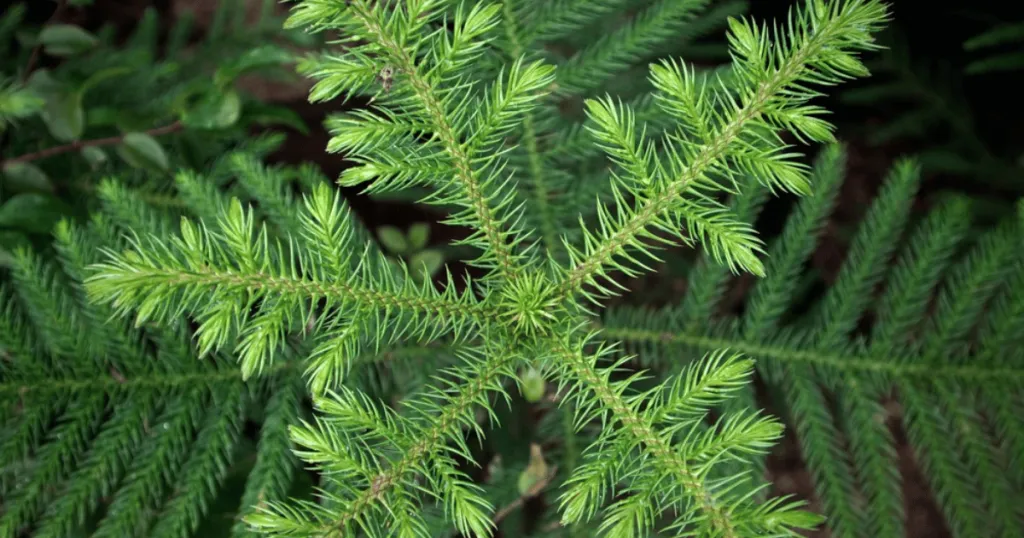
When managing this plant, it is also helpful to observe the “needle-to-branch” ratio. A healthy plant will have dense, lush needles that cover the entirety of the branch. If you notice large gaps or thinning areas, it is an early warning sign that the plant is struggling with its environment.
Rather than waiting for the entire branch to turn brown, use these early visual cues to adjust your care routine. For instance, if you notice thinning, check if the plant has been moved recently or if the office lighting has changed. Being proactive with these subtle indicators is the hallmark of effective office plant maintenance and will ensure your Norfolk Island Pine remains a vibrant, healthy addition to your workspace for years to come.
Related Norfolk Island Pine Guides
- the Norfolk Island Pine plant profile
- fixing common Norfolk Island Pine issues
FAQ
Why are the lower branches of my Norfolk Island Pine turning brown and falling off?
This is almost always a sign of low humidity or insufficient light. In an office setting, HVAC systems dry out the air, which causes the needles to crisp and drop. Try moving the plant closer to a window or using a pebble tray to increase the local humidity.
Can I grow a Norfolk Island Pine in a windowless office with only fluorescent lights?
It is not recommended. While these plants can tolerate moderate light, they require higher intensity than standard office fluorescent fixtures usually provide. Without natural light, the plant will likely lose its structure and eventually fail to thrive.
How often should I fertilize my plant in an office environment?
Fertilize sparingly. Use a balanced, water-soluble fertilizer at half-strength every six to eight weeks during the spring and summer. Do not fertilize in the winter, as the plant is in a period of dormancy and cannot process the extra nutrients.
Is the Norfolk Island Pine safe for office pets?
No. According to ASPCA guidance on toxic plants, the Norfolk Island Pine is considered toxic to cats and is generally treated as toxic to dogs. If your office allows pets, keep this plant in an area where animals cannot reach or chew the needles.