Successful schefflera care in an office setting relies on balancing the plant’s need for consistent, indirect light with the often unpredictable watering schedules of a busy workplace. The Umbrella Tree is a resilient choice for professional spaces, but it requires a specific approach to avoid the common pitfalls of overwatering and light deprivation. By understanding the plant’s natural preferences for soil moisture and ambient light, you can maintain a healthy, lush specimen that improves your office aesthetic without demanding constant attention.
At a Glance
- Light: Thrives in medium to bright indirect light.
- Water: Allow top inch of soil to dry between waterings.
- Humidity: Tolerates standard office air without extra moisture.
- Toxicity: Contains calcium oxalate crystals; toxic to pets if ingested.
The most important takeaway for any office manager or employee is that this plant prefers stability. It does not need high humidity or direct sun, but it does need you to check the soil moisture before reaching for the watering can. If you can master the simple rhythm of checking the top inch of soil, you have already solved the biggest challenge in keeping this plant vibrant throughout the work week.
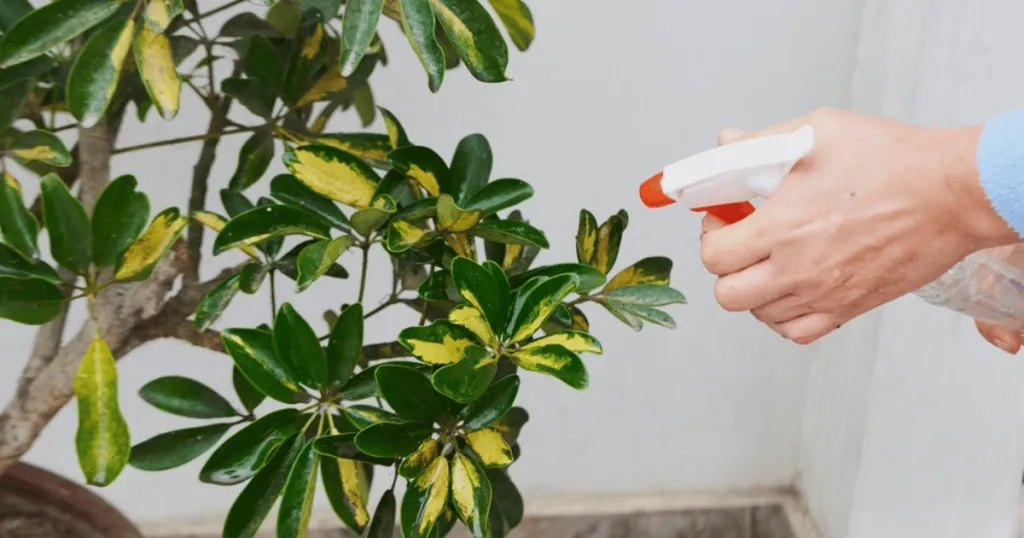
Light and Placement for Office Success
The schefflera is popular in office design because it adapts well to the artificial lighting common in modern workspaces. While it is often labeled as a low-light plant, it performs significantly better when provided with medium to bright indirect light. In practice, this means placing your plant near a north or east-facing window where it can receive soft, filtered sunlight. If your office lacks windows, the plant can still thrive under standard fluorescent or LED office lighting, provided the fixture is close enough to offer consistent intensity throughout the day.
A common mistake is placing the plant in a dark corner or a windowless hallway. While the plant may survive for a time, it will eventually show signs of stress, such as leggy, stretched stems and leaf drop. If you notice the plant leaning heavily toward a light source, rotate the pot a quarter turn every few weeks to ensure even growth. This simple habit prevents the plant from becoming lopsided and helps maintain a balanced, bushy appearance that looks professional in a reception area or meeting room.
If you are managing a space with high-intensity afternoon sun, use sheer curtains or blinds to diffuse the light. Direct, harsh sunlight can scorch the leaves, leaving unsightly brown patches that do not heal. The goal is to provide consistent, bright light without the intensity that would cause heat stress. In an office, the best placement is often a few feet away from a window, where the light is bright enough to read by but not so intense that it creates excessive heat buildup on the foliage.
Watering and Soil Guidance
Watering is the most critical aspect of schefflera care. Because office environments often have HVAC systems that fluctuate in temperature and humidity, the soil drying rate can change from week to week. The golden rule is to let the top inch of soil dry out completely before adding more water. You can easily check this by inserting your finger into the soil. If it feels damp or cool, wait a few more days. If it feels dry to the touch, it is time to water.
When you do water, ensure that the pot has adequate drainage holes. Never let the plant sit in a saucer of standing water, as this leads to root rot, which is the primary cause of plant failure in office settings. If your plant is in a decorative pot without drainage, it is best to keep it in a plastic nursery liner that can be removed for watering. Take the plant to a sink, water it thoroughly until the liquid drains out the bottom, and let it sit for ten minutes before returning it to its decorative container.
The soil itself should be a well-draining potting mix. A standard indoor houseplant mix amended with a handful of perlite or pumice works well to ensure that water moves through the root zone efficiently. Avoid heavy, moisture-retentive soils that stay soggy for long periods. In an office where you might be away for weekends or holidays, a well-draining mix provides a safety buffer, preventing the roots from suffocating if you accidentally overwater on a Friday afternoon.
Humidity, Temperature, and Feeding
Schefflera plants are remarkably tolerant of the dry air typical of office buildings. Unlike tropical ferns that require constant misting or a humidifier, the Umbrella Tree is content with the average room humidity levels found in most climate-controlled offices. You do not need to worry about the drying effects of office heaters or air conditioning, provided the plant is not placed directly in the path of a vent where it would be subjected to constant, forced-air drafts.
Temperature stability is more important than specific humidity levels. Keep your plant in a range between 65 and 80 degrees Fahrenheit. If your office gets significantly colder than this over the weekend, the plant may slow its growth or drop older leaves. Avoid placing the plant near exterior doors where it might be hit by cold drafts in the winter, or near radiators that could cause localized dehydration.
Feeding is straightforward. During the active growing season, which generally spans from spring through early autumn, you can apply a balanced, water-soluble fertilizer at half-strength every four to six weeks. Do not fertilize during the winter months when growth naturally slows down. Over-fertilizing can lead to a buildup of salts in the soil, which may cause leaf tip burn. If you are unsure, it is always safer to under-fertilize than to over-fertilize.
Repotting, Pruning, and Propagation
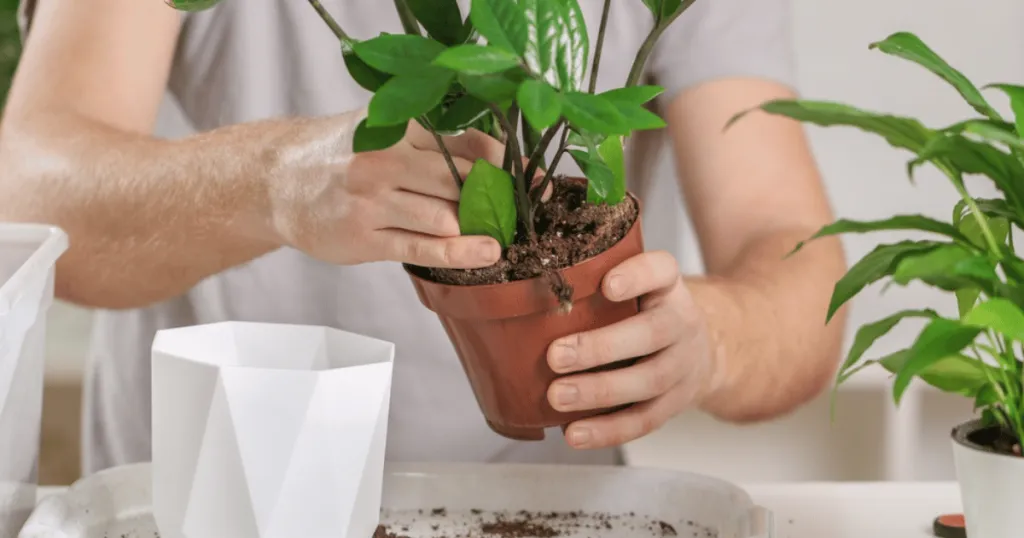
Repotting is only necessary when the plant becomes root-bound, which usually happens every two to three years. You will know it is time if you see roots growing out of the drainage holes or if the plant dries out much faster than it used to. When you repot, choose a container that is only one or two inches larger in diameter than the current one. A pot that is too large holds too much excess soil, which stays wet for too long and increases the risk of root rot.
Pruning is an essential part of keeping a schefflera looking tidy in a professional space. Because these plants can grow quite tall, you may need to prune them to maintain a specific height or to encourage a bushier shape. Use clean, sharp shears to cut back stems just above a leaf node. This encourages the plant to branch out, creating a fuller, more compact appearance. If you notice any yellowing or damaged leaves, remove them promptly to keep the plant looking healthy and to redirect energy to new growth.
Propagation is possible through stem cuttings, though it is more of a hobbyist activity than a standard office maintenance task. If you do choose to propagate, take a four-inch cutting from a healthy stem, remove the lower leaves, and place the cutting in a glass of water or a small pot of moist potting mix. Keep it in bright, indirect light until roots develop. In an office, it is often more practical to simply purchase a new, established plant if you need to expand your greenery.
Seasonal Notes and Common Care Mistakes
The most common mistake in schefflera care is overwatering during the winter months. As daylight hours decrease, the plant’s metabolic rate slows, and it requires significantly less water than it does in the summer. If you continue to water on the same schedule year-round, you will likely cause root issues. Adjust your routine by checking the soil more frequently and being prepared to wait longer between waterings during the colder months.
Another frequent issue is pest infestation, specifically spider mites or scale. These pests thrive in the dry, stagnant air of some offices. Inspect the undersides of the leaves periodically for fine webbing or small, sticky bumps. If you spot pests, wipe the leaves down with a damp cloth or use an insecticidal soap specifically formulated for indoor plants. Prevention is the best strategy, so keep the leaves dust-free by wiping them occasionally, which also helps the plant photosynthesize more effectively under artificial light.
If you notice the plant dropping leaves, it is often a sign of a sudden change in environment. This could be a move to a different room, a change in light intensity, or a shift in temperature. Once the plant is placed in a suitable spot, try to leave it there. Consistency is the key to long-term success. If the plant looks healthy, with firm, glossy leaves and steady growth, you are doing everything right.
Advanced Troubleshooting for Office Managers
When managing multiple plants in a large office, maintaining a consistent care protocol is vital. If you notice a sudden decline in health across several specimens, evaluate the environmental variables first. Often, a change in building management settings – such as a shift in the HVAC schedule or a change in cleaning staff routines – can impact plant health. For instance, if cleaning crews are accidentally watering plants during their nightly rounds, you may see signs of overwatering despite your best efforts. Establishing a clear communication channel or a simple tagging system on each plant can prevent duplicate watering.
Furthermore, consider the physical placement of the plant relative to human traffic. In high-traffic areas like lobbies or breakrooms, plants are prone to physical damage. Ensure the schefflera is placed in a spot where it won’t be bumped by chairs, carts, or cleaning equipment. Physical stress, such as broken stems or crushed foliage, can open the plant up to secondary infections or pest entry points. By placing the plant in a slightly recessed area or using a sturdy, heavy-based planter, you can protect the specimen from accidental damage while ensuring it remains a focal point of the office decor.
Finally, remember that plant health is a long-term investment. A schefflera that has been in your office for several years is a testament to your consistent care. Do not be discouraged by the occasional lost leaf, especially during seasonal transitions. By observing the plant’s growth habits and adjusting your care routine to match the changing conditions of the workplace, you will ensure that your Umbrella Tree continues to thrive for years to come.
Related Schefflera Guides
- the Schefflera plant profile
- why your Schefflera might be struggling
FAQ
Why are the leaves on my schefflera turning yellow and falling off?
Yellowing leaves are almost always a sign of overwatering. When the soil stays too wet, the roots cannot breathe, leading to decay. Check the soil moisture immediately; if it is soggy, stop watering and ensure the pot has proper drainage. If the soil is dry, the issue might be a lack of light or a recent, stressful change in the plant’s environment.
Is the schefflera safe for office pets or service animals?
According to the ASPCA, the schefflera is toxic to cats and dogs. It contains calcium oxalate crystals, which can cause oral irritation, excessive drooling, and difficulty swallowing if chewed or ingested. If your office allows pets, place the plant in an area that is inaccessible to them to ensure their safety.
Can I keep my schefflera in a windowless office with only fluorescent lights?
Yes, a schefflera can survive in a windowless office if it is placed close to a consistent, high-quality light source. The plant needs to be within a few feet of the light fixture to receive enough energy. If the plant begins to stretch or lose leaves, it is likely not getting enough light and should be moved closer to the source or supplemented with a dedicated grow light.
How do I know if my schefflera is getting enough light?
A healthy schefflera will have dense, dark green foliage and a compact shape. If your plant is getting enough light, the stems will be sturdy and the leaves will be close together. If the plant is not getting enough light, it will become leggy, with large gaps between the leaves as it stretches toward the nearest light source.