The most common mistake when managing parlor palm care is assuming that because this plant is shade-tolerant, it can thrive in a windowless corner or a dark storage closet. While the parlor palm (Chamaedorea elegans) is exceptionally resilient in low-light office settings, it still requires some ambient light to maintain its lush, dark green foliage. Placing it in a space with absolutely no natural light will eventually lead to stunted growth and a weakened structure. By understanding the balance between its shade tolerance and its actual energy needs, you can ensure your plant remains a vibrant fixture in your workspace for years.
Key Takeaway
Consistent parlor palm care relies on maintaining lightly moist soil and providing bright, indirect light to prevent leaf yellowing.
- Water when the top inch of soil feels dry.
- Avoid direct sunlight to prevent leaf scorch.
- This plant is non-toxic to cats and dogs.
- Average office humidity is sufficient for healthy growth.
Optimizing Light and Placement for Office Success
In an office environment, light quality varies significantly between a cubicle, a reception desk, and a conference room. The parlor palm is a standout choice because it is one of the most shade-tolerant palms available. However, there is a distinct difference between low light and no light. Ideally, place your palm where it can receive bright, indirect light. If your office relies primarily on overhead fluorescent or LED lighting, ensure the plant is positioned relatively close to the light source or near a north-facing window where it can access diffuse natural light.
Direct sunlight is the primary enemy of the parlor palm. In an office with south or west-facing windows, the intensity of afternoon sun can quickly scorch the delicate fronds, leading to brown, crispy edges that do not recover. If your only available space is near a bright window, use a sheer curtain or a window film to diffuse the light. When the plant receives proper, indirect light, it will maintain a deep green color and a steady, albeit slow, growth rate. If you notice the stems stretching or the plant leaning aggressively toward a light source, it is a clear indicator that the current location is too dim and should be adjusted.
For office managers, consider the orientation of your workspace. A north-facing window provides the most consistent, gentle light for Chamaedorea elegans. If you are in a deep-plan office with limited window access, consider rotating the plant every two weeks to ensure even light distribution, which prevents the plant from developing a lopsided growth habit. Remember that photosynthesis is the engine of plant health; even a shade-loving species needs a consistent light “budget” to sustain its cellular processes.
Watering and Soil Management
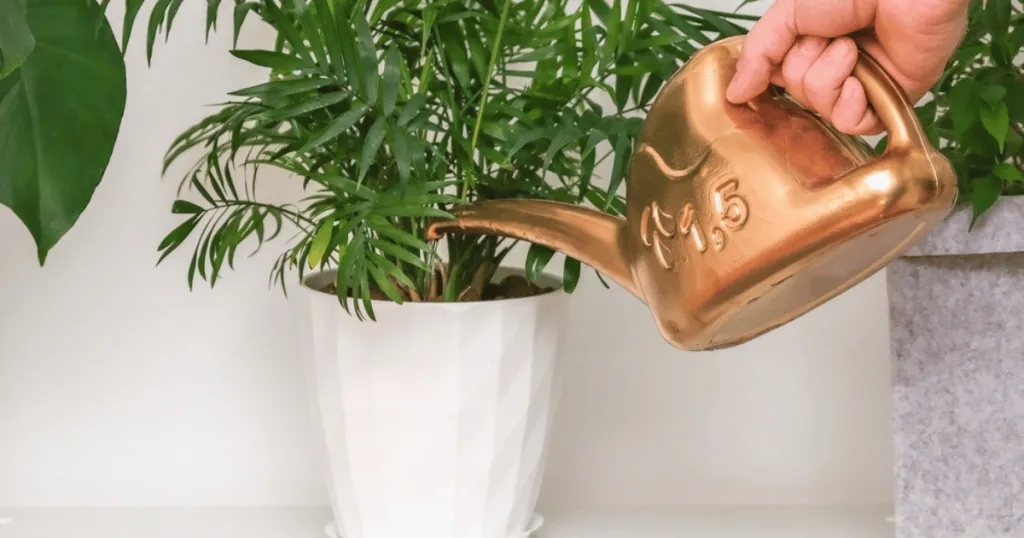
Parlor palm care requires a disciplined approach to watering that avoids the two extremes of overwatering and total desiccation. The goal is to keep the soil lightly moist, similar to the texture of a wrung-out sponge. Never let the soil dry out completely, as this can cause the tips of the fronds to turn brown and brittle. Conversely, do not leave the plant sitting in standing water, which is a common occurrence if the pot lacks proper drainage holes or if the saucer is left full after watering.
In an office setting, the watering schedule often needs to be adjusted based on the HVAC system. Offices with high-efficiency climate control often have lower humidity and higher airflow, which can cause soil to dry out faster than you might expect. Before watering, always check the soil by inserting your finger about an inch deep. If it feels dry, it is time to water. If it still feels cool or damp, wait another few days. Using room-temperature water is best, as cold water can shock the root system. Ensure your potting mix is well-draining, such as a standard indoor potting soil amended with perlite or pumice to prevent compaction and ensure that oxygen can reach the roots.
When managing indoor office plants, the container choice is just as important as the water. Terracotta pots are porous and allow for better evaporation, which can be a safety net if you are prone to overwatering. Plastic or glazed ceramic pots retain moisture longer, which might be preferable if your office has very dry, forced-air heating. Always prioritize a plant watering guide that emphasizes checking the soil moisture rather than following a calendar-based routine, as office temperatures fluctuate significantly between weekends and workdays.
Humidity, Temperature, and Supplemental Feeding
The parlor palm is remarkably adaptable to the standard humidity levels found in most modern office buildings. While many tropical plants struggle in the dry, conditioned air of an office, the parlor palm is comfortable in average room humidity. You do not need to invest in a humidifier or mist the leaves daily, as this can sometimes encourage fungal issues if the office lacks sufficient air circulation. If you notice the tips of the leaves browning, it is more likely a result of inconsistent watering or salt buildup from tap water rather than a lack of atmospheric humidity.
Temperature stability is vital for this species. Parlor palms prefer temperatures between 65 and 80 degrees Fahrenheit. The biggest risk in an office is placement near heating or cooling vents. A blast of hot air from a vent will dry out the fronds rapidly, while a cold draft from an AC unit can cause the plant to go dormant or suffer tissue damage. Keep the plant away from these direct airflow paths. Regarding fertilizer, feed your palm sparingly during the active growing season, which typically spans from spring through late summer. A balanced, water-soluble liquid fertilizer diluted to half-strength, applied once every two months, is sufficient to support growth without overwhelming the plant with excess salts.
When discussing office plant maintenance, it is important to note that plants in office environments often experience different stress factors than those in a home. The constant hum of electronics and the fluctuating HVAC systems can create micro-climates. If your office is particularly dry, grouping your parlor palm with other plants can create a small pocket of higher humidity, which benefits the entire collection. However, ensure that you do not crowd them so much that you restrict airflow, as this can lead to pest outbreaks.
Repotting, Pruning, and Propagation
Parlor palms are slow growers, meaning they do not require frequent repotting. In fact, they often prefer to be slightly pot-bound. You should only consider repotting when you notice roots circling the bottom of the pot or growing out of the drainage holes. When you do repot, choose a container that is only one or two inches larger in diameter than the current one. Using a pot that is too large can lead to excess soil that holds too much moisture, increasing the risk of root rot.
Pruning is straightforward: simply remove any fronds that have turned completely brown or yellow at the base of the stem using clean, sharp shears. This keeps the plant looking tidy and prevents the plant from wasting energy on dying foliage. Propagation of the parlor palm is notoriously difficult for the average office worker, as it is typically grown from seeds rather than cuttings. Because it does not produce offsets or runners like other houseplants, attempting to propagate it in an office setting is generally not practical. It is better to focus your efforts on maintaining the health of your existing specimen.
When you do repot, use a high-quality, peat-based potting mix that provides both moisture retention and aeration. Avoid heavy garden soils, which can become compacted and suffocate the roots. If you are unsure about the drainage of your current pot, consider adding a layer of leca or coarse gravel at the bottom, though this is not a substitute for proper drainage holes. Always ensure that the pot you choose has at least one hole to allow excess water to escape, as root rot is the most common cause of premature death in office-kept palms.
Seasonal Adjustments and Avoiding Common Mistakes
As the seasons change, your office environment may shift. During the winter months, when natural light levels drop and heating systems run more frequently, your parlor palm will require less water. Always err on the side of caution during this time. A common mistake is maintaining a rigid, year-round watering schedule regardless of the plant’s actual needs. Instead, let the soil moisture dictate your actions. If the office is closed for an extended holiday, ensure the plant is watered thoroughly before you leave, but do not soak the soil to the point of saturation.
Another frequent error is the use of harsh, mineral-heavy tap water. Over time, salts can build up in the soil, leading to leaf tip burn. If your office tap water is heavily treated, consider using filtered water or allowing the water to sit out overnight before using it. Finally, keep an eye out for common pests like spider mites, which thrive in dry, stagnant office air. Regularly wiping the leaves with a damp cloth not only keeps the plant clean but also allows you to inspect the undersides of the fronds for early signs of infestation, such as fine webbing or tiny, discolored spots.
When addressing indoor plant pests, early detection is your best defense. If you spot spider mites, a gentle wash with mild soap and water is usually sufficient to clear the infestation. Avoid harsh chemical pesticides, which can be disruptive in a shared office space. By maintaining frond health through regular dusting, you not only improve the plant’s ability to photosynthesize but also make it less hospitable to pests that prefer dirty, neglected foliage.
The Role of Parlor Palms in Workplace Wellness
Integrating low light plants like the parlor palm into your office design is more than just an aesthetic choice. These plants contribute to a more calming and productive environment. The presence of greenery has been linked to improved focus and reduced stress levels in office workers. Because the parlor palm is so resilient, it is an ideal candidate for high-traffic areas like reception desks or break rooms where other, more temperamental plants might fail. Its adaptable nature means it can handle the occasional missed watering or the dim light of a hallway, making it a reliable partner in your office wellness strategy.
When choosing a location for your palm, consider the “human factor.” Placing a plant where it can be easily seen from a desk or a common seating area maximizes its psychological benefits. However, ensure it is not in a high-traffic zone where the fronds might be brushed against or damaged by people walking by. The parlor palm’s elegant, feathery fronds are delicate, and constant physical contact can lead to unsightly brown tips and broken stems. By placing the plant in a slightly protected corner or on a dedicated plant stand, you protect both the plant and the office flow.
Finally, remember that plant dormancy is a natural part of the parlor palm’s life cycle. During the darker, colder months, the plant will naturally slow its growth. Do not be alarmed if you see fewer new fronds emerging during this time. This is not a sign of illness, but rather the plant’s way of conserving energy. Adjust your expectations and your care routine accordingly, and you will be rewarded with a healthy, long-lived plant that brings a touch of nature to your professional environment.
Related Parlor Palm Guides
- everything about the Parlor Palm
- fixing common Parlor Palm issues
FAQ
Is the parlor palm safe for my office pets?
Yes, according to the American Society for the Prevention of Cruelty to Animals (ASPCA), the parlor palm is non-toxic to both cats and dogs. This makes it a safe choice for offices that allow pets or for employees who are concerned about potential ingestion by animals at home.
Why are the tips of my parlor palm leaves turning brown?
Brown tips on a parlor palm are usually a sign of inconsistent watering, low humidity, or a buildup of minerals from tap water. Ensure you are not letting the soil dry out completely between waterings and consider using filtered water if your office supply is heavily treated with chemicals.
How do I know if my parlor palm is getting too much light?
If your parlor palm is receiving too much light, you will notice the leaves fading from a deep green to a yellowish or bleached color. In extreme cases, you may see brown, crispy patches on the fronds. Move the plant further away from the window or use a sheer curtain to filter the light.
Can I keep my parlor palm in a windowless office?
While the parlor palm is shade-tolerant, it cannot survive in a windowless office with no light source. It requires at least some ambient light to perform photosynthesis. If your office lacks windows, you must place the plant directly under or very close to a consistent, high-quality LED or fluorescent light fixture.