The most frequent error in office Monstera care is over-enthusiastic watering, which often leads to root rot in the stagnant, low-airflow environments typical of cubicles and conference rooms. While these plants are resilient, they are not indestructible. Understanding the balance between their tropical origins and the reality of HVAC-controlled office air is the difference between a struggling, yellowing specimen and a lush, architectural feature that enhances your workspace.
Before establishing a routine, recognize that Monstera deliciosa is an epiphyte. In the wild, it clings to trees, meaning its roots are accustomed to rapid drainage rather than sitting in a saturated medium. In an office, the temptation to water on a fixed weekly schedule often ignores the fluctuating humidity levels caused by weekend HVAC shutdowns. Prioritizing soil aeration and drainage is the single most effective way to prevent the rapid decline of your office greenery.
At a Glance
- Light: Bright, indirect light is essential for healthy leaf development.
- Water: Allow the top inch of soil to dry between waterings.
- Humidity: Thrives in higher humidity; misting or pebble trays help.
- Toxicity: Toxic to cats and dogs if ingested per ASPCA guidance.
- Growth: Requires vertical support to encourage iconic leaf fenestration.
Successfully maintaining a Monstera deliciosa in a professional setting requires shifting your focus from a rigid schedule to a responsive, observation-based approach. By prioritizing proper drainage and consistent light exposure, you can ensure your plant remains a vibrant, healthy addition to your office decor for years to come.
Optimizing Light and Placement
Monstera deliciosa is famous for its fenestrations, or the natural splits and holes that develop in mature leaves. In an office, these features are often the primary reason for choosing the plant. However, these gaps do not appear by accident. They are a direct response to light intensity. If your Monstera is producing solid, heart-shaped leaves without any slits, it is likely signaling that it is not receiving enough energy to support the growth of more complex foliage.
Place your plant in a location that receives bright, indirect light. In an office, this usually means near a window with a sheer curtain or a few feet away from a south-facing or east-facing glass wall. Avoid placing the plant in direct, harsh sunlight, which can scorch the leaves and leave unsightly brown patches. Conversely, do not relegate the plant to a dark corner or a windowless interior office. While the plant may survive in lower light, its growth will stall, and the stems will become leggy as they stretch toward the nearest light source.
If your office relies primarily on overhead fluorescent or LED lighting, be aware that this is rarely sufficient to support a large, healthy Monstera. If you cannot provide natural light, consider using a dedicated full-spectrum grow lamp. These can be discreetly mounted on a bookshelf or integrated into a decorative planter setup to provide the necessary intensity without disrupting the professional aesthetic of your workspace. When using artificial lighting, ensure the light source is positioned within 12 to 24 inches of the foliage to maximize the efficiency of photosynthesis, as light intensity drops off significantly with distance.
Watering and Soil Management
Watering is the most common point of failure for office plants. Because office environments are often climate-controlled, the soil surface may feel dry while the root ball remains saturated. Before you reach for the watering can, always check the moisture level. Push your finger into the soil up to the first knuckle. If you feel dampness, wait. If the soil is dry, it is time to water.
The goal is to keep the soil consistently moist but never soggy. When you do water, ensure that the pot has drainage holes. A decorative pot without a drainage hole is a death trap for a Monstera, as excess water will collect at the bottom, depriving the roots of oxygen. If you must use a decorative container, keep the plant in a plastic nursery pot inside the decorative one, and remove it to water it at a sink or breakroom station. This allows you to flush the soil and ensure all excess water drains away completely before returning the plant to its display spot.
Soil composition also plays a vital role. Standard potting mixes often become too compacted over time, which restricts airflow to the roots. For a healthier plant, use a well-draining mix that includes perlite, orchid bark, or coco coir. These amendments create air pockets in the soil, which are essential for preventing the root rot that frequently occurs when Monstera plants are left in heavy, dense, or waterlogged soil during long weekends or holidays. If you notice the soil pulling away from the edges of the pot, it has become too hydrophobic; in this case, bottom-watering by setting the pot in a shallow basin of water for 30 minutes can help rehydrate the root ball effectively.
Humidity, Temperature, and Nutrition
Monstera plants are native to tropical rainforests, meaning they appreciate humidity levels higher than the dry, arid air typically found in modern offices. During the winter months, when heating systems are running, the air can become particularly parched. If you notice the tips of your leaves turning brown and crispy, this is often a sign of low humidity rather than a watering issue.
To combat dry office air, you can group plants together to create a microclimate, or use a pebble tray filled with water beneath the pot to increase local humidity. Avoid placing your Monstera directly in the path of an HVAC vent, as the constant stream of hot or cold air will dehydrate the leaves rapidly and cause stress. Transpiration rates increase in high-airflow areas, meaning the plant loses water faster than it can absorb it from the soil, leading to rapid wilting.
Temperature stability is equally important. Keep your plant in an environment that stays between 65 and 80 degrees Fahrenheit. While they can tolerate slight fluctuations, avoid extreme cold or heat. When it comes to feeding, a balanced, water-soluble fertilizer applied once a month during the growing season, typically spring through early autumn, is sufficient. Do not fertilize during the winter months when the plant is in a period of slower growth, as this can lead to salt buildup in the soil. If you observe white crusting on the soil surface, this is a sign of mineral accumulation from tap water or over-fertilization; flushing the soil with distilled water can help mitigate this issue.
Repotting, Pruning, and Propagation
As your Monstera grows, it will eventually outgrow its container. You will know it is time to repot when you see roots growing out of the drainage holes or if the plant seems to dry out much faster than usual. When you move to a new pot, choose one that is only one or two inches larger in diameter. Moving to a pot that is too large can hold too much moisture, increasing the risk of root rot.
Pruning is a necessary part of maintaining a professional appearance. If a leaf becomes damaged, yellow, or unsightly, use a clean, sharp pair of shears to cut the stem back near the base of the plant. This redirects energy toward new, healthy growth. If your Monstera is becoming too unruly for your office space, you can also prune the aerial roots that emerge from the stems.
These roots are used by the plant to climb in the wild, but they can be trimmed back if they are interfering with your office layout. Note that aerial roots are functional; if you have space, tucking them into the soil or directing them toward a moss pole can actually improve the plant’s stability and nutrient uptake.
Propagation is a straightforward way to create new plants for other areas of the office. If you have a long, leggy stem, you can take a cutting that includes at least one node, which is the bump on the stem where leaves emerge. Place the cutting in a jar of water, ensuring the node is submerged. Once roots are a few inches long, you can transplant the cutting into a pot with fresh, well-draining soil. This is an excellent way to refresh a tired-looking plant or expand your greenery without purchasing new specimens.
Seasonal Adjustments and Common Mistakes
Your Monstera care routine should evolve with the seasons. In the summer, when light levels are higher and the plant is actively growing, it will require more frequent waterings and perhaps a bit more fertilizer. In the winter, growth slows significantly, and the plant will require less water. A common mistake is to maintain the same watering schedule year-round, which almost always results in overwatering during the darker, cooler winter months.
Another frequent error is failing to provide support. Monstera deliciosa is an epiphyte and a climber. Without a moss pole or a trellis to grab onto, the plant will sprawl outward, taking up valuable floor space and failing to produce those signature fenestrated leaves. By training your plant to grow upward, you save space and encourage the plant to reach its full, architectural potential. If you see your plant leaning heavily, it is a clear sign that it needs a support structure to remain upright and healthy.
When installing a support, secure the main stem to the pole using soft garden ties or velcro strips, ensuring you do not crush the stem tissue.
Managing Plant Health in High-Traffic Zones
In a busy office, your Monstera is subject to more than just light and water variables. Physical interaction, such as people brushing past the plant in a hallway or a crowded meeting room, can cause mechanical damage. Large, broad leaves are prone to tearing if they are positioned in high-traffic areas. When selecting a spot, ensure the plant has enough clearance so that its foliage is not constantly disturbed. If you notice small tears or bruising, it is often a result of physical contact rather than a disease or pest issue.
Pest management is another critical component of long-term care. Office plants are susceptible to common indoor pests like spider mites and scale, especially in environments with poor air circulation. Regularly inspect the undersides of the leaves and the junctions where stems meet. If you spot webbing or sticky residue, isolate the plant immediately to prevent the infestation from spreading to other greenery in the office.
A simple wipe-down with a diluted neem oil solution or mild soap and water can often resolve minor issues before they escalate. For scale, which appears as small brown bumps on stems, manual removal with a cotton swab dipped in rubbing alcohol is highly effective.
Finally, consider the long-term growth trajectory of your Monstera. These plants can become quite large, sometimes reaching several feet in width. Plan for this expansion by choosing a location that allows for growth without obstructing walkways or fire exits. If the plant becomes too large for its current desk or corner, consider propagating a smaller cutting to replace the parent plant, or moving the parent to a more spacious area like a lobby or a larger conference room where its size can be appreciated as a focal point.
Proactive management of the plant’s footprint ensures that your office remains both beautiful and functional, preventing the plant from becoming a source of frustration for staff or maintenance teams.
When assessing the overall health of your Monstera, pay attention to the petiole, the stalk that connects the leaf to the main stem. If the petiole is drooping or soft, it is a sign of severe water stress or potential root rot. Conversely, if the leaves are curling inward, the plant may be struggling with low humidity or excessive heat. By learning to read these subtle physical cues, you can adjust your care routine before the plant shows significant damage, ensuring a long and healthy lifespan for your office Monstera.
Related Monstera Guides
- what the Monstera is like as an office plant
- fixing common Monstera issues
FAQ
Why are the leaves on my Monstera turning yellow?
Yellowing leaves are most commonly a symptom of overwatering or poor drainage. In an office, this often happens when the plant sits in a decorative pot without drainage holes, causing water to pool at the bottom. Check the soil moisture and ensure the pot drains freely. If the soil is constantly soggy, the roots may be struggling to breathe, leading to yellowing foliage.
Is it safe to keep a Monstera in an office with pets?
According to ASPCA guidance, Monstera deliciosa is toxic to cats and dogs. The plant contains calcium oxalate crystals, which can cause oral irritation, excessive drooling, and difficulty swallowing if the leaves are chewed or ingested. If your office is pet-friendly, consider placing the plant on a high shelf or in a location where pets cannot reach the foliage.
How do I get my Monstera to grow more splits in its leaves?
Fenestrations, or the splits in Monstera leaves, are a sign of maturity and sufficient light. To encourage them, ensure your plant receives bright, indirect light and has a sturdy support structure like a moss pole to climb. Plants that are kept in low-light conditions or are allowed to sprawl horizontally often produce smaller, solid leaves without the iconic splits.
Should I wipe the dust off my Monstera leaves?
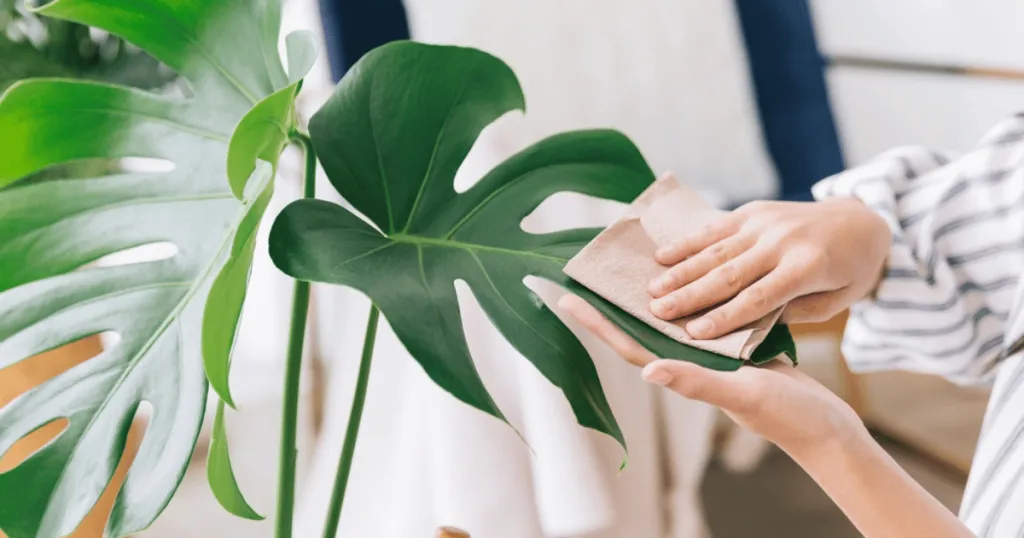
Yes, cleaning the leaves is important for office plant health. Dust buildup on the large leaves can block light and reduce the plant’s ability to photosynthesize. Use a damp, soft cloth to gently wipe the tops and bottoms of the leaves every few weeks. This keeps the plant looking professional and helps it stay efficient at converting light into energy.