When you notice your office Monstera deliciosa struggling, it is usually a sign that the plant is reacting to its specific indoor environment rather than a sign of permanent failure. Most monstera problems stem from three primary sources: inconsistent moisture levels, insufficient light intensity, or the unique environmental stressors of a climate-controlled office space. Because these plants are resilient, they often provide clear visual cues before a minor issue becomes a critical decline, giving you plenty of time to intervene.
Before you consider drastic measures like repotting or pruning, start by evaluating the most immediate environmental factors. Office settings often feature hidden variables like drafty HVAC vents, low-light corners, or irregular watering schedules caused by weekend office closures. By methodically checking these conditions, you can usually resolve the issue with simple adjustments to your care routine.
The Short Version
Most monstera problems are caused by overwatering or inadequate light. Before taking action, check the soil moisture levels and ensure the plant is receiving bright, indirect light. Adjusting these two factors typically resolves the majority of common leaf yellowing, browning, or drooping issues within a few weeks.
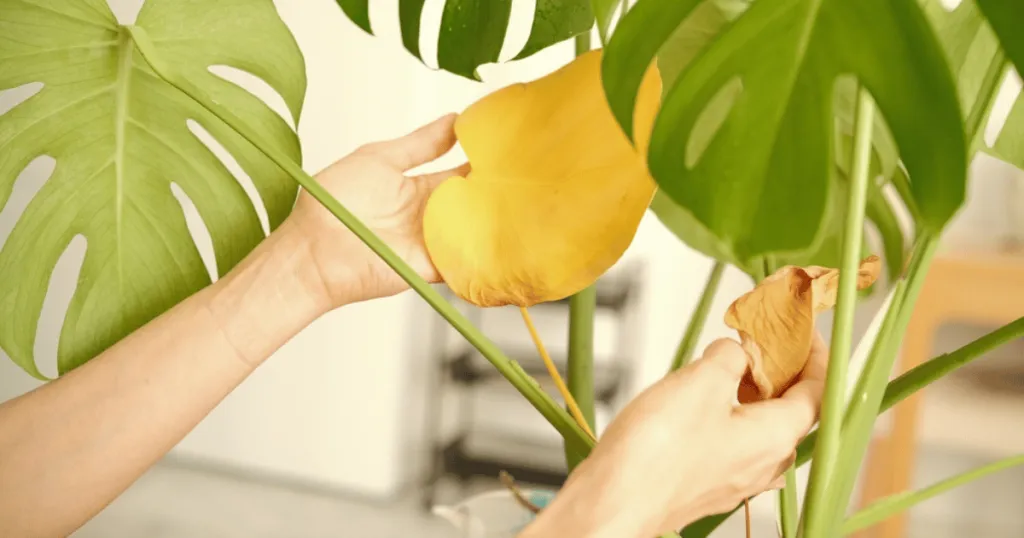
Symptom-First Diagnosis
Identifying the root cause requires looking at the specific way the plant is communicating its distress. Use this guide to match your plant’s symptoms to the most likely cause.
| Symptom | Likely Cause |
|---|---|
| Yellowing leaves | Overwatering or poor drainage |
| Brown, crispy edges | Low humidity or underwatering |
| Drooping stems | Dehydration or root rot |
| Lack of fenestration | Insufficient light |
| Small, sticky spots | Pest infestation (scale or thrips) |
Addressing Moisture and Soil Issues
Watering is the most frequent area where office plant care goes wrong. In an office, the temptation is often to water on a fixed schedule, such as every Monday morning, regardless of whether the soil actually needs it. This leads to moisture imbalances that cause significant stress.
The Overwatering Trap
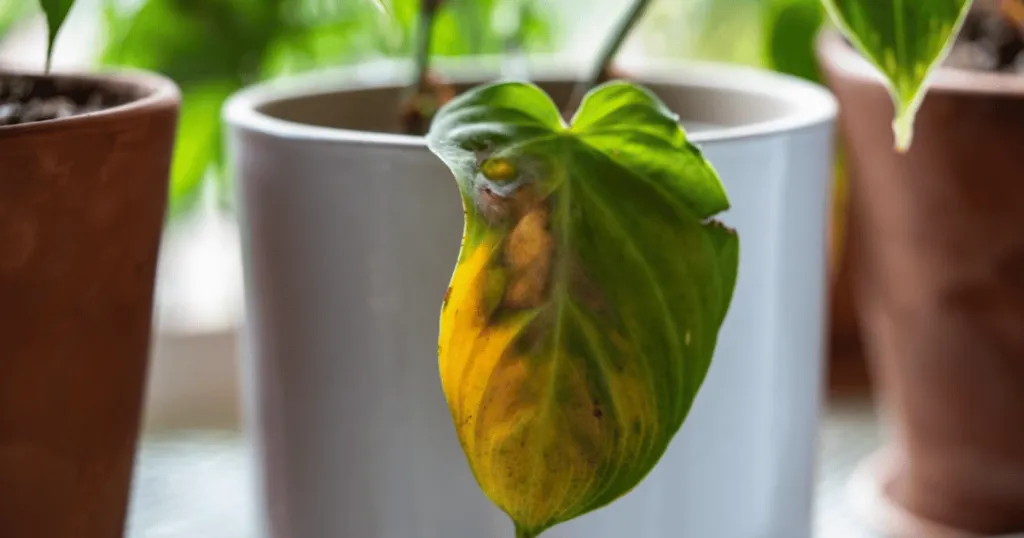
If your Monstera has yellowing leaves that feel soft or mushy, you are likely dealing with overwatering. In office environments, plants often sit in containers without adequate drainage holes, or they are placed in low-light areas where they cannot process water quickly. If the soil remains soggy for extended periods, the roots begin to suffocate and eventually rot. To fix this, stop watering immediately and allow the top two inches of soil to dry out completely. If the plant is in a decorative pot without drainage, carefully lift it out to ensure there is no standing water trapped at the bottom.
Managing Underwatering
Conversely, if the leaves are turning brown at the tips or edges and feel brittle, the plant is likely dehydrated. Office HVAC systems are notorious for stripping moisture from the air, which increases the plant’s transpiration rate. If you find the soil is bone-dry and pulling away from the sides of the pot, give the plant a thorough soak. Ensure water flows freely through the drainage holes, then discard any excess water that collects in the saucer after ten minutes.
Light and Environmental Stress
Monstera deliciosa thrives in bright, indirect light. In an office, this means placement near a window that does not receive direct, scorching sun, or under high-output LED office lighting. If your plant is placed in a dark cubicle or a windowless hallway, it will struggle to maintain its foliage.
Correcting Light Deficiencies
A common sign of low light is the absence of fenestrations, or the characteristic splits and holes in the leaves. If your plant is producing small, solid leaves, it is signaling that it lacks the energy to grow fully. Move the plant closer to a natural light source or supplement with a dedicated grow light. Avoid placing the plant directly against a window pane, as the glass can intensify heat and cause leaf burn during the afternoon.
Handling Drafts and Temperature
Office plants are often placed near air conditioning vents or heaters. Rapid temperature fluctuations can cause leaves to curl or drop prematurely. If your Monstera is in the path of a direct air stream, move it to a more stable location. Consistent temperatures between 65 and 80 degrees Fahrenheit are ideal for maintaining healthy growth.
Managing Pests in the Workplace
Pests like thrips, scale, and spider mites can move quickly in an office environment, especially if multiple plants are grouped together. Regularly inspect the undersides of leaves and the stems for small webs, sticky residue, or tiny, moving insects. If you detect pests, isolate the plant immediately to prevent spread to other office greenery. Use a damp cloth to wipe down the leaves with a mild soap solution, which is often sufficient for minor infestations. For more persistent issues, consult with your office facilities team regarding the use of horticultural soap or neem oil, ensuring that any application is safe for the office environment.
Prevention Habits for Long-Term Health
Establishing a routine is the best way to prevent future issues. First, always check the soil moisture with your finger before adding water. If the top inch is still damp, wait a few days. Second, rotate the pot every time you water to ensure even light exposure, which prevents the plant from leaning heavily in one direction.
Third, dust the leaves periodically with a damp cloth; office dust can accumulate and block the stomata, hindering the plant’s ability to photosynthesize effectively. Finally, be mindful of the plant’s toxicity. According to the ASPCA, Monstera species contain calcium oxalate crystals, which can cause irritation if ingested by pets. Keep the plant in a location where it will not be chewed on by office-visiting animals.
Advanced Troubleshooting: When Basics Aren’t Enough
Sometimes, even when you follow standard monstera plant care protocols, the plant continues to struggle. In these instances, you must look deeper into the soil composition and root health. Office plants are frequently sold in dense, peat-heavy potting mixes that retain too much water for the low-light conditions often found in cubicles. If you notice that your plant stays wet for more than two weeks, the soil may be too compacted. Consider amending the soil with perlite or orchid bark to improve aeration and drainage, which helps prevent root rot symptoms.
Another common issue involves the plant’s physical structure. Monstera deliciosa is an epiphyte, meaning it naturally climbs trees in its native habitat. In an office, it will eventually become top-heavy and start to lean or sprawl. If you see the plant struggling to stay upright, it is not necessarily a health problem, but a structural one. Installing a moss pole or a sturdy stake provides the support the plant needs to develop larger, more mature leaves. This simple addition can often resolve the “drooping” look that office managers mistake for dehydration.
Seasonal Adjustments in the Office
Office environments are not static; they change with the seasons. During winter, heating systems run longer, significantly lowering the ambient humidity. This is when you will see more monstera leaf yellowing or crispy edges. To combat this, consider placing the plant on a tray filled with pebbles and water, ensuring the pot sits above the water line. This creates a microclimate of higher humidity around the plant without the risk of root saturation.
Conversely, during summer, air conditioning can create cold drafts. If your office is kept at a very low temperature, the plant’s metabolic rate slows down. You should reduce your watering frequency during these periods, as the plant will not be photosynthesizing as rapidly. Observing these subtle shifts in the office climate is key to long-term success with your Monstera.
The Role of Fertilizer and Nutrition
While light and water are the primary drivers of growth, nutrient deficiencies can also cause monstera problems. If the plant is not producing new growth despite having adequate light, it may be exhausted of nutrients. Use a balanced, water-soluble fertilizer diluted to half-strength during the growing season (spring and summer). Avoid fertilizing in the winter when the plant is dormant. Over-fertilizing can lead to salt buildup in the soil, which manifests as brown leaf tips – a symptom often confused with underwatering. If you suspect salt buildup, flush the soil with distilled water to wash away excess minerals.
Managing Expectations for Office Growth
It is important to remember that an office is not a greenhouse. While you can achieve a healthy, vibrant plant, you may not see the rapid, aggressive growth that you would in a conservatory. Monstera deliciosa is a slow grower in low-light office conditions. Patience is a vital part of plant maintenance. Do not be tempted to over-water or over-fertilize in an attempt to “force” growth; this almost always leads to the very problems you are trying to avoid. Focus on consistent, stable care, and your Monstera will reward you with steady, healthy foliage that enhances your workspace.
Related Monstera Guides
FAQ
Why are my Monstera leaves turning yellow?
Yellowing leaves on a Monstera are most commonly caused by overwatering. When the soil stays saturated, the roots cannot access oxygen, leading to stress. Check if the soil is soggy and ensure your pot has proper drainage holes to allow excess water to escape.
Do I need to mist my Monstera to increase humidity?
While misting is a common suggestion, it provides only temporary humidity and does not significantly change the environment. In a dry office, it is more effective to group plants together or use a small humidifier near the plant to maintain consistent moisture levels.
How do I know if my Monstera needs a bigger pot?
You should only repot if the roots are visibly circling the bottom of the container or growing out of the drainage holes. Monstera plants prefer to be slightly root-bound, so moving to a much larger pot too quickly can lead to soil staying wet for too long, causing root rot.
Is it normal for Monstera leaves to droop?
Drooping is usually a sign that the plant is either severely underwatered or suffering from root rot due to overwatering. Check the soil: if it is dry and hard, the plant needs water. If the soil is wet and the plant remains droopy, the roots may be damaged and unable to take up water.