Affiliate Disclosure: As an Amazon Associate, I earn from qualifying purchases.
Finding the right large-scale greenery for a workplace requires looking past generic garden center advice. Selecting the best tall office plants means balancing architectural impact against the realities of fluorescent lighting, sealed HVAC systems, and unattended weekends. A successful corporate interior design relies on specimens that maintain their vertical presence without overwhelming narrow corridors, reception areas, or open office layouts. Prioritizing plants with strong upward growth habits, tolerance for consistent indoor temperatures, and manageable root systems ensures long-term vitality in professional settings.
When evaluating options for executive offices, meeting rooms, or main lobbies, workplace managers should weigh vertical scale against practical care constraints. Air circulation, light penetration from perimeter windows, and ceiling height all dictate which species will thrive without constant intervention. The selections below focus on established indoor varieties that deliver structural height while remaining resilient enough to handle standard commercial building environments.
Quick Facts
- Tall office plants provide instant architectural division and privacy.
- Most require medium indirect light or reliable fluorescent exposure.
- Overwatering remains the primary risk in commercial environments.
- Vertical species help soften harsh corporate architecture.
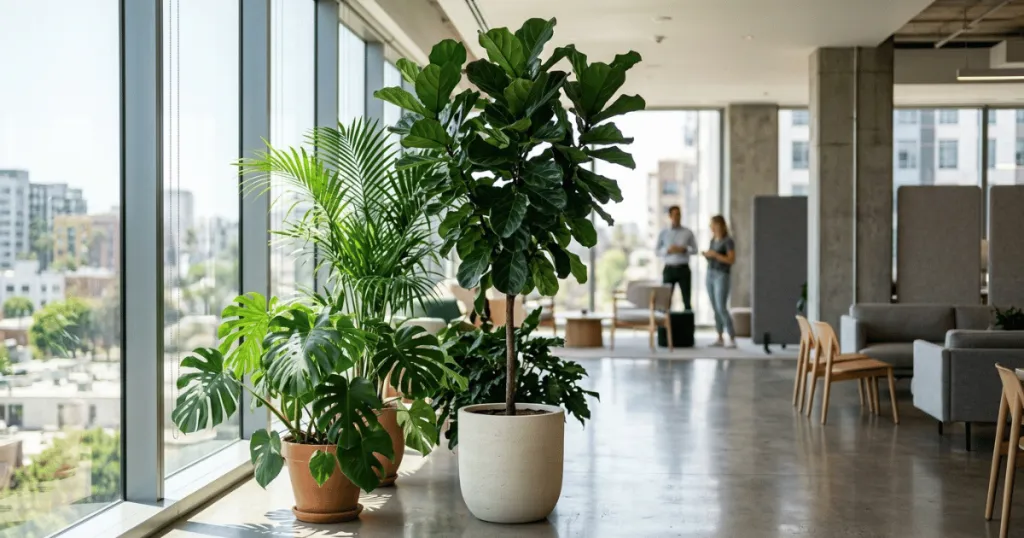
Essential Criteria for Selecting Tall Office Plants
Integrating large flora into a commercial workspace demands a clear evaluation framework. Unlike residential spaces with shifting daylight angles, offices present static lighting conditions and artificial climate control that can stress sensitive specimens. Understanding these environmental factors helps narrow down the choices before purchasing.
Light availability is the primary filtering mechanism. Floor-standing specimens placed away from perimeter windows must rely on ambient ceiling fixtures or specialized LED panels. Growth habit is the second major consideration; columnar growers fit narrow corners and tight reception nooks, while multi-stemmed clustering species work better as statement pieces in open breakout zones. Facilities management teams must also consider the microclimate of the room, accounting for drafty doorways and low humidity levels caused by continuous climate control.
When selecting tall indoor office trees or large indoor plants for office settings, checking pot proportions and root stability is critical. Top-heavy varieties require weighted decorative containers to prevent tipping in busy thoroughfares. Furthermore, evaluating corporate interior greenery through the lens of ongoing foliage maintenance ensures that janitorial or administrative staff are not overburdened with complex pruning or high-demand watering routines.
Additional decision guidance involves anticipating future vertical expansion and root restriction. In commercial planters, root containment can naturally limit ultimate height, but facilities teams should verify whether a species requires periodic root pruning or repumping to avoid root-bound decline. Factoring in furniture clearance, cleaning cart routes, and localized airflow from ceiling diffusers prevents accidental foliage damage and keeps corridor pathways unobstructed throughout the business lifecycle.
Curated Tall Plant Selections for Professional Workplaces
The following shortlist highlights proven vertical varieties that suit commercial interiors, ranging from architectural structural statements to soft, elegant clustering palms. Each option has been vetted for its ability to withstand typical office lighting and HVAC conditions while contributing to overall office biophilia and workplace design.
Snake Plant
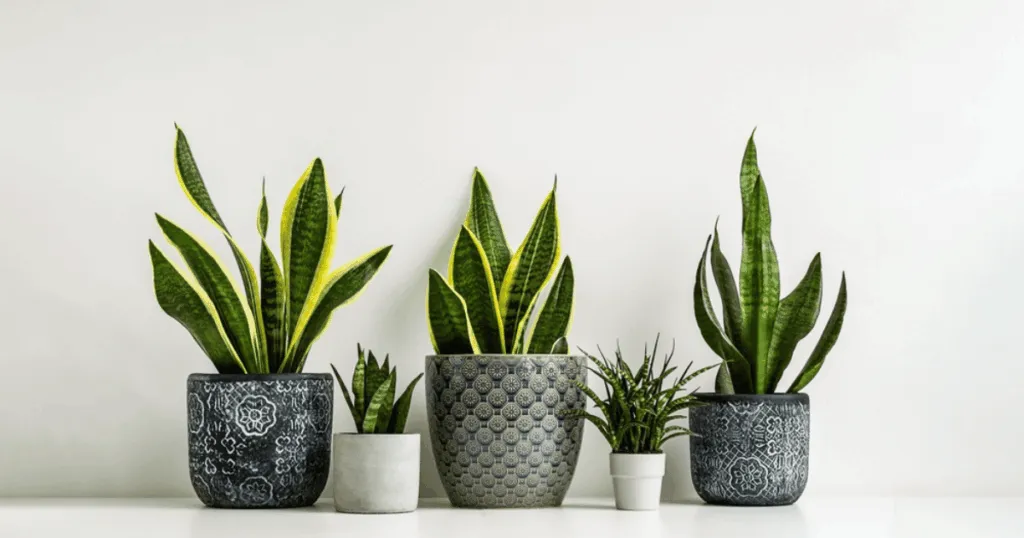
The Snake Plant stands out as one of the most forgiving vertical options for corporate interiors. Reaching heights of three to four feet with upright, sword-shaped leaves, it commands vertical presence while occupying minimal floor space. It tolerates low light conditions well and adapts to the fluctuating humidity typical of modern office buildings. One important thing many people overlook is that overwatering, rather than underwatering, poses the main threat to its survival, making it an ideal choice for facilities teams with limited maintenance bandwidth. Its succulent-like nature allows it to store water efficiently during weekend building shutdowns, fitting seamlessly into low light tall plants strategies.
In practice, Snake Plants excel in narrow corridor turns and core architectural pillars where floor space is exceptionally tight. Because their growth is strictly upward rather than outward, they rarely obstruct pedestrian pathways or emergency egress routes. Facilities managers should ensure they are planted in well-draining soil mixes to mitigate any accidental overzealous watering by office cleaning staff.
ZZ Plant
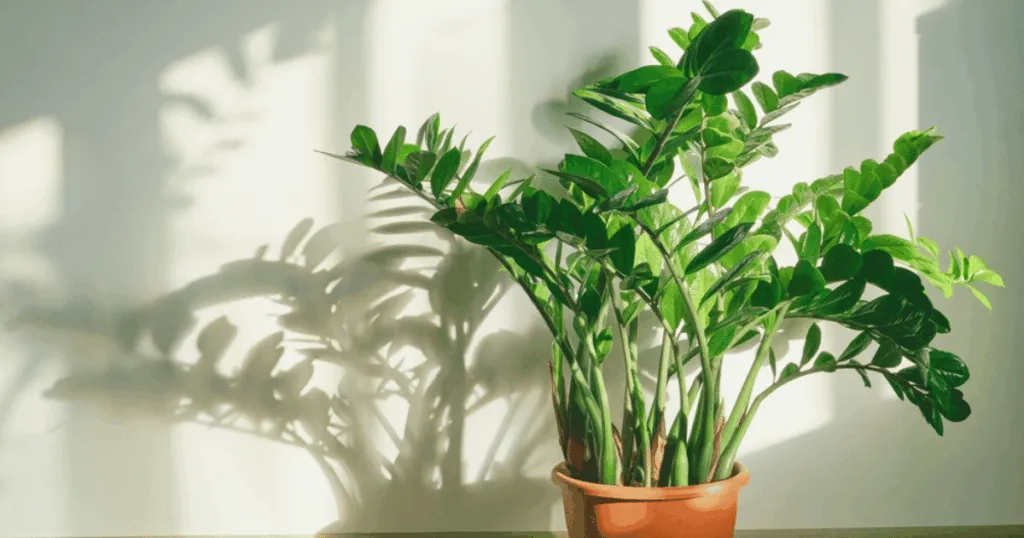
The ZZ Plant offers glossy, dark green foliage on thick, upright stems that easily elevate empty corners in conference rooms or executive suites. It tolerates low light exceptionally well, thriving under standard fluorescent office lighting without missing a beat. From a practical standpoint, its thick underground rhizomes store water efficiently, allowing the plant to withstand extended dry spells when office buildings are closed for holidays or weekends. This resilience makes it a premier specimen plant for dimly lit interior corridors and core architectural zones.
When deployed in high-visibility reception areas, the ZZ Plant maintains its pristine, polished appearance even when exposed to fluctuating indoor temperatures. Its dark, waxy leaves reflect ambient ceiling light effectively, creating an upscale visual texture that requires minimal day-to-day intervention from office administrators.
Dracaena
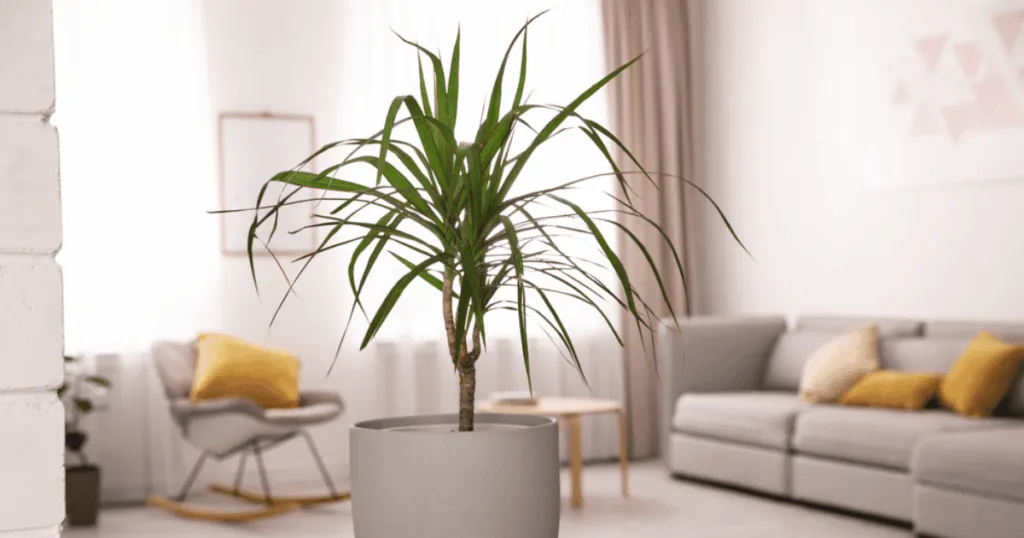
Dracaena varieties, including popular options like the corn plant or marginata, provide distinct tree-like silhouettes with woody stems and crowns of arching leaves. They grow well in medium to bright indirect light and adapt smoothly to typical office layouts. A safer approach for facilities managers is to place them out of heavy traffic zones, as the lower leaves can occasionally suffer physical bruising from passing foot traffic or cleaning carts. Because Dracaenas can be sensitive to heavy minerals found in municipal tap water, using filtered water prevents unsightly brown tips from forming on the leaf margins.
Integrating Dracaena specimens into open office layouts provides a natural vertical canopy that breaks up the monotony of modular desk partitions. Their distinct woody trunks lend an authentic indoor tree aesthetic that enhances professional workspace design without requiring the complex greenhouse care protocols of true outdoor trees.
Kentia Palm
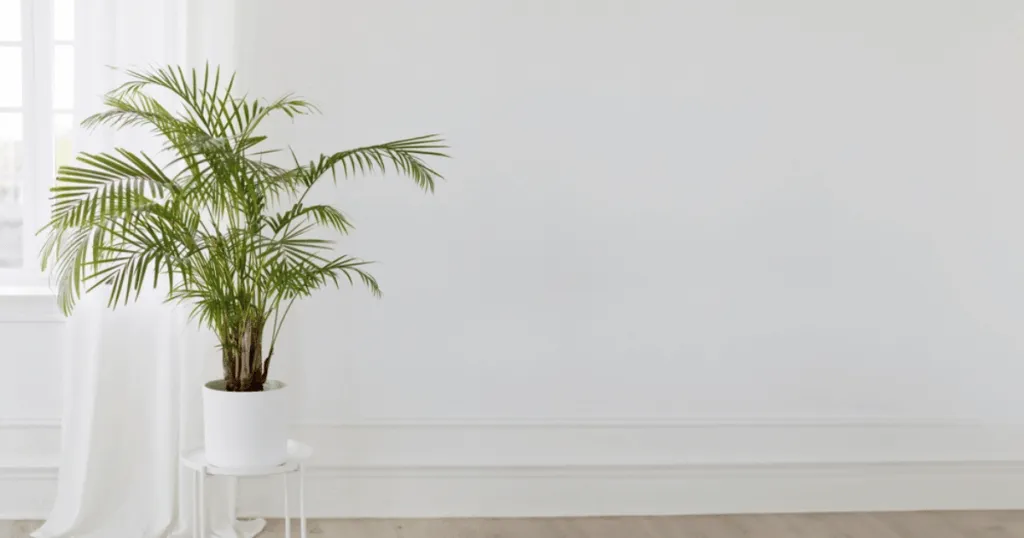
The Kentia Palm delivers classic, elegant architectural grace to corporate lobbies and formal reception areas. It features slender, deep green fronds that arch outward gracefully from upright trunks, creating a polished professional atmosphere. It tolerates lower light levels better than most other palms, though it grows quite slowly. This measured growth rate keeps maintenance trimming to a minimum, preserving its designed aesthetic for years and making it a favored option for high-end reception area plants.
Operating effectively in rooms with limited natural light, the Kentia Palm resists the tip-browning common to other tropical palms in dry office air. Facilities teams should periodically rotate the container to ensure even frond exposure to overhead office lighting, maintaining a balanced, symmetrical canopy over time.
Bamboo Palm
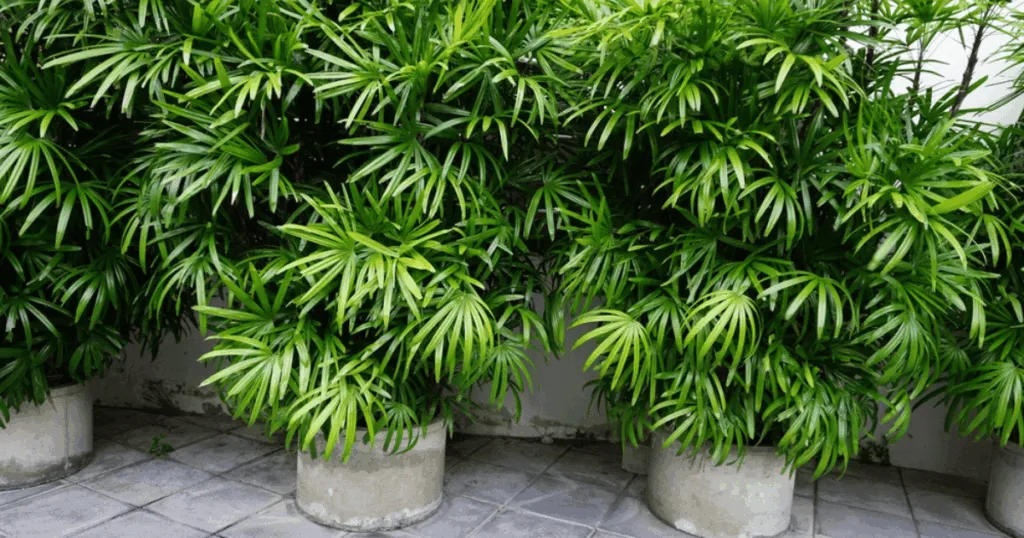
The Bamboo Palm brings a lush, tropical feel to open office clusters or lounge areas without demanding excessive floor space. As a clustering shade-tolerant palm, it features multiple reed-like stems that form a dense, vertical screen. It grows best in medium indirect light and requires consistently moist soil, making it a favorite for teams that enjoy a more structured watering routine. Its delicate fronds help soften linear drywall partitions and create natural acoustic dampening in busy open-plan environments.
In practical workplace applications, the Bamboo Palm serves as a living divider between collaborative breakout spaces and individual focus desks. Because it prefers consistent moisture, self-watering planter inserts can be utilized to maintain steady hydration across long holiday weekends.
Cast Iron Plant
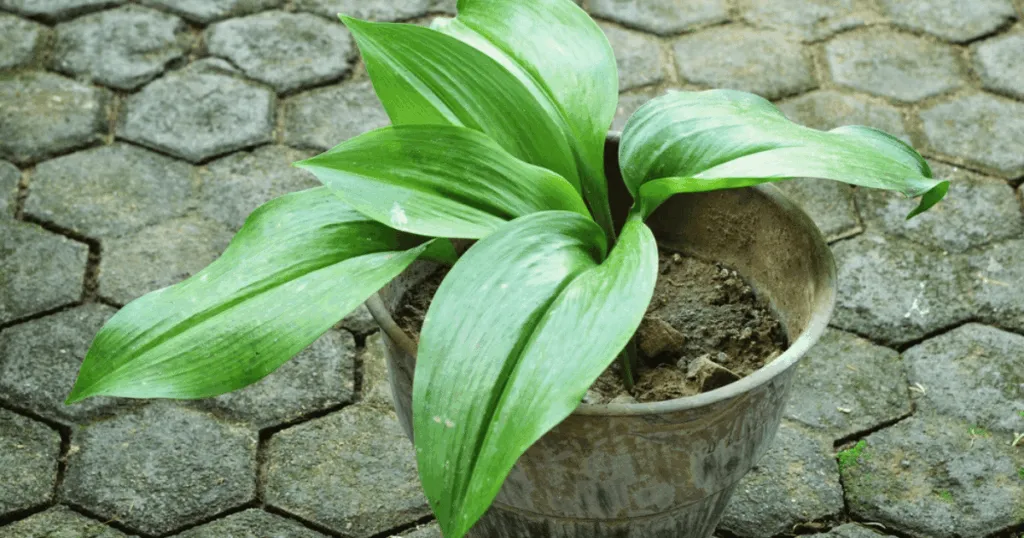
Named for its legendary toughness, the Cast Iron Plant features broad, dark green lance-shaped leaves that emerge directly from the soil to reach heights of two to three feet. It tolerates low light levels exceptionally well and resists neglect, dust accumulation, and erratic watering schedules. One common mistake is exposing it to direct afternoon sun, which scorches the foliage; keeping it in shaded interior corridors preserves its deep green luster. Its robust root system allows it to endure the erratic indoor microclimate of older office buildings without dropping foliage.
Facilities managers frequently select the Cast Iron Plant for windowless interior conference rooms or low-traffic executive hallways where other species might fail due to insufficient light penetration.
Schefflera
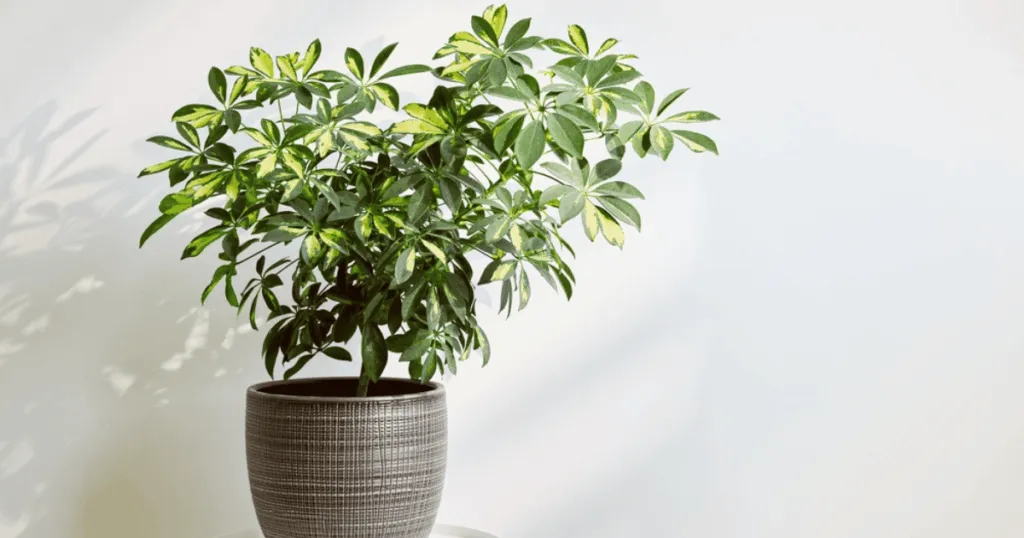
The Schefflera, commonly known as the umbrella tree, offers broad, umbrella-like compound leaves radiating from sturdy central stems. It adapts readily to medium or bright indirect light and can be pruned easily to maintain a specific height or bushiness. In practice, this plant responds well to occasional stem rotation to ensure even canopy development under overhead lighting. Regular wiping of its expansive leaves prevents dust buildup from blocking ambient light absorption in modern commercial suites.
When used as a floor plant for office atriums or spacious corner offices, the Schefflera delivers substantial vertical presence and a robust, woody structure that complements contemporary corporate architecture.
Ponytail Palm
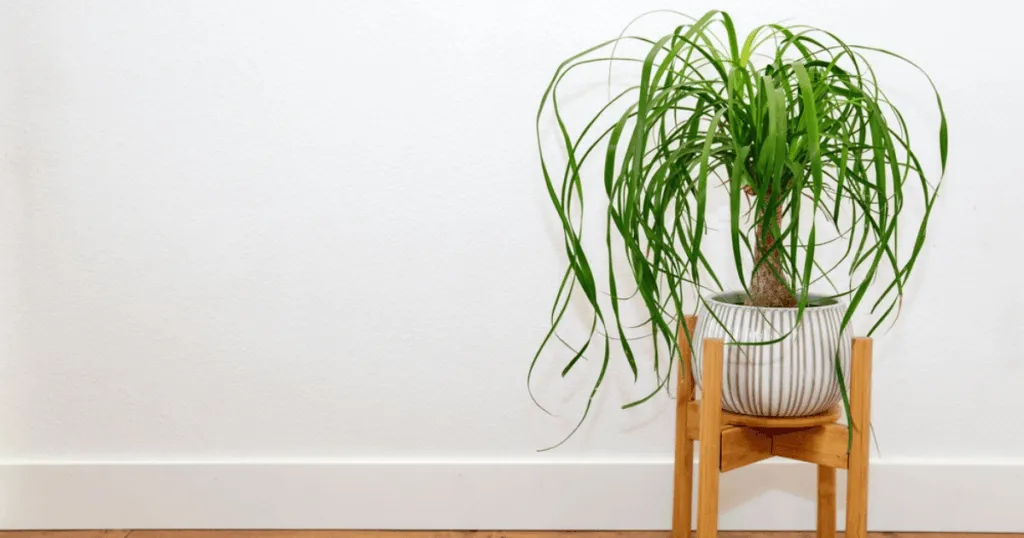
Despite its common name, the Ponytail Palm is actually a succulent with a distinct swollen trunk base that stores water, topped by a cascading fountain of long, slender leaves. It thrives in bright light conditions near south or west-facing windows and requires very minimal irrigation. Its unique sculptural silhouette makes it an engaging focal point for modern open-plan desk areas and executive suites where natural light streams past perimeter glass.
Its drought tolerance makes it exceptionally forgiving if watering schedules are disrupted during busy corporate quarters or seasonal facility audits.
Yucca
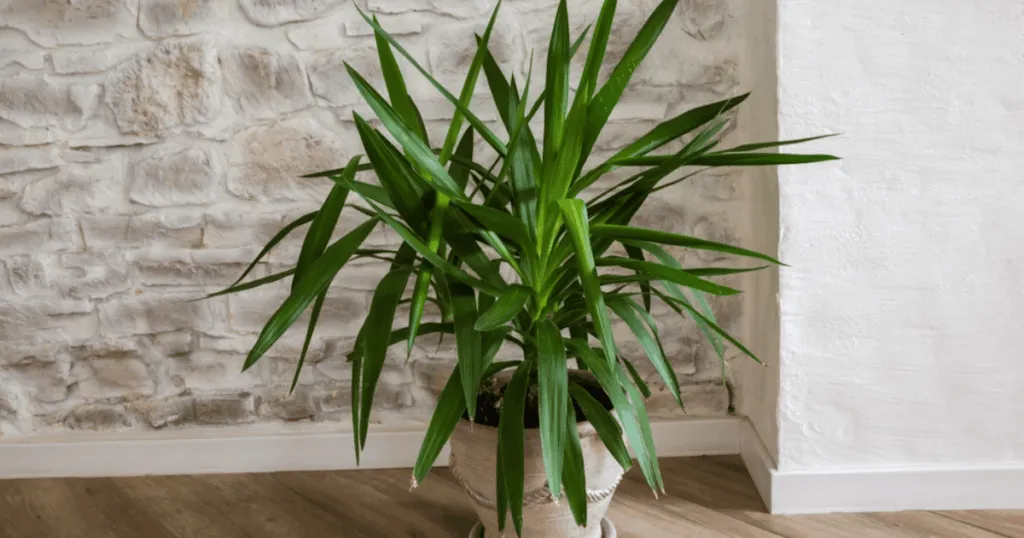
The Yucca features rigid, sword-like leaves clustered atop thick, woody trunks, providing a bold, architectural statement for bright office atriums or corridors. It demands high light levels to maintain its vigor and requires infrequent watering, thriving in the dry air of heated or air-conditioned buildings. Sharp leaf tips require careful placement consideration in high-traffic hallways to prevent accidental snags, but their striking vertical scale makes them unmatched for filling empty vertical corners.
Their woody strength and resistance to dry HVAC air make them exceptionally durable investments for brightly lit corporate interiors that experience minimal day-to-day humidity management.
Rubber Plant
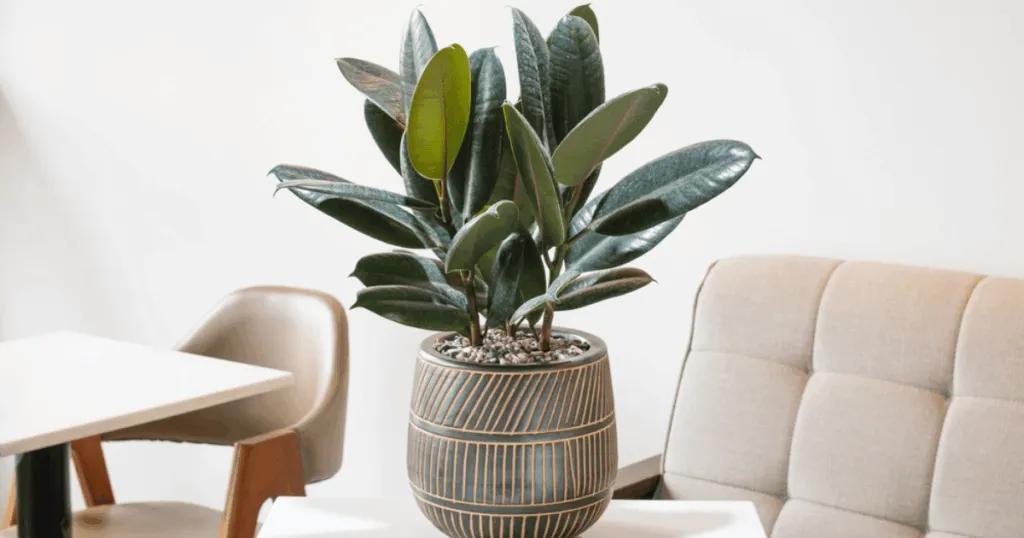
The Rubber Plant produces large, glossy, dark burgundy or emerald leaves that create a dramatic vertical focal point in executive offices. It prefers bright indirect light and can reach impressive heights indoors when given adequate space to expand upward. Wiping the broad leaves periodically with a damp cloth prevents dust accumulation from office ventilation systems, ensuring optimal light absorption. When integrated into workspace design, its dense plant canopy offers a striking visual break from standard corporate monotone color palettes.
Because its lower stems can become bare as the plant matures, underplanting with smaller shade-tolerant companions can maintain a lush, full appearance at the base of the container.
Strategic Placement and Use-Case Breakdowns
Matching the physical architecture of an office with the correct plant habit prevents clutter and visual fatigue. Tall, narrow columnar varieties like Snake Plants or single-stemmed Dracaenas fit exceptionally well in tight structural columns, elevator lobbies, or between workstations where floor space is at a premium.
Clustering palms and broad-leafed specimen trees perform better in wide-open reception spaces, collaborative breakout zones, or corners of large conference rooms where they can act as natural acoustic dampeners and visual screens. Placing taller specimens near seating areas also creates a subtle sense of enclosure without requiring permanent drywall partitions. Office plant styling in these zones should always account for door swings, emergency egress routes, and the placement of security sensors or lighting controls.
When designing open-plan layouts, facilities managers should analyze sightlines and foot traffic patterns. Positioning tall architectural plants at structural inflection points helps guide employee movement organically while softening the visual harshness of exposed ductwork or glass partitioning systems.
Trade-Offs, Limitations, and When to Choose Differently
While large greenery enhances corporate aesthetics, incorporating tall plants involves distinct operational trade-offs. Larger containers require more physical effort to reposition during office reconfigurations, and heavy ceramic pots can challenge raised flooring or standard cleaning protocols. Facilities teams must also account for vertical clearance beneath low ceiling drops, HVAC vents, and fire sprinkler heads.
When office areas suffer from severe light deficits or lack dedicated maintenance personnel, opting for very large specimens can lead to premature leaf drop and increased waste. In spaces with minimal natural or auxiliary light, choosing smaller, more adaptable desk-scale plants or installing specialized horticultural lighting becomes necessary before scaling up to floor-standing varieties. Understanding these limitations ensures that corporate investments in workplace greenery yield healthy, long-lasting results rather than constant replacement cycles.
Furthermore, budgeting for long-term care is essential. Large floor plants require specialized handling equipment during relocation, and mature specimens may eventually outgrow their indoor spaces, necessitating professional pruning or replacement. Weighing these logistical realities against aesthetic goals ensures a sustainable indoor landscaping program.
FAQ
How do tall office plants handle weekend HVAC shutdowns?
Most hardy indoor species tolerate weekend temperature drops well because commercial buildings retain residual thermal mass, though sensitive tropicals may drop lower leaves if subjected to cold window drafts.
What lighting conditions do tall indoor plants need away from windows?
Floor-standing plants positioned away from natural light rely heavily on extended exposure to high-output LED or fluorescent commercial ceiling fixtures to maintain baseline photosynthetic activity.
How often should large corporate floor plants be watered?
Watering frequency depends on pot volume and ambient humidity, but most large specimens require moisture checks every one to three weeks rather than rigid calendar schedules.
Can tall office plants improve indoor air quality in commercial spaces?
While indoor greenery contributes to psychological well-being and visual comfort, mechanical ventilation systems handle the vast majority of commercial air exchange and particulate filtration.