Affiliate Disclosure: As an Amazon Associate, I earn from qualifying purchases.
Open corporate floor plans and sprawling reception areas demand statement greenery that can command a room without requiring round-the-clock maintenance from a dedicated groundskeeper. Large office vegetation must contend with sustained fluorescent lighting, fluctuating HVAC temperatures, and weekend neglect while maintaining an architectural presence that softens commercial architecture. Choosing the best large office plants means balancing mature canopy spread, light availability, and workplace traffic patterns so that your investment thrives for years in a professional environment.
When curating tall office plants for corporate interiors, facilities teams must account for real-world constraints such as restricted natural window access, low humidity from forced-air heating, and accidental impacts from passing cleaning carts or rolling desk chairs. By focusing on species with proven adaptability, you can transform sterile hallways and expansive boardrooms into lush, welcoming zones without creating endless chores for office staff.
Key Takeaway
- Selecting large office plants requires prioritizing light tolerance, physical clearance for foot traffic, and resilience against dry HVAC air.
- Focus on architectural species that resist drought.
- Measure ceiling heights before buying tall palms.
- Choose non-toxic options for high-traffic zones.
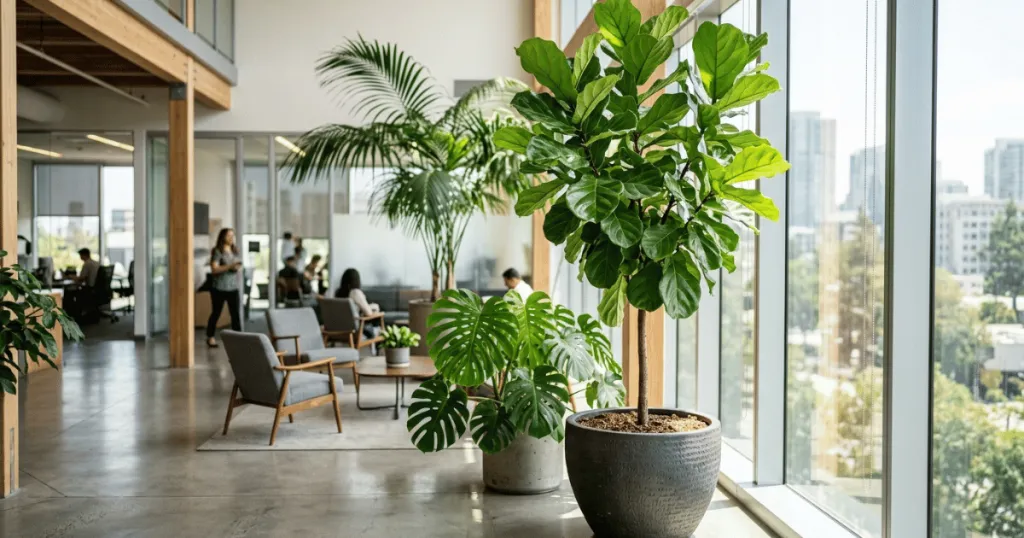
What Makes a Large Plant Work in a Commercial Office
Integrating large-scale greenery into a commercial workspace involves physics and plant physiology rather than simple aesthetics. Office environments introduce severe constraints that do not exist in residential sunrooms or professional greenhouses. Overhead LED fixtures and recessed fluorescent tubes emit a narrow spectrum of light that many tropical canopy trees struggle to utilize efficiently. Meanwhile, central heating and air conditioning units strip ambient moisture from the air, creating a dry microclimate that rapidly dehydrates delicate foliage.
Scale is another critical factor. A specimen that looks impressive in a nursery container can quickly overwhelm a standard desk cluster or block hallway sightlines in an open office. Facilities managers and office coordinators should look for plants with upright, vertical growth habits rather than sprawling lateral spreads unless the floor plan specifically designates a dedicated lounge corner. Root ball stability also matters because commercial pots are frequently bumped by rolling desk chairs, cleaning carts, and passing employees.
Watering logistics dictate daily survival. Large containers hold substantial soil volumes, which means watering mistakes take much longer to correct. Overwatering remains the leading cause of decline in corporate settings where multiple well-meaning employees might water the same floor specimen throughout the week. Selecting drought-tolerant species with robust root systems protects your office investment against inconsistent watering schedules and extended holiday office closures.
Curated Selections for Large Office Plants
Evaluating the priority candidate pool against the specific demands of modern workspaces yields a refined shortlist of reliable architectural plants. These selections perform consistently under standard commercial lighting and handle typical interior humidity levels.
Snake Plant
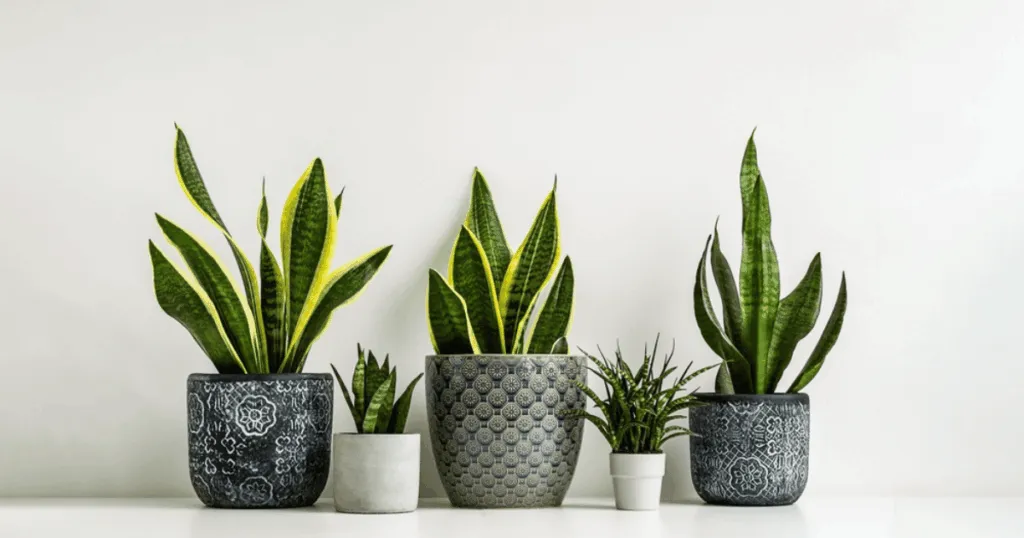
The Snake Plant stands out as a nearly indestructible vertical anchor for reception corners and narrow corridors. Its stiff, upright leaves require minimal floor space while adding sharp, modern architectural lines to corporate interiors. Tolerant of low light and extended dry spells, it thrives on benign neglect. Overwatering is the single greatest threat to this species, making it an ideal choice for offices with unpredictable watering routines. In terms of office plant care, it requires little beyond an occasional dusting of its broad leaves to keep stomata clear of office particulate matter.
ZZ Plant
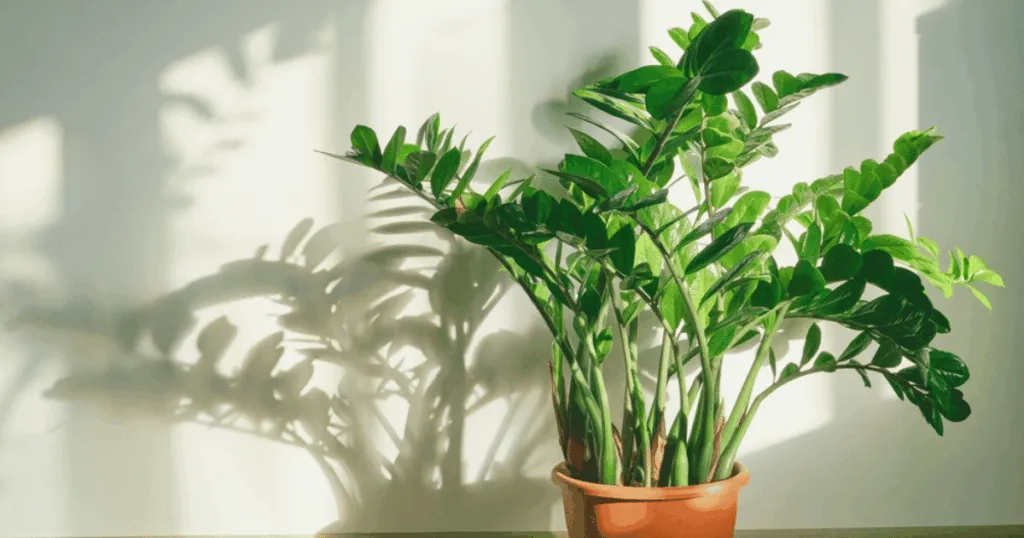
Featuring glossy, waxy leaves that reflect interior lighting, the ZZ Plant handles deep office interior zones where natural sunlight never reaches. Its thick rhizomes store water efficiently, allowing the plant to coast through weekends and long holidays without a drop. A common desk and reception pick, it grows slowly and maintains a clean, polished look without constant pruning or debris dropping. For facilities managers looking at low light office plants, this species consistently ranks among the most reliable options.
Dracaena
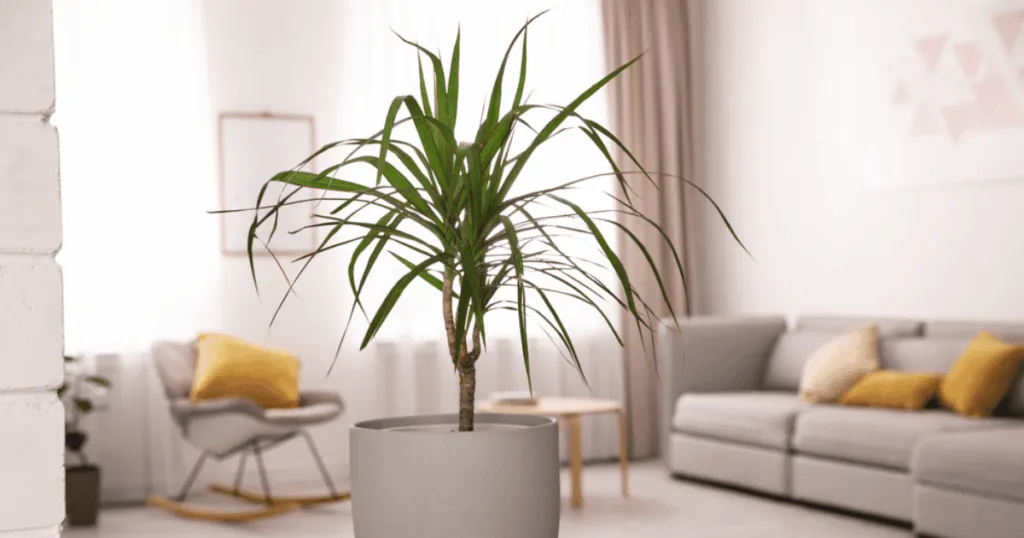
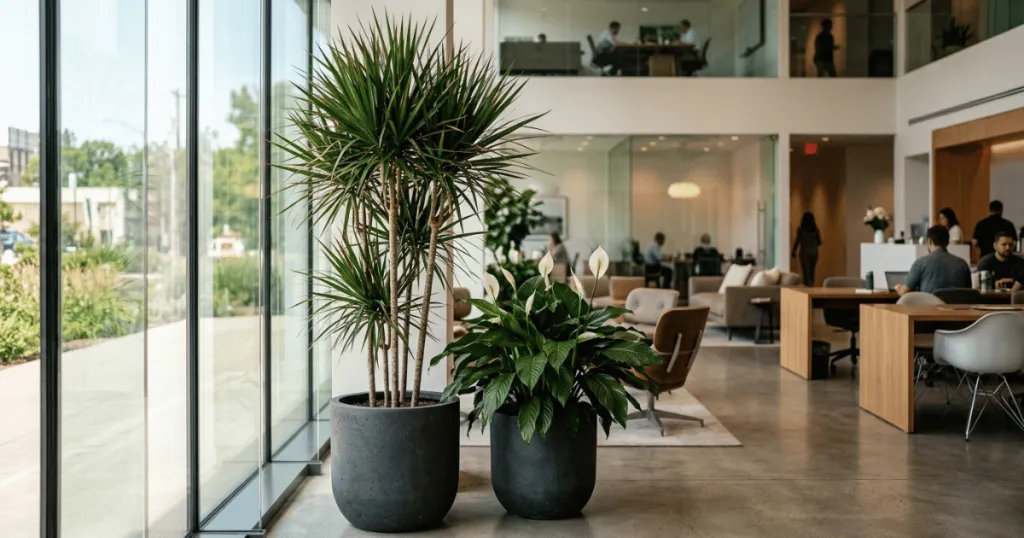
Dracaena varieties offer striking cane-like stems and cascading tropical leaves that fill empty corners in executive offices and conference rooms. As an umbrella genus covering several tough cultivars, these plants handle standard fluorescent office illumination remarkably well. They prefer medium to bright indirect light and appreciate moderate watering when the top inches of soil dry out completely. Note that certain varieties can be sensitive to fluoride or chlorine in tap water, which occasionally causes brown tips on lower leaves if unfiltered water is used consistently.
Kentia Palm
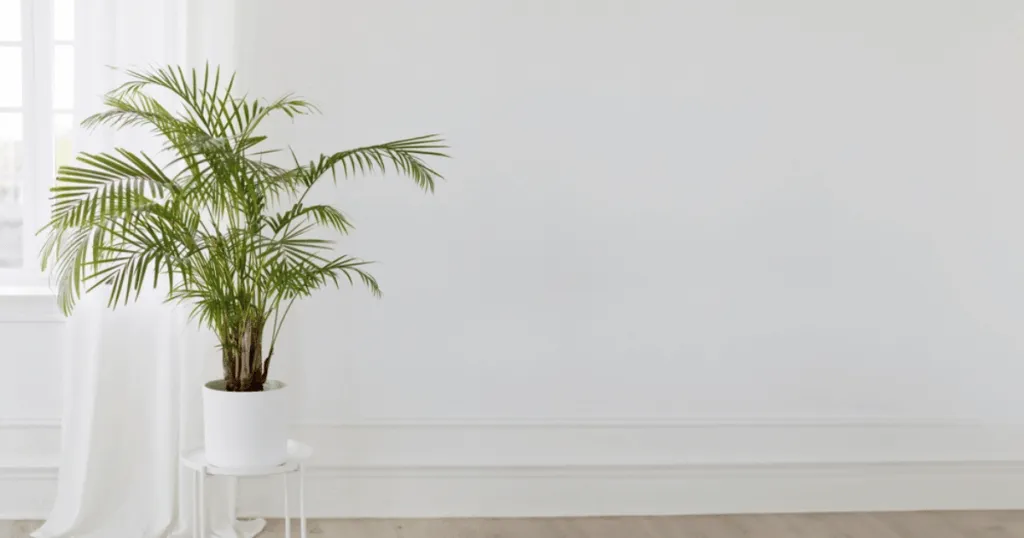
The Kentia Palm provides a touch of classic, understated elegance for high-end corporate lobbies and executive boardrooms. Unlike more demanding palm varieties, it tolerates lower light levels and handles dry office air with grace. Its slow growth rate means it retains its curated shape for years without rapidly outgrowing its assigned corner or requiring constant professional trimming. This makes it a premier choice for reception area plants where first impressions matter deeply.
Cast Iron Plant
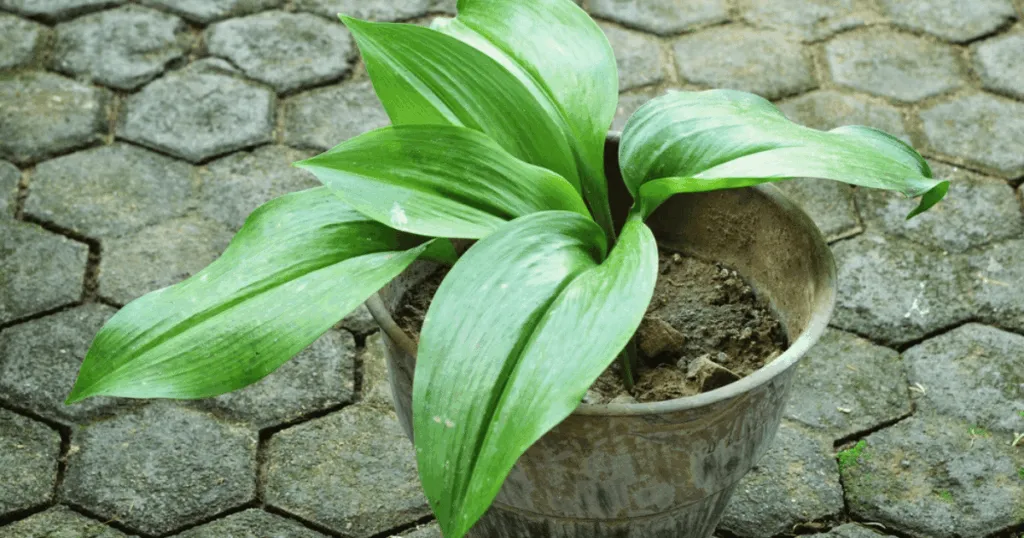
True to its name, the Cast Iron Plant earns its reputation through sheer toughness in dim hallways and interior waiting areas. It tolerates low light well and shrugs off temperature fluctuations caused by aging HVAC systems. While it prefers consistent moisture, it forgives missed waterings far better than most leafy indoor vegetation. Its dark, leathery foliage adds a lush, tropical feel to windowless core zones without demanding specialized greenhouse conditions.
Monstera
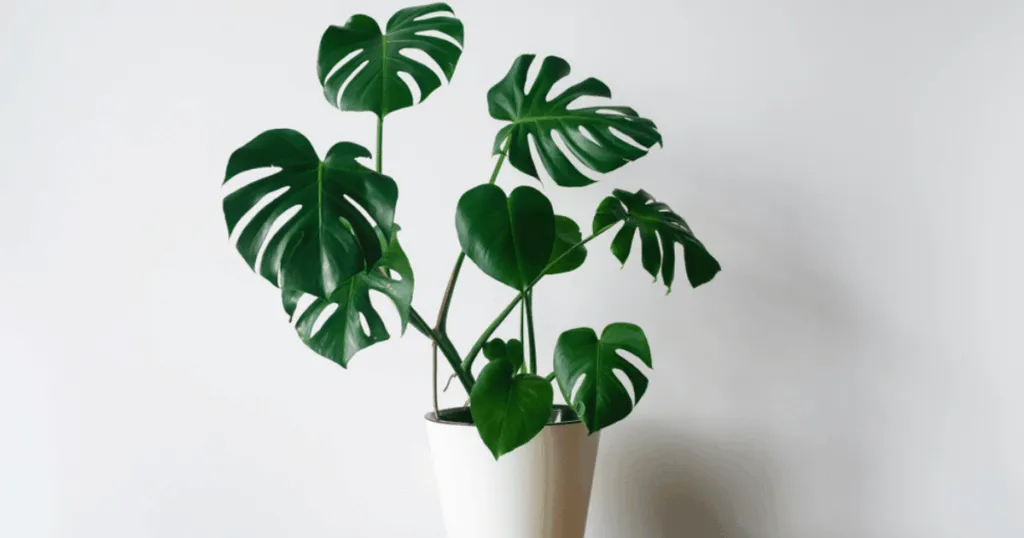
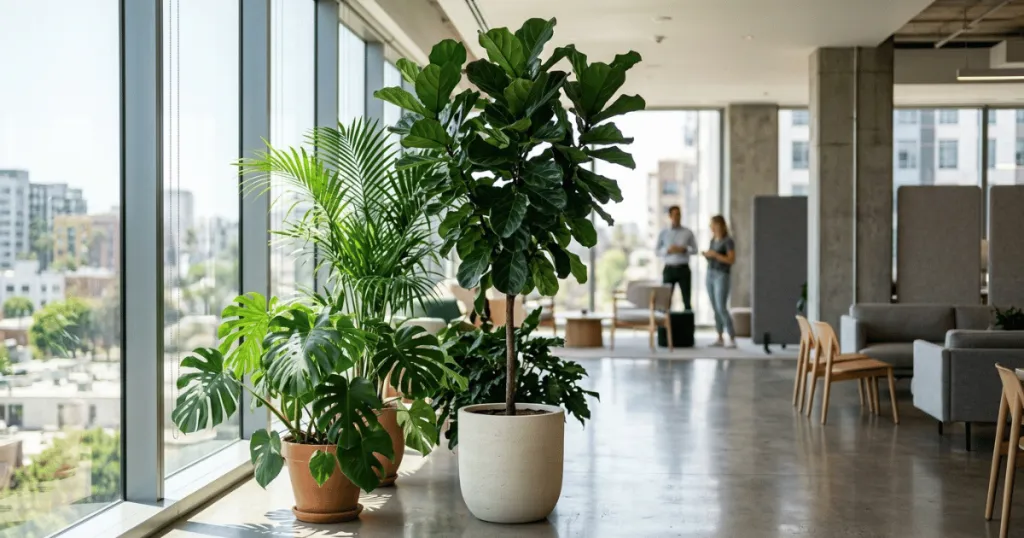
For open-plan breakout areas and collaborative zones with ample natural light from large windows, Monstera delivers bold, tropical impact with its iconic split leaves. While it can tolerate modest indoor lighting, its signature leaf fenestrations develop most vigorously when placed in bright indirect light. Provide a sturdy stake or moss pole early on to support its climbing habit in shared work spaces. As a specimen among commercial indoor plants, it bridges the gap between modern design aesthetics and hardy physiological traits.
Rubber Plant
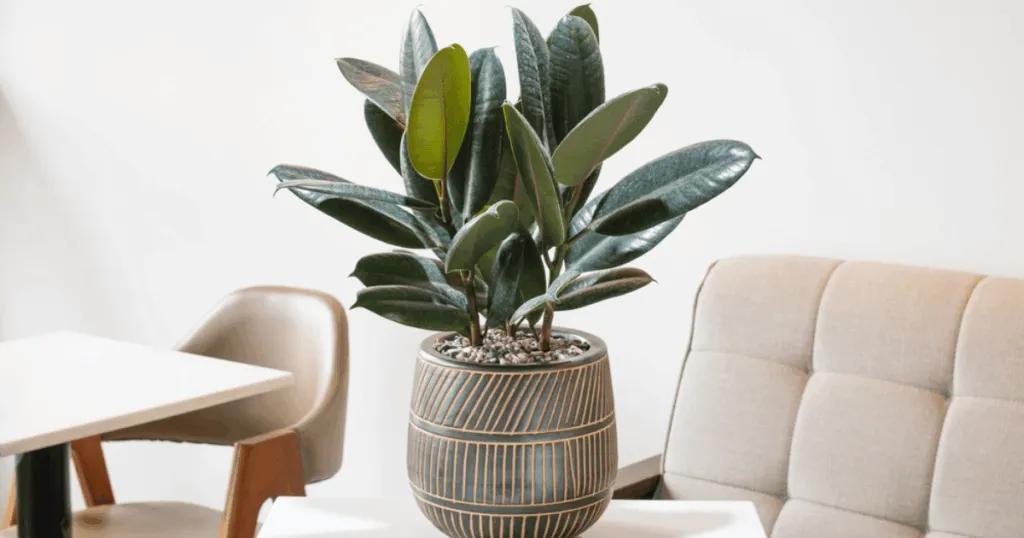
The Rubber Plant features thick, dark green or burgundy leaves that bring a substantial, polished presence to modern office entryways. Ficus elastica demands bright indirect light to maintain its rich leaf coloration and dense growth. Its sturdy trunk and upright posture make it a durable focal point as long as it is kept away from harsh, drafty exterior doors. Routine cleaning with a damp cloth keeps its broad surfaces free of office dust.
Bamboo Palm
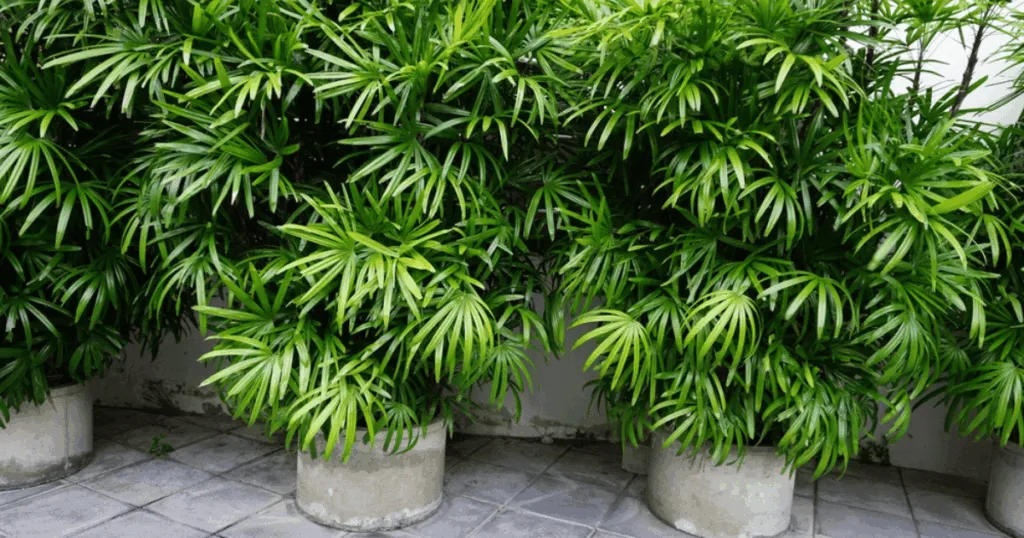
Clustering stems and fine-textured fronds give the Bamboo Palm a lush, screening effect that works well for dividing open office zones or softening sterile drywall. It adapts well to medium indirect light and low-to-moderate humidity levels typical of corporate buildings. Keep the soil evenly moist but never soggy to prevent root issues in closed containers. Its soft silhouette provides a gentle contrast to hard architectural angles in modern corporate architecture.
Placement and Use-Case Breakdowns
Strategic placement determines whether a large office plant thrives or struggles. Reception areas and main lobbies usually feature higher ceilings and better natural light penetration from glass entry doors, making them ideal locations for statement palms like the Kentia Palm or structural Rubber Plants. These zones set the visual tone for visiting clients and corporate partners, rewarding the use of polished, symmetrical specimens in heavy ceramic containers.
Open-plan workspaces and collaborative bullpens require a different placement strategy. Here, plants often function as natural room dividers or visual buffers between desk clusters. Upright, narrow options like the Snake Plant or multi-stemmed Dracaena varieties fit neatly into tight structural columns without eating up valuable floor space or blocking natural pathways. Placing these plants near central gathering spots also encourages employees to take mental breaks and improves the overall acoustic comfort of bustling floors.
Conference rooms and executive offices present unique microclimates. These spaces are often heavily air-conditioned and remain dark for long stretches when meetings are not in session. Shade-tolerant stalwarts like the ZZ Plant or Cast Iron Plant handle these low-light periods effortlessly. When positioning plants near floor-to-ceiling windows in corner offices, ensure delicate foliage is protected from intense direct sun beams that can scorch leaves through untreated glass.
Beyond basic placement, facilities teams must analyze pedestrian traffic vectors and spatial choke points. Placing a wide, delicate specimen directly adjacent to a high-volume corridor or main elevator bank invites continuous mechanical damage from rolling carts, briefcases, and foot traffic. In such high-impact zones, narrow vertical plants like tall Sansevieria or columnar Dracaena cultivars maintain visual scale without encroaching on walkway clearances. Conversely, wide-spreading canopy plants should be reserved for dedicated lounge corners, spatial dead-ends, or anchored perimeter walls where foot traffic naturally arcs away from the foliage.
Limitations, Trade-offs, and Who Should Choose Differently
Large office vegetation involves compromises that facilities teams must evaluate before purchasing. Big containers weigh hundreds of pounds once saturated with water, making repositioning difficult without specialized rolling plant caddies. Facilities with frequent internal office reconfigurations should avoid heavy, rooted architectural trees in favor of lighter, modular plant arrangements.
Maintenance overhead is another factor. While hardy species tolerate neglect, larger canopies still demand routine dusting, occasional pruning of spent lower fronds, and professional pest inspection. Offices without a designated green care team or an outsourced plant maintenance contract often find that over-ambitious botanical displays decline within the first six months due to inconsistent watering protocols.
Safety and spatial flow also dictate boundaries. Species with sharp leaf tips, such as certain Yucca varieties, require careful placement in narrow corridors where employees might brush against them. Similarly, offices with strict pet-friendly policies or frequent visiting companion animals must screen their plant shortlists carefully against toxic sap profiles, opting instead for non-toxic selections like parlor palms or spider plants.
Furthermore, budget and depreciation schedules must factor into large plant acquisitions. Specimen-grade indoor trees represent a substantial upfront capital expenditure. Unlike small desk plants that can be easily replaced or discarded when they decline, major lobby trees require careful long-term stewardship. If an office experiences frequent facilities shifts, remote work policy overhauls, or lease relocations every few years, investing in massive potted vegetation may result in logistical headaches during moving day. In such fluid environments, renting plants through a commercial interior landscaping service or selecting medium-sized, highly portable specimens offers greater operational flexibility.
Non-Commercial Scope Note
This resource focuses purely on the botanical characteristics, environmental requirements, and spatial planning principles associated with large indoor greenery. It provides agronomic and interior design criteria for workplace decision-makers without endorsing specific brands, retailers, or commercial maintenance services.
FAQ
How do I water large office plants without a drainage hole in the pot?
Use an inner nursery grower pot inside a decorative outer container, or utilize a moisture meter and a turkey baster to remove excess water from the base.
What causes brown tips on large office palms?
Low indoor humidity from HVAC systems and tap water mineral buildup are the primary drivers of crispy, brown leaf tips on indoor palms.
Can large office plants survive entirely under fluorescent lighting?
Yes, shade-tolerant species like ZZ plants, snake plants, and cast iron plants adapt well to continuous artificial commercial lighting without natural windows.
How often should large office plants be repotted?
Most large specimens only need repotting every two to three years when roots begin circling the container base or growth slows noticeably.