Affiliate Disclosure: As an Amazon Associate, I earn from qualifying purchases.
If you manage a cramped desk, a shared cubicle pod, or a narrow reception ledge where every square inch dictates workflow, standard floor trees and sprawling ferns will instantly overwhelm your space. This curated shortlist is built specifically for office workers and workplace administrators seeking resilient, vertical-growing greenery that thrives under artificial lighting and survives HVAC-conditioned air. If you instead occupy a sprawling corner office with floor-to-ceiling windows and deep natural sun exposure, skip this guide and explore large statement palms; otherwise, read on for the most practical, space-efficient desk selections available.
Quick Facts
- Compact selections require minimal desk surface area.
- All entries tolerate typical office fluorescent lighting.
- Low-humidity resistance handles standard HVAC airflow.
- Slow growth habits prevent frequent mandatory pruning.
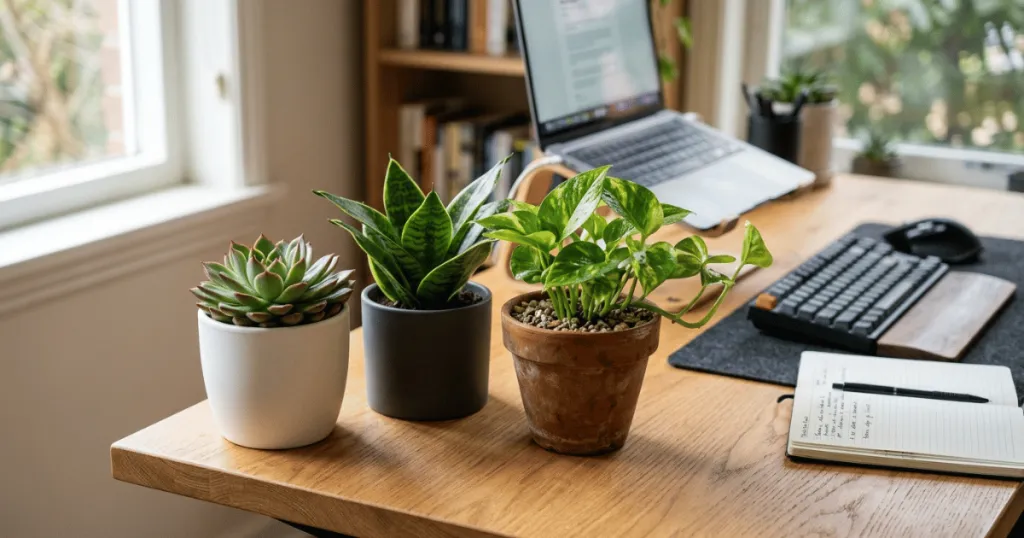
Criteria For Evaluating Office Space Fit
To qualify as one of the best plants for small office environments, a species must pass a strict set of spatial and physiological tests. First, the physical footprint at maturity must fit within a typical desk perimeter without blocking monitors, paperwork, or keyboard trays. Second, the root system must tolerate being contained in smaller pots without requiring constant repotting or root-pruning. Third, the foliage must handle the specific environmental conditions common to modern commercial buildings, including constant indoor temperatures, oscillating air conditioning drafts, and the absence of direct window sunlight. Finally, the maintenance routine must be forgiving enough to survive an unexpected three-day weekend or an office closure without showing severe distress.
Many popular indoor species fail these practical tests simply because they demand high humidity, constant moisture, or sprawling horizontal branch networks that quickly overtake a workspace. The shortlisted options in the following sections are selected because they respect the physical boundaries of a tight desk layout while maintaining a polished, professional aesthetic for clients and coworkers alike.
Top Compact Plant Selections For Tight Workspaces
ZZ Plant
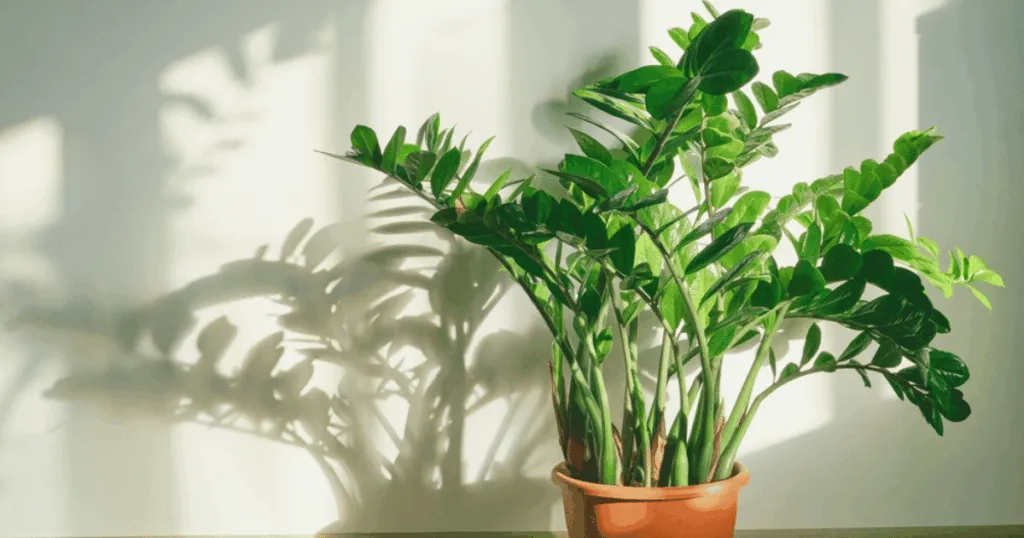
The ZZ Plant stands out as a dependable anchor for dark desk corners and windowless administrative stations. Its thick, fleshy rhizomes store water efficiently, making it remarkably forgiving when weeks pass between watering sessions. It adapts gracefully to fluorescent overhead lighting without losing its deep green, glossy sheen, though it thrives best when kept away from freezing winter window drafts. One important thing many people overlook is that its stems grow primarily upward rather than outward, keeping the overall footprint narrow and neat. A common mistake is planting it in a container without adequate drainage holes, which leads directly to root rot under standard office care routines.
Pothos
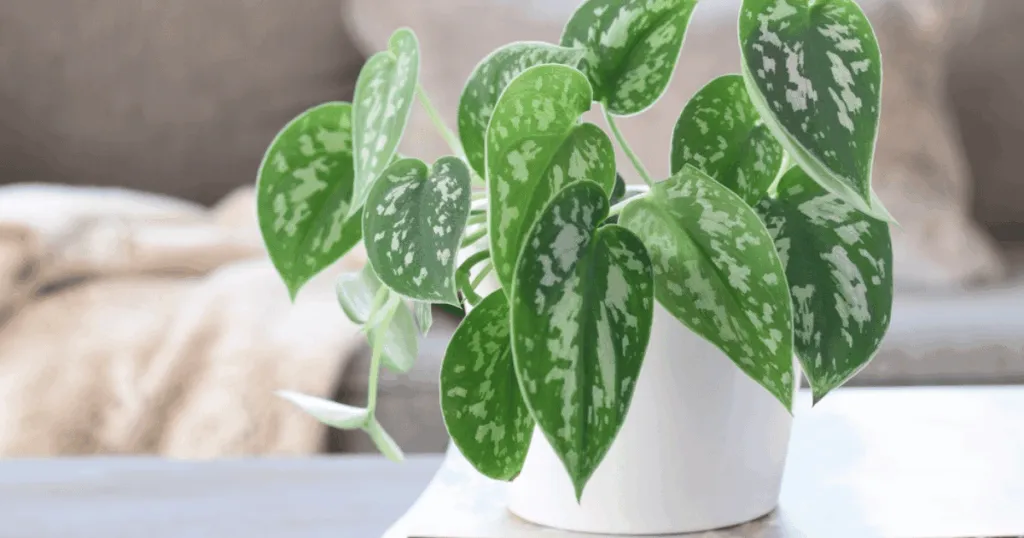
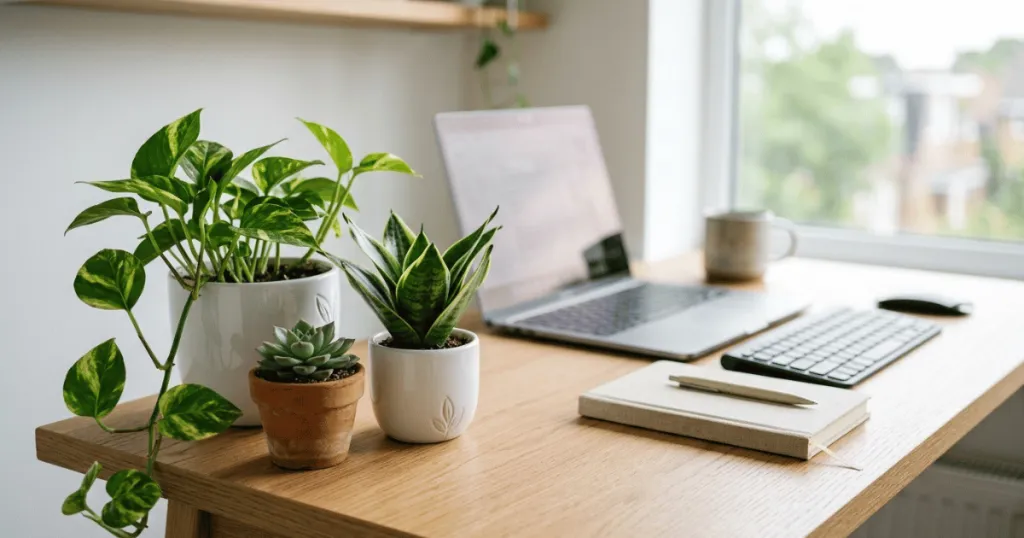
Pothos offers incredible versatility for small office setups because its trailing vines can be trained upward on small moss poles, pinned along a cubicle wall, or allowed to cascade downward from a high bookshelf. It tolerates low light exceptionally well, although variegated cultivars may lose some of their lighter leaf patterns if placed too far from indirect light sources. In practice, this plant acts as a reliable indicator species; its leaves will droop slightly when moisture is depleted, recovering quickly once a thorough watering is applied. Pruning stray vines is simple with standard office scissors, making it easy to maintain a clean appearance in shared working areas.
Snake Plant
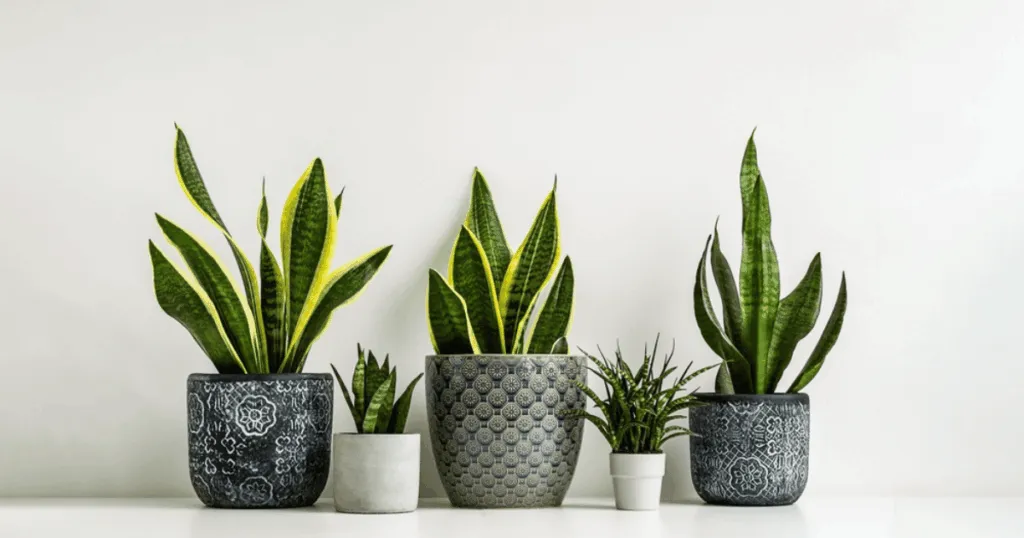
The Snake Plant features rigid, upright sword-like leaves that take up almost zero horizontal desk space, making it a masterclass in vertical efficiency. It tolerates low light conditions easily, though medium indirect light keeps its architectural striping vibrant and crisp. Overwatering remains the single greatest hazard for this species, as its roots require the potting medium to dry out completely between waterings. For office managers dealing with erratic holiday watering schedules, this specimen provides unmatched peace of mind due to its drought-resistant physiological structure.
Peperomia
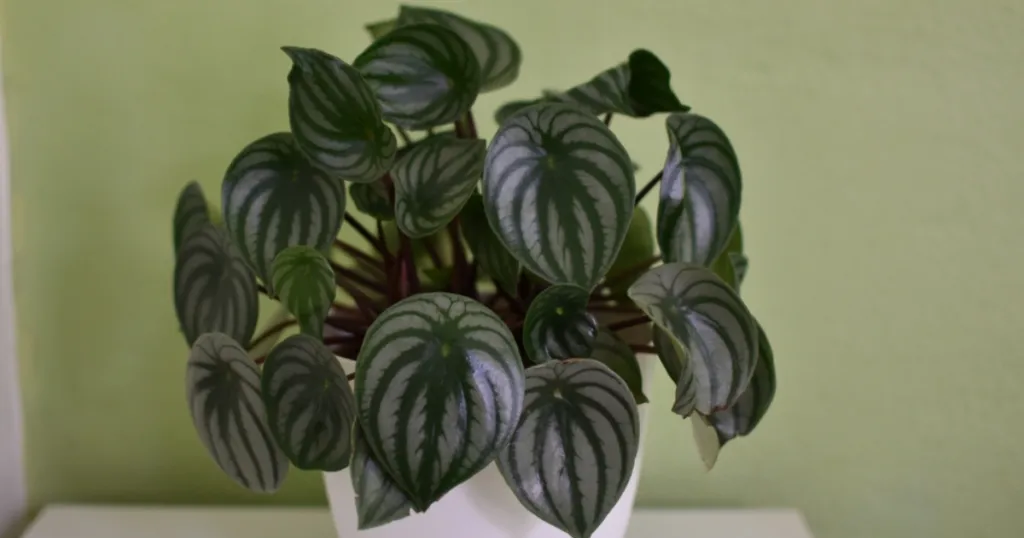
Peperomia varieties deliver remarkable leaf texture and color variation without ever outgrowing a small ceramic desktop container. These compact, slow-growing species prefer medium indirect light and thrive near desk lamps or under bright office task lighting. Their succulent-like stems and leaves store modest amounts of moisture, meaning they handle occasional underwatering far better than delicate tropical ferns. A safer approach in air-conditioned office buildings is to let the top inch of soil dry out entirely before providing a moderate drink, preventing the moisture retention issues that frequently attract fungus gnats.
Lucky Bamboo
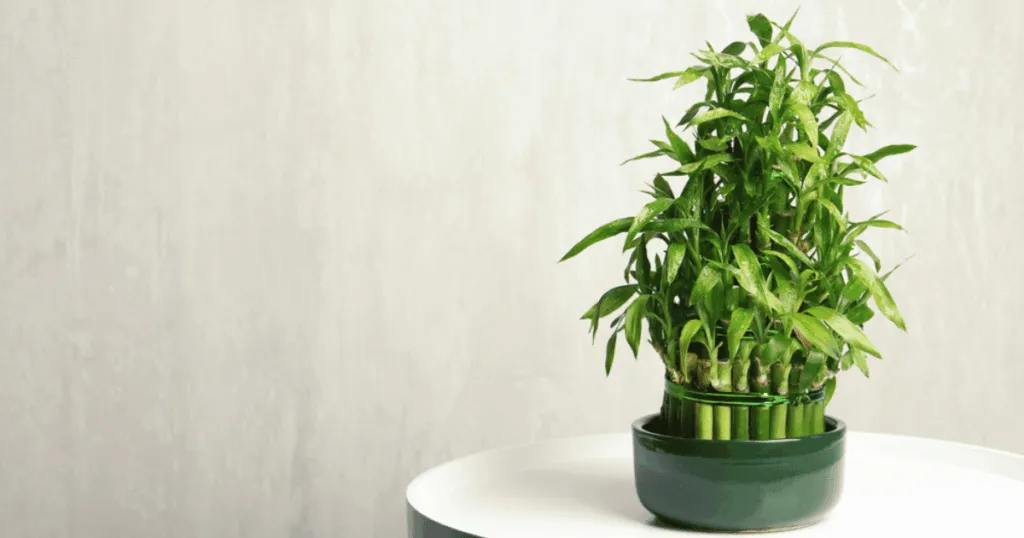
Lucky Bamboo is botanically classified as a Dracaena species and remains a favorite for minimalist desks due to its ability to grow directly in clean water vessels or traditional potting soil. It requires only low to medium indirect light and avoids taking up meaningful workspace. When grown in water, changing the liquid every few weeks and keeping mineral buildup cleared from the roots maintains long-term vitality. In our editorial review, this option consistently ranks high for reception desks and narrow cubicle partitions where standard pots simply will not fit.
Hoya
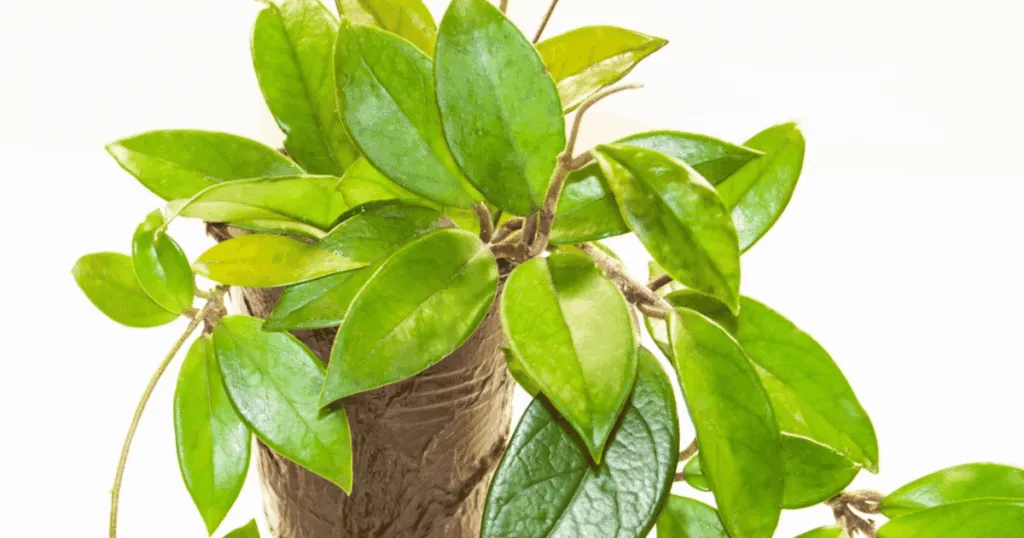
Hoya plants bring thick, waxy foliage and exceptional drought tolerance to tight office environments. Often called wax plants, they feature trailing or climbing growth habits that can be wrapped neatly around small trellises to preserve valuable desk surface area. They appreciate bright indirect light to encourage occasional porcelain-like flower clusters, but they adapt to moderate indoor lighting without losing their structural integrity. Their thick leaves protect against moisture loss, making them exceptionally forgiving when office staff forget to water them before long business trips.
Heartleaf Philodendron
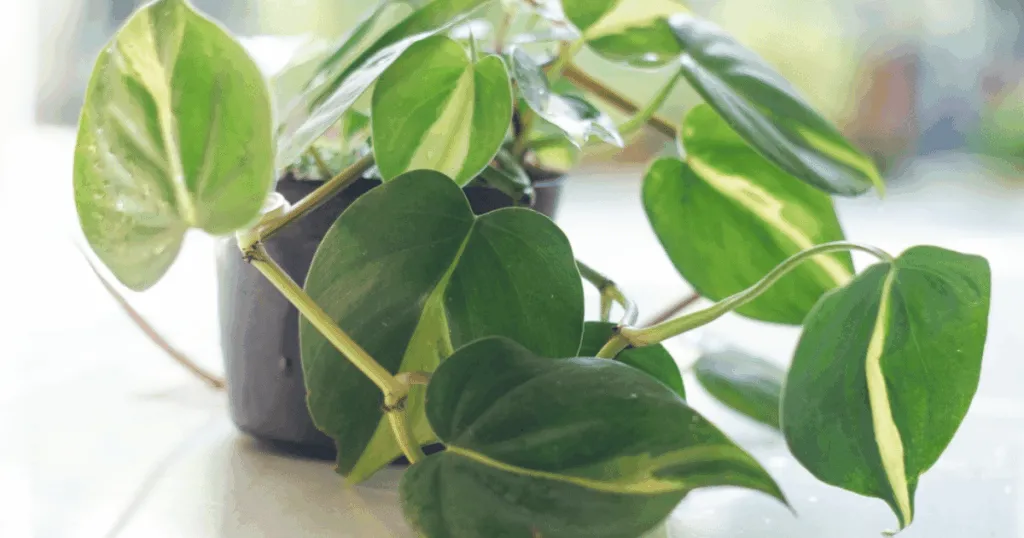
Heartleaf Philodendron provides a lush, tropical aesthetic with heart-shaped leaves that cascade gracefully from high shelves or small desktop hanging planters. It thrives under moderate indoor light and adapts well to standard office temperatures, though sudden cold drafts from overhead vents can cause minor leaf browning. Trimming the growing tips encourages a bushier appearance rather than long, leggy stems, giving you direct control over the plant scale. Based on available evidence regarding indoor growth rates, it remains one of the most reliable trailing choices for novice plant owners in corporate settings.
Chinese Evergreen
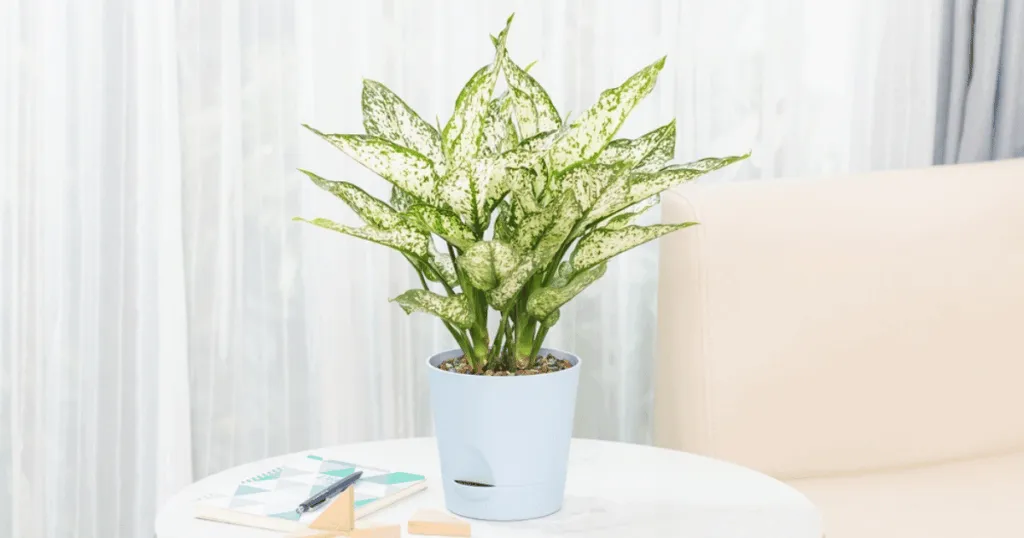
Chinese Evergreen offers striking silver, green, and pink leaf patterns that brighten dull office corners without requiring demanding care routines. It tolerates low light conditions better than many other patterned tropicals, though brighter indirect light enhances its vibrant coloration. The plant grows in a neat, upright clump that expands outward very slowly, meaning it will not crowd surrounding computer equipment or desk accessories for several years. Keeping it away from direct HVAC air currents prevents the leaf tips from drying out prematurely.
Strategic Placement Ideas For Small Offices
Maximizing limited square footage requires looking beyond standard desk surfaces. Vertical real estate offers the most untapped potential for integrating greenery without sacrificing productive workspace. Floating shelves mounted above eye level provide an ideal staging area for trailing species, allowing vines to cascade down blank walls. Magnetic planters attached to metal filing cabinets or cubicle partitions utilize vertical metal surfaces that otherwise sit empty.
Reception counters and shared printer stations also benefit from single, upright specimens in heavy, stable containers that resist tipping during busy workdays. When positioning greenery near computer monitors, ensure that watering maintenance will not endanger sensitive electronics or power strips. Using saucers with proper drainage management protects office furniture from water rings and soil stains.
When selecting containers for small office desks, material choice plays a practical role. Plastic pots retain moisture longer but lack professional weight, while unglazed terracotta breathes quickly, accelerating soil dry-down times in dry commercial interiors. Ceramic planters with built-in or attached saucers strike an effective balance, offering stability and clean aesthetics without risking desktop water damage during weekly hydration routines.
Common Limitations And Trade-Offs To Consider
Selecting compact specimens introduces certain compromises that every workplace decision-maker should understand before purchasing. Smaller containers dry out much faster than large floor planters, which can offset the drought tolerance of hardy species if the pots are severely undersized. Additionally, fluorescent lighting provides adequate energy for survival but rarely supports rapid growth or abundant flowering, meaning your workspace plants will maintain a static size for long periods.
Pet safety is another critical operational factor in shared corporate environments where visiting animals or employee pets may roam. Several popular compact selections contain calcium oxalate crystals or saponins that cause severe mouth irritation if chewed, so reviewing pet policies is essential before decorating open-plan workspaces. Choosing non-toxic alternatives like Parlor Palms or Spider Plants eliminates this risk entirely when animal presence is a daily reality.
Another operational trade-off involves seasonal shifts in light exposure. Buildings with large exterior windows experience dramatic reductions in natural light penetration during winter months, forcing indoor specimens to rely entirely on artificial overhead illumination. Preparing for this transition means pulling plants slightly closer to window lines or supplementing dark corners with dedicated LED grow bulbs designed for desktop lamp fixtures.
Maintaining Workspace Greenery Through Changing Seasons
Indoor office climates shift dramatically between summer cooling cycles and winter heating systems, directly impacting moisture requirements. During winter months, heating vents push dry air across workspaces, increasing transpiration rates and pulling moisture from soil much faster than expected. Conversely, reduced natural daylight filtering through office windows during shorter days slows down metabolic activity, meaning fertilizer applications should be paused completely until spring returns.
Establishing a routine inspection schedule prevents minor issues from escalating into major problems. Checking soil moisture levels with a simple finger test before every watering cycle avoids the chronic overwatering that accounts for most indoor plant failures. Dust accumulation on leaves is another frequent challenge in carpeted office buildings, blocking light absorption and reducing aesthetic appeal. Wiping foliage gently with a damp microfiber cloth every few months restores proper leaf function and keeps your workspace looking crisp and professional.
Pest management also requires deliberate oversight in closed corporate environments. Without natural predators indoors, common pests like fungus gnats or mealybugs can multiply rapidly if overwatered soil or decaying plant debris is left unchecked. Letting the top layer of potting mix dry completely between irrigation cycles breaks the reproductive cycle of soil-dwelling pests, protecting both your desk flora and neighboring workspace equipment from unwanted infestations.
FAQ
Can office plants survive entirely under fluorescent or LED lighting without natural windows?
Yes, hardy low light species like ZZ Plants, Snake Plants, and Cast Iron Plants adapt well to artificial office lighting when standard commercial illumination is left on during normal working hours.
How often should small desk plants be watered in an air-conditioned office?
Watering frequency depends on pot size and ambient humidity, but most small desk plants require a thorough drink only after the top inch or two of soil has dried out completely.
What causes brown tips on office plant leaves in modern corporate buildings?
Low relative humidity caused by HVAC heating and cooling systems is the primary culprit, though irregular watering schedules and mineral buildup from tap water also contribute.
Are there non-toxic options suitable for offices that welcome employee pets?
Yes, species like the Parlor Palm, Spider Plant, and various Peperomia varieties are completely non-toxic to cats and dogs if accidentally chewed or ingested.