Facility managers and office workers choosing between soil additives should look closely at who benefits most from each option. Perlite suits workplaces with irregular watering schedules, multi-day unattended weekends, and risk-averse teams looking to prevent root rot in low-light environments. Vermiculite suits administrative zones with high evaporation rates, constant HVAC drafts, and moisture-loving foliage that suffers under dry indoor air. Perlite vs vermiculite explained is the essential starting point for any workplace decision-maker looking to customize container soil for desk ferns, reception area monsteras, or breakroom pothos. Choosing the correct amendment prevents root suffocation and ensures that indoor flora thrives despite low light and artificial indoor air currents.
Office managers working with high-humidity-loving tropicals need a moisture-retentive substrate, while facilities teams managing desert-adapted succulents require rapid drainage to prevent fungal decay. Understanding the structural differences between these two sterile volcanic minerals helps eliminate guesswork when repotting corporate flora.
Short Answer
Choose perlite if your office plants need rapid drainage and heavy aeration to prevent root rot in low-light conditions. Choose vermiculite if your plants require steady moisture retention in dry, drafty office air. The main trade-off is that perlite repels water while vermiculite holds it.
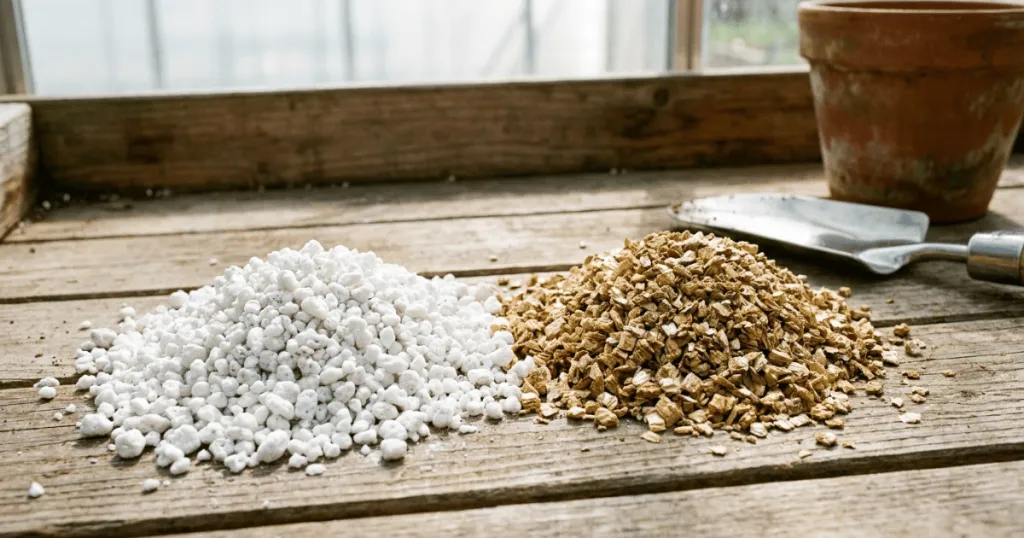
Perlite vs vermiculite explained: Core Structural Differences
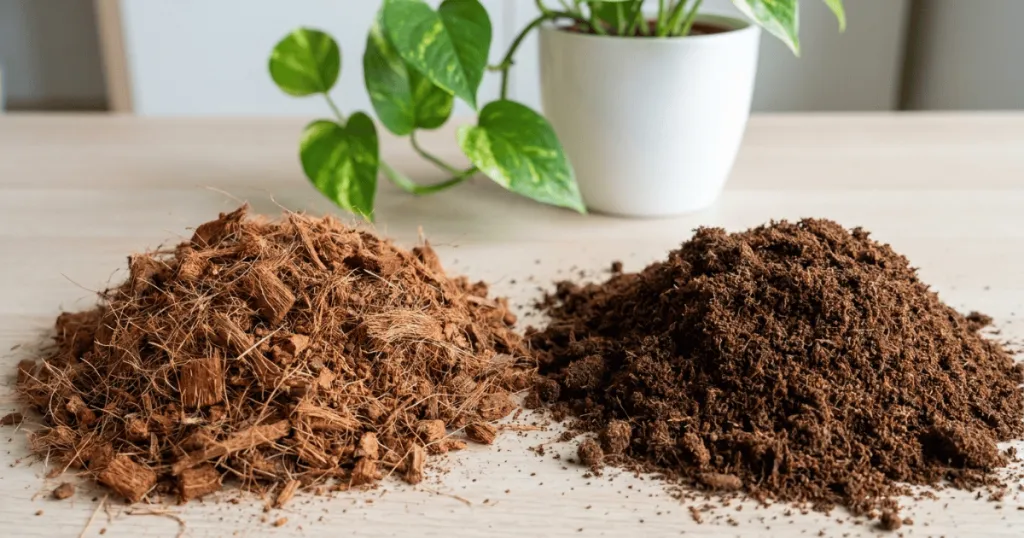
To make the right choice for workplace greenery, you must look at how these materials function physically inside a ceramic planter or plastic desk pot. Although both amendments are lightweight, sterile, and heat-expanded minerals used to improve potting soil, their internal architecture dictates completely opposite behaviors when exposed to water.
What Is Perlite and How It Works
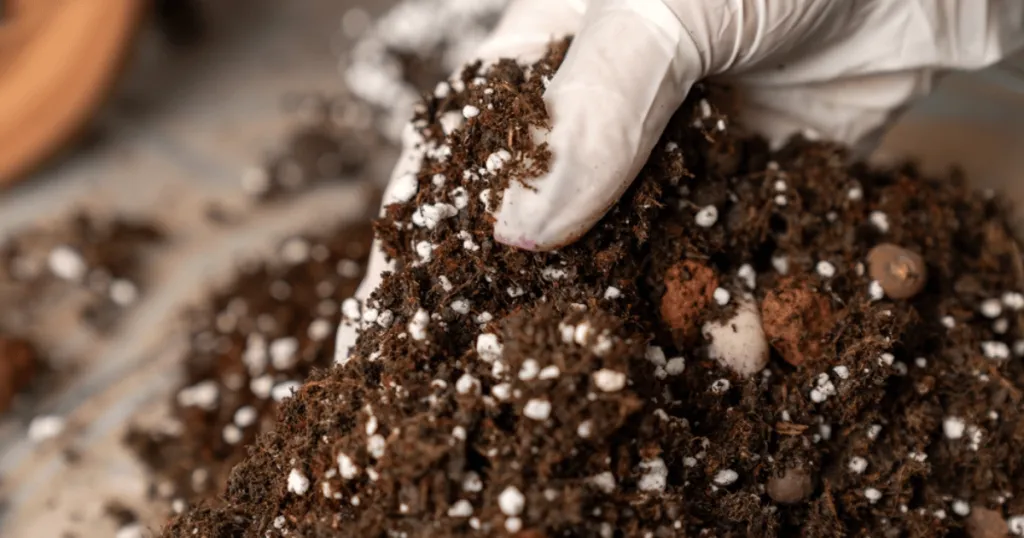
Perlite starts as an amorphous volcanic glass mined from the earth. When heated rapidly to extreme temperatures, trapped water molecules inside the rock turn to steam, causing the mineral to pop and expand up to twenty times its original size. The resulting white, pebble-like granules are extremely lightweight, chemically inert, and filled with tiny, closed surface cavities.
In practice, perlite acts as a permanent structural breaker in dense potting soils. Because its surface repels water rather than absorbing it, moisture flows rapidly past the granules. This creates microscopic air pockets throughout the root zone. In an office setting where plants sit undisturbed for days under fluorescent lights, these air channels ensure oxygen reaches the root tips even if an overzealous staff member floods the container during a weekly desk-watering routine.
When incorporating horticultural perlite into custom soil mixes for corporate interiors, facilities staff must account for its physical tendency to float. Because the expanded volcanic glass is buoyant, heavy top-watering can cause individual perlite pieces to migrate toward the surface of the container. To counteract this in client-facing reception areas, professionals often top-dress containers with decorative gravel, coarse sand, or clay pebbles to hold the lightweight material in place while maintaining essential potting soil aeration.
What Is Vermiculite and How It Works
Vermiculite is a hydrous silicate mineral belonging to the mica group. Like perlite, raw vermiculite is subjected to intense heat, causing the layered flakes to exfoliate and expand into accordion-like structures. These expanded particles feature a high cation exchange capacity, meaning they can hold onto essential mineral nutrients and water molecules much like a microscopic sponge.
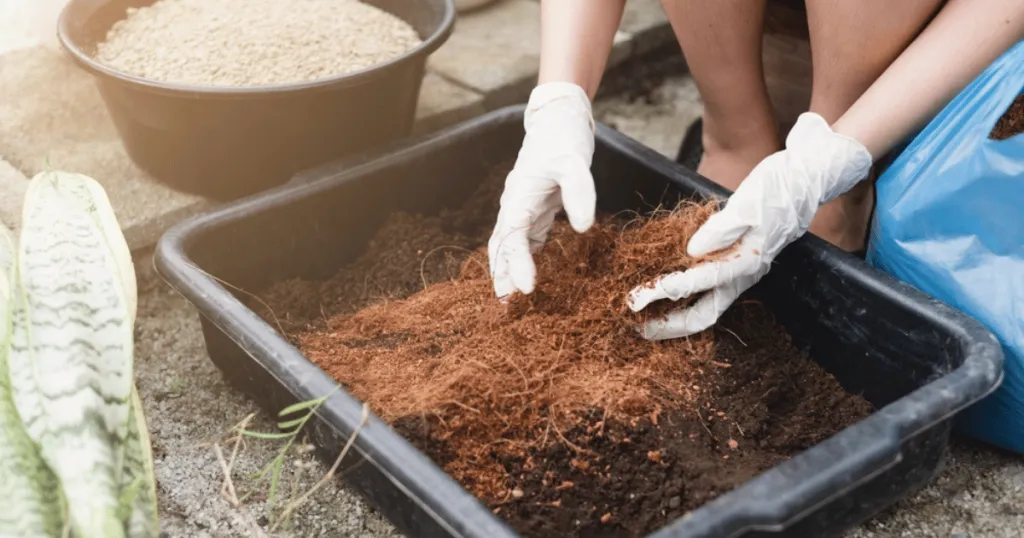
When mixed into office plant potting media, vermiculite absorbs water and swells slightly, holding moisture near the root zone for extended periods. This makes it exceptionally useful for moisture-loving office plants placed near warm heating vents or air conditioning returns that rapidly dry out topsoil. However, if used in excessive amounts without adequate aeration, vermiculite can become waterlogged and lead to compacted, oxygen-starved soil conditions.
Expanded vermiculite functions exceptionally well in specialized indoor propagation setups, such as rooting pothos cuttings or starting delicate office ferns from spores. Because it retains moisture evenly, cuttings placed in vermiculite experience less dehydration stress. However, workplace maintenance teams must exercise caution; in dark, windowless breakrooms, a continuously damp vermiculite surface creates a welcoming habitat for fungus gnats, requiring strict monitoring of watering volumes.
Comparison Table
| Feature | Perlite | Vermiculite |
|---|---|---|
| Primary Function | Aeration and rapid drainage | Moisture and nutrient retention |
| Water Behavior | Repels water on surface; drains freely | Absorbs and holds water like a sponge |
| Compaction Resistance | High; does not break down easily | Moderate; can collapse under heavy pressure |
| Best For Office Plants | Cacti, succulents, arums, and low-light tropicals | Ferns, calatheas, and moisture-loving foliage |
| Nutrient Holding | Zero nutrient retention | High cation exchange capacity |
Feature-by-Feature Differences in Workplace Environments
Evaluating these amendments requires looking at the unique pressures of commercial buildings. Office spaces present challenges that differ significantly from outdoor gardens or home environments, making certain physical characteristics of soil amendments far more critical.
Drainage and Root Oxygenation
In standard office buildings, heating, ventilation, and air conditioning systems run continuously, creating dry surface air while subterranean soil stays damp due to low evaporation rates. Perlite excels in this environment because its hard, irregular shape resists crushing and creates permanent drainage pathways. Excess water flushes straight through the bottom drainage holes, protecting office plants from sitting in stagnant pools over three-day weekends.
Vermiculite behaves differently. By holding onto water, it reduces the frequency of necessary waterings, which appeals to busy office managers. However, if a container lacks proper bottom drainage or receives too much water, vermiculite retains that liquid, suffocating roots and inviting fungus gnats into the open-plan workspace.
Understanding soil permeability is crucial when managing container gardening inside commercial offices where staff members often over-water plants out of an abundance of caution. When standard potting mixes lack sufficient drainage materials for potted plants, water collects at the base of the container. Perlite prevents this failure by maintaining continuous air channels that facilitate root oxygenation, even when drainage holes become temporarily blocked by mineral buildup or root growth.
Nutrient Retention and Fertilization Cycles
Office plants generally receive infrequent, diluted liquid fertilization, often applied by office cleaning crews or designated employee volunteers on a monthly schedule. Vermiculite contributes positively here by acting as a temporary storage bank for macro and micro-nutrients, holding them in the root zone rather than letting them wash out immediately during watering. Perlite offers no chemical contribution to fertility; it is entirely inert and relies completely on the base potting mix to supply nutrients to the plant.
In professional interior landscaping, balancing soil amendments for office plants involves assessing how long nutrients remain available in closed container systems. Because office plants are rarely repotted frequently, soil additives must support long-term plant health. Vermiculite’s chemical interaction with fertilizers prevents rapid leaching, making it valuable for slow-growing foliage in executive boardrooms. Conversely, perlite users must rely on balanced, slow-release fertilizers or consistent liquid feeding schedules since the inert volcanic glass washes nutrients out with every heavy watering.
Durability and Lifespan in Containers
Office plants are rarely repotted more than once every couple of years. Over time, organic components like peat moss or bark break down and compress. Perlite maintains its rigid structural integrity indefinitely, ensuring drainage channels remain open years after initial planting. Vermiculite, while durable, can slowly flatten under heavy soil weight or aggressive root growth, eventually losing some of its sponge-like porosity over multiple seasons.
When designing long-term interior plantscapes, facilities managers must factor in soil compaction over time. Heavy peat-based mixes naturally slump and settle, squeezing out vital air pockets. Perlite resists this mechanical breakdown, providing a permanent scaffold within the root zone. Vermiculite offers initial elasticity, but repeated wetting and drying cycles combined with heavy root mass expansion can cause its accordion structure to compress, reducing internal porosity and necessitating periodic soil refreshment or amendment top-ups during routine maintenance windows.
Best Use Cases for Office Plants
Matching the amendment to specific plant varieties and office zones prevents common maintenance failures. Different areas of a corporate workplace demand tailored soil strategies based on light exposure and watering accessibility.
When to Use Perlite
Perlite is the default choice for the vast majority of office plants, including snake plants, pothos, ZZ plants, and philodendrons. These species tolerate drying out between waterings far better than constant moisture. Perlite is also mandatory for any desk plant living in a decorative ceramic pot that lacks an inner nursery pot with drainage holes, as it maximizes whatever limited aeration is available inside a confined container.
For office managers overseeing large open-plan spaces with dozens of desk plants, perlite minimizes human error. Because it promotes rapid drainage, well-meaning employees who water office plants too frequently are less likely to trigger fatal root rot. This makes perlite the cornerstone of reliable perlite vs vermiculite for indoor plants strategies in busy corporate settings where oversight is decentralized.
When to Use Vermiculite
Vermiculite shines in high-evaporation office zones, such as reception desks sitting directly beneath aggressive ceiling air diffusers or boardrooms with large glass windows that bake plants in afternoon sunlight. Moisture-sensitive tropicals like peace lilies or maidenhair ferns benefit from the steady baseline humidity that vermiculite maintains in the root zone, reducing the risk of crispy leaf tips caused by dry HVAC air.
Additionally, vermiculite serves as an exceptional medium for hydroponics setups and office propagation stations where staff members sprout stem cuttings in water or damp media before potting them into permanent corporate containers. Its sterile nature and water-holding capacity give developing roots a stable, hydrated environment without introducing soil-borne pathogens into shared office spaces.
Which One Should You Choose?
Making a final decision comes down to evaluating your specific office watering routine and the plant species in your care. If your workplace relies on rotating volunteers to water the lobby plants, overwatering is a constant risk. In that scenario, perlite is the safer, more forgiving choice because it prevents accidental waterlogging and ensures excess moisture drains away quickly.
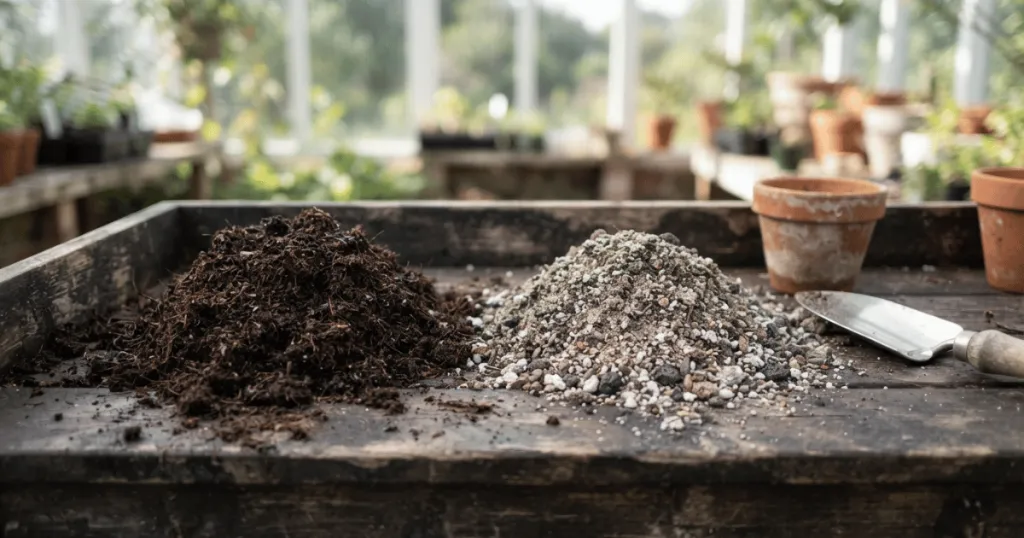
If your office features delicate tropical foliage that drops leaves the moment soil dries out, or if you manage a propagation station where you are rooting stem cuttings in moisture-retentive media, vermiculite provides the steady dampness required for root initiation. Many professional horticulturists actually blend both materials into a custom potting mix, combining twenty percent perlite for drainage with ten percent vermiculite for moisture balance. However, if you must choose only one for general office plant maintenance, perlite offers greater safety margins against root rot in indoor environments.
FAQ
Can I mix perlite and vermiculite together in the same office plant pot?
Yes, combining both amendments is a common practice among professional interior landscapers. A blend allows you to gain the rapid drainage and aeration benefits of perlite while maintaining the steady moisture-buffering capacity of vermiculite for thirsty tropical plants.
Which amendment is better for preventing fungus gnats in open-plan offices?
Perlite is superior for pest prevention because it keeps the top layer of soil dry and well-aerated. Vermiculite holds surface moisture longer, which can attract fungus gnats if the potting medium remains damp for too long in low-light office conditions.
Does perlite float to the top of the soil over time when watering office plants?
Yes, because perlite is extremely lightweight, it frequently floats to the surface during heavy watering. You can minimize this aesthetic issue by topping your office plant pots with a thin decorative layer of gravel, expanded clay pebbles, or coarse sand.
Do these amendments break down or expire inside indoor plant containers?
Perlite never breaks down chemically or structurally inside a pot, though it can eventually crush under extreme physical force. Vermiculite can slowly compact over several years as organic matter degrades, reducing its internal porosity over long periods.