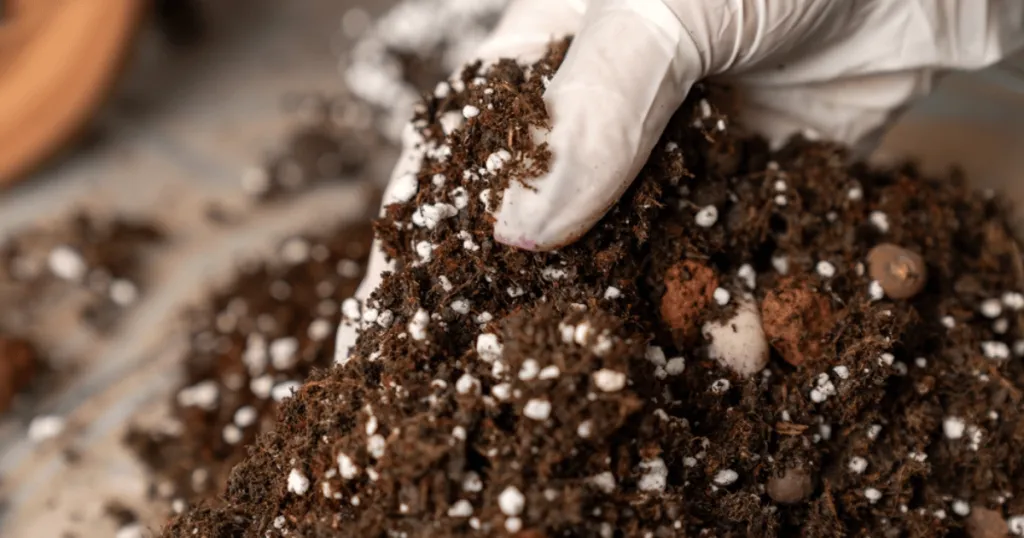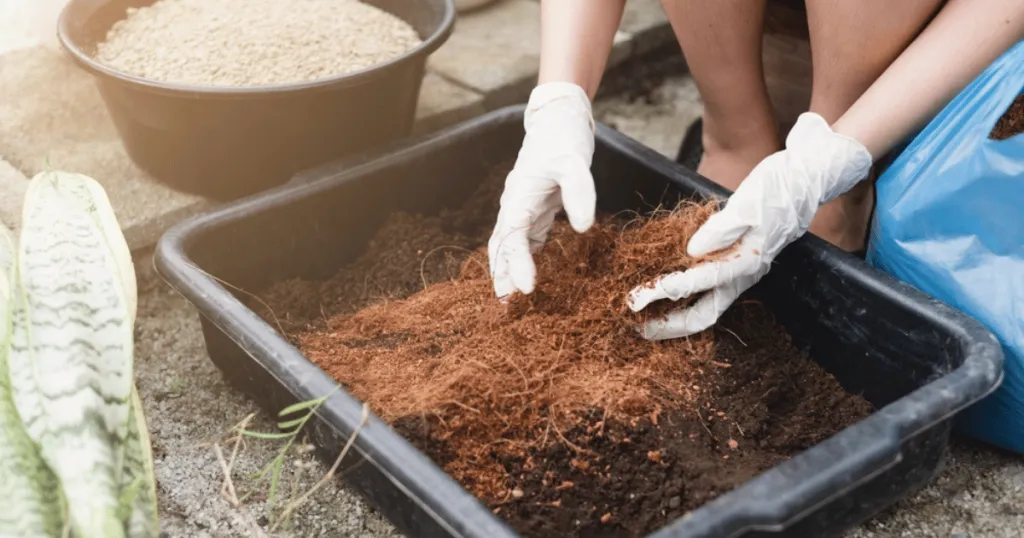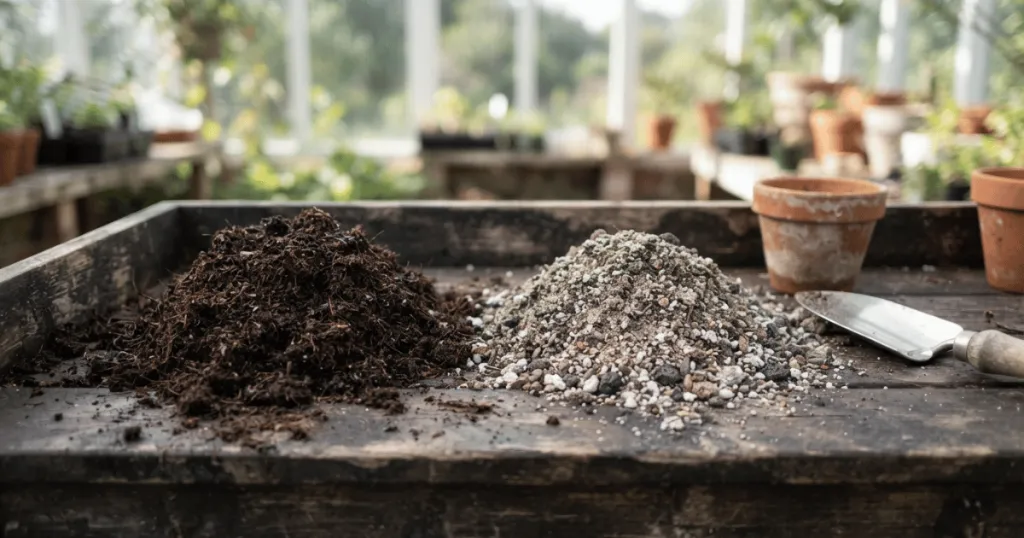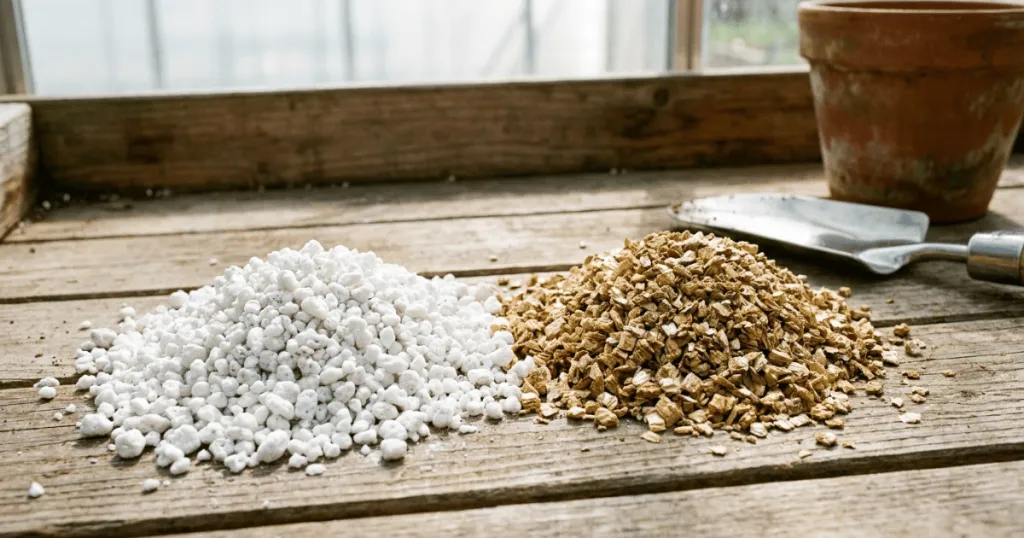
When preparing potting mixes for indoor office greenery, choosing the right soil amendment dictates how easily your plants tolerate missed Monday waterings and low light. Coco coir and sphagnum peat moss remain the two dominant organic materials used to improve moisture retention and soil structure in containers. For most workplace environments, coco coir proves superior due to its neutral pH, resistance to compaction under fluorescent or LED lighting, and exceptional re-wetting ability after long holiday weekends. However, each amendment behaves differently inside climate-controlled commercial spaces.
Short Answer
Choose coco coir for office plants because it re-wets easily after drying out in low humidity and features a neutral pH. Peat moss holds moisture slightly longer but becomes hydrophobic when bone dry, making it risky for unattended office greenery.
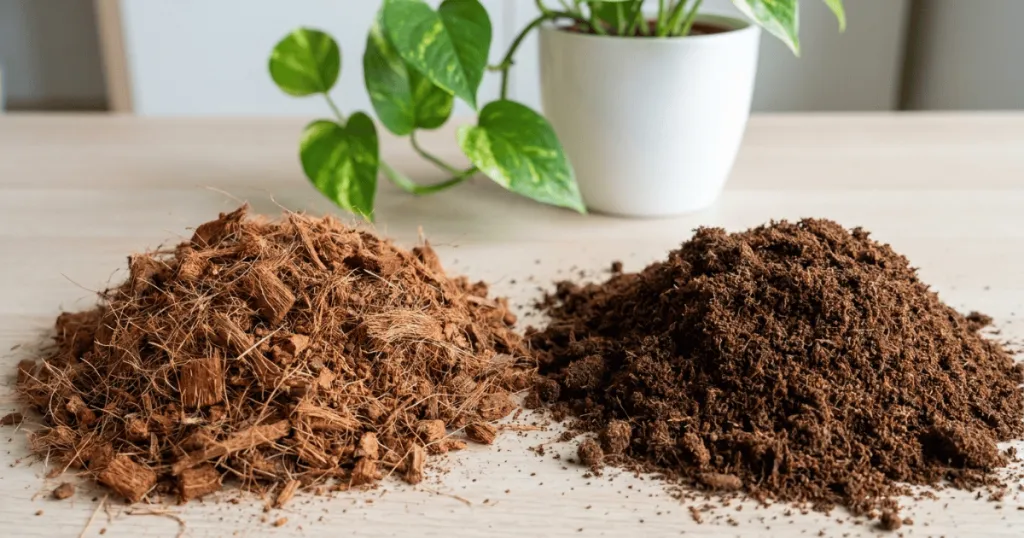
Understanding the Core Differences
Evaluating coco coir vs peat moss for office plants requires looking past general gardening advice and focusing strictly on indoor commercial conditions. Office environments present unique challenges, including steady HVAC airflow, constant artificial lighting, and erratic watering schedules managed by busy staff or cleaning crews. Both amendments serve the same primary function of preventing potting soil from packing too tightly around roots, but their chemical and physical properties diverge sharply.
To understand container media in a professional workspace, workplace managers must look at how indoor potting soil amendments interact with office heating and cooling systems. When building a robust foundation for workplace greenery, facility operators evaluate water management, root aeration, and container gardening constraints. Unlike outdoor plots or greenhouses with high natural humidity, corporate settings feature rapid surface evaporation driven by forced-air heating and air conditioning units. This microclimate accelerates the drying process, making the physical behavior of your soil amendment the primary factor in plant survival over long weekends and holiday closures.
| Feature | Coco Coir | Peat Moss |
|---|---|---|
| pH Level | Neutral (5.5 to 6.8) | Acidic (3.5 to 4.5) |
| Re-wetting Ability | Excellent, absorbs water instantly even when dry | Poor when dry, repels water (hydrophobic) |
| Sustainability | Renewable byproduct of coconut processing | Non-renewable fossilized bog material |
| Nutrient Retention | Holds potassium and micronutrients well | Holds cations well, but requires lime to adjust pH |
| Compaction Resistance | High springiness, maintains pore space | Moderate, breaks down faster over time |
Coco Coir Analysis for Workplace Greenery
Coco coir is derived from the fibrous husks of coconuts, making it an eco-friendly organic material that repurposes agricultural waste. In a corporate office setting, coir offers distinct mechanical advantages for potted specimens like snake plants, pothos, and peace lilies. Its natural elasticity prevents the potting mix from compressing into a dense brick under the weight of commercial containers and frequent watering.
One major operational benefit of coco coir is its natural hydraulic behavior. When an office remains closed over a long weekend or holiday break, standard soil mixes can dry out completely. Coco coir resists this permanent dry-out state. When Monday morning watering resumes, coir re-absorbs moisture instantly without the water running straight down the sides of the nursery pot. This characteristic protects root systems from sudden drought shock caused by dry pockets in the container.
Office managers should note that raw, unwashed coir can contain high levels of sodium and potassium from processing in coastal saltwater regions. For optimal results, purchase pre-washed, buffered coco coir specifically labeled for horticultural use to prevent mineral buildup and salt burn on sensitive foliage. In practice, incorporating coir into indoor landscaping setups provides exceptional drought tolerance without sacrificing the structural integrity of the soil mix. Because office workers often rely on sporadic watering schedules, having a medium that maintains stable plant hydration is vital for keeping reception areas and open offices vibrant.
Peat Moss Analysis for Indoor Containers
Sphagnum peat moss consists of decomposed organic matter harvested from peat bogs over thousands of years. It has long been a staple in commercial potting soil formulations because of its exceptional water-holding capacity and sterile nature. Peat naturally inhibits certain fungal pathogens, which can be advantageous in damp breakrooms or low-ventilation private offices.
Despite its water-holding strengths, peat moss introduces significant management hurdles in professional workplaces. Its highly acidic pH, typically ranging between 3.5 and 4.5, falls well below the optimal range for common office plants that prefer slightly acidic to neutral soils. Correcting this acidity requires mixing in agricultural limestone, an extra step that is rarely practical for busy office maintenance routines.
The most critical risk with peat moss in offices is its tendency to become hydrophobic when dry. If an office plant goes unwatered for a week or two, the peat shrinks and forms a hard crust. When water is finally applied, it beads up and rolls off the surface instead of penetrating the root ball. Salvaging a severely dry peat-based pot requires tedious bottom-soaking, which is messy and inefficient in a professional workspace. In an environment where green office practices prioritize efficiency and low administrative overhead, dealing with hydrophobic soil and correcting mineral deficiencies adds unnecessary friction to daily operations.
Feature-by-Feature Comparison
Comparing coco coir vs peat moss for office plants across specific performance metrics reveals how each material responds to standard workplace stressors like dry HVAC air, artificial lighting, and irregular maintenance.
Moisture Retention and Drought Tolerance
Peat moss holds a higher volume of water pound-for-pound compared to coco coir. However, that capacity comes with a catch. Peat releases stored water slowly, but once depleted, it resists re-hydration. Coco coir holds slightly less water total, but distributes moisture evenly throughout the container and accepts water instantly upon application. For office workers who water sporadically, coir provides a more forgiving margin of error.
When evaluated through the lens of moisture retention, both materials succeed in preventing immediate dry-out, but their long-term performance differs under fluorescent or LED office lighting. Peat-based commercial planters can fool staff into thinking a plant has been watered properly because surface moisture sits temporarily before running off the hardened crust. Coco coir, by contrast, relies on its superior capillary action to draw water uniformly across the entire root zone, ensuring that desk plants receive consistent hydration even when maintenance routines lapse.
Chemical Stability and pH Management
Soil chemistry dictates nutrient availability for container plants. Coco coir naturally sits near a neutral pH range, meaning it rarely requires chemical adjustments to keep common office plants thriving. Peat moss demands active pH management. Without added limestone, highly acidic peat can lock out essential nutrients like calcium and magnesium, leading to stunted leaf growth and chlorosis in high-visibility reception areas.
In practice, maintaining a balanced pH is crucial for office managers who want reliable results without maintaining an inventory of soil amendments. While sphagnum peat offers a sterile starting environment, its low pH actively works against the physiological needs of most tropical foliage used in indoor landscaping. Coco coir provides a chemically stable baseline that integrates seamlessly with standard liquid fertilizers and routine tap water.
Environmental Impact and Sustainability
Workplace sustainability initiatives increasingly influence purchasing decisions for indoor greenery. Peat bogs represent fragile ecosystems that sequester massive amounts of carbon, and harvesting peat releases those greenhouse gases while destroying ancient habitats. Coco coir utilizes a renewable waste stream from the food and fiber industries, aligning better with corporate environmental standards and green office certifications.
Choosing sustainable office plant soil sends a positive message to clients, visitors, and employees who care about environmental corporate responsibility. While peat moss has historical precedent in commercial horticulture, its extraction footprint clashes with modern corporate sustainability goals. Coco coir bridges the gap between high-performance indoor cultivation and eco-conscious procurement policies.
Best Use Cases for Each Amendment
Matching the right amendment to your specific office environment ensures long-term plant health with minimal labor.
When to Choose Coco Coir
Coco coir is the ideal choice for open-plan offices, conference rooms, and desk plants that experience variable watering schedules. It excels in self-watering planters, vertical living walls, and lightweight nursery containers where maintaining loose, aerated root zones is essential. If your office building features aggressive climate control that rapidly dries out indoor air, coir prevents the potting mix from sealing shut.
For facilities teams managing hundreds of individual workstations, coir-based commercial planters reduce the incidence of sudden plant failure. Because coir resists soil compaction and handles irregular watering without turning into a water-repellent block, it represents the gold standard for busy corporate environments where plant care is secondary to core business operations.
When to Choose Peat Moss
Peat moss suits specialized setups where plants require consistently damp, acidic conditions and dedicated maintenance staff oversee the watering schedule. It works well in enclosed terrariums or large floor planters managed by professional interior landscaping services that monitor moisture meters daily. If your chosen plant species explicitly demands high acidity, such as certain ferns or acid-loving tropicals, unamended peat can provide a suitable baseline if properly pre-moistened.
However, these scenarios are exceptions in the modern workplace. Unless an office employs dedicated horticulturists who actively monitor pH balance and moisture saturation levels, peat moss introduces avoidable operational risks that can quickly degrade the visual appeal of corporate greenery.
Which One Should You Choose?
When weighing coco coir vs peat moss for office plants, the practical choice for most workplace settings is clearly coco coir. Its forgiveness regarding irregular watering schedules makes it much safer for offices where plant care falls to rotating staff or busy office managers.
The main trade-off centers on upfront preparation and cost. Peat moss is often cheaper and readily available in pre-mixed commercial potting soils, but it demands strict attention to moisture levels to prevent hydrophobic dry-out. Coco coir sometimes requires rinsing to remove excess salts if purchased raw, but pre-buffered horticultural grades eliminate this extra chore.
For facilities teams, office managers, and remote business owners looking for low-maintenance indoor landscaping, coco coir minimizes the risk of sudden drought damage and eliminates the need for pH-correcting additives. Select a balanced potting mix featuring coco coir to keep desk ferns, floor palms, and tabletop foliage thriving with minimal intervention.
FAQ
Can I mix coco coir and peat moss together for office plants?
Yes, blending both amendments combines the high water capacity of peat with the excellent aeration and neutral pH of coco coir. However, you will still need to manage the overall acidity of the mix if you use high proportions of peat moss.
Do office plants grown in coco coir need fertilizer sooner than peat-based mixes?
Coco coir naturally contains potassium and lacks inherent mineral reserves, meaning you will need to start a balanced liquid feeding schedule slightly earlier than with nutrient-rich compost, though this applies similarly to sterile peat moss.
How do I know if my office plant potting mix has become hydrophobic?
If water immediately runs out of the drainage holes without dampening the soil core, or if the soil pulls away from the edges of the pot, the medium has dried out completely and lost its ability to absorb moisture.
Is unwashed coco coir safe to use straight out of the bag for office plants?
Unwashed coco coir often contains high levels of residual salts that can cause leaf tip burn on sensitive indoor plants. Always look for pre-washed and buffered horticultural coco coir before potting workplace greenery.