Successful Anthurium care in an office setting requires a delicate balance between providing enough light for the plant to thrive and managing the often harsh, artificial environment of a modern workspace. These plants are prized for their glossy, heart-shaped leaves and long-lasting, waxy flower spathes, which can add a professional and vibrant aesthetic to reception areas or individual desks. However, the most common mistake office managers make is treating them like low-light, hardy foliage plants.
Because they are tropical epiphytes, they require specific attention to moisture and light to prevent the common issues of yellowing leaves and stunted growth. By understanding their native requirements and adapting your office routine to match, you can ensure your Anthurium remains a healthy, attractive feature of your workspace for years.
To maintain peak health, prioritize bright, indirect light and a consistent watering schedule where the top inch of soil is allowed to dry out between applications. Because these plants are sensitive to the dry air common in climate-controlled offices, proactive humidity management is essential for long-term success.
At a Glance
- Light: Provide bright, indirect light for best flowering results.
- Watering: Allow the top inch of soil to dry between waterings.
- Humidity: Maintain high humidity levels to prevent leaf browning.
- Toxicity: Keep away from pets as it contains calcium oxalate crystals.
Optimizing Light and Placement
The success of your Anthurium depends heavily on where you place it. While these plants are often sold as low-light options, they are actually moderate to high-light plants. In an office, this means finding a spot that receives bright, indirect light. If you place your Anthurium in a dark corner or a windowless cubicle, you will likely notice a significant drop in flower production and a slow decline in leaf health.
If you have access to a window, position the plant a few feet away from it. Avoid direct sunlight, which can scorch the leaves, especially when magnified through office window glass. If your office relies entirely on fluorescent or LED lighting, ensure the plant is placed as close to the light source as possible. While these plants can survive in lower light, they will not thrive or produce their signature spathes without sufficient energy. If you notice the stems becoming long and leggy, it is a clear sign that the plant is reaching for more light and should be moved to a brighter location.
In open-plan offices, consider the proximity to windows. A south-facing window might be too intense, while an east-facing window often provides the perfect morning light. If your office layout forces the plant into a low-light area, you may need to rotate it periodically or consider supplemental full-spectrum LED grow lights, which can be discreetly mounted under shelves or on desk lamps to support photosynthesis.
Watering and Soil Management
Watering is the most critical aspect of Anthurium care. These plants prefer a consistent moisture level but are highly susceptible to root rot if left sitting in water. The golden rule is to allow the top inch of soil to dry out completely before you add more water. In an office, it is easy to forget a plant for weeks or, conversely, to overwater it during a routine office cleaning schedule. Neither extreme is ideal.
When you do water, ensure the pot has adequate drainage holes. Never leave the plant sitting in a saucer of standing water, as this will quickly lead to root decay. If your office uses a decorative pot without drainage, it is best to keep the plant in its original plastic nursery liner and place that inside the decorative container. This allows you to remove the liner, water it in a sink, and let it drain fully before returning it to its display spot. The soil should be a well-draining, chunky mix, often containing bark or perlite, which mimics the airy, epiphytic conditions the plant prefers in the wild.
For office managers, establishing a “check-in” day is more effective than a strict watering schedule. Because HVAC systems fluctuate based on building occupancy, the soil may dry out faster on a Monday after a weekend of high-temperature settings. Always use the finger-test method: if the top inch feels dry, water thoroughly until liquid exits the drainage holes. If the soil is still damp, wait another day or two. This prevents the anaerobic conditions that lead to root rot.
Humidity, Temperature, and Feeding
Office environments are notorious for low humidity due to constant HVAC usage, which is the primary enemy of the Anthurium. These plants require above-average humidity to keep their foliage glossy and prevent the leaf tips from turning brown and crispy. If your office is particularly dry, consider placing the plant on a pebble tray filled with water or grouping it with other plants to create a more humid microclimate. Avoid placing your Anthurium directly in the path of an air conditioning vent or a heater, as these drafts can cause rapid moisture loss and stress the plant.
Temperature-wise, Anthuriums prefer the same comfortable range that humans do, typically between 65 and 80 degrees Fahrenheit. If your office temperature drops significantly over the weekend, the plant may slow its growth, but it should recover once the climate stabilizes. Regarding feeding, use a balanced liquid fertilizer diluted to half-strength during the growing season. Do not fertilize during the winter months when the plant is dormant, as this can lead to salt buildup in the soil.
When managing humidity in a professional setting, avoid misting leaves as a primary solution. Misting provides only temporary relief and can encourage fungal growth on foliage if the office has poor air circulation. Instead, focus on group placement. Clustering plants together creates a localized microclimate where the transpiration from one plant benefits the others, effectively raising the ambient humidity around the foliage.
Repotting, Pruning, and Propagation
Repotting an Anthurium is usually only necessary every two to three years. You will know it is time when you see roots circling the bottom of the pot or growing out of the drainage holes. When you repot, choose a container that is only one or two inches larger in diameter than the current one. Using a pot that is too large can hold too much water, which risks suffocating the roots. Use a high-quality, peat-based or bark-heavy potting mix to ensure the roots receive plenty of oxygen.
Pruning is straightforward and mostly involves maintenance. You should remove any yellowing or dead leaves by cutting them off at the base of the stem with clean, sharp shears. This helps the plant redirect its energy toward new, healthy growth. Propagation is possible through division during repotting. If you see distinct clumps with their own root systems, you can gently separate them and pot them into individual containers. This is a great way to expand your office greenery without purchasing new plants.
When pruning, always sterilize your tools with rubbing alcohol between plants. This prevents the accidental transmission of pathogens, which is particularly important in an office where multiple plants might be grouped together. If you notice a stem that is damaged or rotting, prune it back to the healthy tissue immediately to prevent the spread of decay to the rest of the root system.
Seasonal Adjustments and Common Mistakes
The biggest mistake in Anthurium care is assuming the plant needs the same routine year-round. During the winter, growth slows down, and the office air often becomes even drier due to heating systems. You should reduce your watering frequency during this period, as the soil will stay damp for longer. Always check the top inch of soil before adding water rather than following a strict calendar schedule.
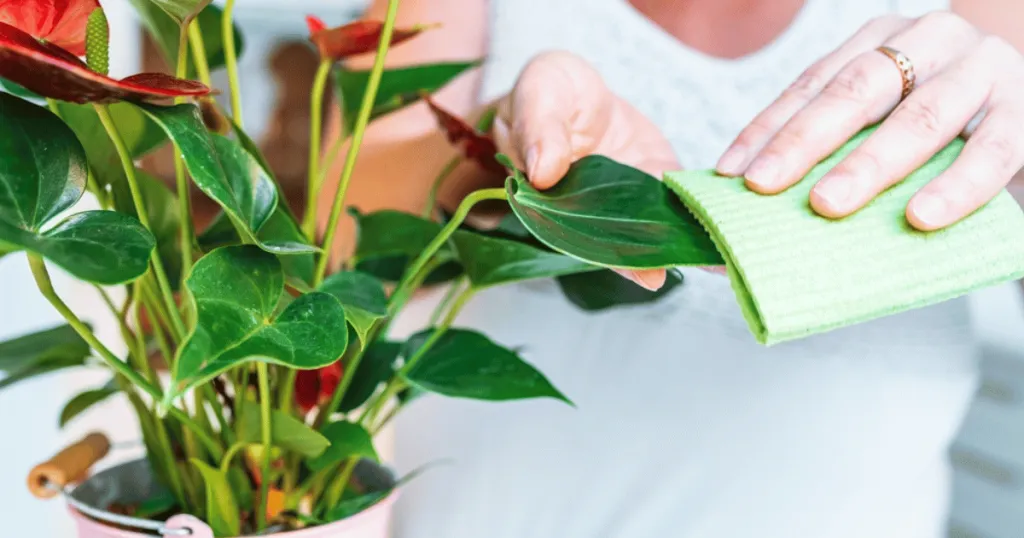
Another common error is failing to wipe the leaves. Office plants collect dust, which blocks light and can harbor pests. Gently wiping the leaves with a damp cloth every few weeks keeps them clean and allows the plant to photosynthesize efficiently. Watch for signs of stress like drooping or browning edges, which are often indicators of inconsistent watering or low humidity. If you see these symptoms, assess your environment first before assuming the plant is diseased.
Be mindful of the “weekend effect.” Many office plants suffer because they are left in environments that change drastically when the staff leaves. If your office turns off the heat or AC over the weekend, the plant may experience a temperature swing. While Anthuriums are resilient, they prefer stability. If you know your office temperature drops significantly, try to move the plant away from windows or exterior walls on Friday afternoons to protect it from cold drafts.
Advanced Troubleshooting for Office Managers
Sometimes, despite your best efforts, an Anthurium may show signs of distress. If you notice yellowing leaves, this is often a symptom of overwatering or poor drainage. Conversely, if the leaves are curling or drooping, the plant is likely experiencing water stress or is positioned in a drafty area. By observing the plant’s reaction to its environment, you can adjust your care routine dynamically.
If the plant is not blooming, evaluate the light quality first. Anthuriums require high-quality light to produce their signature spathes. If the plant is healthy but refuses to flower, it is almost certainly receiving insufficient light. Moving it to a brighter spot – or adding a small, dedicated desk lamp with a full-spectrum bulb – can often trigger new flower production within a few weeks. Remember that patience is key; Anthuriums are not instantaneous bloomers, and they require a stable environment to focus their energy on reproduction.
Finally, keep an eye out for common office pests such as spider mites or mealybugs. These thrive in the dry, warm conditions of many offices. If you see fine webbing or small, white, cotton-like spots on the undersides of leaves, isolate the plant immediately and treat it with a gentle insecticidal soap or a simple wipe-down with diluted neem oil. Early detection is the best way to keep your office plant collection healthy and pest-free.
Related Anthurium Guides
- everything about the Anthurium
- why your Anthurium might be struggling
FAQ
Why are the tips of my Anthurium leaves turning brown?
Brown, crispy tips are almost always a sign of low humidity or inconsistent watering. Office environments often have very dry air due to HVAC systems. You can improve this by placing the plant on a pebble tray with water or ensuring you are not letting the soil dry out too much between waterings.
How do I know if my Anthurium is getting enough light?
A healthy Anthurium should have firm, dark green leaves and produce new growth regularly. If your plant is stretching, losing its deep color, or failing to produce new flower spathes, it is likely not receiving enough bright, indirect light. Move it closer to a window or a consistent light source.
Can I use tap water for my Anthurium?
Yes, you can use tap water, but if your water is heavily chlorinated or contains high levels of minerals, you might notice white crusts on the soil surface or leaf tip burn. If you suspect your water quality is poor, letting the water sit out overnight before using it can help some chlorine evaporate.
Is it normal for the flowers to fade?
Yes, Anthurium spathes are very long-lasting, but they will eventually fade and turn green or brown as they age. Once a flower has completely withered, you can prune the stem back to the base of the plant to encourage the energy to go toward new foliage and future blooms.