The most common mistake in lucky bamboo care is assuming this plant is a true aquatic bamboo that thrives in any water quality. While it is often sold in simple glass vases, it is actually a member of the Dracaena family, specifically Dracaena sanderiana. Treating it like an indestructible water-plant often leads to yellowing stalks and root decay. Because it is highly sensitive to the chemicals found in standard municipal tap water, the water you use is just as important as the light it receives.
What You Need to Know
- Keep roots submerged in water or soil lightly moist.
- Provide low to medium indirect light; avoid direct sun.
- Use filtered or distilled water to prevent leaf tip burn.
- Toxic to cats and dogs; keep away from pets.
- Maintain stable temperatures between 65 and 90 degrees Fahrenheit.
In an office setting, these plants are popular for their structural, minimalist aesthetic and ability to tolerate the lower light levels common in cubicles or reception areas. However, success depends on understanding that while it is an easy-care plant, it is not a zero-maintenance object. By adjusting your routine to account for office-specific factors like air conditioning and fluorescent lighting, you can keep your plant healthy for years.
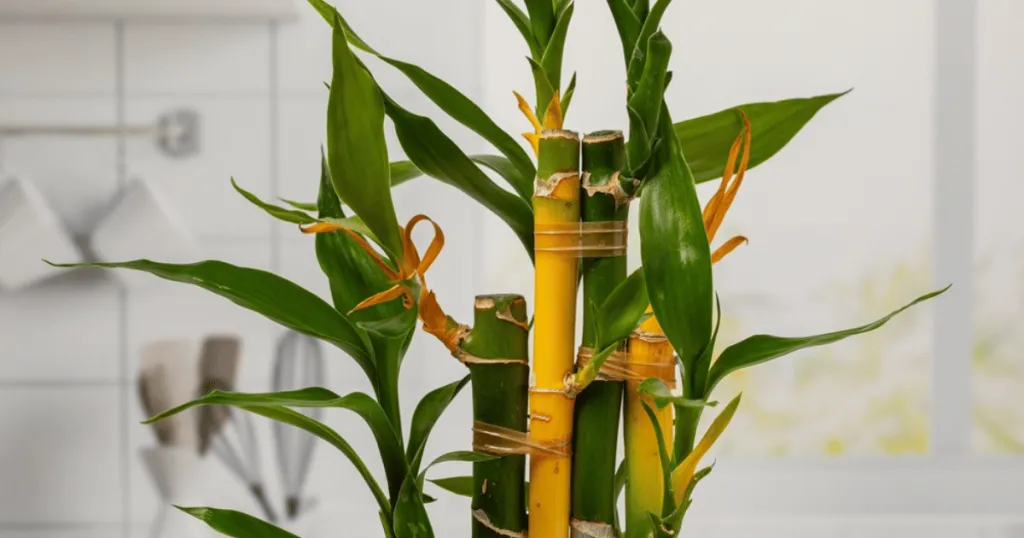
Light and Placement for Office Environments
Lucky bamboo is a master of adaptation, but it has distinct preferences when it comes to light. In its native habitat, it grows in the shaded understory of forests, which makes it well-suited for the lower light conditions of an office. You do not need to place this plant on a sunny windowsill; in fact, direct sunlight is one of the fastest ways to damage the leaves.
If your desk is located in an interior office or a cubicle with no windows, your lucky bamboo will likely survive under standard fluorescent or LED overhead lighting. These artificial light sources provide enough energy for the plant to maintain its color, though growth will be significantly slower than it would be in a bright, naturally lit room. The goal is to provide consistent, indirect light rather than intense, focused beams.
When placing your plant, look for a spot that receives bright, filtered light. A north-facing window or a desk located a few feet away from a window is ideal. If you notice the leaves beginning to stretch or turn a pale, light green, the plant is likely not receiving enough light and is reaching for a source. Conversely, if you see brown, scorched patches on the leaves, the plant is receiving too much direct sun and should be moved further into the office interior.
Avoid placing your lucky bamboo directly in the path of HVAC vents. While the plant is generally tolerant of indoor temperatures, constant blasts of dry, cold air can cause rapid dehydration and stress the plant. A stable, draft-free location is always better than a high-traffic area where the plant might be knocked over or subjected to fluctuating temperatures.
Watering and Soil Guidance
Watering is the most technical aspect of lucky bamboo care. Whether you are growing your plant in a vase of water or in a potting medium, the quality of the water is critical. Most office tap water contains chlorine, fluoride, and other minerals that can build up in the plant tissue, leading to brown leaf tips and eventual decline. If possible, use filtered, distilled, or bottled spring water to ensure the plant stays healthy.
If you are growing your plant in water, ensure the roots are always fully submerged. You should replace the water entirely every two to four weeks to prevent algae growth and ensure the plant has access to fresh oxygen. When you change the water, rinse the roots gently and clean the container with a mild soap to remove any slimy buildup. If the water becomes cloudy or develops an odor before your scheduled change, replace it immediately.
For plants grown in soil, the goal is to keep the medium consistently moist but never waterlogged. Use a well-draining potting mix that allows excess water to escape. A common mistake is allowing the soil to dry out completely, which causes the stalks to shrivel. Check the top inch of soil with your finger; if it feels dry, it is time to water. Always ensure your container has a drainage hole if you are using soil, as standing water at the bottom of a pot will quickly lead to root rot.
Humidity, Temperature, and Feeding
Lucky bamboo thrives in the average humidity levels found in most modern office buildings. While it is a tropical plant, it does not require the high humidity of a greenhouse. If your office is exceptionally dry due to heating systems, you may notice the leaf tips turning brown. In this case, a simple misting of the leaves once or twice a week can provide a temporary boost, though it is not strictly necessary for the plant to survive.
Temperature stability is more important than humidity. Keep your plant in an environment that stays between 65 and 90 degrees Fahrenheit. Avoid placing it near radiators, heaters, or exterior doors that let in cold drafts during the winter. Sudden temperature swings can cause the plant to drop leaves or stop growing entirely.
Feeding is rarely necessary for lucky bamboo, especially if it is grown in water. If you do choose to fertilize, use a very weak, water-soluble fertilizer specifically formulated for lucky bamboo or a general-purpose houseplant fertilizer diluted to one-tenth of the recommended strength. Over-fertilizing is a common error that leads to salt buildup and leaf burn. A small amount of food once every few months during the active growing season is more than enough.
Repotting, Pruning, and Propagation
Lucky bamboo grows slowly, so you will not need to repot it frequently. If your plant has outgrown its container or the roots have become so dense that they are pushing the plant out of the water, it is time to move it to a larger vessel. When repotting, be careful not to damage the delicate root system. If you are moving from water to soil, do so gradually by adding small amounts of soil to the water over several weeks to help the plant acclimate to the change in medium.
Pruning is an essential part of maintaining the shape of your lucky bamboo. If a stalk becomes too tall or leggy, you can trim it back with clean, sharp shears. Always cut just above a node, which is the slightly raised ring on the stalk. New growth will eventually emerge from this point. If you have yellow leaves, prune them off immediately to redirect the plant’s energy toward healthy growth.
Propagation is straightforward and can be done by taking a cutting from a healthy stalk. Use a sharp, sterilized blade to cut a section that includes at least one node. Place the cutting in a container of distilled water and keep it in bright, indirect light. Within a few weeks, you should see new roots forming. Once the roots are an inch or two long, you can move the cutting to its own permanent vase or pot.
Seasonal Notes and Common Mistakes
While offices are climate-controlled, seasonal changes can still impact your plant. During the winter, the air is often much drier due to central heating, and the light levels may decrease as the days shorten. You may need to water slightly less frequently during these months because the plant’s metabolism slows down, but keep an eye on the water level in your vase to ensure the roots never dry out.
The most frequent error is the use of unfiltered tap water. If you see brown tips on the leaves, this is almost always a sign of chemical sensitivity. Another common issue is the presence of algae in water-grown plants. Algae competes with the plant for nutrients and oxygen, so keep your container clean and out of direct sunlight to inhibit its growth. If you notice a stalk turning yellow or becoming mushy, remove it from the container immediately, as it is likely rotting and will contaminate the water for the healthy stalks.
Advanced Troubleshooting for Office Managers
Managing multiple plants in a workspace requires a systematic approach. If you are responsible for several lucky bamboo arrangements, create a maintenance schedule. Assign a specific day for water changes to ensure no plant is neglected. If you notice a plant struggling, isolate it from others to prevent the spread of potential pests or fungal issues. Remember that Dracaena sanderiana is resilient, but it does not recover quickly from severe dehydration or root rot. By observing the foliage health, you can often catch issues before they become terminal.
Consider the growth cycle of your plants. During spring and summer, you may notice more rapid leaf production. This is the time to ensure the plant has adequate light and perhaps a very light dose of fertilizer. During the darker winter months, focus on keeping the plant clean and free of dust, which can accumulate on leaves and inhibit photosynthesis. A clean leaf is a more efficient leaf, especially in lower light conditions.
Finally, address the “lucky” aspect of the plant in a professional context. While often associated with feng shui, in an office, the plant serves as a focal point for biophilic design. Keeping the plant in a clean, clear vessel with polished stones or decorative pebbles can enhance the aesthetic appeal without compromising the plant’s health. Ensure that any decorative additions are rinsed thoroughly before being placed in the water to avoid introducing unwanted contaminants.
Strategic Placement and Biophilic Benefits
Integrating lucky bamboo into an office layout offers more than just visual appeal; it contributes to a sense of workspace wellness. When choosing locations, consider the “line of sight” principle. Placing these plants in reception areas or near meeting room entrances can soften the clinical feel of modern office architecture. Because they are narrow and vertical, they are ideal for small desks where space is at a premium.
However, be mindful of the “weekend effect.” In offices that shut down completely from Friday evening to Monday morning, the microclimate around your plant may shift. If your office turns off the HVAC system, temperatures may spike or drop significantly. Lucky bamboo is hardy, but it prefers consistency. If you notice your plant struggling after long weekends, check if it is positioned near an exterior wall that experiences extreme temperature shifts when the building’s climate control is inactive. Adjusting the plant’s position by just a few feet can often mitigate these environmental stressors.
Furthermore, consider the psychological impact of plant maintenance. For office managers, the act of caring for a plant can be a grounding exercise. However, if you are managing a large number of plants, avoid “over-tending.” Lucky bamboo does not need daily attention. Over-watering or excessive pruning can be just as detrimental as neglect. Establish a rhythm that aligns with your office workflow – perhaps a quick check during your Monday morning coffee or a Friday afternoon water-change routine. This prevents the plant from becoming an additional source of stress rather than a calming office companion.
Lastly, keep in mind that lucky bamboo is a slow-growing species. Do not be discouraged if your plant does not show visible growth for weeks at a time. In the low-light, climate-controlled environment of an office, growth is measured in seasons, not days. Focus on the health of the foliage and the firmness of the stalks as your primary indicators of success. If the leaves are vibrant green and the stalks are firm, your plant is thriving, even if it is not actively adding new height.
Related Lucky Bamboo Guides
- what the Lucky Bamboo is like as an office plant
- troubleshooting a Lucky Bamboo