The Chinese evergreen (Aglaonema) is widely considered one of the most resilient plants for office environments, particularly for those looking to add greenery to cubicles or meeting rooms with limited natural light. Its ability to adapt to artificial lighting and fluctuating indoor conditions makes it a staple for workplace plant collections. By focusing on consistent watering and avoiding extreme temperature shifts, you can maintain a lush, healthy plant that survives the typical office work week with minimal intervention.
What You Need to Know
- Thrives in medium indirect light but tolerates low office light.
- Allow the top inch of soil to dry between waterings.
- Prefers average to above-average indoor humidity levels.
- Toxic to cats and dogs if ingested or chewed.
Success with this species relies on understanding its preference for stability. While it is forgiving of neglect, the plant does not respond well to erratic care routines or constant relocation. By prioritizing a consistent spot and a predictable watering schedule, you provide the foundation for long-term growth in an indoor setting.
Light Requirements and Ideal Office Placement
Chinese evergreen (Aglaonema) care starts with finding the right light. In its native tropical environment, this plant grows on the forest floor, meaning it is naturally adapted to filtered, low-intensity light. In an office, this translates to a preference for medium indirect light. While it is famous for tolerating low-light conditions, such as those found in windowless offices or areas lit primarily by fluorescent or LED fixtures, growth will be significantly slower in these darker spots.
If your office has windows, place your Aglaonema several feet away from direct sunlight. Harsh afternoon sun can scorch the leaves, leading to unsightly brown patches or bleached foliage. If you are working in an interior office with only overhead lighting, the plant will survive, but you may notice it becomes leggy as it reaches for the light source. To prevent this, rotate the pot every few weeks to ensure even growth on all sides.
For those managing reception areas or open-plan offices, consider the quality of the light. If the space is bright enough to read a document comfortably without a desk lamp, it is likely sufficient for an Aglaonema. If the area is consistently dim, the plant will remain healthy but will not produce new leaves as rapidly. Avoid placing the plant directly under strong, hot spotlights or near heat-emitting fixtures, as this can dry out the foliage prematurely.
When evaluating placement, consider the “light footprint” of your office. Aglaonemas with variegated leaves – those featuring white, silver, or pink patterns – generally require slightly more light than their solid dark green counterparts. In a dim cubicle, a solid green variety will maintain its color better than a highly variegated one, which might revert to green to maximize chlorophyll production in low-light conditions.
Watering and Soil Management
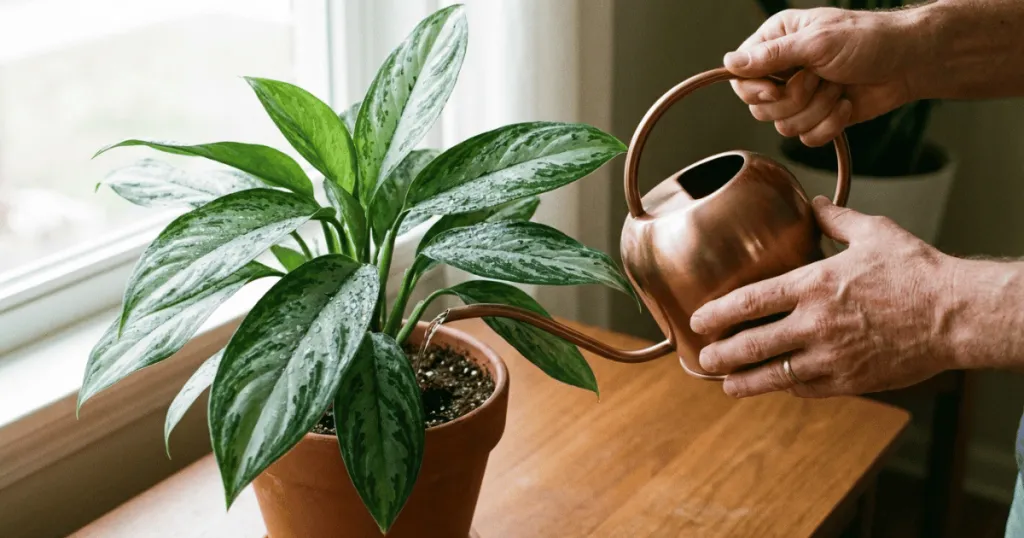
Watering is the most critical aspect of Chinese evergreen (Aglaonema) care. The primary goal is to keep the soil lightly moist but never waterlogged. A good rule of thumb is to allow the top inch of soil to dry out completely before adding more water. In an office setting, where HVAC systems often keep the air dry, the soil may dry out faster than you expect. Checking the moisture level with your finger is more accurate than following a strict calendar schedule.
When you water, ensure the excess drains away from the pot. Never allow the plant to sit in a saucer filled with standing water, as this leads to root rot, a common killer of indoor plants. If your office pots do not have drainage holes, use a plastic nursery liner inside your decorative pot so you can remove the plant for watering and ensure it is fully drained before returning it to its display spot.
The type of soil used also plays a role in water retention. A high-quality, peat-based potting mix that includes perlite or bark is ideal. This combination provides the necessary aeration for the roots while holding enough moisture to sustain the plant through a weekend. If the soil feels compacted or hard, it may be time for a refresh, as dense soil prevents oxygen from reaching the roots and can lead to yellowing leaves.
In practice, office workers often fall into the trap of “sip watering” – giving the plant a small splash of water daily. This is detrimental. It is far better to give the plant a thorough soaking until water runs out of the drainage holes, then wait until the top inch of soil is dry. This deep watering encourages deeper root growth and ensures that the entire root ball receives hydration, rather than just the surface layer.
Humidity, Temperature, and Feeding
While Aglaonema is remarkably hardy, it does have a preference for humidity levels that are often higher than what is found in a climate-controlled office. Office HVAC systems are designed to remove moisture, which can cause the leaf tips to turn brown or crispy. If you notice this, you can improve the environment by grouping plants together to create a microclimate or by placing the pot on a tray filled with pebbles and a small amount of water, ensuring the bottom of the pot does not touch the water itself.
Temperature stability is equally important. Keep your plant away from direct drafts, such as those from air conditioning vents or heating registers. The ideal temperature range is between 65 and 80 degrees Fahrenheit. If your office drops significantly below this at night or over the weekend, the plant may show signs of stress, such as drooping or leaf drop. Consistent temperatures are far more important than hitting a specific degree mark.
Regarding fertilization, the Chinese evergreen is not a heavy feeder. During the active growing season, which is typically spring and summer, a balanced liquid fertilizer diluted to half strength once every two months is sufficient. In the winter, when growth naturally slows, you can stop fertilizing entirely. Over-fertilizing in an office environment often leads to salt buildup in the soil, which can burn the roots and cause brown spots on the leaves.
When selecting a fertilizer, opt for a water-soluble formula designed for foliage plants. Because office plants are often in smaller containers, the nutrients in the potting mix are depleted faster than in outdoor gardens. However, because Aglaonemas are slow growers, they do not need the aggressive feeding schedules required by fast-growing tropicals. Always err on the side of under-fertilizing; a slightly hungry plant is much easier to manage than one suffering from chemical burn due to excess salts in the growing medium.
Repotting, Pruning, and Propagation
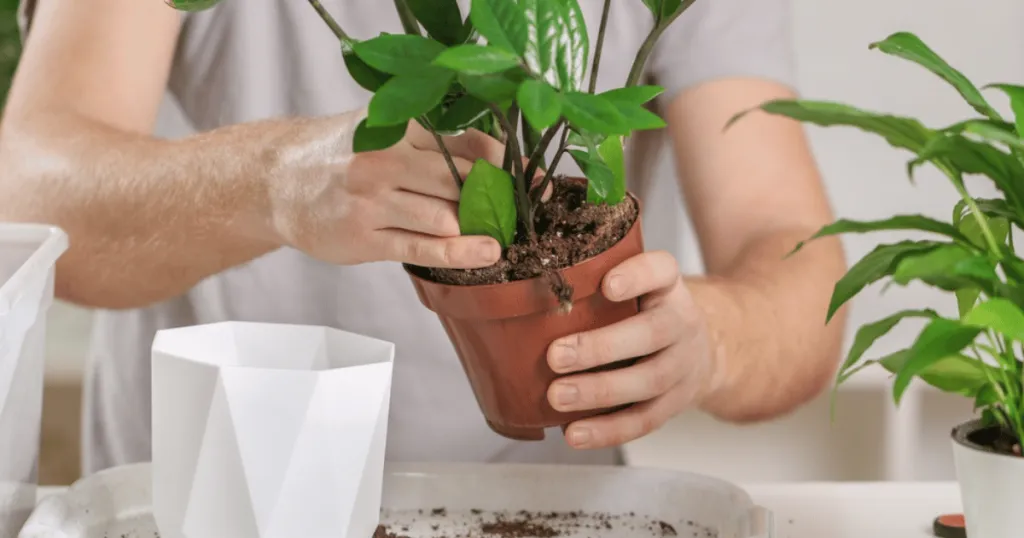
Repotting is rarely needed for these slow-growing plants. You should only consider moving your Aglaonema to a larger pot if the roots have completely filled the current container or if the plant has become so top-heavy that it is prone to tipping over. When you do repot, choose a container that is only one or two inches wider than the current one. Using a pot that is too large can lead to excess soil that stays wet for too long, increasing the risk of root rot.
Pruning is mostly aesthetic. If you notice yellow or damaged leaves, you can trim them off at the base of the stem using clean, sharp scissors. This keeps the plant looking tidy and allows it to focus its energy on healthy growth. If the plant becomes too leggy or sparse, you can prune the stems back to encourage fuller growth from the base, though this should be done sparingly during the growing season.
Propagation is a straightforward way to create new plants for other areas of the office. You can propagate Aglaonema through stem cuttings. Simply cut a healthy stem that includes at least one or two nodes, place it in a jar of water, and wait for roots to develop. Once the roots are an inch or two long, you can transplant the cutting into a small pot with fresh soil. This is a practical way to expand your office greenery without purchasing new plants.
When pruning, always use sterilized tools. In an office setting, it is easy to grab a pair of scissors from a communal drawer, but these can harbor bacteria or fungi that may infect the plant’s open wounds. A quick wipe with rubbing alcohol before and after pruning is a best practice for maintaining plant health. If you are propagating, ensure the water in your propagation jar is changed weekly to keep it oxygenated, which prevents the stem from rotting before it can produce roots.
Seasonal Adjustments and Common Mistakes
In an office, the seasons are often defined more by building maintenance than by the weather outside. During the winter, when heating systems run constantly, the air becomes exceptionally dry. You may need to monitor your watering frequency more closely during these months, as the plant may dry out faster despite the cooler temperatures. Conversely, during summer, if the office air conditioning is set very low, be mindful of cold drafts that can shock the plant.
The most common mistake in Chinese evergreen (Aglaonema) care is overwatering. Many office workers fall into the trap of watering on a set day, regardless of whether the plant actually needs it. If you are unsure, wait an extra day or two. It is much easier to revive a slightly dry plant than one that has suffered root rot from excessive moisture. Another frequent issue is the accumulation of dust on the leaves. Because office air can be dusty, wipe the leaves down with a damp cloth every few weeks. This not only improves the appearance of the plant but also allows it to photosynthesize more efficiently.
Regarding safety, it is important to note that the Chinese evergreen is toxic to pets. According to guidance from the ASPCA on toxic and non-toxic plants, the plant contains calcium oxalate crystals. If a cat or dog chews or ingests the leaves, it can cause irritation to the mouth, tongue, and throat. In an office environment where pets may occasionally visit or reside, keep the plant in a location that is inaccessible to animals.
Another common, yet often overlooked, issue is the “office weekend effect.” Many office plants suffer because they are neglected for 48 to 72 hours in an environment that changes drastically when the building’s HVAC system powers down. If your office building turns off the heat or air conditioning on weekends, the temperature might fluctuate significantly. While the Aglaonema is tough, it prefers a stable environment. If you notice your plant struggling after weekends, consider moving it away from windows or vents where these temperature swings are most pronounced.
Workplace Wellness and Plant Longevity
Integrating plants like the Chinese evergreen into your workspace is more than just a decorative choice; it contributes to overall workplace wellness. By maintaining your plant, you create a more calming, professional atmosphere. Long-term success with your Aglaonema depends on observing the plant’s subtle cues. A slight droop in the leaves often indicates that the plant is thirsty, while yellowing lower leaves can be a sign of natural aging or, if occurring in large numbers, a warning of overwatering.
To ensure longevity, avoid the temptation to constantly move the plant. While it might be tempting to rotate it between different meeting rooms, the plant needs time to acclimate to its specific light and humidity levels. Once you find a spot where the plant shows signs of new growth, keep it there. Consistency is the hallmark of professional-grade plant care, and the Chinese evergreen will reward your patience with years of lush, vibrant foliage.
Related Chinese Evergreen Guides
- what the Chinese Evergreen is like as an office plant
- Chinese Evergreen symptoms and fixes
FAQ
Why are the leaves on my Chinese evergreen turning yellow?
Yellowing leaves are most often a sign of overwatering or poor drainage. If the soil remains soggy, the roots cannot breathe, leading to yellowing and potential rot. Check the soil moisture; if it is wet, allow it to dry out significantly before watering again. Less common causes include low light or extreme temperature fluctuations, so ensure your plant is in a stable spot.
Can I keep my Chinese evergreen in a windowless office?
Yes, Chinese evergreen (Aglaonema) care is well-suited for windowless offices because the plant is highly tolerant of artificial light. While it will not grow as quickly as it would in a bright, naturally lit room, it will remain healthy under standard fluorescent or LED office lighting. If the area is extremely dim, you may notice the plant becoming leggy, but it will survive.
How often should I clean the leaves of my plant?
In an office environment, dust can accumulate on broad leaves, blocking light and reducing the plant’s ability to photosynthesize. Wiping the leaves with a damp cloth every two to four weeks is a good practice. This keeps the plant looking professional and ensures it remains healthy despite the indoor air quality.
Is the Chinese evergreen truly safe for all office environments?
While the plant is safe for humans, it is toxic to cats and dogs. According to ASPCA guidance, the plant contains calcium oxalate crystals that cause irritation if ingested. If your office is pet-friendly, ensure the plant is placed on a high desk or shelf where pets cannot reach the foliage.