Peace lily care centers primarily on two non-negotiable elements: balancing soil moisture without drowning the roots, and providing bright indirect light so the plant can photosynthesize efficiently without burning its leaves. Understanding how these tropical rainforest natives respond to indoor environments prevents common workplace maintenance failures.
When you place a Spathiphyllum in a workspace, you gain a plant that communicates its needs more clearly than almost any other indoor foliage. The secret to successful peace lily care lies in reading those signals rather than sticking to a rigid calendar. This plant thrives when it receives medium indirect light and a steady supply of moisture, yet it forgives occasional neglect by dramatic wilting that reverses within hours of a thorough soak. Office environments introduce unique challenges, from dry HVAC air to fluorescent lighting, but understanding the natural growth habits of these resilient tropical perennials makes keeping them vibrant entirely manageable for any desk setup or reception area.
To master indoor office plants successfully, office managers and desk workers must balance moisture retention against root suffocation while adapting to the unique microclimates found inside commercial buildings. Because these specimens evolved under the dense canopy of tropical rainforests, they rely on ambient humidity and indirect illumination to fuel foliage expansion without burning their delicate green leaves.
Decision Snapshot
- Light: Tolerates low light; grows best in medium indirect light.
- Watering: Keep soil evenly moist; droops noticeably when thirsty.
- Humidity: Prefers above-average humidity over dry office air.
- Difficulty: Easy to moderate for indoor environments.
- Toxicity: Toxic to cats and dogs if chewed or ingested.
Light and Placement Strategies for Office Interiors
Light is the engine that drives growth, but finding the right spot in a commercial building requires weighing window orientation against interior architectural limits. While these plants tolerate dim office corners or windowless interior rooms illuminated solely by overhead fluorescent fixtures, prolonged darkness suppresses flowering and slows new leaf production to a crawl. On the other end of the spectrum, direct afternoon sun streaming through glass can scorch delicate green leaves, leaving unsightly brown patches that never heal.
When evaluating office layouts, consider how light intensity shifts throughout the day. Glass partitions, heavy window tinting, and deep floor plates drastically reduce available foot-candles. A desk positioned ten feet away from a south-facing window might still provide less usable energy than an east-facing reception desk catching direct morning rays. Assessing these spatial dynamics helps prevent positioning errors that lead to stalled growth or scorched foliage.
Ideal Window Proximity
Positioning your plant near an east-facing window delivers the ideal balance of gentle morning illumination without harsh heat buildup. North-facing windows also provide safe, consistent indirect light, though intensity drops during winter months. If your desk sits deep within an open-plan office far from any glass, rely on balanced spectrum LED desk lamps or overhead architectural lighting to keep the foliage dark green and healthy. When natural light is sparse, rotate the container every few weeks so all sides receive balanced exposure.
Adapting to Artificial Lighting
Office workers frequently ask whether fluorescent or LED ceiling fixtures provide enough energy for sustained growth. While peace lilies survive under commercial artificial lighting, they rarely bloom consistently without some natural daylight supplement. If your office lacks windows entirely, expect robust foliage expansion but minimal white spathes. To maximize visual appeal in windowless boardrooms, choose well-lit corners where commercial bulbs burn for at least ten hours a day.
Understanding how low light houseplants adapt to corporate settings helps prevent premature leaf drop. When moving a Spathiphyllum from a high-light greenhouse to a dim hallway, expect a brief adjustment phase where older leaves yellow as the plant reallocates energy. Providing supplemental desk lighting during this transition cushions the biological shock and preserves overall plant vigor.
Watering Mechanics and Soil Management
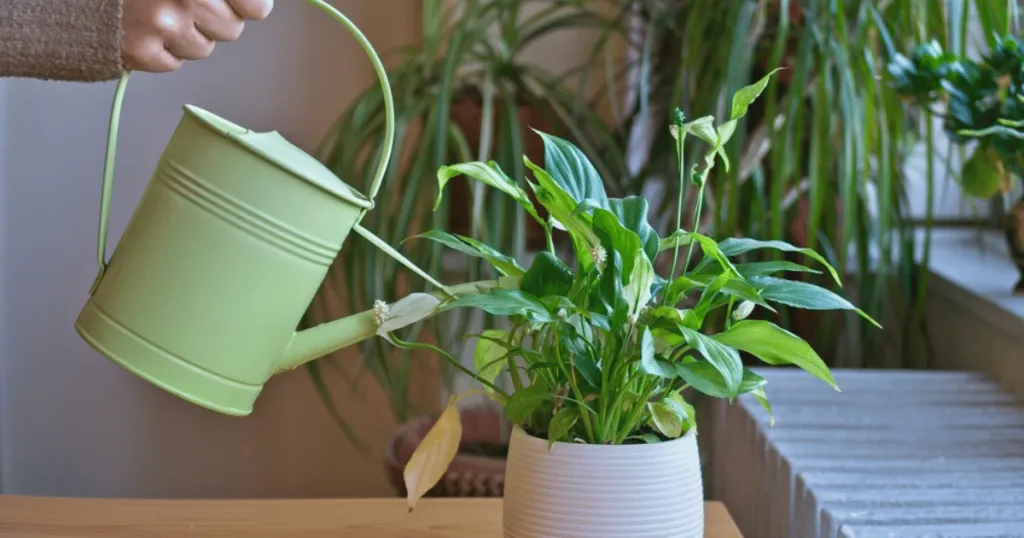
Watering frequency is the single most critical factor in indoor plant health. In a typical climate-controlled office, air conditioning and heating evaporate moisture rapidly from standard potting mixes. The foundational rule for peace lily care is maintaining evenly moist soil without creating soggy, waterlogged conditions that invite root rot. Fortunately, this species removes the guesswork by staging a dramatic theatrical droop whenever moisture reserves run low.
Executing watering protocols in an office setting requires establishing clear operational workflows. When multiple employees share a workspace, well-meaning individuals often water the same container repeatedly, assuming someone else missed a turn. This lack of coordination quickly creates waterlogged conditions. Designating a single team member to inspect soil moisture prevents accidental over-saturation and protects the root system from decay.
Reading the Droop Cue
When the soil dries past a safe threshold, every leaf and stem slump downward simultaneously, making the plant look lifeless. This visual signal is actually a protective mechanism to reduce surface area exposed to dry air. In most cases, a thorough watering revives the entire plant within two to four hours, restoring turgor pressure completely. While this dramatic recovery makes the species forgiving, allowing severe wilting on a weekly basis stresses the vascular system and eventually causes lower leaves to yellow and drop.
Soil Composition and Drainage Requirements
Heavy garden soil retains too much water and suffocates root systems. Commercial potting soil amended with perlite, peat moss, and coarse orchid bark creates the ideal porous structure needed for healthy root respiration. Ensure your office container features at least one functional drainage hole at the base. Standing water trapped in a decorative cachepot will rot roots rapidly, even if the topsoil feels dry to the touch.
When executing watering peace lily routines in shared workspaces, assign responsibility to a single designated caretaker to avoid the common pitfall of multiple well-meaning colleagues adding water on the same day. Checking the soil moisture manually by pressing a finger two inches deep into the potting mix prevents accidental over-saturation.
Humidity, Temperature, and Feeding Protocols
Office environments are notorious for low relative humidity due to continuous heating and cooling cycles. Because these tropical plants originate from rainforest floors, dry air frequently causes brown, crispy leaf tips. While occasional misting provides temporary relief, grouping plants together or placing containers on wet pebble trays offers more sustained moisture improvement around the foliage.
Maintaining a healthy microclimate around office foliage also involves managing spatial airflow. Direct blasts from overhead HVAC supply vents strip moisture from green tissue faster than roots can absorb it, causing accelerated leaf edge browning. Locating containers away from direct vent paths ensures steady humidity retention and minimizes physical stress on delicate leaf margins.
Temperature Stability
Keep your workspace temperatures between 65 and 80 degrees Fahrenheit for optimal performance. Avoid placing containers directly beneath active air conditioning vents or beside drafty exterior doors during winter. Sudden temperature fluctuations shock the foliage and stunt expansion, whereas stable indoor office climates keep growth steady year-round.
Nutrient Requirements
Fertilizing requirements are modest compared to heavy-feeding outdoor ornamentals. Apply a balanced, water-soluble houseplant fertilizer diluted to half strength once every six weeks during spring and summer. Withhold feeding entirely during autumn and winter when natural light levels drop and growth naturally slows down. Over-fertilizing builds up mineral salts in the potting mix, which quickly burns root tips and causes marginal leaf browning.
Repotting, Pruning, and Propagation Techniques
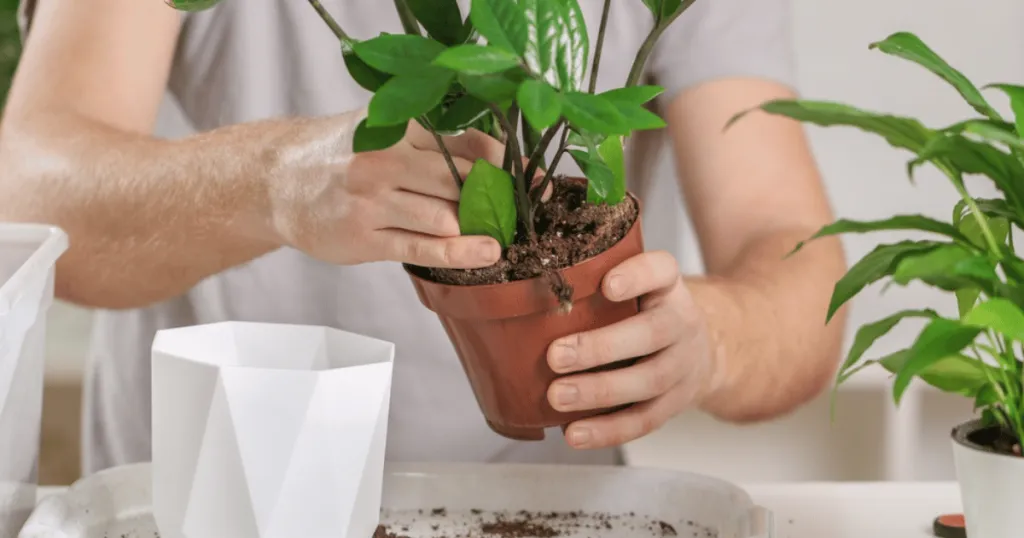
Healthy plants eventually outgrow their containers, signaling the need for a larger home. Rootbound specimens dry out within a single day and push roots through bottom drainage holes. Spring is the ideal time for repotting, moving up just one container size to avoid overwhelming the root system with excess damp soil.
When selecting a new vessel for a mature specimen, prioritize structural stability. Large, top-heavy plants in lightweight plastic pots can easily tip over in busy office corridors. Choosing a heavier ceramic or terracotta container anchors the plant securely while enhancing workplace aesthetics in professional boardrooms or client-facing reception areas.
Pruning Spent Growth
Routine maintenance involves removing spent blooms and yellowed foliage. Use clean, sharp pruning shears to snip flower stalks down near the base of the plant once the white spathes turn green and wither. Trimming away old, damaged leaves directs plant energy toward fresh green shoots rather than sustaining dying tissue.
Division and Propagation
Propagation is accomplished through rhizome division rather than stem cuttings. When repotting an overgrown specimen, gently tease the root ball apart into smaller sections, ensuring each division retains several healthy stems and an active root system. Plant each new section in fresh potting mix and water thoroughly to establish strong root contact.
Applying proper spathiphyllum care principles during division ensures that office managers can expand their interior green footprint without purchasing new specimens. Splitting large, mature plants into smaller desk-sized containers is a cost-effective way to populate multiple private offices or conference rooms with matching greenery.
Seasonal Adjustments and Common Care Mistakes
Indoor environments experience subtle seasonal shifts despite central heating and cooling. Winter demands reduced watering frequency because soil dries much slower when days shorten and ambient temperatures dip slightly near exterior walls. Conversely, summer heatwaves accelerate evaporation, requiring closer monitoring of moisture levels.
During winter months in corporate buildings, heating systems often run continuously, driving indoor humidity to desert-like lows. Monitoring soil moisture closely during this period prevents under-watering errors, while keeping plants away from perimeter glass prevents cold night drafts from chilling the root zone.
Avoiding Overwatering and Crown Rot
The most frequent mistake made by office workers is watering on a rigid calendar schedule rather than checking soil moisture. Saturating damp soil repeatedly suffocates roots, leading to mushy stems and yellow leaves. Always test the top two inches of soil with your finger before applying water, and never let the pot sit in a saucer of stagnant drainage water.
Managing Tap Water Sensitivity
Municipal tap water often contains fluoride, chlorine, and high mineral salts that accumulate in potting mixes over time, resulting in burnt leaf tips. If you notice persistent tip browning despite proper soil moisture, let tap water sit uncovered overnight before using it, or switch to filtered water for your office plants.
Related Peace Lily Guides
- what the Peace Lily is like as an office plant
- Peace Lily symptoms and fixes
FAQ
Why are the leaves on my office peace lily turning yellow?
Yellowing leaves typically point to overwatering, poor drainage, or natural aging of lower foliage. If the soil remains constantly wet and heavy, roots suffocate and turn yellow. Allow the soil surface to dry between waterings and ensure excess liquid drains freely from the container base.
Is peace lily care safe around office pets and therapy animals?
According to veterinary poison-control resources and ASPCA guidance on toxic plants, this species is toxic to cats and dogs. The foliage and stems contain calcium oxalate crystals that cause intense oral irritation, drooling, and difficulty swallowing if chewed or ingested. Keep containers out of reach in pet-friendly offices.
Why is my plant refusing to produce white flowers?
Inconsistent flowering is usually caused by insufficient light intensity. While these plants survive in dim office corners, they need bright indirect light to produce new spathes. Moving the container closer to a natural light source or supplementing with full-spectrum desk lighting usually encourages new blooms.
Should I cut off brown leaf tips?
You can trim away brown tips for aesthetic reasons using clean scissors, cutting along the natural contour of the leaf. However, brown tips usually indicate low humidity or mineral buildup from tap water, so addressing the underlying watering or air moisture issue prevents the problem from returning.