When an office plant begins to fade or display sudden distress, the first instinct is often to reach for the watering can or move the pot to a brighter corner. However, peace lily problems rarely stem from a single, obvious mistake. These resilient tropical specimens communicate their environmental stress through visible leaf changes, yet many workplace managers misinterpret a drooping stem or yellowing frond as a sign of underwatering. Before making drastic changes to your office plant care routine, it helps to rule out the most common misdiagnosis in workplace horticulture: assuming every wilt means the soil is bone dry.
Understanding the delicate equilibrium required to maintain lush greenery in modern commercial buildings goes beyond simple instinct. Office workers and facility managers often place pots near high-traffic walkways, underneath artificial lighting grids, or adjacent to climate control machinery that drastically alters local humidity. By looking past surface-level symptoms and analyzing the underlying physical responses of your spathiphyllum, you can resolve minor ailments before they compromise the plant’s overall vitality in your workspace.
What This Means
Your peace lily is reacting to environmental stress rather than a single acute failure. Check soil moisture and light levels before altering your watering schedule to avoid root rot.
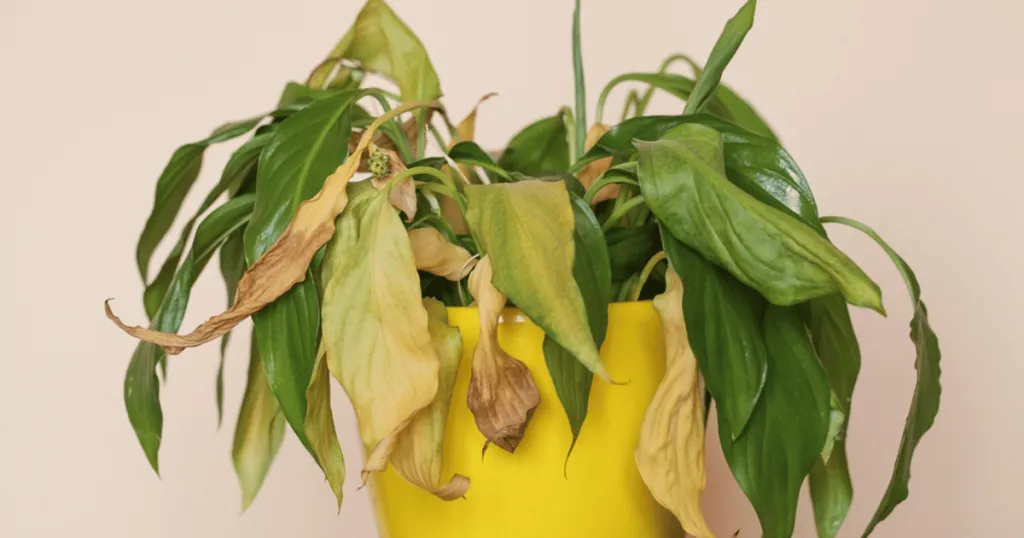
Quick Checks and Fast Diagnostics for Workplace Spathiphyllum
Office environments present unique microclimates that differ vastly from greenhouses or domestic living rooms. Fluorescent lighting, steady HVAC air circulation, and weekend temperature setbacks all influence how your spathiphyllum processes moisture and light. When diagnosing peace lily problems, starting with a rapid physical assessment prevents you from applying an aggressive fix that worsens the underlying stress.
To conduct an effective physical audit, examine the foliage, stems, and container structure systematically. Many corporate spaces utilize decorative outer cachepots that lack internal drainage, trapping irrigation water at the base of the root zone. Checking these hidden moisture traps is just as important as evaluating the visual condition of the top canopy.
The Finger Test Versus Electronic Meters
Relying on surface observations is the primary reason office plants decline. The top inch of potting mix often dries out quickly under active heating or cooling vents while the root ball below remains saturated. Press your index finger two inches deep into the soil mix. If the soil feels cool and damp at your fingertip, hold off on watering even if the surface crust looks pale and dusty.
For large floor-standing containers in executive boardrooms or open-plan bullpens, manual finger testing may not reach deep enough. In these instances, utilizing a wooden moisture probe or a reliable digital meter provides a clearer assessment of moisture distribution throughout the entire depth of the container.
Evaluating Light Quality Near Desks and Windows
While these plants tolerate low light effectively, total darkness in interior windowless conference rooms or harsh, direct sun right against a south-facing glass pane causes rapid leaf scorch or severe chlorosis. Look closely at where the pot sits relative to your light sources. Medium indirect light remains the gold standard for maintaining rich, dark green foliage.
When natural light is entirely absent, standard fluorescent or LED office fixtures can sustain the plant, but positioning matters. Placing a desk plant directly underneath a recessed troffer light provides adequate foot-candles for survival, whereas tucked-away corners require auxiliary desktop illumination to prevent long-term decline.
Symptom to Cause Diagnosis Table
| Visual Symptom | Primary Likely Cause | Secondary Contributing Factor | First Recommended Action |
|---|---|---|---|
| Sudden limp drooping | Severe thirst or root shock | High ambient heat from desk vents | Check soil moisture; water thoroughly if dry |
| Yellow lower leaves | Overwatering or poor drainage | Heavy soil holding excess moisture | Let soil dry down further between waterings |
| Brown, crispy leaf tips | Low humidity or tap water minerals | HVAC airflow drying out delicate foliage | Switch to filtered water; boost humidity |
| Stalled growth and pale color | Insufficient light or nutrient depletion | Pot-bound root system | Move closer to a window or mild LED source |
| Black patches on stems | Root rot from persistent saturation | Dense, non-porous potting medium | Inspect root ball; trim decayed black roots |
Most Common Issue Fixes in Office Environments
Addressing peace lily problems successfully requires moving through low-risk interventions before undertaking disruptive steps like repotting or root pruning. Most workspace plant challenges trace back to water management, tap water chemistry, or humidity mismatches caused by commercial building systems.
Implementing targeted corrections helps stabilize the plant without shocking its biological systems. Because office spaces undergo predictable weekly cycles – such as reduced heating or cooling over weekends – managing watering volume and environmental placement requires a deliberate, structured approach.
Correcting Watering Habits and Moisture Stress
These plants are famous for dramatic theatrical fainting spells when thirsty, but treating every droop as a signal to soak the container invites chronic overwatering. When the soil stays soggy for days, roots suffocate and lose the ability to take up oxygen and nutrients. Let the top third of the soil dry out slightly before adding room-temperature water until it drains freely from the bottom holes. Never let the nursery pot sit in a pool of standing water inside a decorative cachepot.
In practice, office managers should establish a routine checking schedule rather than adhering to rigid calendar intervals. Seasonal shifts in indoor relative humidity directly impact how quickly the potting mix dries out, making dynamic observation far superior to automated watering routines.
Mitigating Brown Tips Caused by Tap Water and Dry Air
Crispy brown leaf tips are an aesthetic frustration for office managers trying to maintain a professional workspace. Municipal tap water often contains high levels of fluoride, chlorine, and dissolved salts that accumulate in porous potting mixes over time, burning the sensitive leaf margins. If you notice persistent tip burn despite consistent watering, switch to filtered or distilled water. Additionally, commercial HVAC systems strip moisture from indoor air, leaving humidity levels well below the preferred threshold for tropical foliage. Grouping plants together or placing them on a pebble tray filled with water helps elevate local humidity without risking electrical safety hazards at desks.
When utilizing pebble trays in office settings, ensure the water level remains strictly beneath the bottom surface of the inner pot. Allowing the pot base to sit directly in standing water defeats the purpose of the tray and reintroduces the risk of root saturation.
Reviving Severely Drooping Stems
When a peace lily collapses completely flat against the rim of its pot, panic often sets in. In most cases, this dramatic wilt is a natural protective mechanism. If the soil is completely dry, a thorough soaking will cause the stems to rebound upright within twelve to twenty-four hours. If the soil is soaking wet and the stems remain limp, however, you are dealing with advanced root rot, which demands immediate intervention.
Office workers often make the mistake of adding small, frequent sips of water to a collapsed plant. This practice only moistens the very top layer of soil while leaving the core root zone completely dry. A thorough, deep-watering session – followed by complete drainage – is essential to reverse true moisture stress.
Advanced Troubleshooting and Root Rot Interventions
When basic adjustments fail to halt plant decline, you must examine the root system directly. Root rot represents the most dangerous category of peace lily problems, driven by anaerobic soil conditions where beneficial microbes starve and destructive fungi take over.
Navigating this stage requires careful execution. Left untreated, fungal pathogens will migrate throughout the entire vascular system, causing irreversible plant collapse.
Inspecting and Pruning Damaged Roots
Gently slide the plant out of its container and brush away heavy soil to inspect the underground architecture. Healthy roots appear firm, white, or light tan, and feel resilient to the touch. Rotted roots are dark brown or black, mushy, and slide off easily when touched, often emitting a distinct sour odor. Use clean, sterilized shears to cut away all decayed tissue completely. Leaving infected roots behind allows pathogens to spread into newly growing tissue after repotting.
Sterilizing cutting tools with isopropyl alcohol between cuts prevents cross-contamination of healthy root segments. Once all compromised material is removed, rinse the remaining root mass gently under lukewarm water to clear away lingering fungal spores.
Repotting Into Fresh, Well-Draining Medium
After trimming away diseased roots, repot the surviving healthy root mass into a fresh, well-aerated potting mix. A standard commercial houseplant mix amended with perlite or orchid bark provides the ideal balance of moisture retention and air porosity required to prevent future saturation issues. Choose a container that is only one size larger than the root ball, as excess soil volume holds too much moisture and restarts the cycle of root decay.
When selecting containers for office installations, prioritize pots with functional drainage over purely aesthetic vessels. If a favorite decorative container lacks drainage holes, use it as an outer cachepot by housing the plant inside a standard plastic nursery pot equipped with multiple bottom slots.
Prevention Habits That Prevent Repeat Problems
Maintaining a thriving spathiphyllum in a commercial workplace relies on consistent preventative care routines rather than emergency interventions. Establishing simple weekly habits eliminates environmental triggers before they manifest as leaf damage.
Proactive care also minimizes labor costs associated with plant replacement, ensuring your office vegetation remains vibrant and professionally presented year-round.
Establishing a Reliable Inspection Routine
Incorporate a quick plant health check into your weekly office maintenance schedule. Look beneath leaves for early signs of common indoor pests like spider mites or mealybugs, which thrive in the dry air near office windows. Wipe dust from broad leaves using a damp cloth to maximize light absorption under fluorescent or LED office fixtures.
Dust accumulation acts as a physical barrier that restricts photosynthetic efficiency. Keeping foliage clean not only enhances visual appeal but also allows the plant to process interior light levels with maximum effectiveness.
Managing Environmental Placement Risks
Position your plant away from direct blasts of forced air from overhead ceiling vents or perimeter heating units. Rapid temperature fluctuations and constant air movement stress foliage and accelerate moisture loss. Maintaining a stable ambient temperature range between sixty-five and eighty degrees Fahrenheit keeps your plant performing at its best year-round.
Office managers should also account for seasonal changes in HVAC schedules. Buildings that shut down climate control systems completely over weekends experience sharp temperature drops that can shock tender tropical specimens if they sit directly in draft paths.
Understanding Pet Safety and Workplace Placement
According to guidance from organizations like the ASPCA, spathiphyllum species contain insoluble calcium oxalate crystals that cause severe oral irritation, drooling, and digestive distress if chewed or ingested by cats and dogs. If your office operates a pet-friendly workspace policy, place the container on an elevated desk shelf, high plant stand, or enclosed meeting room where animals cannot reach the foliage.
Educating staff members about these biological defense mechanisms ensures that pet-owning colleagues take appropriate precautions when interacting with workplace greenery, maintaining a safe environment for both employees and animals.
Related Peace Lily Guides
FAQ
Why is my peace lily turning yellow after I just watered it?
Yellowing leaves immediately following a heavy watering session typically indicate that the soil is retaining too much moisture, suffocating the roots. Ensure your pot features working drainage holes and let the soil dry out further between watering sessions.
Can office fluorescent lighting cause peace lily problems?
Standard fluorescent or LED office lighting supports basic survival, but extremely dim interior offices or windowless conference rooms stunt growth and prevent flowering. Supplementing with a dedicated desktop grow light helps maintain vigor in windowless workspaces.
Should I cut off brown leaf tips with scissors?
Yes, you can trim away dead or brown tips for aesthetic purposes using clean shears. Cut along the natural contour of the leaf edge, leaving a tiny margin of brown tissue to prevent the remaining green cell walls from dying back further.
How do I know if my peace lily is suffering from pests or a disease?
Pests like spider mites leave fine webbing and tiny stippling marks on leaves, while fungal root diseases cause mushy black stems and a general collapse. Inspect the undersides of leaves and check root firmness to identify the exact root cause.