The Calathea is frequently celebrated for its dramatic, patterned foliage, which often features intricate variegation and deep purple undersides. In the world of interior design, it is a top-tier choice for visual impact. However, its reputation as a high-maintenance plant is well-earned, particularly when placed in the climate-controlled, often arid environment of a modern office. While many plants thrive on a “set it and forget it” schedule, the Calathea requires consistent attention to its surroundings.
- Light: Medium indirect light; avoid direct sun exposure.
- Watering: Keep soil evenly moist; avoid mineral-heavy tap water.
- Humidity: Requires high, consistent humidity levels to thrive.
- Difficulty: Moderate to advanced; sensitive to environmental shifts.
- Toxicity: Non-toxic to cats and dogs according to ASPCA guidance.
In an office setting, the primary challenge is not necessarily the light, but the stability of the air. HVAC systems are designed to cycle air, which often results in low humidity and fluctuating temperatures. For a Calathea, these conditions can lead to crispy leaf edges and stunted growth. If you are considering this plant for a reception area or a personal desk, it is vital to understand that it will not tolerate the same neglect that a Snake Plant or Pothos might endure over a long weekend.
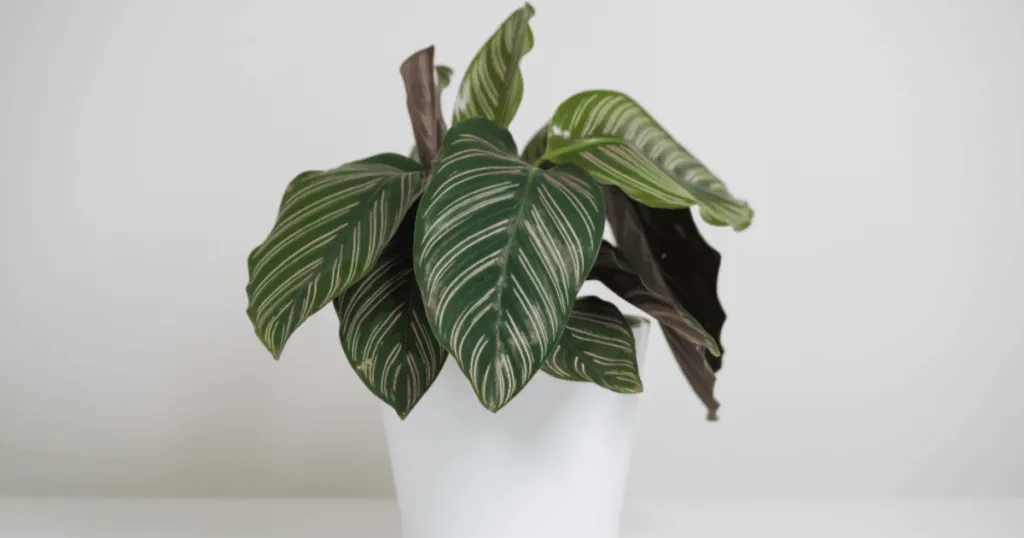
Understanding Growth Habits and Foliage
Calathea plants are members of the Marantaceae family, often referred to as prayer plants because of their unique nyctinasty—the movement of leaves in response to the light cycle. During the day, the leaves often spread out to maximize surface area for photosynthesis, and at night, they fold upward like hands in prayer. This rhythmic movement is a fascinating feature that adds a dynamic element to a meeting room or quiet office corner.
The growth habit is typically clumping, with leaves emerging from a central root system on long, slender petioles. In an office, you can expect most common varieties to reach a height of 18 to 30 inches. They do not grow rapidly, which is an advantage for space management, as they won’t quickly outgrow a desktop or a designated shelf. However, because they grow from a rhizome base, they appreciate a container that allows for consistent moisture without becoming waterlogged.
The foliage is the main attraction. Patterns range from bold, brushstroke-like stripes to delicate, mosaic-like veining. Because these patterns are a result of evolutionary adaptation to low-light forest floors, the plant is naturally inclined to perform well in office lighting. However, the intensity of the colors can fade if the light is too dim, while direct sunlight will almost certainly scorch the delicate leaf tissue. Finding the middle ground is the key to maintaining the plant’s aesthetic appeal.
Care Needs at a Glance
Managing a Calathea in a workplace requires moving beyond basic watering habits. The most significant hurdle is water quality. Calatheas are notoriously sensitive to the chlorine, fluoride, and mineral salts commonly found in municipal tap water. These elements accumulate in the soil over time, leading to brown, necrotic leaf tips. If your office building has a filtration system or if you have access to distilled or filtered water, the plant will show significantly better health.
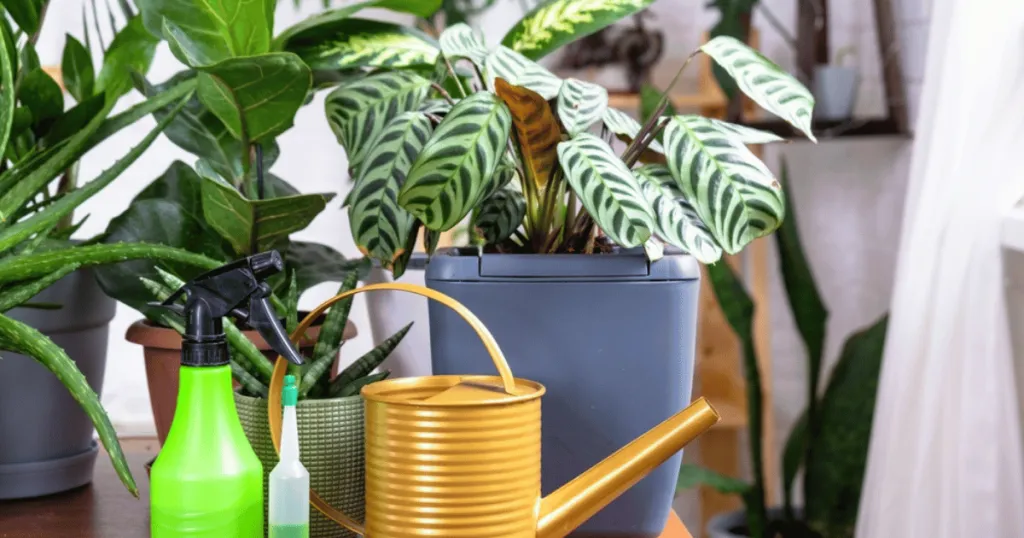
Soil moisture should be kept consistent. The goal is to keep the potting medium damp to the touch, but never saturated. In an office, this is often complicated by the weekend break. If the office air is particularly dry, the soil may dry out faster than expected. A moisture meter can be a helpful tool for office managers who oversee multiple plants, as it removes the guesswork from checking soil depth.
Humidity is the final pillar of care. Most office environments hover around 20% to 30% relative humidity, whereas a Calathea prefers levels above 50%. While you cannot easily change the humidity of an entire office, you can create a microclimate. Grouping plants together or placing the pot on a tray filled with pebbles and water can help elevate the local humidity. Avoid placing the plant directly in the path of an HVAC vent, as the constant airflow will rapidly dehydrate the leaves, regardless of how often you water.
Office Suitability and Placement Guidance
The Calathea is an excellent choice for an office manager who has the time to dedicate to plant care or for a dedicated plant enthusiast working at a desk. It is not, however, a suitable choice for high-traffic areas where plants are frequently ignored or where environmental conditions are wildly unpredictable. Its beauty makes it a high-reward plant, but its sensitivity makes it a high-risk choice for casual maintenance.
For placement, prioritize areas with indirect light. A north-facing window or a spot a few feet away from an east-facing window is ideal. Avoid placing the plant on a windowsill where it might receive direct afternoon sun, as this will cause the leaves to curl and lose their color. If your office relies entirely on artificial lighting, ensure the plant is close enough to the light source to receive adequate intensity, but be wary of heat buildup from older fluorescent fixtures.
Consider the “traffic” of the space. Because the leaves are relatively thin and delicate, they can be easily damaged by people brushing past them in a narrow hallway or a crowded open-office layout. A corner spot or a dedicated plant stand is usually safer than a high-traffic desk edge. If you are managing a large office, treat the Calathea as a focal point plant rather than a filler plant; it works best when it has the space to be admired without being disturbed.
Toxicity and Safety Considerations
One of the most practical benefits of the Calathea is its safety profile. According to the ASPCA, Calathea species are non-toxic to both cats and dogs. For offices that allow pets or for managers who want to ensure a safe environment for visiting animals, this is a significant advantage over other popular tropical office plants like Philodendrons or Dieffenbachia, which contain calcium oxalate crystals that can cause irritation if ingested.
While the plant is safe, it is still a living organism that requires soil and organic matter. Ensure that the potting soil is kept clean and that any fallen leaves are removed promptly to maintain a professional appearance. The safety of the plant means you do not need to worry about accidental ingestion by office pets, but it does not mean the plant is indestructible. Its primary “limitation” is its environmental fragility, not its chemical composition.
Handoff to Care and Troubleshooting
Successfully maintaining a Calathea in an office requires a proactive mindset. Because this plant is sensitive to environmental stressors, you will likely encounter issues like leaf curling or yellowing if the conditions are not perfectly aligned. These symptoms are usually the plant’s way of communicating that it needs a change in its water source, humidity level, or placement.
We have provided a high-level overview of the requirements here, but the nuances of diagnosing specific leaf patterns or adjusting your watering routine are covered in our dedicated care and troubleshooting guides. If you find your Calathea struggling, refer to those resources for step-by-step recovery protocols. By understanding these baseline needs, you are already well-positioned to manage the plant’s health effectively in your workplace.
Related Calathea Guides
- the full Calathea care breakdown
- Calathea symptoms and fixes
FAQ
Why are the edges of my Calathea leaves turning brown?
Brown, crispy edges on a Calathea are typically caused by low humidity or the buildup of minerals from tap water. In an office, try using filtered or distilled water and consider placing the plant on a pebble tray to increase local humidity.
Can a Calathea survive in a windowless office with only fluorescent lights?
It can survive, but it will likely struggle to thrive. Calatheas need consistent, medium-intensity light. If your office has no natural light, ensure the plant is placed very close to a high-quality LED or fluorescent light source, but be mindful that it may grow much slower and lose some of its vibrant variegation.
How often should I water my Calathea in an office setting?
There is no fixed schedule, as it depends on the ambient temperature and humidity of your office. Aim to water whenever the top inch of soil feels dry to the touch. In a dry, air-conditioned office, this may be once a week, but always check the soil moisture before adding more water.