When setting up greenery for an office environment, the choice between succulent vs regular potting mix usually depends entirely on how often the soil stays wet and whether the root system can tolerate restricted airflow. Choosing the wrong soil formulation remains one of the fastest ways to compromise office plants, particularly when desk spaces or reception areas feature lower light levels and HVAC airflow patterns that slow down natural evaporation.
Best Choice at a Glance
Use succulent mix for drought tolerant varieties like pothos, sansevieria, or cacti that sit in low light and dry out slowly, while regular potting mix suits moisture lovers in bright spots with steady warmth and consistent weekly watering schedules.
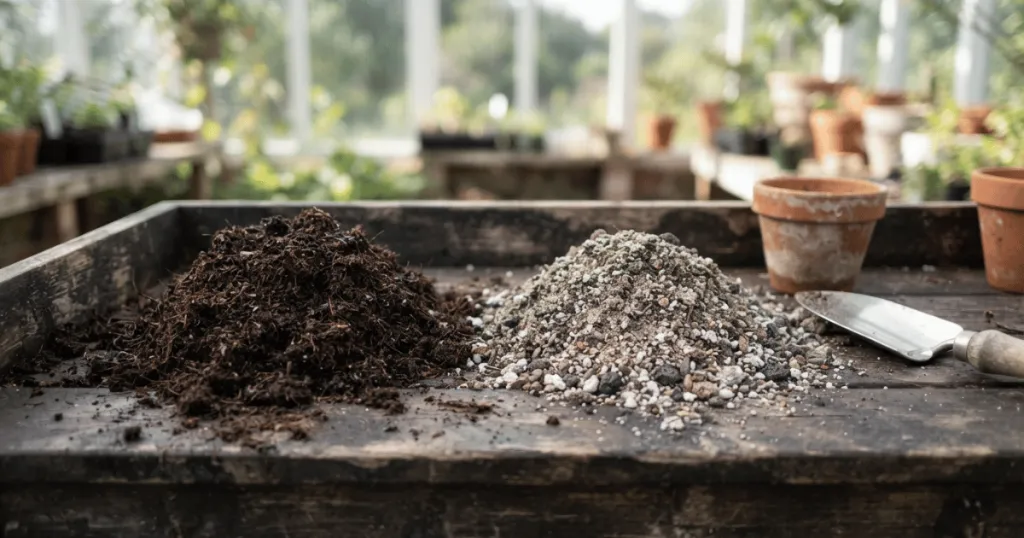
Understanding Soil Formulations for Indoor Spaces
Office interiors present distinct environmental challenges for potted greenery. Unlike a greenhouse or a sunny home garden, commercial offices rely on artificial LED or fluorescent lighting, sealed windows, and HVAC systems that maintain low indoor humidity. These factors dramatically slow down how quickly water evaporates from a container. When you place a plant in an office, the root zone behaves differently than it would outdoors. Soil choice dictates gas exchange, water retention, and root respiration.
Understanding potting soil composition is essential for workplace decision-makers who want to avoid the high turnover of dead or declining desk plants. In a typical home garden, sun and wind assist the topsoil in drying out uniformly after a rainstorm or watering session. In contrast, an enclosed corporate workspace traps humidity around the base of the plant, especially if the container sits inside a decorative cachepot or on a solid wood desktop. When the soil remains heavy and damp, roots cannot breathe, triggering a cascade of physiological failures that start invisibly beneath the surface.
| Soil Feature | Succulent Mix | Regular Potting Mix |
|---|---|---|
| Primary Components | Coarse sand, perlite, pumice, minimal peat | Peat moss, compost, bark, coir, vermiculite |
| Drainage Speed | Extremely fast, water flows through instantly | Moderate to slow, retains moisture for days |
| Aeration Level | High air space, prevents compaction | Denser, tighter particle matrix |
| Best Office Use Case | Low light desks, neglected weekend setups | Bright reception areas, high water demand plants |
Succulent Mix Analysis
Succulent and cactus soil formulations are engineered with one primary goal in mind: keeping roots from sitting in stagnant moisture. In office settings, this characteristic offers a hidden advantage even for non succulent species. Because office workers often overwater plants or leave them in saucers filled with excess irrigation water, a fast draining medium provides a built in margin of error.
Structural Composition
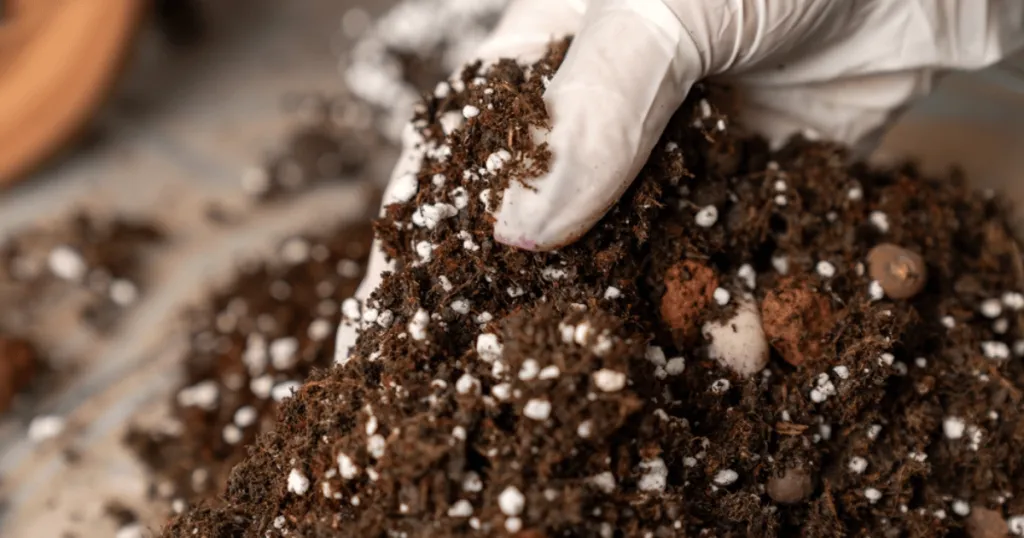
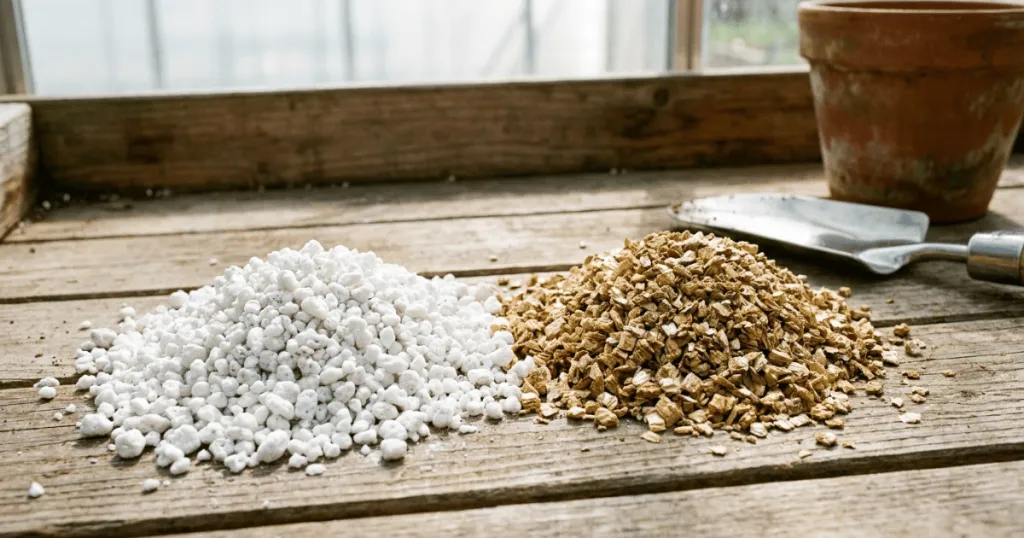
A typical commercial succulent mix relies on chunky, inorganic ingredients like horticultural pumice, expanded perlite, coarse granite sand, and very small amounts of organic peat moss or bark. This creates large macropores throughout the pot. Water moves downward via gravity almost immediately upon application, while air channels remain open around the root tips. Root rot fungi thrive in oxygen depleted environments, so this continuous airflow acts as a primary defense mechanism against disease.
For office managers seekingcactus soil for office plants, the secret lies in the ratio of rock-based amendments to organic material. While regular garden soil collapses into a muddy paste when saturated, gritty succulent mixes maintain their physical structure year after year. This prevents the soil from compacting under its own weight, ensuring that every watering flushes out stale air and draws fresh oxygen down into the root zone.
Behavior in Low Light Office Conditions
Photosynthesis and transpiration rates drop significantly when office plants receive only fluorescent lighting or indirect illumination from distant windows. Slower transpiration means roots drink at a fraction of their normal outdoor speed. If planted in dense soil under these conditions, the mix stays saturated for weeks. Succulent mix accelerates dry down cycles, ensuring that root tissue receives necessary oxygen even when the surrounding office environment is cool, dim, and stagnant over a long holiday weekend.
When evaluating indoor plant drainage, it becomes clear that soil density is just as important as the drainage hole at the bottom of the container. Even with a hole present, water can become suspended in fine-textured soils due to capillary action. Succulent mixes disrupt this capillary pull, forcing excess water straight through the profile and out of the pot. This protects office plants from lingering moisture pockets that often go unnoticed beneath a dry surface crust.
Regular Potting Mix Analysis
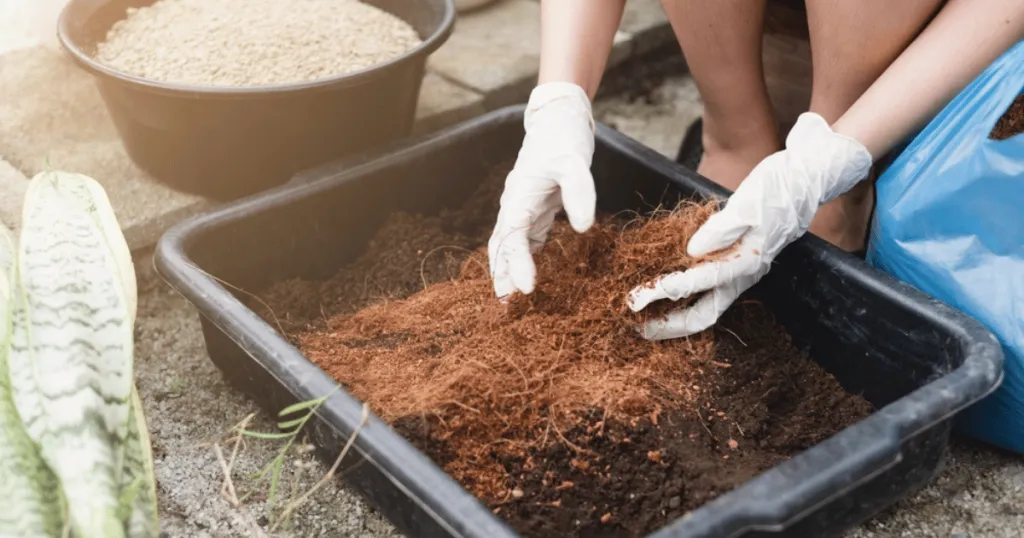
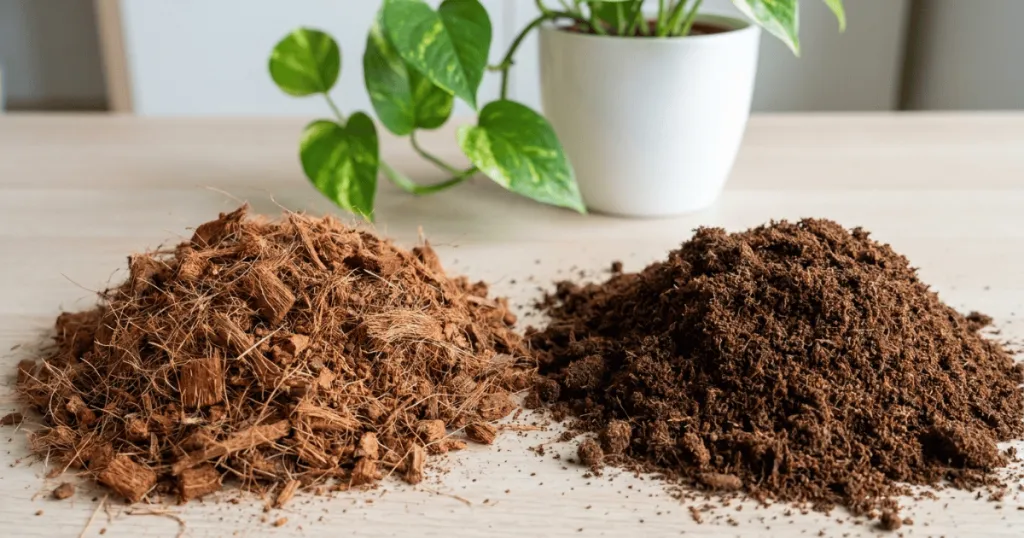
Standard indoor potting mix, often labeled as all purpose or container mix, is formulated to hold moisture and supply steady nutrients to actively growing foliage. It usually consists of a high percentage of sphagnum peat moss or coconut coir, fine pine bark, and composted organic matter. This matrix creates a sponge like texture designed to capture water molecules and release them gradually over several days.
Nutrient Retention and Organic Matter
The organic components in regular potting mix hold onto micronutrients and fertilizers far better than gritty mineral mixes. For office plants that put out large leaves and demand consistent hydration, this high water holding capacity reduces the frequency of watering required by office managers or facility staff. However, as organic matter breaks down over months of indoor cultivation, the particle size shrinks, making the soil denser and more prone to compaction.
Maintaining optimal soil aeration becomes more challenging as regular potting mix ages. The fine particles settle into the empty air spaces, choking off the oxygen supply to delicate root tips. In an office setting where plants are rarely repotted on an annual schedule, this gradual degradation can turn a healthy container environment into a stagnant trap. Facility teams must account for this shift when planning long-term care for large floor-standing tropicals.
Risk Profile in Commercial Workspaces
The primary hazard of regular potting mix in an office stems from its moisture retention capability. When combined with typical office routines where well meaning staff water on a rigid calendar schedule regardless of soil moisture, standard mix often stays damp beneath the top crust. If the pot lacks adequate drainage holes or sits inside a decorative cachepot without clearance, water accumulates at the bottom. Without proactive intervention, this leads directly to root suffocation and anaerobic bacterial growth.
Office workers frequently misjudge soil moisture because the top inch of a peat-based mix dries out quickly under the drying influence of office air conditioning. Probing deeper into the container often reveals a soggy, waterlogged core. This mismatch between surface appearance and deep root conditions is a primary driver of root rot prevention failures in corporate workspaces, making regular potting mix a riskier choice for employees who tend to water by routine rather than by checking actual soil moisture.
Feature-by-Feature Comparison
Evaluating how these two soil types perform across specific physical characteristics clarifies why choosing the right option matters for workplace greenery.
Aeration and Root Respiration
Roots require oxygen to convert sugars into energy. Succulent mixes maintain high air porosity because their gritty components do not break down or pack together easily. Regular potting mixes rely on fluffy organic matter that gradually collapses under repeated watering. In a sealed office building where air movement is minimal, high root zone aeration prevents suffocation.
When root respiration is hindered by a tight, water-saturated soil matrix, plants stop taking up water and nutrients effectively. Even if the office worker continues to water diligently, the foliage begins to yellow and drop. Utilizing a mix rich in perlite and pumice ensures that gas exchange continues uninterrupted, supporting robust cellular function even in stagnant corners of an open office floor.
Water Holding Capacity
Regular potting mix acts like a sponge, holding multiple times its weight in water. Succulent mix acts more like a sieve, letting excess fluid escape in seconds. In practice, this means regular mix requires less frequent watering but carries a higher risk of accidental over saturation. Succulent mix demands more frequent monitoring of soil moisture depth but practically eliminates the danger of standing water at the base of the pot.
For office managers evaluating the best soil for indoor office plants, balancing water holding capacity against the specific evaporation rate of the room is vital. A windowless accounting department with constant LED lighting will process water much more slowly than a sunlit south-facing executive corner office. Matching the soil’s retention profile to the room’s microclimate prevents chronic water stress.
Nutrient Dynamics and Fertilization
Standard potting mix often contains pre-mixed slow release fertilizers and rich organic compounds that feed plants for months. Succulent mix is generally nutrient lean, requiring supplemental liquid fertilization during the active growing season if plants are expected to thrive in office lighting conditions.
While nutrient-rich regular mix supports rapid leaf expansion, this fast growth can actually become a liability in dim office environments where light levels are too low to sustain heavy foliage. Conversely, the lean nature of succulent mix encourages compact, resilient growth habits that match the modest energy output of plants surviving on artificial indoor lighting.
Best-Fit Use Cases for Each Option
Matching the soil medium to the specific plant variety and office setting ensures long term health without constant maintenance intervention.
When to Use Succulent Mix
Opt for a gritty, fast draining formulation when planting snake plants, ZZ plants, or any species housed in a low light corner of a private office or windowless conference room. It also serves as an excellent upgrade for standard foliage plants when office workers admit to a habit of overwatering or when containers lack functional drainage holes.
Consider the practical reality of maintaining desk plants across a large corporate floor. Staff members often take turns watering plants or pitch in during coworker vacations without knowing the specific hydration history of each container. Using a fast-draining succulent or cactus-oriented blend protects these displays from human error, ensuring that an accidental double-dosing of water drains away harmlessly before it can rot the root crown.
When to Use Regular Potting Mix
Choose standard all purpose mix for high demand tropicals like peace lilies or ferns placed in bright, well ventilated reception areas where temperatures remain warm and humidity is managed. These plants require the steady moisture reserve that only organic peat or coir based mixes can provide.
In high-traffic zones where visual lushness is a priority, standard potting mix provides the necessary nutritional foundation and moisture buffer to keep large foliage vibrant. However, success depends entirely on ensuring that the containers feature working drainage and that facility staff verify soil dryness below the surface before adding more water.
Which One Should You Choose?
Deciding between succulent vs regular potting mix comes down to balancing your watering habits against the natural needs of the plant and the lighting conditions of your workspace. If you manage office plants and notice that containers stay damp for more than a week after watering, the environment is too dim or the soil is too dense. For most general office plants placed in typical indoor settings, a hybrid approach or defaulting to a lighter, airier mix prevents the most common cause of indoor plant failure, which is root rot.
Professionals managing multiple office floors usually prioritize low maintenance resilience over maximum growth speed. Beginners often make the mistake of using heavy garden soil or compact regular potting mix indoors because it mimics outdoor flower beds, ignoring the fact that indoor offices lack wind and intense sunlight to dry the soil. When in doubt, leaning toward a faster draining medium with added perlite or pumice provides a safer buffer against accidental overwatering during busy work weeks.
Ultimately, evaluating your office workspace through the lens of airflow, light availability, and team watering behaviors removes the guesswork. By selecting the soil formulation that actively supports root health under indoor constraints, you ensure long-lasting workplace greenery that requires minimal corrective intervention.
FAQ
Can I mix succulent soil and regular potting mix together for office plants?
Blending equal parts succulent mix and regular potting mix creates a balanced medium that offers moderate moisture retention while maintaining enough perlite for adequate root aeration in typical office environments.
Why does regular potting mix stay wet for so long on an office desk?
Indoor office spaces feature low airflow, stable cool temperatures, and dim artificial lighting, all of which reduce plant transpiration and slow down moisture evaporation from dense organic soil.
Is it safe to use succulent mix for tropical office plants like peace lilies?
Using pure succulent mix for moisture loving tropicals will force you to water much more frequently, but it can work well if your office environment suffers from chronic overwatering tendencies.
Does succulent potting mix expire or break down over time?
Inorganic components like pumice and sand last indefinitely, but any organic matter or peat included in the succulent mix will slowly degrade over a few years, eventually reducing drainage efficiency.