When an office plant begins to look lackluster after a move to a larger container, the immediate reaction is often to assume something has gone wrong. In the world of indoor horticulture, the term Repotting stress recovery is frequently used to describe this period of adjustment. However, it is important to separate the physiological reality of root disturbance from the common misconception that a plant should immediately thrive in a new environment. In reality, most indoor plants require a period of stabilization where their energy shifts from outward growth to root system re-establishment.
Understanding this transition is critical for office managers who oversee plant health in high-traffic areas. While some plants are resilient, others react to the change in soil volume, moisture retention, and root aeration by dropping leaves or stalling growth. By recognizing that this stress is a natural part of the plant lifecycle rather than a sign of failure, you can adjust your care routine to support the plant through its recovery phase without over-intervening.
The Short Version
Repotting stress recovery is the temporary period where a plant diverts energy to root repair rather than foliage growth. To support this, prioritize consistent but moderate watering, avoid fertilization for several weeks, and maintain stable light levels to prevent further environmental shock while the root system stabilizes.
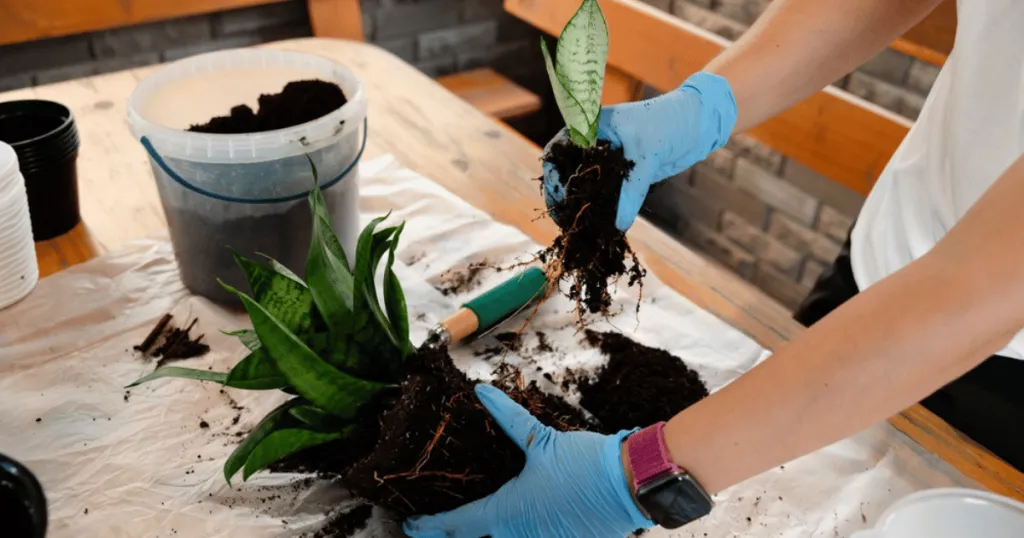
Understanding the Physiology of Root Disturbance
When you move a plant from one container to another, you are essentially forcing it to adapt to a new micro-climate. Even with careful handling, fine root hairs responsible for water and nutrient uptake are often damaged or severed during the process. This disruption creates a temporary imbalance between the plant’s ability to absorb water and its transpiration rate through the leaves. In an office setting, where HVAC systems often create low-humidity conditions, this imbalance can become pronounced.
The plant must prioritize the regeneration of these root hairs before it can safely support new foliage. During this phase, you might notice the plant looking slightly wilted or losing older, lower leaves. This is not necessarily a sign of disease; it is the plant shedding excess canopy to reduce the demand on its compromised root system. If you attempt to force growth with heavy fertilization or excessive watering, you risk root rot, as the plant lacks the functional root mass to process those inputs.
The Role of Soil Volume and Moisture
A common mistake in office plant care is moving a plant into a pot that is significantly larger than the previous one. While the intent is to provide more room to grow, a large volume of fresh, damp soil that is not occupied by roots stays wet for too long. This creates a hypoxic environment where roots struggle to breathe. Repotting stress recovery is significantly prolonged when the root zone remains waterlogged, as the plant cannot perform the necessary cellular repair in saturated soil.
Environmental Stability During Recovery
Office environments are rarely static. Fluctuations in temperature near vents or changes in light intensity as seasons shift can exacerbate the stress caused by repotting. During the recovery window, which typically lasts two to four weeks depending on the species, it is best to keep the plant in its original location. Moving a plant to a different light level immediately after repotting adds a second layer of stress, making it difficult for the plant to acclimate to its new container.
Evidence and Limitations in Plant Recovery
While the concept of transplant shock is well-documented in agricultural and nursery sciences, applying these findings to office plants requires nuance. Many studies on plant recovery focus on outdoor species or greenhouse-grown crops that have high light and humidity requirements. In an office, the limiting factor is often light intensity, which is significantly lower than what a plant would receive in a greenhouse. This means the recovery process may be slower because the plant has less energy available through photosynthesis to fuel root repair.
There is no scientific evidence to support the use of complex growth stimulants or heavy doses of fertilizer to speed up recovery. In fact, the most effective approach is often passive. The plant possesses the biological mechanisms to repair itself if the environmental conditions remain stable. The limitation here is human intervention; we often try to fix a plant that is simply undergoing a natural, albeit slow, biological process.
Who Benefits Most From Understanding Recovery
Office managers and staff responsible for plant maintenance benefit most from this knowledge because it prevents the cycle of over-care. When a plant looks sad after repotting, the urge to water it more or move it to a brighter window is strong. By understanding that the plant is in a recovery phase, you can adopt a hands-off approach that allows the plant to stabilize. This saves time, reduces the likelihood of plant loss due to root rot, and ensures that the office greenery remains a long-term asset rather than a disposable decoration.
Common Misconceptions About Plant Adjustment
One of the most persistent myths is that plants need immediate fertilizer after repotting to help them recover. In reality, fresh potting mixes often contain starter nutrients, and a stressed root system is highly susceptible to fertilizer burn. A plant in recovery is not actively growing, so it has no immediate need for extra nutrients. Another misconception is that wilting always means the plant is dry. After repotting, a plant may wilt because it cannot move water up to its leaves, even if the soil is moist. Checking the soil moisture with a finger or a moisture meter is essential before adding more water.
Strategic Planning for Office Plant Transitions
To minimize the need for extensive recovery periods, office managers should plan repotting schedules around the plant’s active growing season. For most indoor species, this is late spring or early summer. Repotting during the winter months, when light levels in offices are at their lowest and growth is naturally dormant, can lead to prolonged stress. The plant lacks the metabolic energy to repair root damage efficiently during these darker months.
Furthermore, consider the physical placement of the plant during the recovery phase. If the plant is located in a high-traffic lobby or a drafty hallway, consider temporarily moving it to a more sheltered area of the office – not necessarily a different light level, but a location with less airflow or lower temperature fluctuations. This reduces the transpiration demand on the leaves, allowing the plant to focus its limited resources on root hair regeneration.
Analyzing Root-to-Pot Ratios
A critical, often overlooked aspect of Repotting stress recovery is the physical root-to-pot ratio. When a plant is moved, the new container should ideally be only one or two inches wider in diameter than the root ball. If the container is too large, the excess soil acts as a moisture reservoir that the roots cannot access. In an office environment, where ambient humidity is often low, this can lead to a deceptive cycle: the top inch of soil may feel dry to the touch, prompting a manager to water, while the bottom of the pot remains saturated. This creates a anaerobic condition that prevents root hair regeneration. By selecting a pot that fits the root mass snugly, you ensure that the plant can effectively manage the moisture levels in its new environment, which is the single most effective way to shorten the recovery window.
Monitoring and Intervention Thresholds
How do you know if a plant is struggling with normal recovery or if it is failing? A plant in normal recovery will show signs of stabilization within a few weeks. The foliage might look dull, and growth will be stagnant, but the plant should not be actively dying. If you observe rapid yellowing of leaves, mushy stems, or a foul odor emanating from the soil, these are indicators of root rot or severe environmental incompatibility. In such cases, the plant may need to be removed from the new pot to inspect the root system, trim away necrotic tissue, and potentially repot into a smaller, more appropriate container with better drainage.
It is also helpful to document the date of repotting. In a busy office, it is easy to forget when a plant was last moved. A simple tag or a digital note can prevent staff from accidentally over-fertilizing or over-watering, as they will have a reference point for when the plant entered its recovery phase. This systematic approach to office plant maintenance ensures that the greenery remains a functional part of the workspace aesthetic rather than a source of frustration.
The Impact of Lighting on Recovery Speed
Light is the fuel for all repair processes in plants. During the recovery phase, photosynthesis is the primary engine driving the production of new root tissue. In many office settings, plants are placed in areas with low-intensity fluorescent or LED lighting. While these light sources are sufficient for maintenance, they are often suboptimal for the high-energy demands of recovery. If a plant is struggling significantly after being repotted, consider moving it to a location with slightly higher, indirect light. This does not mean placing it in direct, scorching sun, which would increase transpiration and stress the plant further. Instead, aim for a spot that receives bright, ambient light. This increase in light availability can provide the necessary energy boost to accelerate the synthesis of new root hairs, effectively shortening the duration of the recovery phase.
Conclusion
Successful Repotting stress recovery is defined by patience and environmental consistency. By allowing the plant time to adjust to its new container without unnecessary interference, you support its natural ability to re-establish a healthy root system. Focus on maintaining stable light and moderate moisture, and avoid the temptation to over-manage the plant while it works through this transition period.
FAQ
How long does Repotting stress recovery usually take?
Most indoor office plants take between two and four weeks to show signs of stabilization. During this time, the plant is focusing its energy on root repair rather than new leaf production. If the plant continues to decline after a month, it may indicate an issue with the soil drainage or the new pot size.
Should I fertilize a plant immediately after repotting?
No. It is best to wait at least six to eight weeks before applying any fertilizer. Most commercial potting mixes already contain enough nutrients for the first few months, and applying fertilizer to a plant in recovery can cause root burn, as the damaged root system cannot process the nutrients effectively.
Why is my plant wilting even though the soil is wet?
Wilting after repotting often occurs because the root system is not yet established enough to pull water up to the leaves, even if the soil is moist. This is a common symptom of transplant shock. Ensure the soil is not waterlogged, which can cause root rot, and keep the plant in a stable environment to allow it to recover.
Does the size of the new pot affect recovery time?
Yes. Using a pot that is too large can significantly delay Repotting stress recovery. A large pot holds excess water that the roots cannot absorb, leading to poor aeration and potential root rot. Always choose a container that is only one or two inches larger in diameter than the previous one.