In a professional office environment, the climate is rarely designed with plant health in mind. HVAC systems are optimized for human comfort, which often results in powerful, concentrated streams of air that can be devastating to indoor greenery. Protecting plants from AC and heating vents is not just about aesthetics; it is about preventing the rapid moisture loss and temperature fluctuations that lead to premature leaf drop, scorched foliage, and systemic plant stress.
When a plant is positioned directly in the path of a vent, it is subjected to constant air movement that strips moisture from the leaves faster than the root system can replenish it. This creates a localized microclimate that is far drier and more volatile than the rest of the office, often turning a healthy plant into a maintenance burden within just a few weeks.
Understanding the difference between a draft and a steady stream of air is crucial for office managers. While a gentle breeze can actually strengthen plant stems, a direct blast from a ceiling or wall vent acts like a hair dryer, especially during the winter months when heating systems lower the ambient humidity even further. Recognizing these high-risk zones early allows for proactive placement, which is far more effective than trying to nurse a plant back to health after it has already suffered from chronic exposure to extreme air currents.
Identifying High-Risk Zones in the Workplace
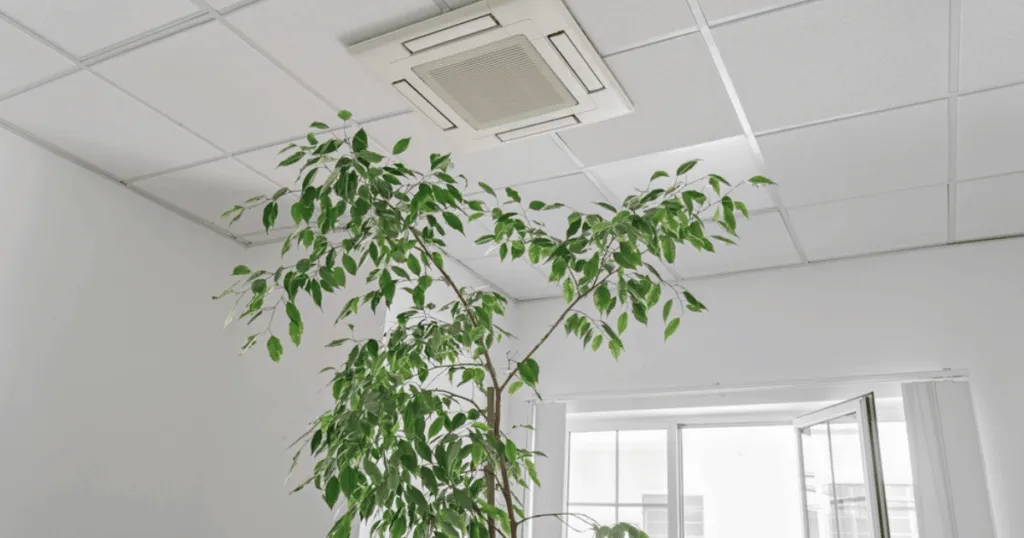
The most common mistake in office plant placement is prioritizing visual impact over environmental stability. While a lush floor plant looks excellent near a reception desk or a conference room entrance, these areas are frequently located directly under or adjacent to high-output HVAC diffusers. To determine if a plant is at risk, observe the air movement during peak operating hours. If the leaves of your plant are constantly fluttering or if the soil surface dries out significantly faster than similar plants in other parts of the office, you have identified a high-risk zone.
Beyond visual cues, facility management teams should consider the architectural layout. Open-plan offices often utilize linear slot diffusers that create long, invisible curtains of air. A plant placed in a hallway or near a doorway might seem safe, but it could be sitting in the direct path of a high-velocity air curtain designed to regulate temperature at the building’s perimeter. Mapping these zones requires a combination of observation and an understanding of how air circulates in your specific office environment.
The Impact of Forced Air on Foliage
Forced air systems introduce two distinct stressors: mechanical damage and desiccation. Mechanical damage occurs when high-velocity air causes leaves to rub against each other or against nearby walls and furniture, leading to physical tears or bruising. Desiccation is more insidious. As air moves across the leaf surface, it disrupts the boundary layer of moisture that plants use to regulate transpiration. When this layer is stripped away, the plant loses water at an accelerated rate. In an office setting, where humidity levels are already kept low for electronic equipment and human comfort, this leads to crispy leaf edges, yellowing, and eventually, total leaf drop.
This process is particularly damaging to broad-leaved tropical plants, which are adapted to humid, still-air environments. When the transpiration rate exceeds the water uptake capacity of the roots, the plant enters a state of hydraulic failure. In practice, this means the plant cannot maintain turgor pressure, leading to wilting that does not resolve with watering. If the air stream is constant, the plant may eventually stop growing entirely as it diverts all its energy into survival rather than new foliage production.
Seasonal Variations in HVAC Output
Heating vents present a unique challenge compared to AC vents. While air conditioning units provide cold, dry air, heating vents provide hot, dry air that can literally bake the foliage. During the winter, the temperature differential between the air exiting the vent and the ambient room temperature can be significant. This rapid cycling between hot and cold air causes the plant to enter a state of shock. Furthermore, many office buildings reduce their HVAC output over weekends or holidays. This sudden shift in environmental conditions can be just as stressful as the constant exposure, as the plant struggles to adapt to the changing intensity of the airflow.
Office managers should also be aware of the “start-up” phase of HVAC systems on Monday mornings. The sudden surge in air volume as the building reaches its target temperature can cause a spike in stress for plants located near vents. This cyclical nature of office climate control means that plants are rarely in a stable environment, necessitating a more robust approach to plant selection and placement.
Practical Strategies for Plant Placement and Protection
When you cannot move a plant away from a vent, you must create a buffer zone. The most effective approach is to install physical barriers that redirect the airflow without completely blocking the ventilation system. Clear acrylic air deflectors, which attach magnetically or via adhesive to the vent face, are an excellent, low-profile solution for office ceilings. They redirect the air toward the ceiling or along the wall, allowing the conditioned air to circulate throughout the room without hitting the plant directly.
When using deflectors, ensure they are installed according to manufacturer guidelines to avoid creating back-pressure that could damage the HVAC unit itself. If an office manager is unable to modify the vent, consider using decorative screens or room dividers. These can be placed between the vent and the plant to diffuse the air stream, turning a direct, high-velocity blast into a gentle, harmless current.
Strategic Grouping and Microclimates
If you have multiple plants, grouping them together can create a shared microclimate that is more resilient to airflow. When plants are placed in close proximity, they create a small pocket of higher humidity through their combined transpiration. This collective moisture acts as a shield against the drying effects of nearby vents. Additionally, using larger, sturdier plants like Sansevieria or Zamioculcas as a perimeter around more sensitive, leafy plants can provide a physical windbreak. These tougher species are better equipped to handle the occasional gust of air and will protect the more delicate specimens behind them.
Consider the height of the plants as well. By placing shorter, shade-tolerant plants at the base of a larger, more resilient specimen, you can effectively hide them from the direct path of the vent. This layering technique mimics natural forest floor conditions, where taller canopy plants protect the understory from harsh winds and direct exposure.
Modifying Care Routines for Exposed Plants
Plants located near vents will almost always require more frequent monitoring than those in stable locations. You may need to adjust your watering schedule to account for the increased evaporation rate. However, be cautious not to overwater; the goal is to maintain consistent soil moisture, not to keep the soil perpetually saturated. Using a moisture meter can help you determine if the soil is drying out at a rate that warrants a change in your routine. Additionally, increasing the ambient humidity around the plant using a small, desk-sized humidifier can help mitigate the drying effects of the air, provided the device does not interfere with office electronics or safety protocols.
Another maintenance strategy involves regular foliage cleaning. Dust and debris can clog the stomata of the leaves, further hindering the plant’s ability to regulate moisture in a high-airflow environment. Gently wiping leaves with a damp cloth every two weeks helps keep the plant’s respiratory system functioning efficiently, which is vital when the plant is already under environmental stress.
Decision Framework for Office Managers
Before placing a new plant, take a moment to evaluate the immediate surroundings. If the intended location is within three to five feet of an active vent, consider these three options. First, choose a plant species known for high tolerance to drafts and low humidity, such as a snake plant or a cast iron plant. These species have thicker cuticles that resist water loss. Second, if the plant is already in place and showing signs of stress, move it to a different area of the office for a two-week recovery period. If the plant shows signs of improvement, you have confirmed that the vent was the primary stressor.
Third, if the location is non-negotiable for aesthetic or spatial reasons, implement a regular misting schedule or add a decorative barrier. A tall, floor-standing planter can act as a shield if placed between the vent and the plant. Always prioritize the health of the plant over the initial design plan. A struggling, brown-leafed plant reflects poorly on the office environment, whereas a thriving plant, even if moved a few feet from its original spot, adds value and vitality to the workplace. If you notice persistent issues despite these interventions, it is often more cost-effective to relocate the plant to a more stable environment than to continue attempting to compensate for an unsuitable location.
When evaluating the long-term viability of a plant in a specific spot, consider the “cost of care.” If a plant requires daily attention to survive a vent, the labor cost and the risk of plant failure may outweigh the benefits of having greenery in that specific location. Often, the best decision is to swap the plant for a species that is naturally adapted to the conditions, or to accept that the location is simply not suitable for living plants and opt for a different decorative element.
Long-Term Management and Facility Coordination
Successful office plant management requires ongoing communication with the facilities department. Office managers should coordinate with building staff to understand the HVAC schedule and any planned maintenance that might affect air output. For instance, if the building is undergoing a seasonal transition, the airflow patterns may change, potentially exposing plants that were previously in a safe zone. Being aware of these shifts allows for proactive adjustments to plant placement.
Furthermore, document the locations of all plants in the office. If a particular area consistently results in plant decline, this information can be used to inform future office layout decisions. By treating plant health as a key performance indicator of the office environment, managers can create a more sustainable and vibrant workspace that benefits both employees and the greenery they enjoy.
FAQ
How can I tell if my office plant is suffering from vent exposure?
Look for symptoms like crispy, brown leaf tips, curling leaves, or a soil surface that dries out significantly faster than other plants in the same room. If the plant is losing leaves rapidly despite adequate watering, it is likely experiencing desiccation from a nearby AC or heating vent.
Are there specific plants that are better at handling office drafts?
Yes. Plants with thick, waxy, or succulent-like leaves, such as the snake plant (Sansevieria), ZZ plant (Zamioculcas zamiifolia), and various types of succulents, are generally more resilient to the drying effects of HVAC systems than thin-leaved tropical plants like ferns or peace lilies.
Is it safe to use a humidifier near office electronics to help my plants?
While humidifiers help plants, they can pose risks to office equipment. Always check with your IT or facilities department before adding a humidifier. If allowed, use a small, ultrasonic unit with a directed mist output that keeps moisture away from computers, printers, and other sensitive hardware.