Affiliate Disclosure: As an Amazon Associate, I earn from qualifying purchases.
Finding resilient greenery for a workspace in the American Southwest requires navigating intense external climates and specialized indoor microclimates. Selecting the best plant to survive in a Tucson Arizona office means balancing the realities of aggressive air conditioning, relentless summer heat outside, and window glass that filters out vital solar spectrums. Office managers and desk workers often struggle to keep indoor foliage alive when buildings maintain dry, artificial air for months on end. Understanding how desert-adapted species handle these stressful indoor conditions prevents premature plant decline and creates a vibrant workspace.
Most commercial buildings in the region rely heavily on constant climate control to combat extreme outdoor temperatures. This reliance creates an environment characterized by low humidity and rapid moisture evaporation from potting soil. At the same time, interior office spaces frequently suffer from inadequate natural light, forcing plants to rely on fluorescent or LED overhead fixtures. Species that thrive in these settings must tolerate both drought stress from HVAC cycles and dim light without dropping leaves or developing weak, spindly growth. Choosing the right specimen transforms a dry, sterile office into a restorative green workspace.
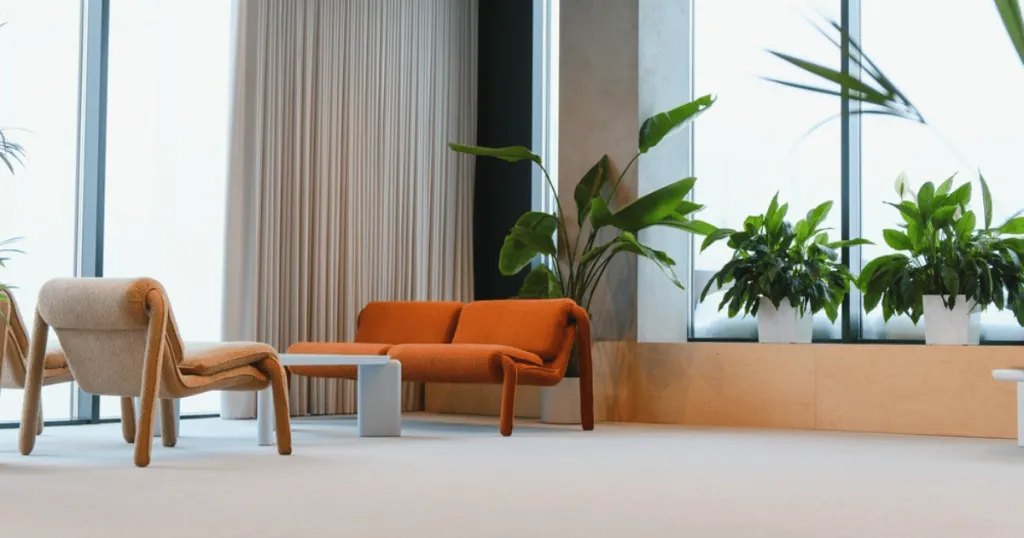
Why Succulents and Drought Tolerant Species Excel Indoors
The botanical physiology of desert and semi-desert plants makes them uniquely suited for corporate interiors. Unlike tropical foliage that demands damp soil and humid air, drought-adapted varieties store moisture within thick leaves, stems, or specialized root structures. This biological adaptation protects them against the erratic watering schedules common in busy work environments where plants are frequently forgotten over long weekends or holidays.
When evaluating candidates for an interior desert office, look closely at leaf thickness and cuticle development. A thick, waxy outer layer significantly reduces transpirational water loss. This defense mechanism is particularly useful in offices where ceiling vents blow dry, conditioned air directly onto nearby desks and reception counters. The best plant to survive in a Tucson Arizona office leverages these natural defenses to stay healthy despite minimal human intervention.
The Role of CAM Photosynthesis in Indoor Survival
Many desert species utilize Crassulacean Acid Metabolism, a specialized photosynthetic pathway. Instead of opening their leaf pores during the heat of the day, these plants keep them sealed until nighttime to capture carbon dioxide. While this adaptation evolved to conserve water in arid outdoor environments, it also confers resilience indoors. It allows plants to withstand prolonged drought periods and irregular watering routines without suffering immediate cellular damage. In an office environment, this biological efficiency translates into a specimen that does not throw a tantrum if the facilities team forgets to water it for a month.
Understanding this process helps office managers select office plants for arid climates that will not drop foliage at the slightest environmental shift. Because internal building temperatures in Tucson remain tightly regulated year-round, plants operating under CAM pathways do not experience the traditional seasonal cues they might outdoors. Instead, their internal clock focuses entirely on moisture conservation, making them exceptionally stable companions for cubicles, private offices, and shared conference rooms.
Root System Resilience Under Dry Conditions
Office plants often suffer from two extremes: total neglect followed by accidental overwatering when someone tries to make up for lost time. Desert-adapted species typically possess shallow, spreading root systems or tuberous storage organs that handle soil compaction and dry spells far better than fine, fibrous tropical roots. This structural hardiness prevents root rot, which remains the leading cause of death for indoor office vegetation.
When container soil dries out completely in an air-conditioned office, standard tropical roots can desiccate and die back, leaving the plant unable to take up water when irrigation finally resumes. In contrast, indoor desert plants feature specialized rhizomes or bulbous bases that hold reserve supplies of water and nutrients. This structural resilience means that even if a desk plant goes completely unwatered during a two-week office closure, it retains the internal reserves required to bounce back quickly once normal routines resume.
Top Plant Candidates for Arid Climate Workspaces
Certain botanical families stand out when outfitting a Southwest commercial interior. These selections combine toughness with professional aesthetics suitable for open-plan offices, private executive desks, and bright reception areas.
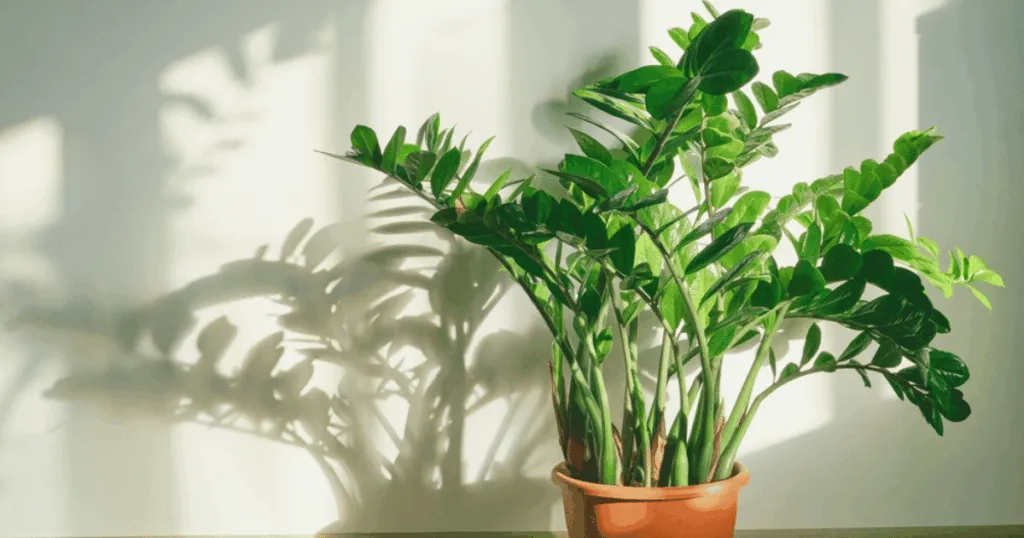
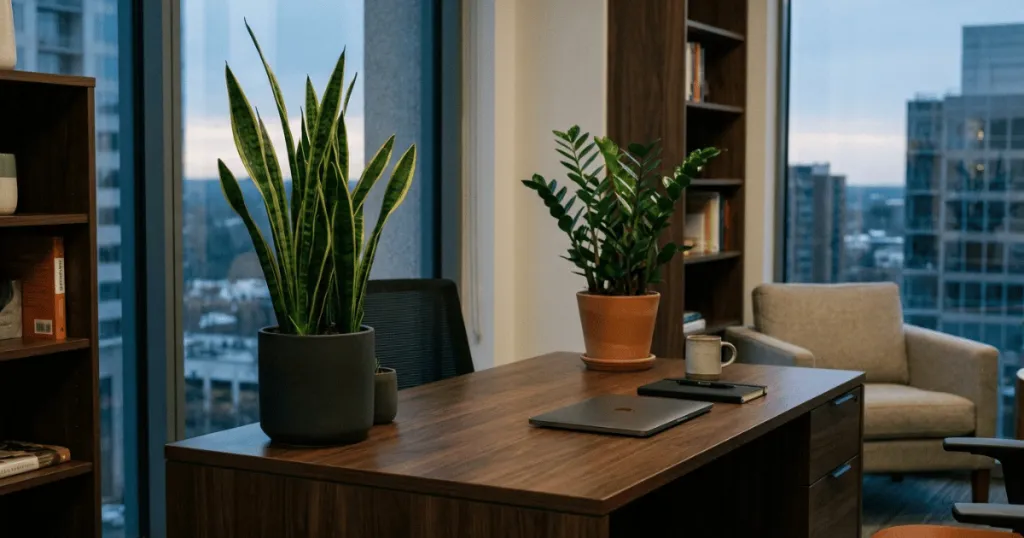
- Zamioculcas zamiifolia (ZZ Plant): Famed for its glossy, dark green leaves and thick rhizomes, this species stores vast amounts of water and tolerates low fluorescent lighting with ease.
- Sansevieria trifasciata (Snake Plant): Upright, architectural leaves allow this plant to fit into tight corners near elevators or windows while shrugging off dry air and irregular irrigation.
- Beaucarnea recurvata (Ponytail Palm): Featuring a swollen base that stores moisture and long, cascading leaves, this plant handles intense indoor dry heat exceptionally well.
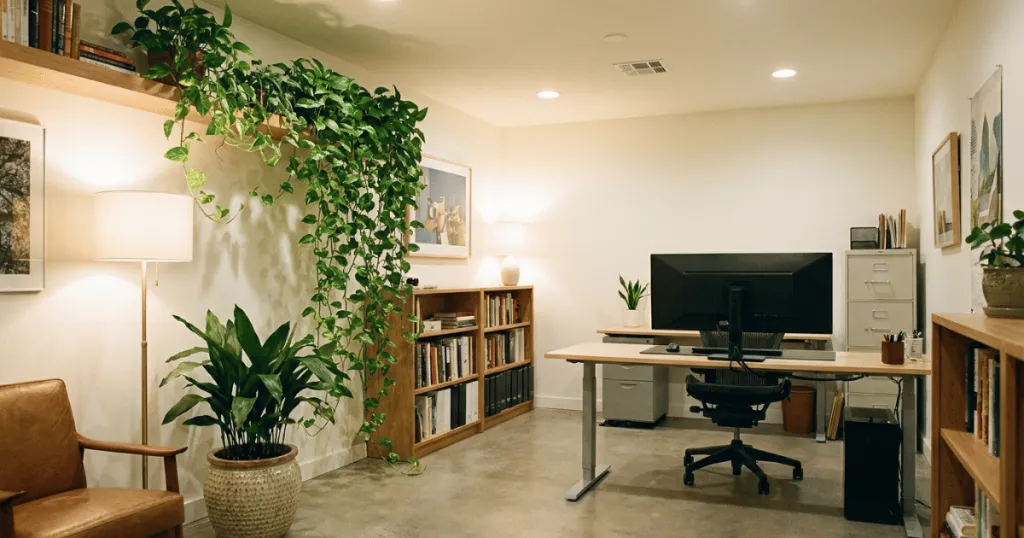
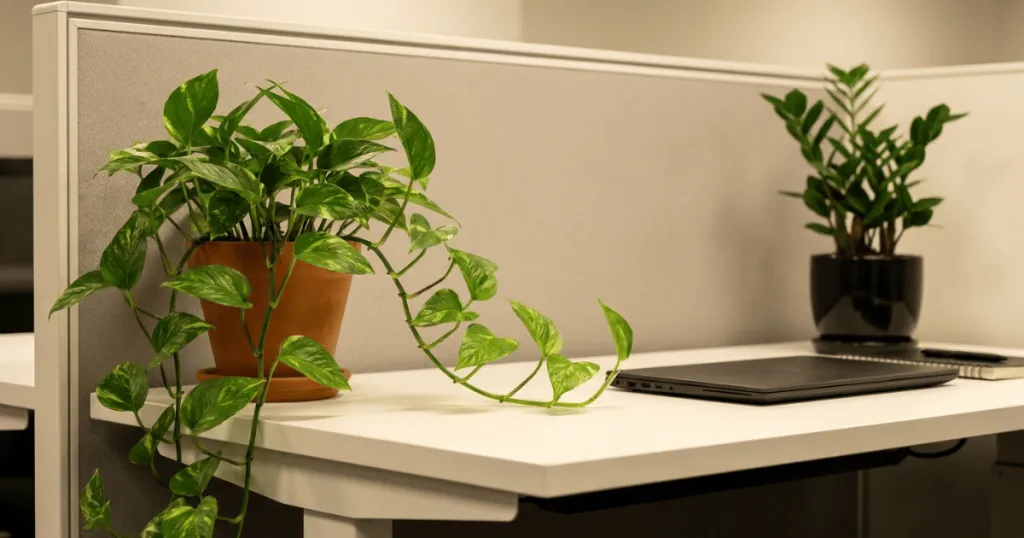
- Epipremnum aureum (Pothos): While technically a tropical vine, its remarkable adaptability makes it exceptionally tough in moderate office settings as long as soil is allowed to dry completely between waterings.
Integrating these specific selections into a workplace design plan requires looking beyond mere survival and considering how each specimen interacts with the built environment. For instance, the upright geometry of a snake plant complements modern corporate architecture, while a sprawling Pothos can soften the hard lines of modular filing cabinets or break up expansive partitions in an open-plan room. Selecting resilient desk plants ensures that the aesthetic investment does not become a high-maintenance burden for administrative staff.
Managing Indoor Microclimates in Desert Offices
Even the toughest indoor flora requires proper placement to thrive. Office layouts dictate light exposure and airflow, both of which fluctuate wildly between perimeter offices with large glass windows and interior core workstations lit entirely by artificial bulbs.
Balancing Natural Light and Window Glare
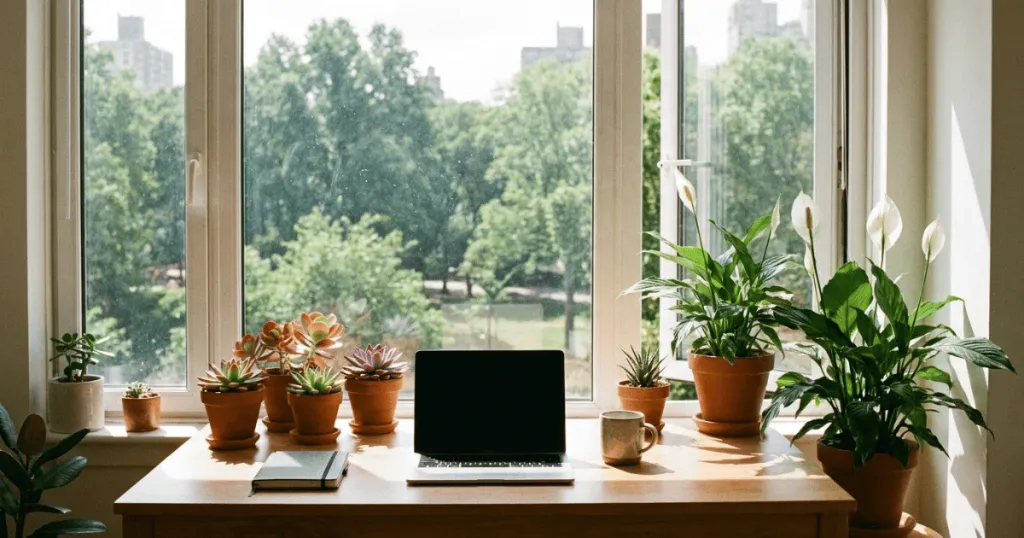
Tucson sunlight is exceptionally intense, and windows facing south or west can scorch indoor foliage if plants sit directly on the sill. Conversely, placing a light-loving plant ten feet away from that same window drops the available photon count dramatically. Positioning resilient species within a few feet of an east-facing window or directly under fluorescent strip lighting provides the ideal balance without risking heat stress.
Office managers must also consider window tinting and Low-E coatings common in modern commercial real estate across the Southwest. These architectural treatments are designed to block heat-generating solar radiation, but they frequently filter out the exact wavelengths of light that plants require for basic biological processes. When natural illumination is heavily compromised by window treatments, supplementing with low light office vegetation or positioning containers near task lighting ensures the plants maintain steady growth without stretching toward dim light sources.
Navigating HVAC Drafts and Humidity Drops
Air conditioning units pull moisture out of indoor air, often driving relative humidity down below twenty percent during peak summer months. This arid air accelerates moisture loss through transpiration. To protect office vegetation, avoid placing sensitive or drought-resistant plants directly beneath active supply vents. If a desk sits right in the path of a constant draft, consider using a physical barrier or relocating the container to a more sheltered zone.
The relentless cycle of heating and cooling in a desert workplace creates invisible microclimates that can catch plant owners off guard. A conference room might feel comfortable to employees, but if an overhead vent blows continuous, chilled air directly onto a tabletop display, the local humidity plummets even further. Recognizing these subtle air currents allows workplace decision-makers to position containers in protected corners where stagnant or overly turbulent air does not disrupt plant stomata or dry out delicate foliage margins.
Practical Care Guidelines for Low Maintenance Success
Establishing a simple, predictable maintenance routine prevents most common workplace horticulture failures. Because office environments lack the seasonal temperature cues found outdoors, indoor care must focus entirely on soil moisture levels and cleanliness.
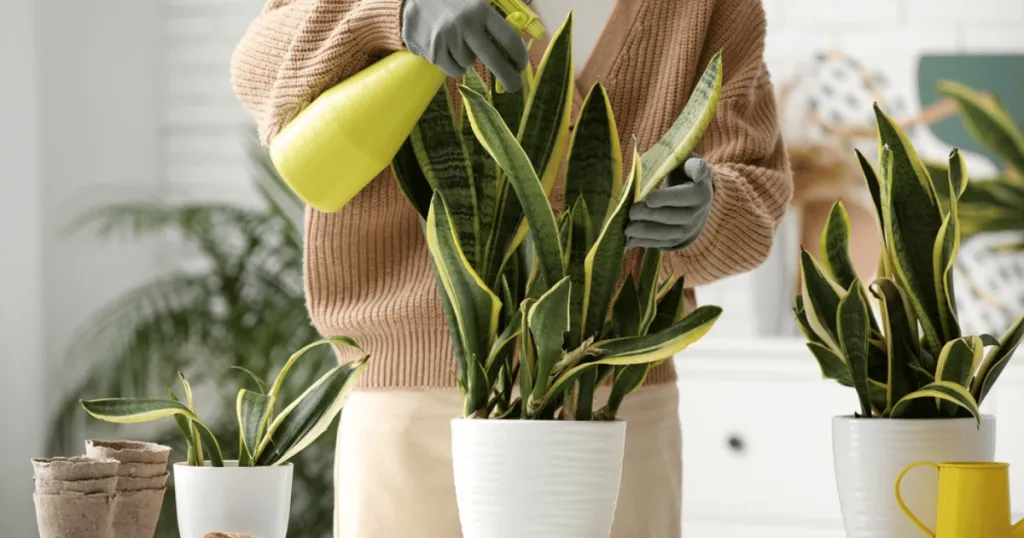
The Check-First Watering Method
Never water office plants on a strict calendar schedule. Instead, insert a finger two inches into the potting mix. If the medium feels dry and crumbly, it is time to irrigate thoroughly until water drains from the bottom of the container. If the soil still feels damp, delay watering for another week. Overwatering remains the single most destructive mistake made in corporate settings.
In a Tucson office where HVAC airflow dries out the topsoil long before the root ball experiences thirst, relying on surface appearance alone can lead to premature watering. Implementing the check-first rule forces a tactile assessment of actual sub-surface moisture conditions. This practice protects against accidental overhydration, which quickly suffocates roots and invites fungal pathogens even in desert-adapted specimens.
Soil Drainage and Repotting Best Practices
Always ensure office containers feature functional drainage holes. Pots without drainage trap excess mineral salts from tap water near the roots, leading to leaf tip burn and root decline. When potting or repotting, use a well-draining soil mix amended with perlite or coarse sand to mimic the porous conditions found in arid native habitats.
Dust accumulation on leaves acts as a physical barrier, blocking the limited indoor light available in corporate buildings. Wipe broad leaves gently with a damp cloth every few weeks to keep stomata clear and maintain optimal photosynthetic efficiency. By following these straightforward management practices, workplace greenery will remain healthy, attractive, and resilient year-round.
Furthermore, selecting the right container size during repotting prevents moisture retention issues. Moving a small plant into an oversized pot with massive amounts of fresh soil creates a moisture trap where the root system cannot drink fast enough to prevent anaerobic conditions. Sticking to appropriately sized containers ensures the potting soil dries evenly between irrigation cycles, supporting long-term plant health in any corporate setting.
FAQ
How often should office plants be watered in a dry desert climate like Tucson?
Watering frequency depends entirely on indoor humidity and container size rather than the outdoor climate. In an air-conditioned office, soil dries out quickly from HVAC airflow. Always check the top two inches of soil before watering, which typically translates to every two to three weeks for resilient succulents and every week or two for leafy species.
Can office plants survive without any natural sunlight in a windowless workspace?
Yes, several resilient species such as the ZZ plant and snake plant adapt remarkably well to windowless interior offices lit entirely by fluorescent or LED overhead fixtures. While they will not experience rapid growth without natural light, they maintain their color and health under standard office lighting for years.
Why do indoor office plant leaves turn brown at the tips in air-conditioned buildings?
Brown leaf tips typically result from low humidity caused by continuous air conditioning, chemical buildup from tap water salts, or letting the soil dry out too severely between waterings. Using filtered water and keeping plants away from direct HVAC air vents helps prevent this issue.
What is the biggest mistake people make when caring for office plants over long weekends or holidays?
The most common mistake is overcompensating right before leaving by soaking the soil excessively, which leads to oxygen deprivation and root rot. Resilient office plants easily survive several weeks without water, so it is safer to leave them dry than to saturate their containers.