Affiliate Disclosure: As an Amazon Associate, I earn from qualifying purchases.
When workplace decision-makers look for greenery, improving indoor air quality is frequently the primary goal. Offices present a unique environment for plant life, characterized by artificial fluorescent or LED lighting, dry air from continuous HVAC systems, and periods of complete neglect over weekends and holidays. Finding a specimen that survives these conditions while actively processing volatile organic compounds requires looking past standard gardening advice and focusing on resilient indoor varieties.
Choosing the best office plant for cleaning air means evaluating how well a species tolerates indoor stressors while managing pollutants like formaldehyde or benzene off-gassed by carpets, furniture, and office equipment. While scientific studies confirm that common foliage specimens filter toxins through their leaves and root systems, practical success in a cubicle or executive suite depends entirely on matching the plant to your building’s specific microclimate.
Evaluating Leading Air Purifying Office Plants
Not all indoor greenery performs equally under fluorescent lights or withstands erratic watering schedules. To identify the top performers for commercial interiors, we must analyze how specific botanical families handle office realities without requiring constant professional maintenance. When implementing air purifying office plants across open-plan desks or windowless boardrooms, understanding physiological traits helps prevent premature plant failure.
Snake Plant Adaptability in Artificial Light
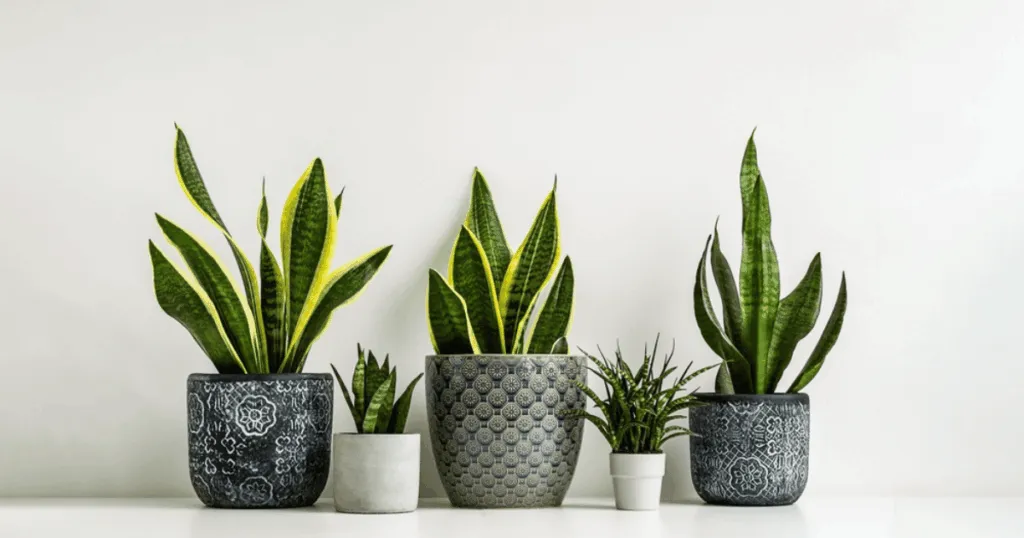
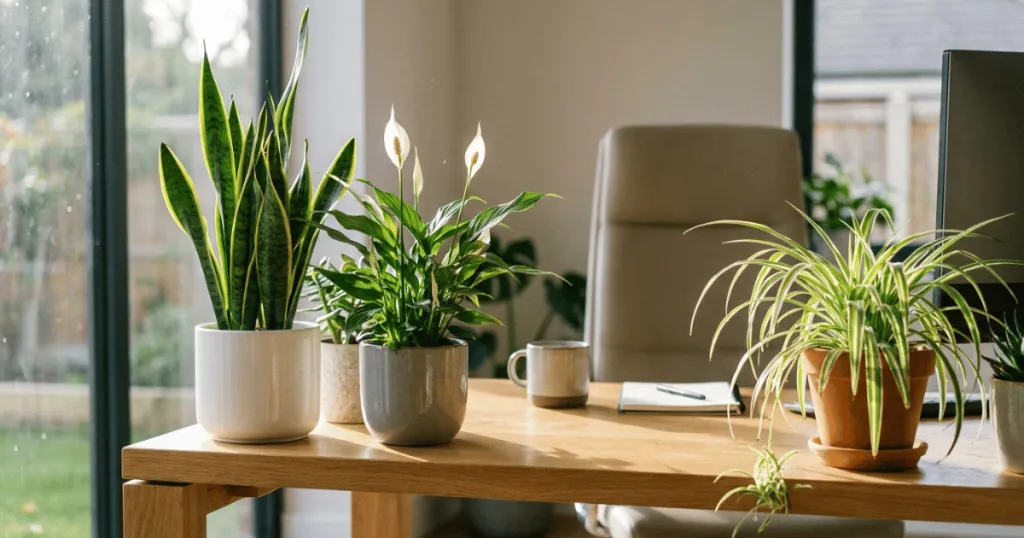
The snake plant, known botanically as Sansevieria or Dracaena trifasciata, frequently tops lists for indoor air filtration due to its exceptional tolerance of neglect. It survives under purely fluorescent office lighting where other species wither, and its crassulacean acid metabolism allows it to release oxygen and absorb carbon dioxide at night, making it well-suited for round-the-clock workspaces. For indoor office plants low light tolerance is essential, and this species excels without direct window exposure.
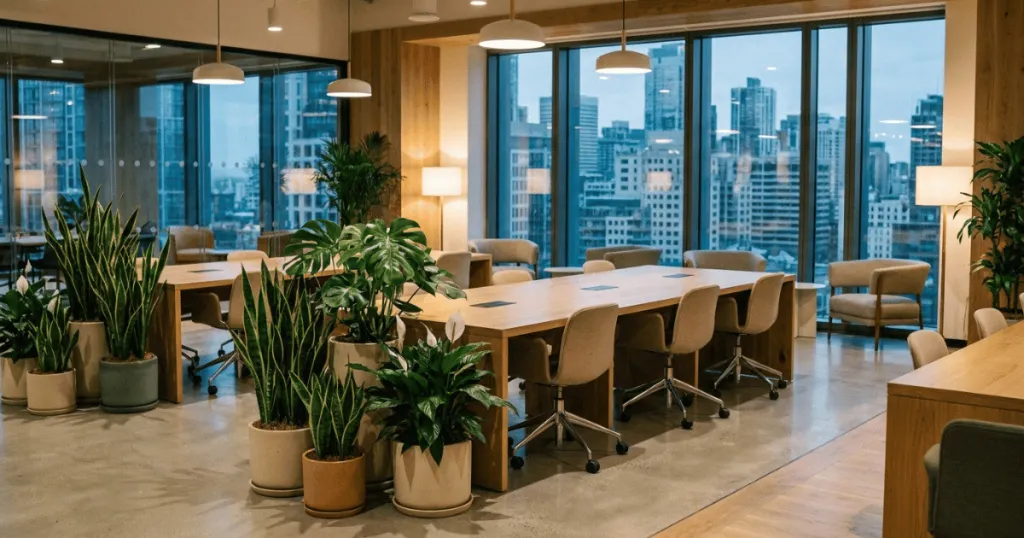
From a practical standpoint, the biggest risk with snake plants in an office is overwatering. Because weekend staff often water office plants on arbitrary schedules, these specimens frequently suffer from root rot. Allowing the soil to dry completely between waterings ensures longevity, making it an ideal candidate for shared break rooms or open-plan desks.
When placing these specimens in commercial interiors, facility managers should consider pot drainage and weight. Heavy ceramic containers protect against tipping in high-traffic corridors, but they must feature functional drainage holes to prevent moisture accumulation at the base of the root systems.
Peace Lily Performance in Low Humidity
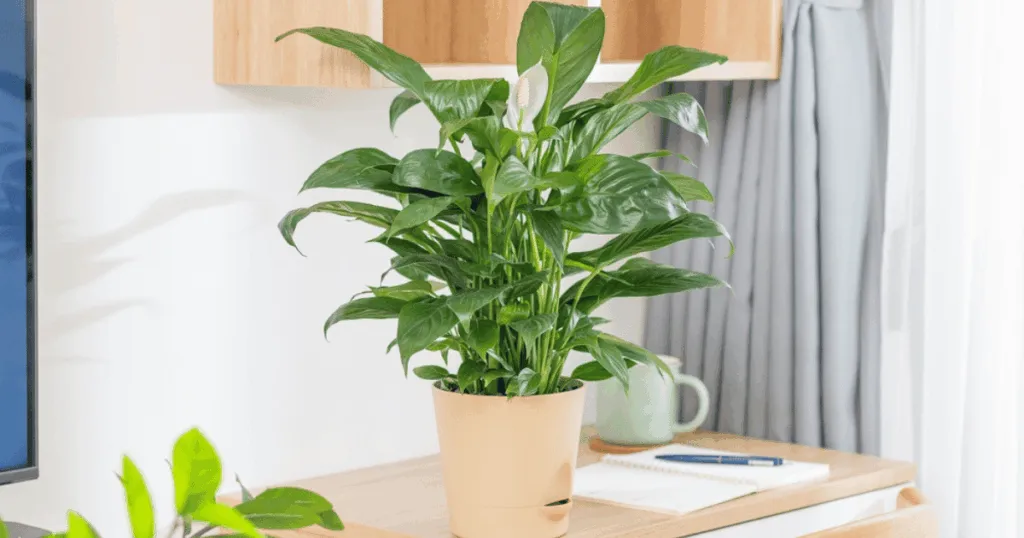
Peace lilies offer broad, glossy leaves that capture airborne dust and toxins efficiently. However, they present a distinct challenge in office environments governed by commercial HVAC systems. Low relative humidity causes leaf tips to brown quickly, and these plants will visibly droop to signal drought stress, demanding careful moisture management and consistent hydration levels.
While they excel at moisture regulation and toxin removal, peace lilies demand more attentive moisture management than snake plants. They suit reception areas or private offices where a manager or receptionist can monitor hydration levels closely, rather than unsupervised open-plan bullpens.
To mitigate the dry air generated by commercial heating and cooling, positioning a peace lily on a pebble tray filled with water can elevate local humidity without risking over-saturation of the soil. Alternatively, pairing them with companion species that share similar moisture preferences creates a microclimate that buffers against sudden drafts from nearby HVAC supply vents.
Spider Plant Resilience and Propagation
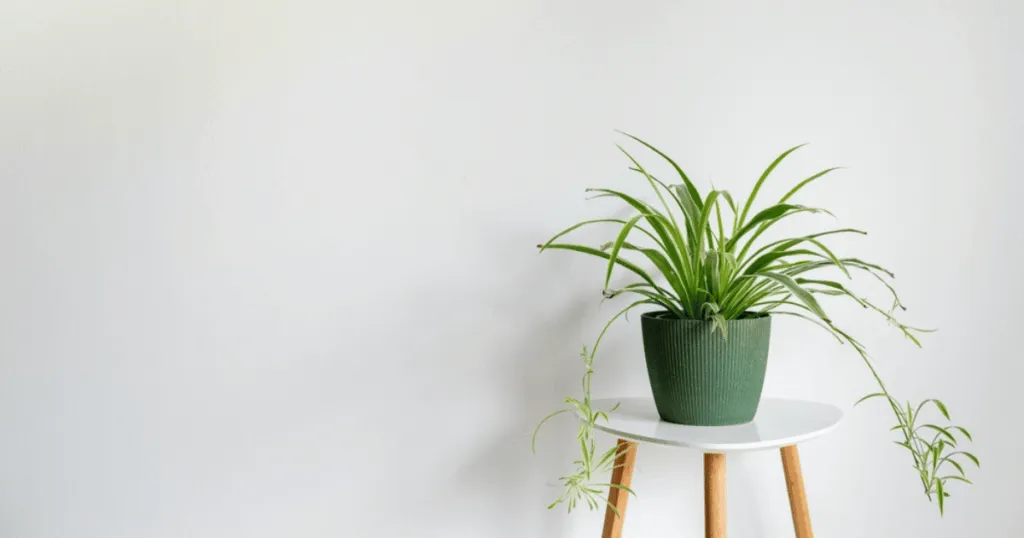
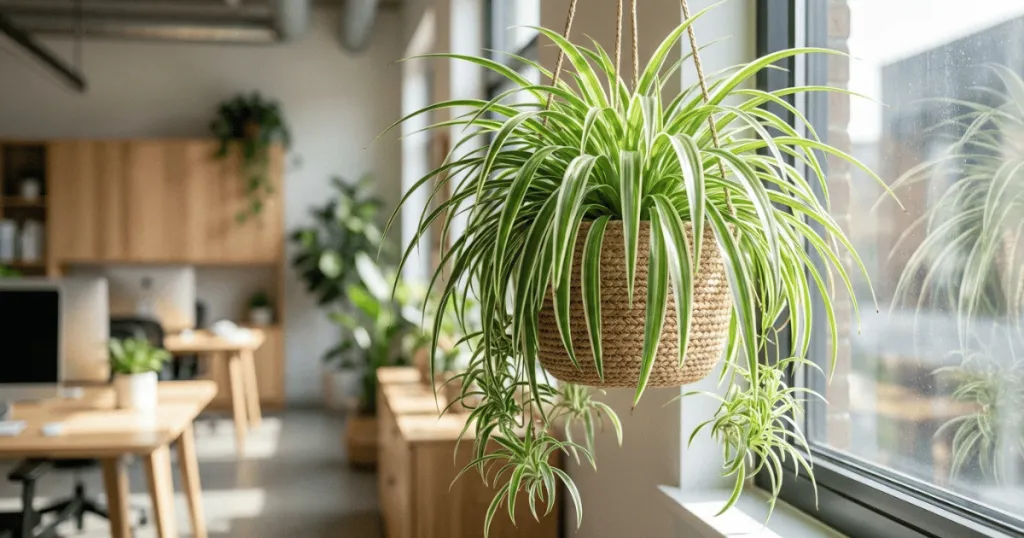
Spider plants tolerate low light, artificial illumination, and erratic watering with remarkable grace. They neutralize common indoor pollutants effectively and produce small plantlets that make propagation simple if you want to expand your office greenery without purchasing new specimens. For teams seeking the best plants for office cubicle air quality without a recurring botanical budget, this cultivar proves exceptionally reliable.
The primary drawback in a professional setting is their tendency to accumulate brown leaf tips when exposed to fluoridated tap water or dry air. Trimming these tips maintains a neat appearance, but facility managers should ideally use filtered water when possible.
Office workers managing these plants should also note that spider plant foliage can attract household pests if air circulation is stagnant. Ensuring adequate cross-ventilation in small private offices prevents fungal issues and keeps the foliage robust.
Practical Factors for Workplace Plant Success
Installing greenery to improve indoor air requires more than simply placing a pot on a desk. Office managers must navigate specific environmental constraints that dictate whether a plant thrives or decays within a few weeks. Evaluating office plant care under fluorescent lights requires acknowledging that photosynthetic rates differ drastically from outdoor settings.
Lighting Realities in Corporate Interiors
Natural sunlight is rarely uniform across a modern floor plan. Cubicles located deep within the interior rely entirely on overhead LED or fluorescent fixtures. Low-light tolerant species utilize these narrow spectrums efficiently, whereas sun-loving varieties drop leaves rapidly. When natural windows are absent, positioning plants directly under or adjacent to desk task lighting can extend their lifespan significantly.
Workers must recognize that artificial lumens degrade over distance. A plant sitting three feet below a ceiling fixture receives exponentially less usable light than one placed directly on a desktop beneath an adjustable task lamp. Supplementing dim corners with full-spectrum grow bulbs in standard desk fixtures can solve persistent lighting deficits.
HVAC Airflow and Watering Discipline
Continuous heating and cooling systems create drafts that desiccate foliage rapidly. Soil dries out unevenly in pots situated near supply vents. Establishing a clear ownership protocol for watering prevents both drought-induced collapse and waterlogged roots. A common mistake is assigning watering duties to multiple well-meaning employees, which frequently leads to over-saturation.
Indoor office environments also experience wide fluctuations in indoor air pollution and particulate settling. Leaves naturally collect dust from carpeting and HVAC blowers, which can clog stomata and reduce photosynthetic efficiency. Wiping foliage down with a damp cloth every few months restores optimal leaf function and enhances aesthetic appeal.
Weekend and Holiday Neglect
Office buildings often shut down climate control systems or reduce humidity levels over the weekend, creating harsh conditions for sensitive vegetation. Choosing hardy cultivars with thick cuticles or water-storing root structures ensures that specimens survive unwatered for extended periods during holiday closures.
For offices prone to prolonged shutdowns, implementing passive sub-irrigation inserts or utilizing water-wicking capillary mats can sustain moisture levels reliably without requiring weekend staff check-ins.
Strategic Selection for Diverse Office Zones
The success of an air-purifying plant program relies on zone-based placement. Not every corner of an office is suitable for every species. For example, the ZZ plant (Zamioculcas zamiifolia) is a powerhouse for dark, windowless hallways where other plants would perish. Its rhizomes store water, making it perhaps the most forgiving plant for high-traffic areas where watering schedules are often forgotten. Unlike the peace lily, the ZZ plant does not require high humidity, making it a superior choice for the dry, arid air found in modern high-rise office buildings.
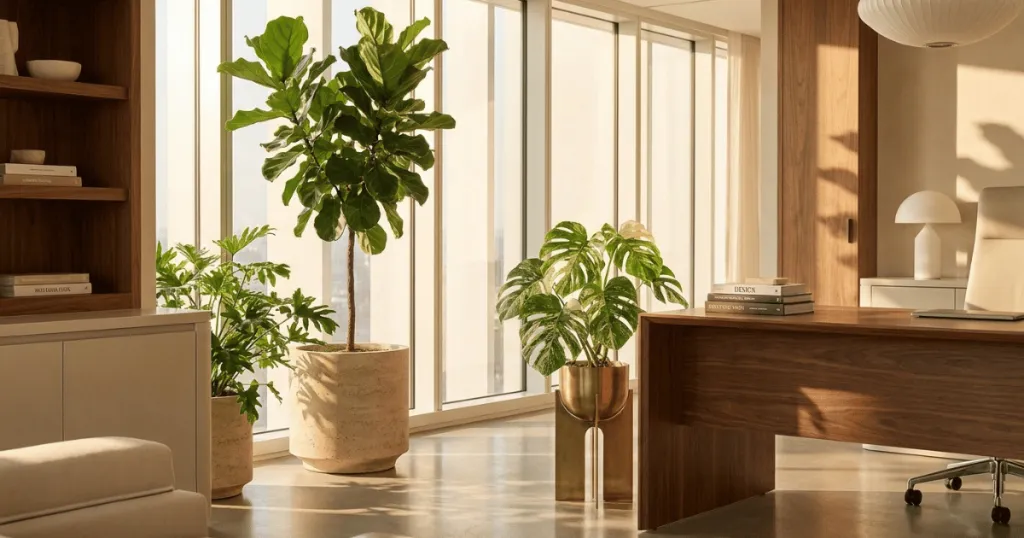
When selecting plants for reception areas, aesthetic impact is as important as air filtration. A larger specimen, such as a Dracaena marginata, can act as a focal point while providing significant surface area for toxin absorption. However, these taller plants require stable, heavy-bottomed containers to prevent accidental tipping in crowded lobbies. Decision-makers should prioritize plants that offer a high leaf-to-stem ratio, as the leaf surface is where the primary gas exchange occurs. If the plant is too sparse, its impact on indoor air quality will be negligible regardless of its species.
Another consideration is the potential for allergen sensitivity among staff. While plants generally improve air quality, some individuals may react to specific pollens or soil-borne molds. In sensitive environments, choosing plants that rarely flower, like the snake plant or ZZ plant, minimizes the risk of airborne allergens. Furthermore, using inorganic potting media, such as expanded clay pebbles or high-quality perlite-heavy mixes, can reduce the presence of fungus gnats, which are common pests in damp office soil that can cause significant employee annoyance.
Ultimately, the goal is to create a sustainable ecosystem. By rotating plants between high-light and low-light zones every few months, you can prevent the stress associated with permanent placement in dim corners. This rotation strategy helps maintain the vigor of the plants, ensuring they remain active in their role as natural air filters rather than becoming decorative, dying liabilities.
Summary of Maintenance and Placement Choices
Selecting the right specimen depends entirely on your specific workspace constraints. The table below outlines how different air-purifying options compare under typical office conditions.
| Plant Type | Light Requirement | Watering Frequency | Office Challenge |
|---|---|---|---|
| Snake Plant | Low to Bright Indirect | Every 2 to 3 Weeks | Root rot from overwatering |
| Peace Lily | Low to Medium Indirect | Weekly | Brown tips from dry HVAC air |
| Spider Plant | Medium Indirect | Every 1 to 2 Weeks | Sensitivity to tap water chemicals |
| ZZ Plant | Low to Medium Indirect | Every 3 to 4 Weeks | Slow growth rate |
If your desk sits far from any window in a heavily air-conditioned room, the snake plant remains the safest recommendation. If you manage a humid reception area with natural light, a peace lily provides lush visual appeal alongside robust toxin absorption. For the most challenging, low-light corners, the ZZ plant offers the best balance of durability and low-maintenance requirements.
Ultimately, the best office plant for cleaning air is one that matches your specific maintenance reality. Assess your office lighting, establish a single point of contact for watering, and choose a resilient species capable of weathering the unique microclimate of a modern workplace.
FAQ
Do office plants actually make a measurable difference in air quality?
Yes, research demonstrates that indoor foliage and associated root microbes reduce volatile organic compounds in enclosed spaces. However, in an actively ventilated office with constant air exchange from HVAC systems, plants supplement air filtration rather than replacing mechanical ventilation units.
How do I prevent coworkers from overwatering our shared office plants?
The most effective approach is designating a single caretaker and posting a simple care card or watering calendar near the container. Using moisture meters eliminates guesswork by showing when soil is genuinely dry below the surface.
Can office plants survive over a two-week winter holiday closure?
Hardy species like snake plants and ZZ plants endure extended periods without water if thoroughly hydrated right before the break. For more sensitive varieties, self-watering pots or capillary mats provide a reliable buffer during long office shutdowns.