When you master how to water office plants with consistent precision, your workplace greenery will thrive for years under artificial fluorescent lighting, climate-controlled HVAC systems, and the erratic weekend schedules common to commercial buildings. Too many workplace greenery setups fail simply because routines default to random cup dousings or rigid, calendar-based schedules that ignore actual soil moisture levels. By implementing structured desk plant watering schedule habits, office managers and workplace decision-makers can protect their investment in indoor office plant care while ensuring root rot prevention across open offices, reception areas, and private executive workspaces.
Short Answer
Water office plants only when the top two inches of potting soil feel completely dry to the touch, and always saturate the root ball thoroughly until excess water drains freely from the bottom of the container. Avoid giving small sips on a fixed weekly calendar, as this encourages shallow root growth and leaves lower soil layers bone dry.
Before You Start
Before grabbing a watering can or stepping away from your desk, take time to evaluate your specific workspace environment and the tools you intend to use. Office buildings present unique environmental challenges that differ significantly from residential homes. Constant climate control, whether it is forced-air heating in the winter or heavy air conditioning in the summer, strips moisture from indoor air rapidly. This low humidity often creates a false impression of soil dryness because the top layer bakes hard under overhead lighting while the soil deeper down near the root ball remains saturated.
Examine your containers first. Every single office plant pot must have functional drainage holes at the base. If you have decorative ceramic cachepots without holes, remove the inner plastic nursery pot before applying any moisture, or ensure a layer of gravel allows excess water to sit safely away from the roots. Standing water trapped inside a sealed decorative pot is the primary cause of root rot in professional environments.
Understanding the interplay between indoor office plant care and the surrounding commercial building environment helps prevent premature plant failure. In a typical commercial office, air exchange rates are high, and continuous HVAC operation creates persistent air currents that accelerate transpiration from plant leaves. When leaves transpire quickly, they pull moisture rapidly from the vascular system, which in turn demands a steady supply of moisture from the roots. However, if the potting soil is compacted or poorly aerated, the roots cannot absorb water efficiently, leading to a confusing scenario where a plant exhibits drought stress despite sitting in damp soil.
Workplace decision-makers should also consider the physical layout of their office plant installations. Plants stationed directly beneath intense fluorescent lighting tubes or hot LED panel arrays experience higher ambient temperatures at the leaf surface than plants tucked away in darker corners. This localized heat increases metabolic rates, meaning your desk plant watering schedule must account for microclimates within the same room. A Pothos sitting on a sunny windowsill or directly under a commercial downlight will metabolize moisture significantly faster than an identical specimen sitting in a shaded hallway corner.
To further refine workplace greenery maintenance, evaluate the container material itself. Unglazed terra cotta pots allow moisture to evaporate through the container walls, speeding up soil drying times, whereas glazed ceramics and thick plastic nursery pots retain moisture significantly longer. Factoring in pot composition prevents overzealous watering in slow-drying vessels and protects against chronic underwatering in porous containers.
Tools and Equipment for Office Plant Care
Having the right tools transforms plant care from a messy chore into a quick, professional routine. Ditch the open disposable coffee cups and soda bottles, which spill easily and deliver uneven amounts of liquid. Instead, invest in equipment designed for controlled indoor irrigation.
Recommended Watering Gear
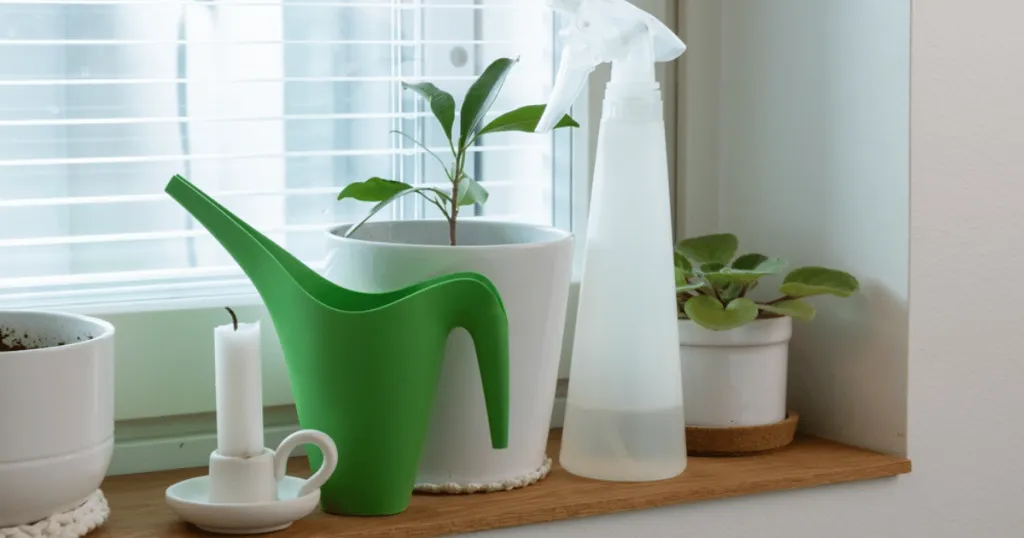
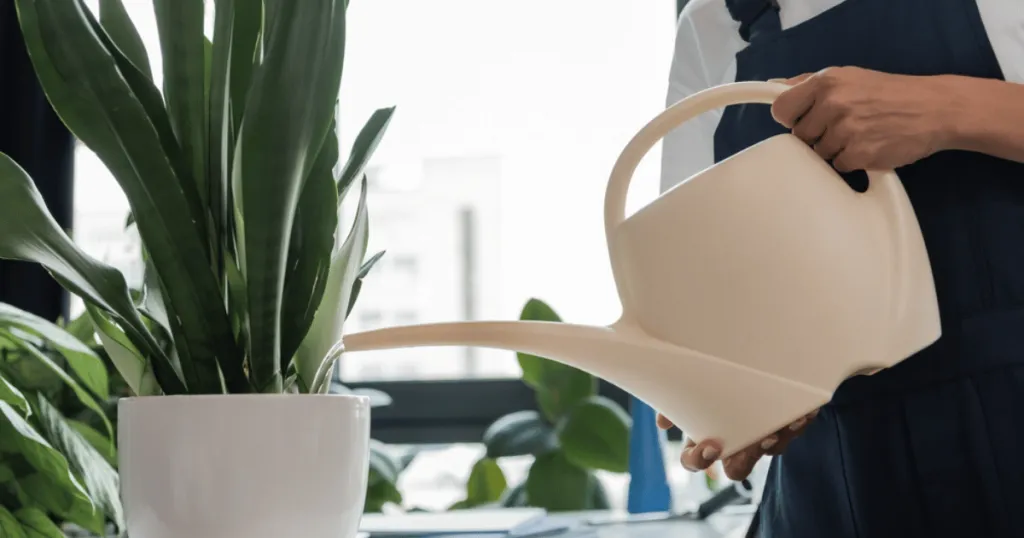
- Long-Spout Watering Can: A narrow, extended spout lets you reach under dense foliage and direct moisture right onto the soil surface without splashing leaves or office furniture.
- Moisture Meter: A dual-probe soil meter removes guesswork by measuring dampness deep near the root zone, which is especially helpful for large floor plants in heavy containers.
- Catch Trays and Saucers: Always place a protective saucer beneath your pots to capture runoff, preventing stains on wooden desks, carpets, or filing cabinets.
- Turkey Baster or Syringe: Use this simple tool to quickly vacuum out standing water from decorative outer pots after a thorough soak.
Selecting durable, office-appropriate equipment is essential for maintaining a clean, professional appearance in shared workspaces. A high-grade plastic or stainless steel watering can with a detachable rose or precision spout prevents accidental overflows during busy workdays. When dealing with heavy floor plants in executive suites or conference rooms, a moisture meter for indoor plants provides an objective reading that eliminates finger-testing in formal settings. Pairing these tools with reliable potting soil drainage layers ensures that surplus moisture never compromises office furnishings or creates slip hazards on polished commercial flooring.
Additionally, keeping a dedicated cleaning cloth and a small hand towel near your plant care station ensures that any accidental spills on shared desk surfaces or conference tables are wiped up instantly. Maintaining pristine common areas builds organizational confidence in your office plant management strategy and prevents friction among facilities teams.
Step-by-Step Instructions
Step 1: Test the Soil Moisture
Never rely on a calendar to decide when your workspace greenery needs a drink. Push your index finger two inches deep into the soil mix. Alternatively, insert a moisture meter halfway down the pot. If the soil clings to your skin or feels damp and cool, walk away and check again in a few days. If it feels dry, crumbly, or warm, move on to the next step.
Step 2: Prepare the Water Source
Fill your watering can with tap water and let it sit out overnight at room temperature. Allowing municipal tap water to sit out for twenty-four hours lets dissolved chlorine and fluorine dissipate slightly. Cold water straight from a breakroom refrigerator tap can shock plant roots and cause leaf drop. Engaging in tap water chlorine dissipation is a simple habit that prevents chemical buildup and tip burn in sensitive office foliage.
Step 3: Apply Moisture Evenly
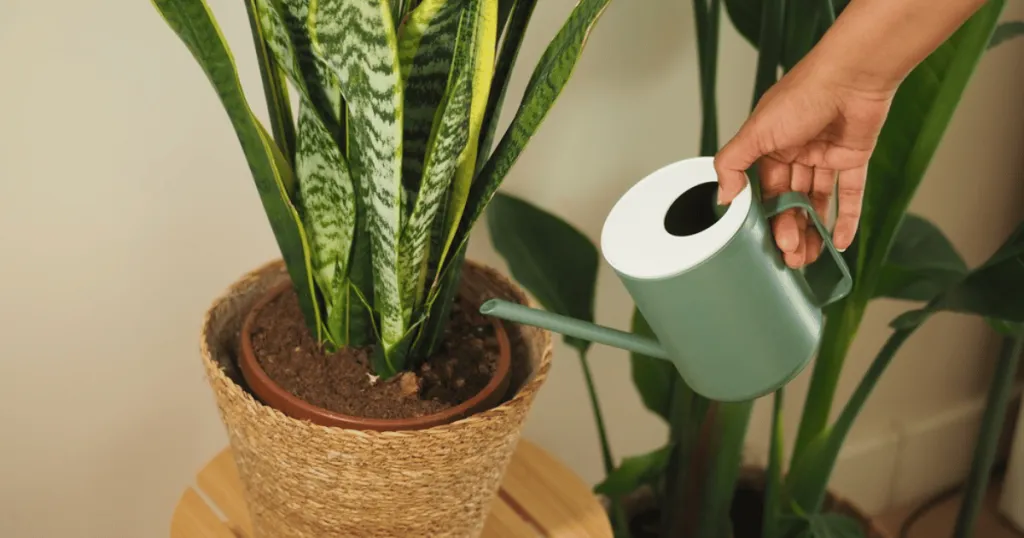
Slowly pour water over the entire soil surface, working your way around the edges of the container. Avoid dumping all the liquid in one spot, which can carve channels through the potting mix and leave dry pockets around the root ball. Continue pouring steadily until you see excess liquid begin to seep out through the drainage holes at the bottom of the pot, achieving complete root ball hydration.
Step 4: Allow Complete Drainage
Let the pot sit undisturbed for ten to fifteen minutes while gravity pulls out the excess water. Once the dripping stops, empty the saucer or cachepot completely. Never allow a pot to sit in a pool of standing water for hours, as this cuts off oxygen to the root system and triggers rapid decay.
Executing these steps requires mindfulness regarding the physical properties of the growing medium. Over time, commercial potting mixes can break down, compact, and pull away from the inner walls of the container. When this happens, pouring water over the top often results in liquid slipping down the gap between the soil and the pot without actually penetrating the root mass. If you notice this phenomenon, immerse the entire inner container in a basin of water for thirty minutes to rehydrate the compressed media before resuming your standard maintenance routine.
When executing deep saturation routines in open-plan offices, coordinate with cleaning staff schedules to ensure catch trays are emptied before evening janitorial sweeps. Leaving trays overflowing overnight invites accidental spills and creates maintenance headaches for office facility managers.
Common Mistakes to Avoid
One of the most frequent errors in workplace plant care is the habit of giving plants small, frequent sips of water every single day. This shallow watering method only dampens the top layer of soil, starving the lower roots and creating a weak foundation. Another common trap is ignoring seasonal changes. Office buildings maintain artificial climates year-round, but heating and cooling cycles still alter how fast soil dries out. In winter, when dry indoor heating runs constantly, soil may actually dry out faster than it does in summer, despite lower natural light levels. Always judge by feel rather than assuming plants need less water simply because it is winter outside.
Another critical oversight involves leaving plants unattended during extended holiday closures. When offices close for Thanksgiving, winter holidays, or long weekends, indoor HVAC systems often cycle down, altering humidity levels unpredictably. Office managers should coordinate a final maintenance check just before departure, ensuring that saucers are emptied and plants are positioned out of direct blast zones from heating vents. Failing to manage this transition often results in severe desiccation or, conversely, waterlogged soil if automated or well-meaning colleague watering occurs without proper moisture assessment.
Avoid using unverified liquid additives or leftover breakroom beverages. Pouring coffee, tea, or sports drinks into office planters introduces sugars, acids, and dairy solids that sour the soil, attract pests, and suffocate beneficial microorganisms. Stick strictly to pure, room-temperature water for all routine irrigation tasks.
Troubleshooting Office Plant Watering Issues
Yellowing Lower Leaves
If the oldest leaves near the base of the stem turn yellow, feel mushy, and drop off unexpectedly, your plant is likely receiving too much water or suffering from poor drainage. Stop watering immediately, check the bottom saucer for standing water, and let the soil dry out completely before your next maintenance check. This classic symptom of overwatering highlights the destructive nature of restricted oxygen availability in waterlogged root zones.
Crispy Brown Tips and Drooping Stems
If the foliage feels brittle, papery, or crispy at the edges and the soil has pulled away from the inner rim of the plastic pot, the plant is severely underwatered. Submerge the entire inner pot in a bucket of room-temperature water for thirty minutes to rehydrate the compressed soil block, then let it drain fully. Addressing underwatered foliage promptly prevents permanent tissue damage.
Fungus Gnats Hovering Around Pots
Tiny black flies buzzing around your desk plants indicate that the top layer of soil stays consistently wet and damp. Allow the top three inches of soil to dry out completely between watering sessions. This dry surface breaks the breeding cycle of the gnats without requiring harsh chemical treatments in a shared office space, preserving a pleasant environment for staff and visitors alike.
For persistent pest issues or chronic root stress, consider evaluating the surrounding office airflow. Stagnant air pockets near cubicle partitions can trap humidity around soil surfaces, prolonging drying times and inviting fungal proliferation. Enhancing air movement through subtle desk fan placement or adjusting nearby louver vents supports rapid, healthy soil breathability.
FAQ
Can I use leftover breakroom bottled water for my office plants?
Yes, but check the mineral content first. Filtered or bottled water is fine, but avoid flavored waters or liquids containing sodium or sugars, which will damage root tissues.
How do I handle office plant watering over long holiday breaks?
Give plants a thorough soaking the day before you leave, let them drain completely, and move them slightly away from hot windows or direct HVAC vents to slow down evaporation rates.
Is it okay to use ice cubes to water desk plants?
We generally discourage using ice cubes. The freezing temperature can shock delicate tropical roots, and melting ice only dampens the top layer of soil instead of soaking the entire root ball.
Why does water run straight through the pot without wetting the soil?
Old potting soil can become hydrophobic, meaning it shrinks and repels moisture. Submerge the entire pot in a basin of water for an hour to rehydrate the compressed root ball.