You finished your morning espresso or drip coffee in the breakroom, and now you are staring at the dark brown leftovers in your filter. It feels wasteful to toss them into the trash when office desk plants like pothos, snake plants, or peace lilies are sitting right nearby looking a bit tired. That natural impulse makes complete sense, but acting on it indoors can create unexpected complications. While outdoor garden soils often process organic amendments smoothly, indoor containers operate under entirely different physical constraints.
Before you dump that morning batch of caffeine remnants into your favorite desk foliage, you need to understand how indoor soil ecosystems react. From restricted root zones to stubborn fungal growth, bringing outdoor composting habits inside the workplace requires much more caution than most people realize.
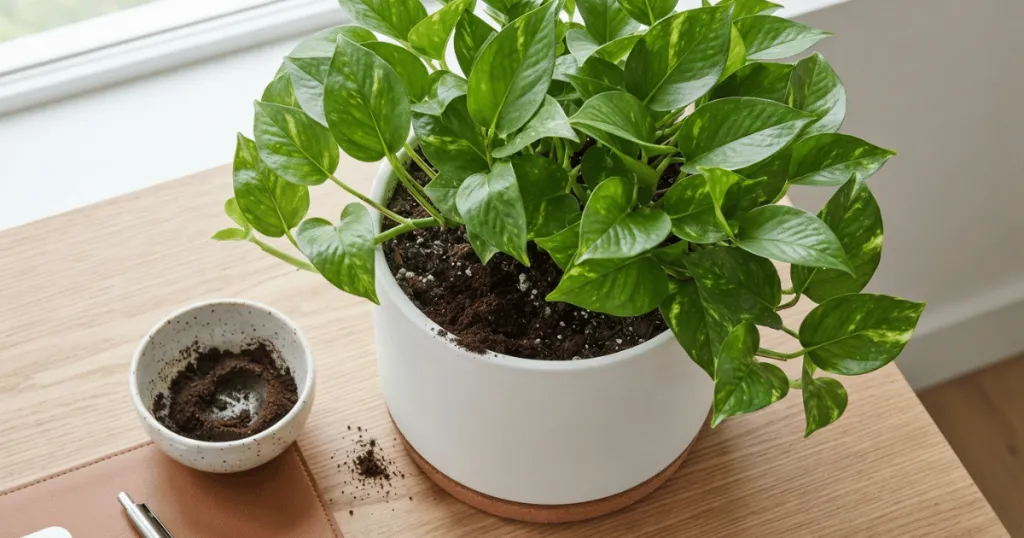
The Reality of Putting Coffee Remnants in Indoor Pots
When asking can i add used coffee grounds to office plants, the short answer is that you should generally avoid the practice. Although organic matter sounds beneficial in theory, the chemistry and physical structure of spent coffee refuse clash directly with the needs of containerized office greenery. Office environments already present unique challenges, such as dry heating, fluctuating air conditioning, and stagnant air, which make potted plants much more vulnerable to soil imbalances.
Coffee waste is rich in nitrogen and organic solids, but it does not break down cleanly inside a small plastic or ceramic container without earthworms, micro-organisms, and deep soil aeration. Instead of enriching the root zone, dumping these leftovers directly onto the surface creates a dense mat that alters airflow, moisture retention, and soil pH.
In a professional workplace setting, appearance and cleanliness matter just as much as plant health. When raw organic waste begins to decompose on the surface of a desk planter, it creates visual clutter, unpleasant odors, and attracts pests that can quickly migrate to neighboring desks or shared collaborative areas. Understanding the specific mechanical and biological failures of putting coffee grounds in indoor pots helps office managers maintain vibrant, healthy greenery without risking workspace hygiene issues.
Soil Acidity and Chemical Composition
Many people assume that used coffee waste remains highly acidic. While freshly brewed coffee is acidic, the rinsing process during brewing actually leaches out much of that acidity, leaving spent grounds closer to neutral. Even so, pouring organic residue onto potting mix introduces compounds that change how water moves through the root zone. In an enclosed office desk planter, these localized chemical shifts can stress delicate root systems, especially for species that prefer neutral or slightly alkaline conditions.
Furthermore, because office plants rely on stable growing environments, sudden influxes of concentrated organic acids or microbial byproducts can shock the root hairs. Unlike field soil, which buffers chemical changes across vast volumes of earth, a six-inch office container absorbs these inputs directly. The sudden shift in soil pH can lock out essential minerals, causing leaf chlorosis or tip burn that mimics underwatering or nutrient deficiency.
Moisture Retention and Drainage Issues
Office containers rely on porous soil to deliver oxygen directly to the root hairs. When you layer fine coffee residue onto the topsoil or mix it heavily into the substrate, the particles pack tightly together. This compaction restricts water penetration during regular office watering routines. The top layer may stay waterlogged while the root ball below remains dry, or conversely, moisture may become trapped, creating a soggy environment that invites root rot.
Drainage holes in office planters are designed to let excess water escape freely, but fine organic sludge can easily clog these exit paths. When water cannot drain properly, oxygen is forced out of the potting mix. Office workers often overwater plants when they notice the surface crusting over from dried coffee refuse, compounding the moisture imbalance and accelerating the decay of underground roots.
Fungal Growth and Pest Attraction
Perhaps the most immediate problem in a climate-controlled workplace is mold and pest activity. Organic matter sitting on damp soil provides a ready food source for fungus gnats, mold spores, and mildew. In a warm office with limited natural ventilation, white mold frequently blooms across the surface of fresh organic debris within days. Fungus gnats quickly multiply in these damp layers, turning your professional workspace into a breeding ground for annoying flying insects.
Office colleagues rarely appreciate clouds of tiny gnats hovering around conference room tables or computer monitors. Once these pests establish a breeding cycle in the damp, decaying organic matter at the top of the pot, eradicating them requires letting the entire root zone dry out completely, which can stress the plant further.
Why Outdoor Composting Logic Fails Indoors
Gardeners often praise organic waste for feeding soil microbes and improving garden beds. However, office containers are not mini outdoor ecosystems. An outdoor garden features vast amounts of space, sunlight, wind, and complex soil food webs that rapidly digest organic matter. None of those buffering factors exist inside a ceramic pot sitting on a filing cabinet or conference table.
Office plants also deal with lower light levels from fluorescent or LED lighting fixtures, meaning their metabolic and growth rates are slower than plants growing outdoors in full sun. A slower-growing plant absorbs nutrients at a reduced pace. It cannot consume sudden surges of nitrogen or process heavy organic loads, leaving the waste to decompose anaerobically right against the stem and roots.
When evaluating coffee grounds for indoor plants, it is crucial to recognize that indoor spaces lack the specialized macro-decomposers, such as earthworms and beetles, required to break down raw kitchen or breakroom waste safely. Without these organisms, the breakdown process turns sour, producing organic acids and foul-smelling byproducts that suffocate root systems.
Safer Alternatives for Supporting Office Foliage
If you want to give your workspace greenery a boost without risking mold outbreaks or pest infestations, standard horticultural practices offer much cleaner, more reliable results. Professional office plant maintenance relies on controlled methods that protect indoor air quality and workspace cleanliness.
- Balanced Liquid Fertilizers: Use a water-soluble, diluted houseplant fertilizer during the active growing season in spring and summer, following manufacturer dilution instructions carefully.
- Controlled-Release Granules: Apply slow-release nutrient pellets designed specifically for indoor containers, which release minerals gradually without disrupting surface soil texture.
- Fresh Potting Mix: Repott root-bound specimens annually using a well-draining indoor soil blend containing perlite or orchid bark to restore physical aeration naturally.
- Proper Watering Technique: Focus on consistent moisture management, allowing the top inch of soil to dry out before the next watering cycle instead of relying on organic surface amendments.
Implementing these professional-grade care routines ensures that office flora receives consistent, predictable nutrition without introducing foreign organic materials that can destabilize the container environment over weekends or holiday breaks when the building sits unattended.
What to Do If You Already Added Coffee Waste
If you have already sprinkled coffee remnants onto your office planters, do not panic, but take corrective steps promptly before problems escalate. Inspect the surface of the soil under good lighting. If you notice a furry white mold layer or a swarm of tiny flying gnats hovering around the container, intervention is necessary.
Carefully scrape away the top layer of organic waste and soil using a small trowel or spoon, making sure not to disturb the deeper root structure. Once the residue is removed, let the soil surface dry out completely before the next watering session. If the soil underneath feels overly compacted or smells sour, flushing the pot thoroughly with clean water in a breakroom sink can help leach out excess decomposing solids, provided the container has a functioning drainage hole. Moving forward, keep your morning brew strictly inside your ceramic mug and away from your desk greenery.
By taking swift corrective action, you can rescue stressed desk foliage and restore a clean, professional aesthetic to your workspace without permanent damage to the root system.
FAQ
Can I mix coffee grounds into the soil before potting an office plant?
Mixing organic waste into potting soil before planting is still discouraged for indoor containers. Without outdoor earthworms and active composting microbes, the buried material breaks down very slowly, often creating pockets of anaerobic rot that damage developing roots.
Do any office plants actually benefit from caffeine or coffee waste?
No common office plant species requires coffee waste to thrive. While acid-loving outdoor plants like azaleas sometimes tolerate treated organic mulches, indoor container plants face severe drainage and aeration risks that outweigh any marginal nutrient content.
Will dried coffee grounds prevent mold better than wet ones?
Drying out organic residue reduces immediate moisture, but once you water the plant, those dry particles absorb moisture from the soil and quickly begin the same decomposition process, leading to the same surface mold and pest risks.
How do I get rid of fungus gnats if they arrived because of organic soil additives?
Allow the top two inches of potting mix to dry out completely between watering sessions, as fungus gnat larvae require moist soil to survive. You can also apply sticky yellow traps near the base of the plant to catch flying adults.