The most frequent mistake office managers make with a rubber plant, or Ficus elastica, is treating it like a low-light survivor. While these plants are often marketed as hardy, they frequently struggle in dark corners or windowless cubicles. When a rubber plant begins to drop its lower leaves or shows leggy, stretched-out growth, it is almost always a signal that the plant is starving for light. Unlike some other office greenery that tolerates dim conditions, the rubber plant requires steady, bright, indirect light to maintain its structural integrity and deep, glossy foliage.
Decision Snapshot
- Light: Thrives in bright, indirect office light.
- Water: Allow the top inch of soil to dry completely.
- Humidity: Average office humidity levels are perfectly sufficient.
- Toxicity: Contains latex sap; keep away from pets and sensitive skin.
- Difficulty: Moderate; requires consistency rather than constant attention.
Beyond lighting, the second most common failure point is overwatering. In an office setting, it is easy to fall into a routine of watering on a set day regardless of the soil moisture. Because office environments often have lower light levels than greenhouses, the soil stays damp for longer than you might expect. If the roots sit in water, they will suffocate, leading to yellowing leaves and potential root rot. Mastering rubber plant care is less about a strict schedule and more about observing the soil before you reach for the watering can.
Light and Placement in the Workplace
Placement is the single most important factor for long-term success. A rubber plant placed in a dark hallway or a corner far from a window will eventually lose its luster. To keep the plant compact and vibrant, position it within a few feet of a south or east-facing window. If your office lacks natural light, you may need to supplement with full-spectrum LED grow lights. These can be easily integrated into a desk lamp or a dedicated plant stand to ensure the plant receives the intensity it needs.
When selecting a spot, watch for temperature fluctuations. Avoid placing the plant directly in the path of an HVAC vent or near a drafty door. Sudden blasts of hot or cold air can cause the plant to drop leaves in protest. If you are in an open-plan office, try to find a spot that offers consistent, ambient light rather than direct, scorching sun, which can bleach the leaves. If the leaves start to turn pale or develop brown spots, the light might be too intense; if the stems become thin and lean toward the light source, it is not getting enough.
In large office layouts, consider the “light budget” of the room. A plant placed in a lobby with floor-to-ceiling windows will have vastly different needs than one in a private office with a single window. Rotate your plant every few weeks to ensure even growth on all sides, preventing the plant from leaning permanently in one direction. This rotation is a simple but effective part of professional office plant maintenance that ensures the plant remains aesthetically balanced for visitors and staff.
Watering and Soil Management
The golden rule for watering is to check the soil depth. Use your finger to test the top inch of soil; if it feels dry to the touch, it is time to water. If it still feels moist, wait a few more days. In an office, the air is typically dry due to climate control, which can cause the top layer of soil to dry out faster than the root zone. Always ensure your pot has adequate drainage holes. A decorative pot without drainage is a recipe for disaster, as excess water will pool at the bottom, leading to root rot that is often invisible until the plant begins to collapse.
When you do water, saturate the soil until water runs out of the drainage holes, then discard any excess water from the saucer. Never let the plant sit in a pool of standing water over the weekend. Regarding soil, use a high-quality, well-draining potting mix. If the soil feels too dense or heavy, mix in some perlite or orchid bark to improve aeration. This prevents the soil from compacting over time, which is essential for healthy root respiration in an indoor environment.
For office managers, the challenge is often the “Friday watering trap.” If you water on a Friday afternoon, the plant may sit in cold, damp soil all weekend while the building’s HVAC system is powered down. This combination of lower temperatures and high moisture is the primary catalyst for fungal issues. Instead, aim to water early in the week when the office is active, allowing the plant to utilize the moisture during the period of highest light and temperature. If the office is closed for a long holiday, ensure the plant is not saturated right before you leave.
Humidity, Temperature, and Feeding
Rubber plants are surprisingly adaptable to the average office environment. While they are tropical in origin, they do not require the high humidity of a greenhouse. Standard office humidity levels are generally fine for a healthy specimen. If you notice the leaf tips turning brown and crispy, it may be a sign that the air is exceptionally dry, perhaps due to proximity to a heater. In such cases, a simple pebble tray with water or a small humidifier can help, though this is rarely necessary in most modern office buildings.
Temperature stability is more critical than humidity. Keep the plant in a space where the temperature stays between 65 and 80 degrees Fahrenheit. Avoid extreme shifts, especially during weekends when the office HVAC might be turned down or off. Feeding should be done sparingly. Use a balanced, water-soluble fertilizer diluted to half-strength once a month during the growing season, which is typically spring and summer. Do not fertilize during the winter months when the plant enters a period of slower growth.
Understanding the nutrient needs of Ficus elastica is straightforward. Because these plants are often potted in containers with limited soil volume, they rely on you for essential minerals. However, over-fertilizing is a common error that leads to salt buildup in the soil. If you see a white crust forming on the surface of the soil, this is a sign of mineral accumulation. Flush the soil with clean water to rinse away excess salts, and consider switching to a more dilute fertilizer regimen. Remember that the goal is steady, healthy growth, not rapid, forced expansion.
Repotting, Pruning, and Propagation
Rubber plants are relatively slow growers in indoor settings, so you will likely only need to repot them every two years. When you do repot, choose a container that is only one or two inches larger in diameter than the current one. A pot that is too large will hold too much water, increasing the risk of root rot. Spring is the best time to repot, as the plant is entering its active growth phase.
Pruning is essential if you want to keep your plant bushy and prevent it from hitting the ceiling. If the plant becomes too tall or leggy, you can prune the main stem to encourage branching. Always use clean, sharp shears and be prepared for the white, milky latex sap to leak from the cut. This sap can be irritating to the skin, so it is a good practice to wear gloves. You can propagate the cuttings in water or moist soil, though this is a slower process that requires patience and consistent light.
When pruning for size control, make your cut just above a leaf node – the point where a leaf attaches to the stem. This is where the plant’s growth hormones are concentrated, and cutting here will trigger the development of new side shoots. If you are propagating, ensure the cutting has at least two or three leaves. Place the cutting in a clear glass of water, changing the water weekly to keep it oxygenated. Once roots reach about two inches in length, you can transition the cutting into a small pot with fresh potting mix. This is an excellent way to expand your office greenery without purchasing new plants.
Seasonal Adjustments and Common Pitfalls
Your care routine should shift slightly with the seasons. During the winter, growth slows down significantly, meaning the plant will consume less water and nutrients. Reduce your watering frequency accordingly. A common mistake is to keep the same watering schedule year-round, which often leads to overwatering in the winter. Keep a close eye on the plant during the transition between seasons, as this is when it is most sensitive to changes in light duration and temperature.
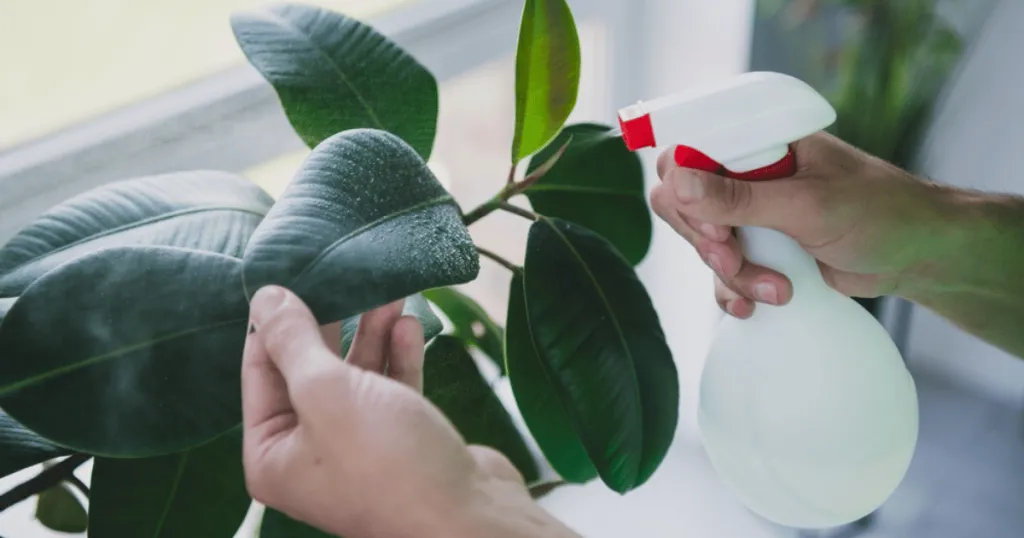
Another common pitfall is failing to clean the leaves. In an office, dust accumulates quickly on broad leaves, which blocks sunlight and hinders photosynthesis. Wipe the leaves down with a damp cloth every few weeks to keep them clean and healthy. If you notice yellowing leaves, check for pests like spider mites or scale, which can thrive in dry, stagnant office air. Early detection is key; wiping the leaves regularly also serves as a great way to inspect for these unwanted guests.
Pest management in an office environment requires a proactive approach. Because you cannot easily isolate a plant in a busy workspace, regular inspection is your best defense. If you spot webbing or sticky residue, isolate the plant immediately. Use a mild insecticidal soap or a simple mixture of water and a drop of dish soap to wipe down the leaves. Avoid harsh chemical sprays in shared office spaces. By maintaining the plant’s health through proper light and water, you make it naturally more resistant to these common office pests.
The Role of Structural Integrity in Office Design
A well-maintained rubber plant serves as a structural element in office design. Its upright, architectural form can define spaces, soften the harsh lines of cubicle walls, or act as a focal point in a reception area. However, this aesthetic value depends entirely on the plant’s structural integrity. A plant that is leaning or dropping leaves loses its ability to contribute to the office atmosphere. By following these care guidelines, you ensure that your Ficus elastica remains a reliable, long-term asset to your workspace.
Finally, consider the long-term lifecycle of your office plants. A rubber plant can live for many years if provided with consistent care. As the plant matures, it may require a heavier, more stable pot to prevent tipping, especially in high-traffic areas. Periodically check the stability of the plant and ensure it is not becoming top-heavy. By investing time in these small, routine tasks, you create a professional environment that is both welcoming and visually stimulating, proving that even in a demanding office setting, nature can thrive with the right approach.
Related Rubber Plant Guides
- our Rubber Plant overview
- troubleshooting a Rubber Plant
FAQ
Why are the lower leaves of my rubber plant falling off?
Leaf drop in rubber plants is usually caused by insufficient light or inconsistent watering. If the plant is in a dark corner, it will shed lower leaves to conserve energy. Ensure it is placed in a spot with bright, indirect light and check that you are allowing the top inch of soil to dry out between waterings.
Is the rubber plant safe for office pets?
According to ASPCA guidance on toxic plants, the rubber plant (Ficus elastica) is considered toxic to cats and dogs. It contains a milky latex sap that can cause oral irritation, vomiting, and skin irritation if chewed or touched. It is best to keep this plant in areas inaccessible to pets.
How do I know if my rubber plant needs more light?
If your plant is stretching, leaning heavily toward a window, or producing smaller-than-average leaves, it is not receiving enough light. A healthy rubber plant should have a compact, upright habit with large, glossy leaves. If these signs appear, move the plant closer to a window or add a grow light.
Can I prune my rubber plant to make it fuller?
Yes, pruning is the most effective way to encourage a bushier shape. By cutting the top of the main stem, you force the plant to develop lateral branches. Always use clean, sharp shears and wear gloves to protect your skin from the irritating latex sap that leaks from the cut.